


While SEGA had a massive showing for its upcoming Stranger Than Heaven during Summer Game Fest, Scott Adams and I had an even bigger surprise waiting for us, as we were able to go hands-on with the game. And let me tell you, we were not ready for what we got to experience.
It was only a small slice of the game, but it was enough to make one thing clear: if you were expecting this to play exactly like the older Yakuza or Like a Dragon games, Stranger Than Heaven has other plans.
Once we arrived at the SEGA demo location, we were shown a short video explaining what we would be playing. Stepping into the shoes of Makoto Daito, this demo took us through three different eras: 1915 Kokura, 1929 Kure, and 1943 Osaka. Each era acted as a different difficulty level, starting with easy, moving into normal, and then ending on hard.
This Is Not Your Standard Yakuza-Style Brawler
The demo was clearly built to show how Stranger Than Heaven handles combat, how enemies react to your choices, and how quickly a fight can turn against you if you are not paying attention. That was the biggest surprise for both of us, because this did not feel like a standard brawler where you can simply rush into a crowd and start swinging until everyone drops.
Combat in Stranger Than Heaven is built around the left and right bumpers and triggers. The left bumper and trigger control attacks from the left side, while the right bumper and trigger control attacks from the right side. It sounds odd at first, but once you start fighting, it feels closer to a boxing game than a traditional beat-’em-up.
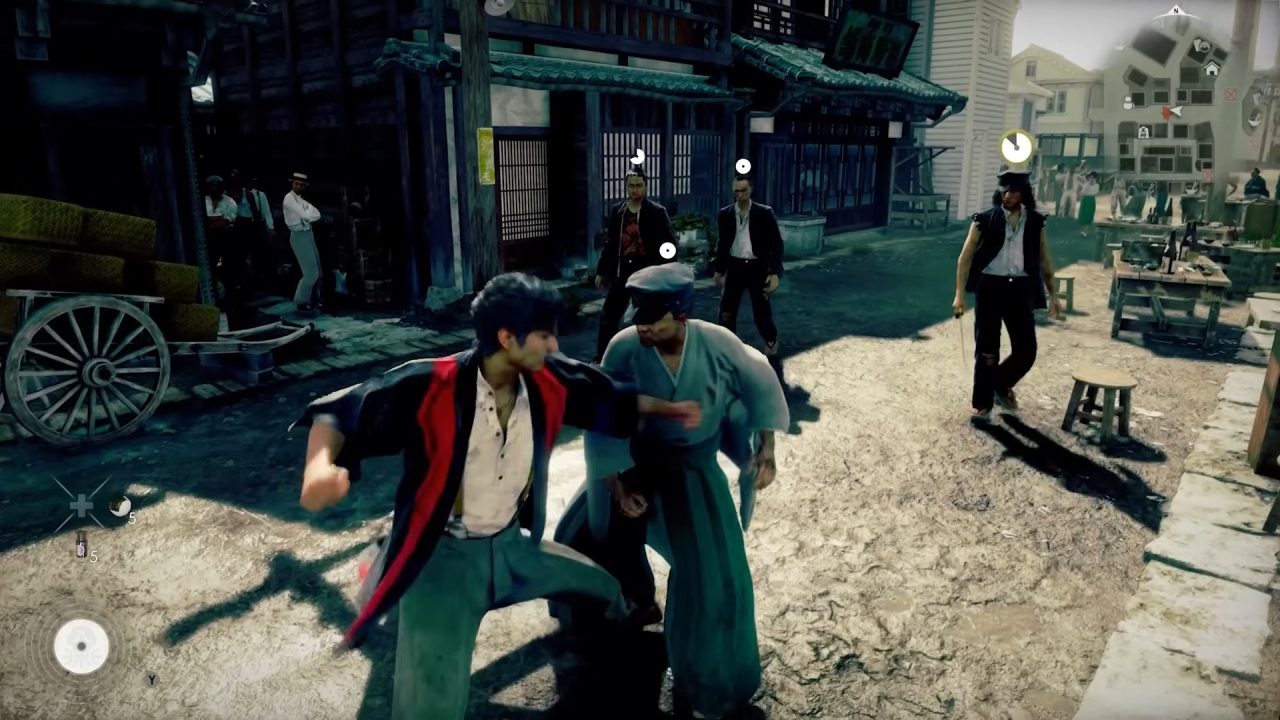
That setup also creates some interesting moments. You can attack with your left fist while holding a weapon in your right hand, or if an enemy grabs one of your arms, you can still use the other to fight back. Once the demo started throwing more enemies at us, that added control made a real difference, especially when enemies started grabbing, sidestepping, or attacking from different angles.
During the demo, we were able to switch between bare hands and weapons, and each option had its own purpose. Your fists were faster and easier to use, but they did not hit as hard. Weapons did more damage, but they came with trade-offs in speed, stamina, and range.
Weapons, Stamina, And Crowd Control Matter
Scott spent more time with the full demo than I did, which allowed me to sit back and analyze the fights, sort of like how a commentator would. When you have a weapon equipped, the right bumper and right trigger become light and heavy weapon attacks, while the left bumper and left trigger are used for punches or kicks, depending on what you are holding.
The knife was fast and did more damage than a punch, but it did not have much range. The crowbar had better reach and could hit multiple enemies at once, but it was slower and needed more commitment. Incidentally, kicking an approaching enemy and then following up with a heavy crowbar swing was a good way to deal with groups.
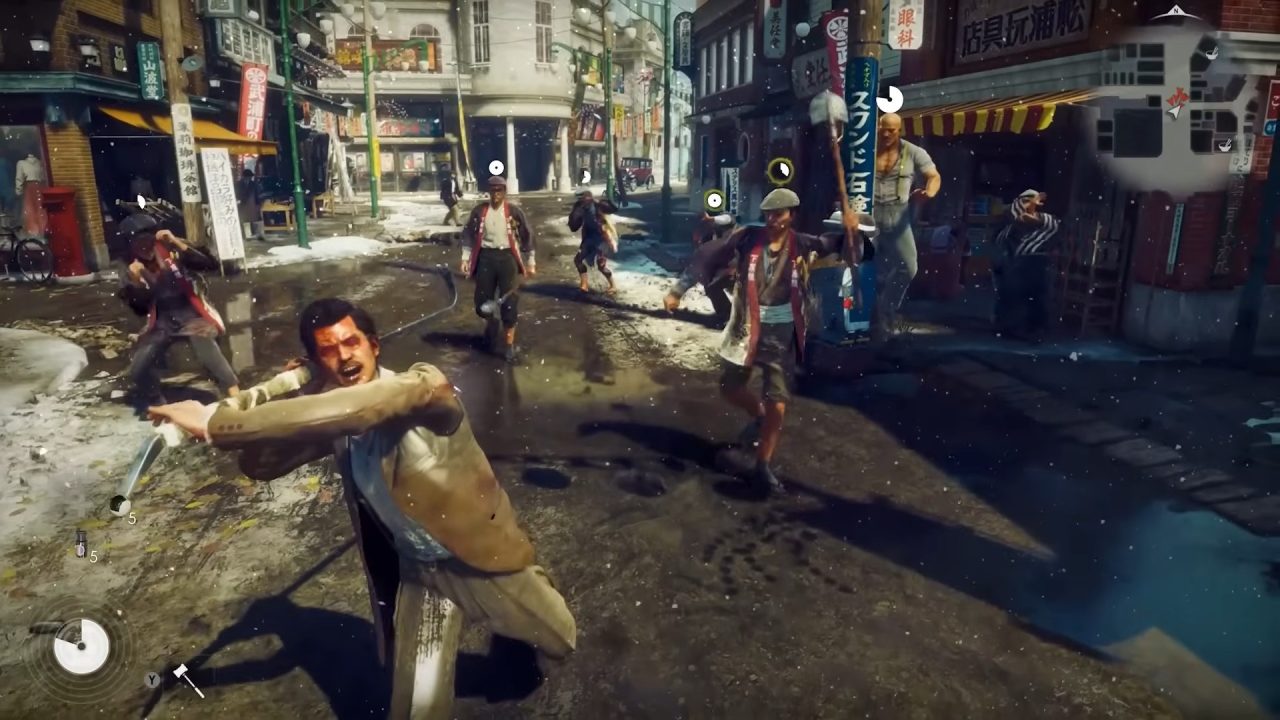
Stamina was just as important. Your stamina is shown through a pulse and color next to your life bar, and when it gets low, the pulse speeds up and shifts toward an orange-red color. If you run out of stamina and get hit, your character drops to the ground, forcing you to mash the A button to get back up. Even then, you can still dodge an incoming stomp by tilting the analog stick at the right time.
The first era was simple enough, but the second era threw more bodies at us and showed that groups are not just there to be knocked around. While watching Scott fight through the crowd, I noticed how enemies would sidestep, grab onto him, or keep him busy while another enemy moved in to punish him. Being a tad harder than the first era, this introduced a much larger character that could be a fill in for Alan Ritchson, that was problem. As massive as he was hard hitting, getting smacked by one of his attacks usually meant getting intimate with the ground. However, it was a good way to also get introduced to rolling on the ground as to avoid suffering more damage.
The Samurai Boss Was The Real Test
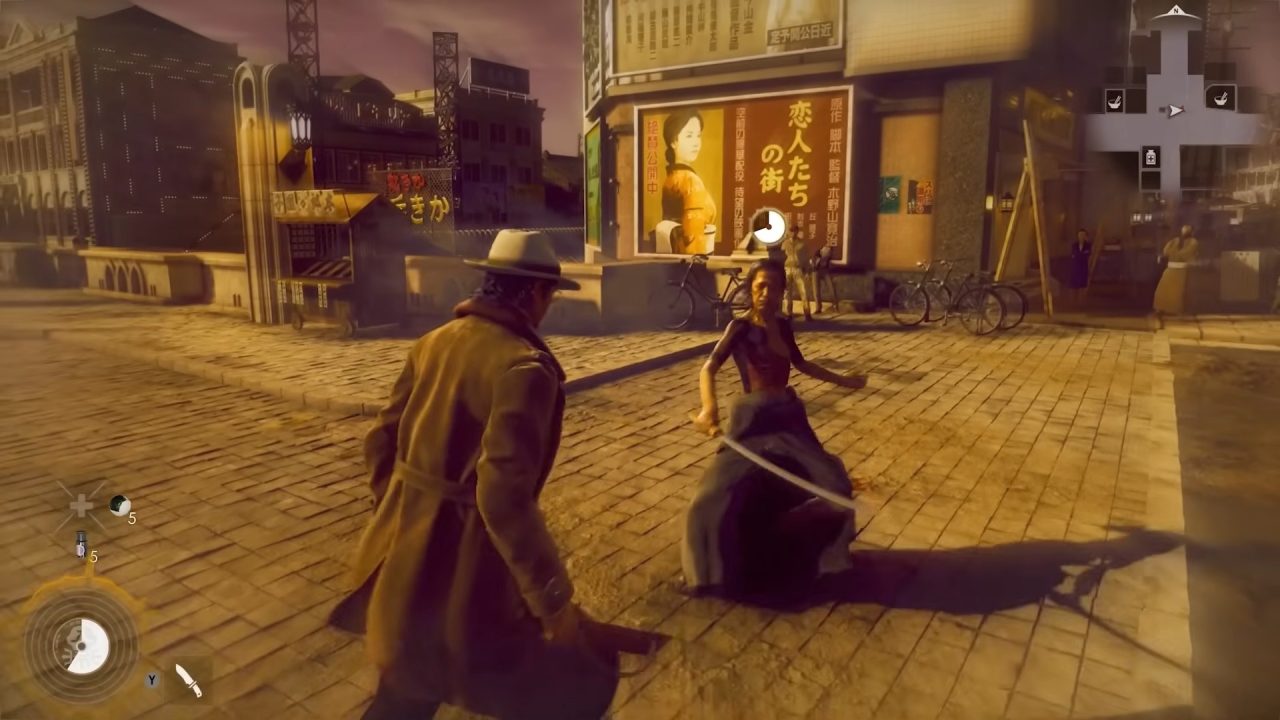
The final era, set in 1943 Osaka, was where the demo really started showing its teeth. This fight was against a skinny samurai who was fast, tricky, and capable of punishing almost every mistake. This was where I spent most of my time, while Scott had already gotten a better look at the demo as a whole.
At first, the samurai mostly used a couple of combo attacks, but as his stamina and health dropped, his patterns started changing. Scott noticed that when his stamina got low, he would not always fall like a normal enemy. Instead, he would use his sword to catch himself and slow his breathing. If you left him alone too long, he could even pull out a potion and heal, which meant you had to pressure him without getting greedy.
Perfect dodges and parries were the key to dealing with him. If you timed either one right before an attack connected, time would slow down and give you a chance to land a bigger hit. Scott almost beat him on his first attempt, getting the boss down to a sliver of health before burning through his stamina and getting stabbed while he was down. After a few more tries, he slowed down, learned the timing, and finally beat him.
Stranger Than Heaven Surprised Us
What surprised me most about Stranger Than Heaven was how calculated the combat felt. I went in expecting something closer to the older Yakuza games, where you run into groups of enemies and start throwing hands. And while there is still plenty of that energy here, the combat system asks more from you.
As we talked about the experience, Scott likened parts of the combat to the old Fight Night titles and I can see why. There is a rhythm to alternating attacks, setting up heavier hits, and catching enemies off guard, but if you get greedy, your stamina will disappear and the enemy will make you pay for it. That was the biggest takeaway from our time with the demo. Stranger Than Heaven may come from the same studio known for Yakuza and Like a Dragon, but this is not just more of the same. The combat feels more deliberate, more technical, and much more punishing than I expected.
After getting hands-on with it, I am interested to see how the full game expands on this system, what other weapons will be available, and what kind of enemies SEGA and RGG Studio will throw at us next.
Stranger Than Heaven releases on January 15, 2027, for PlayStation 5, Xbox Series X|S, and PC.
For more Summer Game Fest coverage, check out these artices.
- Aliens: Fireteam Elite 2 Summer Game Fest Hands-On Preview
- Alien Isolation 2 Hands-On Preview: The Xenomorph Is Just As Terrifying As Ever
- Crimson Moon Summer Game Fest 2026 Hands-On Preview Shows A Co-Op Soulslike With Serious Potential
- CONTROL Resonant PS5 Pro Hands-On Preview from Summer Game Fest 2026
- Resident Evil Veronica Director Shares New Gameplay Details And Explains The Remake’s Biggest Changes
- Stranger Than Heaven Hands-on Preview from Summer Game Fest
- These Summer Game Fest 2026 Games Shot Up My Most Anticipated List

