


We’ve all seen Disney’s take on Carlo Collodi’s classic children’s novel about a wooden puppet who eventually becomes a real boy. But I’m pretty sure none of us ever imagined we’d get a game based on that story, let alone one that turned out to be one of the best Soulslike experiences I’ve ever played. Yet that’s exactly what we got with Round8 Studio’s Lies of P, and damn, I can’t get enough of this game. Find out why in our Lies of P review.
Game Name: Lies of P
Platform(s): PC (Reviewed), PlayStation 5, Xbox Series X|S
Publisher: Neowiz
Developer: Round8 Studio
Release Date: September 19, 2023
Game Length: 30–35 hours for the main quest, longer if you enjoy finding everything
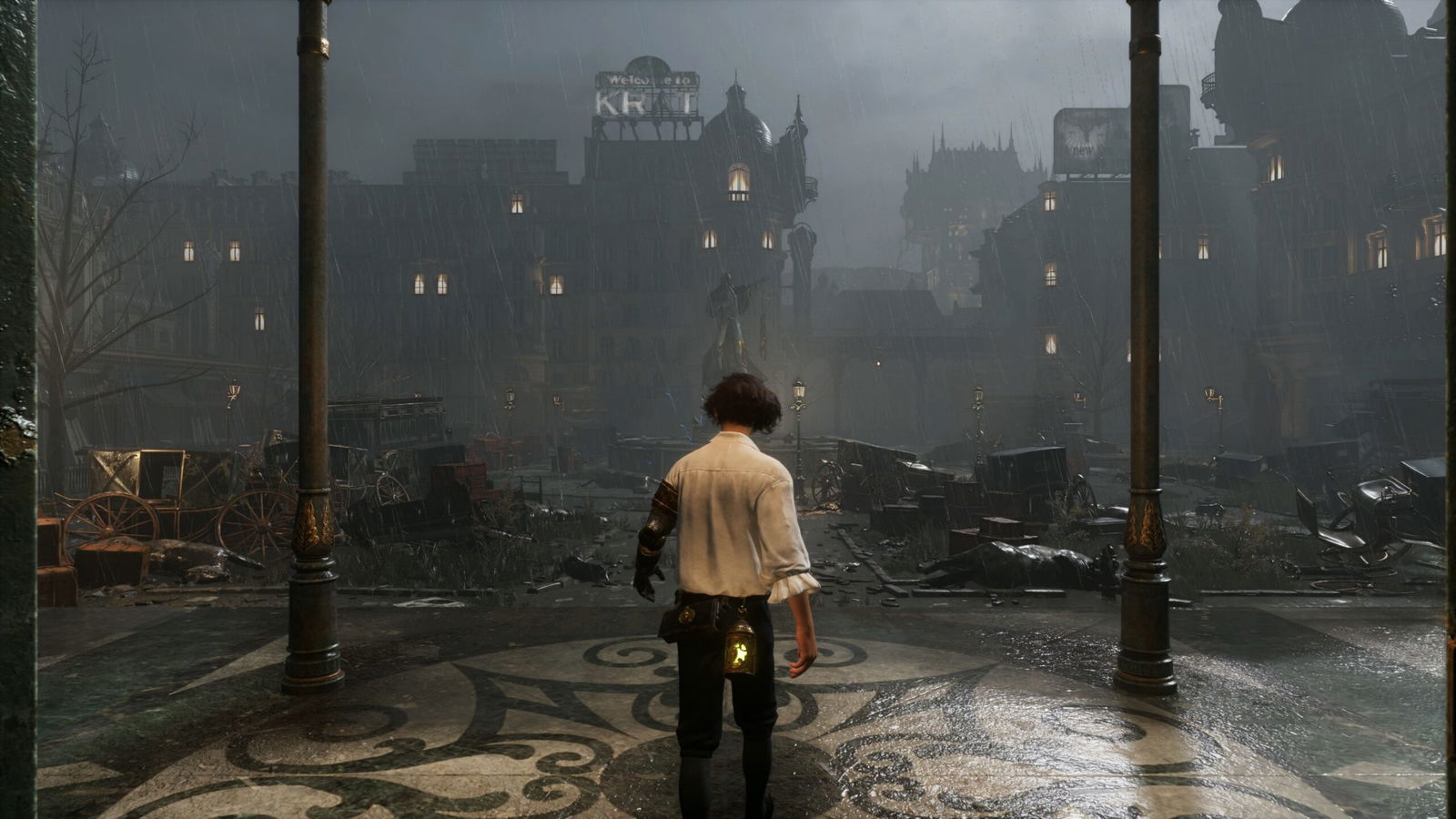
Inspired by Carlo Collodi’s classic fairy tale, The Adventures of Pinocchio, Lies of P is a Soulslike game developed by Neowiz and Round8 Studio. Players take on the role of a marionette named P in the aftermath of a mysterious and deadly puppet uprising that has devastated the Belle Époque-inspired city of Krat. To uncover the truth behind the revolt and the other strange occurrences plaguing the city, players will guide P, customize his build, battle hostile foes, and unravel the dark secrets at the heart of Krat’s downfall.
Fans of Soulslike titles such as Dark Souls, Elden Ring, and Bloodborne will feel right at home with Lies of P. The game features all the familiar elements of the genre, including deliberate combat, dodging, a stamina meter, healing items, deep RPG mechanics, and an unforgiving save-and-respawn system.
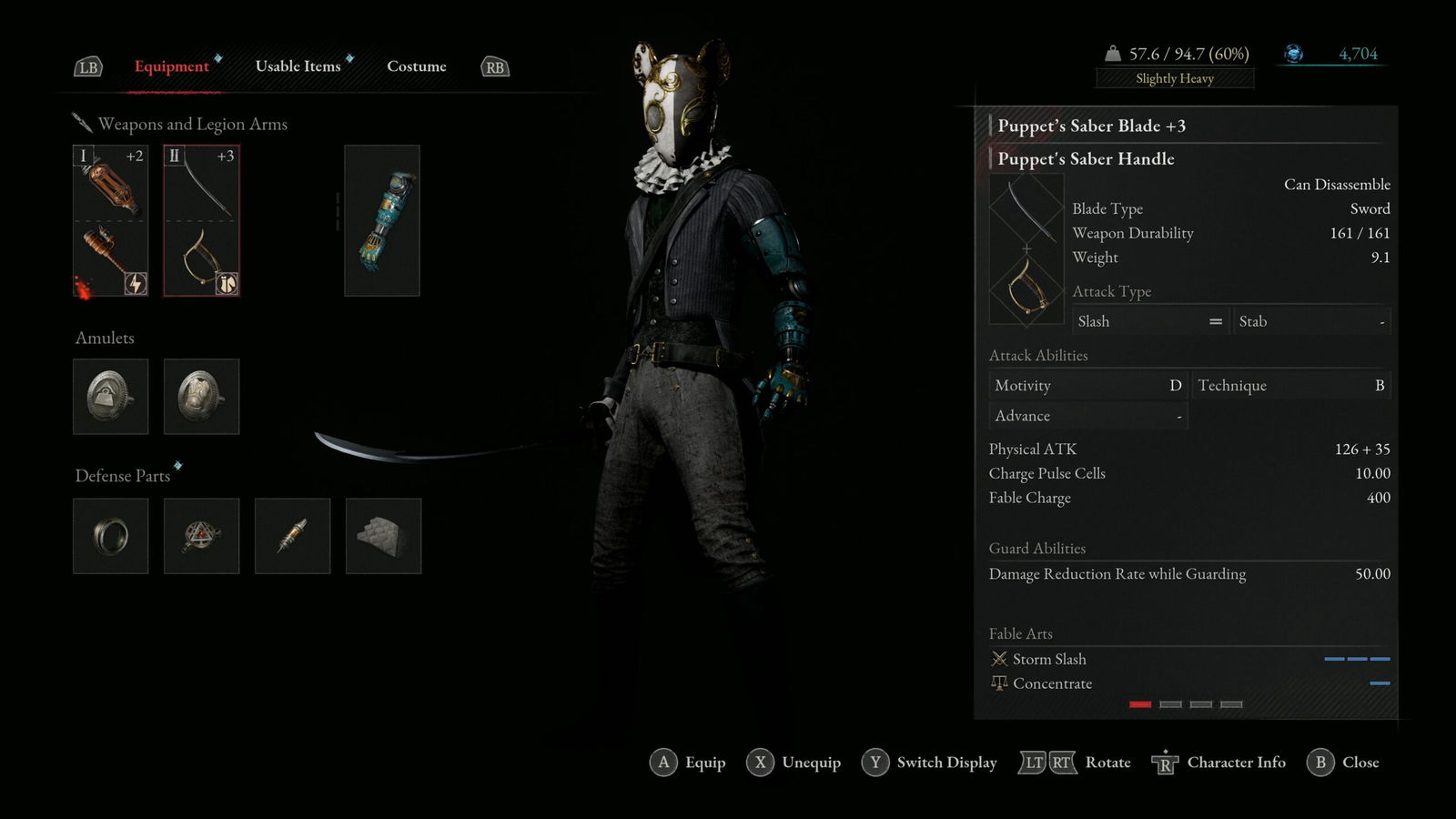
As players progress, they’ll collect Ergo, the in-game currency used to level up P and purchase essential items. Leveling up allows you to improve attributes such as health, stamina, capacity, equipment load, and more. Core stats such as Motivity (Strength), Technique (Dexterity), Advance (Elemental damage and Legion Arms), Vitality (Health), Vigor (Stamina), and Capacity (Weight) also affect your build and how effectively you can wield different weapons. Much like in Dark Souls or Bloodborne, the more you invest in a specific stat, the more proficient you’ll become with weapons that scale with it.
In addition, there’s a skill tree system that can only be upgraded when you find a specific item called Quartz. Once obtained, you can choose a perk and slot the Quartz into one of the available bonuses. The system can be a bit confusing at first because the game doesn’t clearly explain how it works, leaving you to figure it out on your own. What makes it worse is that once you commit Quartz to an upgrade, that decision is permanent. You can’t remove or reassign it, so if you realize the upgrade path wasn’t what you wanted, there’s no way to undo the change. Since Quartz isn’t tied directly to progression and can be missed during exploration, you could also lose out on potential perks altogether.
While Lies of P doesn’t include traditional magic, it does introduce Fable Arts, which are special abilities that can be used during combat. To activate them, you’ll need to build up the Fable Arts meter by attacking enemies. It’s an interesting system, but it can become frustrating in practice. The rate at which the meter fills depends on the weapon you’re using, as some generate more Fable energy than others. Fable Arts also consume different amounts of energy, making certain abilities harder to rely on consistently. Ultimately, I often found it more practical to use items instead because they were more reliable and less of a hassle. I genuinely think the Fable Arts system could benefit from some tweaking to make it more accessible and worthwhile.
What Lies of P Brings to the Table
Every time I play a Soulslike, it’s always interesting to see what new ideas the developer brings to the table in an attempt to stand out. With Lies of P, it feels like Round8 Studio took a masterclass in “How to Emulate FromSoftware” because this game is packed with fresh mechanics unique to its world, alongside a few borrowed concepts that have been refined in clever ways. I promise I’ll try not to geek out too much over this, but there are no guarantees.
Let’s start from the top. Yes, Lies of P includes weapon durability. I know, I can already hear you groaning. But unlike other games that make you fumble around in your inventory for repair items, this one lets you restore durability on the fly. Thanks to the grinder mechanic, you can simply sharpen your weapon during combat to restore its condition. Later in the game, you can even upgrade the grinder to apply temporary elemental buffs, adding another layer of strategy. It’s a unique spin that makes the durability system feel meaningful instead of annoying.
That said, if you let your weapon break completely, you won’t be able to sharpen it and will have to use an item to repair it instead. Thankfully, the game provides a clear visual cue when your weapon is close to breaking, so there’s no excuse for letting it happen during a boss fight unless you’re pushing your luck. Still, it’s something you’ll want to keep an eye on.
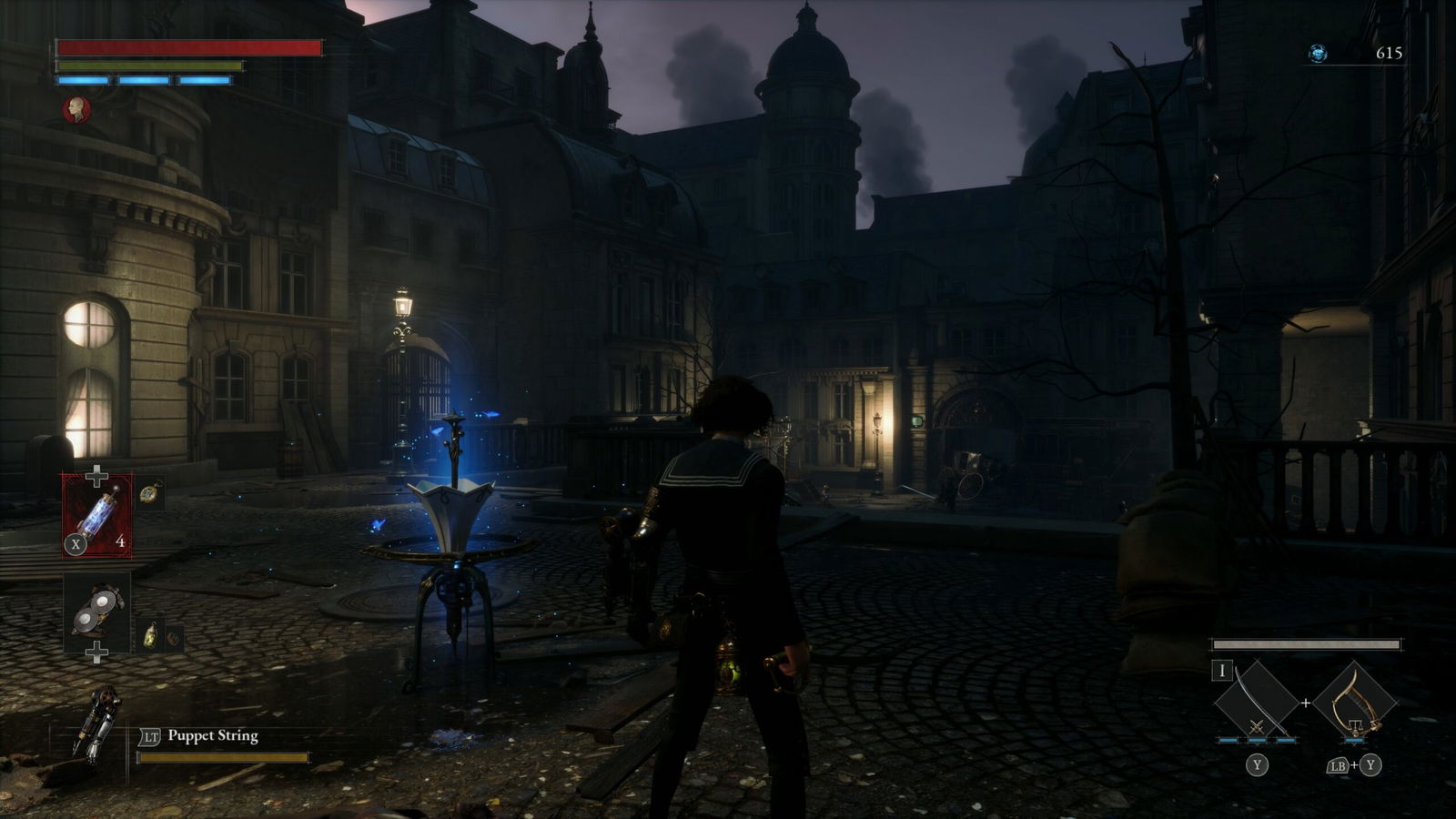
Then there’s the prosthetic left arm, known as the Legion Arm. While this might sound familiar to fans of Sekiro, Round8 Studio takes the concept a step further. Early in the game, you start with a basic ability that lets you punch the hell out of enemies. But as you progress, you’ll unlock and equip various other arms with unique functions, including flamethrowers, artillery shells, lightning cannons, a shield, and more. Once you’ve obtained the necessary materials, you can even upgrade these arms to make them more effective. And speaking from experience, get the shield as soon as possible. I won’t say why. Just trust me on that.
One of the coolest mechanics in Lies of P is the weapon assembly system. Weapons are divided into two parts: the blade and the handle. This allows you to mix and match components to create entirely new weapons, altering their range, speed, and damage output. It’s a great way to experiment and discover new playstyles. Unfortunately, this customization doesn’t apply to special boss weapons, but even so, I managed to put together some pretty wild builds. I only wish the system went a bit deeper.
The game also features several key narrative choices. At various moments, you’ll be asked to respond to certain questions or take specific actions that directly affect how the story unfolds. These decisions influence the characters you meet and ultimately determine which ending you receive. From what I understand, there are three different endings, and I fully intend to go back and figure out how to unlock the other two.
There’s also a ton of hidden content. If you’re a completionist, you’re going to have a field day. I’ve barely scratched the surface, but now that the review is done, I can finally dive back in and spend hours trying to uncover every last secret this game has to offer.
Parry, Block, or Dodge, It’s All in the Mind
It seems like more and more Soulslikes are adopting parry-focused systems to encourage aggressive gameplay, and Lies of P is no exception. While you can block, there are no traditional equippable shields in the game, and nothing allows you to block 100 percent of incoming damage. That makes dodging and parrying far more important, especially during the early stages.
That said, blocking isn’t useless. It’s still a viable option in certain situations, but it’s clear that the developers want you to parry, parry, and parry some more. Think of it like blocking, but with much tighter timing. You need to wait until the last possible moment to execute what the game calls a Perfect Guard. If you time it correctly, you’ll negate the damage and hear a distinct metallic audio cue that lets you know you nailed it.
Parrying is cool when you pull it off, and it comes with some great payoffs. Enemies, especially puppets, react in dramatic ways, such as appearing stunned or watching in horror as their weapon shatters in their hands. It’s a great touch. But as fun as it is, parrying also has its downsides and can definitely backfire if you’re not careful.
The biggest issue is that parrying is tied to your stamina. If you spam it, you’ll burn through your stamina bar quickly, and having no stamina means you can’t dodge, attack, or even block. On top of that, if you mistime a parry, you’re going to take a hit straight to the face and lose a chunk of health. That’s why it’s crucial to learn when to parry, when to dodge, and when it’s safer to simply block.
Speaking of blocking, it’s not a bad fallback option. Unlike in many other Soulslikes, blocking in Lies of P doesn’t immediately make all of the lost health permanent. Instead, blocked attacks leave behind recoverable chip damage, which you can regain by landing attacks afterward. If you don’t counterattack quickly enough, however, that recoverable health is lost. It’s a smart risk-and-reward system that encourages an aggressive playstyle, but you’ll still need to decide whether the risk is worth taking in the moment.
Now for the bad news: parrying still feels off. Sure, it feels better than it did in the demo, but compared to Sekiro, the parry window is still smaller than I’d like it to be. Maybe it’s because I’m playing on a review build, or maybe Round8 Studio will need to revisit it again. They might want to take another look at dodging while they’re at it.
Excellent PC Performance
I’ve clocked over 35 hours on the PC, and the performance has been nothing short of stellar. No stuttering, no texture pop-in, and none of the issues we’ve come to expect from many recent AAA PC releases. Lies of P’s PC performance easily outshines most of what I played in 2023.
I tested the game on two setups: a high-end rig with a Ryzen 7 7700X and an Nvidia RTX 4090, and a mid-range build featuring a Ryzen 5 3600X and an RTX 3060. On both machines, I was able to run the game smoothly, reaching 4K at 60fps on the high-end build and 1440p at 60fps on the mid-range setup. Even more impressive, despite Lies of P being an AMD-partnered title, it still includes support for Nvidia’s DLSS. Imagine that?
I also tried it on the ASUS ROG Ally, and it performed better than the demo version, which was already impressive. Thanks to AMD’s FSR 2, both the performance and visual quality exceeded my expectations. Here are the performance numbers I recorded:
- Low settings, 1080p, 25W (Turbo): 50–60fps
- Medium settings, 1080p, 25W (Turbo): 45–55fps
- Best settings, 1080p, 30W (Turbo): 30–45fps
Unfortunately, I didn’t get a chance to test it on my Steam Deck, so I can’t speak to how well it performs there.
The PC port also offers a wide range of options, including customizable keyboard and controller bindings, robust visual settings, and ultrawide support. The only real omission is an FOV slider, and I’m not sure why that’s missing. Still, this is one of the most polished PC ports I’ve played in a long time. I don’t know what kind of technical magic Round8 Studio pulled off, but the developers have put a lot of other studios to shame.
Multiplayer, Yes?
Multiplayer, no! There’s no multiplayer whatsoever. None. It’s just you and the CPU-controlled Specter, who isn’t always worth the effort but does a decent job of keeping the bosses off your ass… mostly.
Concerns and Frustrations
Alright, we’ve arrived at the part where I get to talk about the stuff that rubbed me the wrong way. And despite all my gushing, trust me, there’s still plenty here to get mad about. Mad as a mad hatter… get it? Okay, Dad Joke quota filled. Moving on.
As you progress, the difficulty ramps up in ways that feel less challenging and more cheap. I’ve played just about every Soulslike out there and beaten most of them without too much trouble. But Lies of P? Some of its mobs and bosses feel overtuned, not in a “Git Gud” kind of way, but in a “how is this fair?” kind of way.
Take the unblockable attacks, for example. Some enemies will spam them like they’re going out of style. Sure, technically you can parry them, but what happens when they chain those attacks while you’re waiting for your stamina to recover? Or worse, what happens when you dodge one cleanly, only for the enemy to pivot during the animation and hit you anyway? It’s aggravating. Add to that the fact that certain weapons, especially the heavier ones, require such a huge commitment with every swing that it feels like you’re being punished for liking them. Meanwhile, the boss can land three or four hits in the time it takes you to connect with one or two, assuming you don’t get decapitated in the process.
And let’s talk about chip damage because even the bosses get it. Unlike you, they can recover that chip damage over time simply by keeping you at a distance. So if they start spamming combos that you can’t counter or parry, you’re forced to back off, and in doing so, you get to watch all the hard-earned damage you inflicted melt away. It’s demoralizing. There’s a fine line between difficulty and frustration, and Lies of P crosses it more than once.
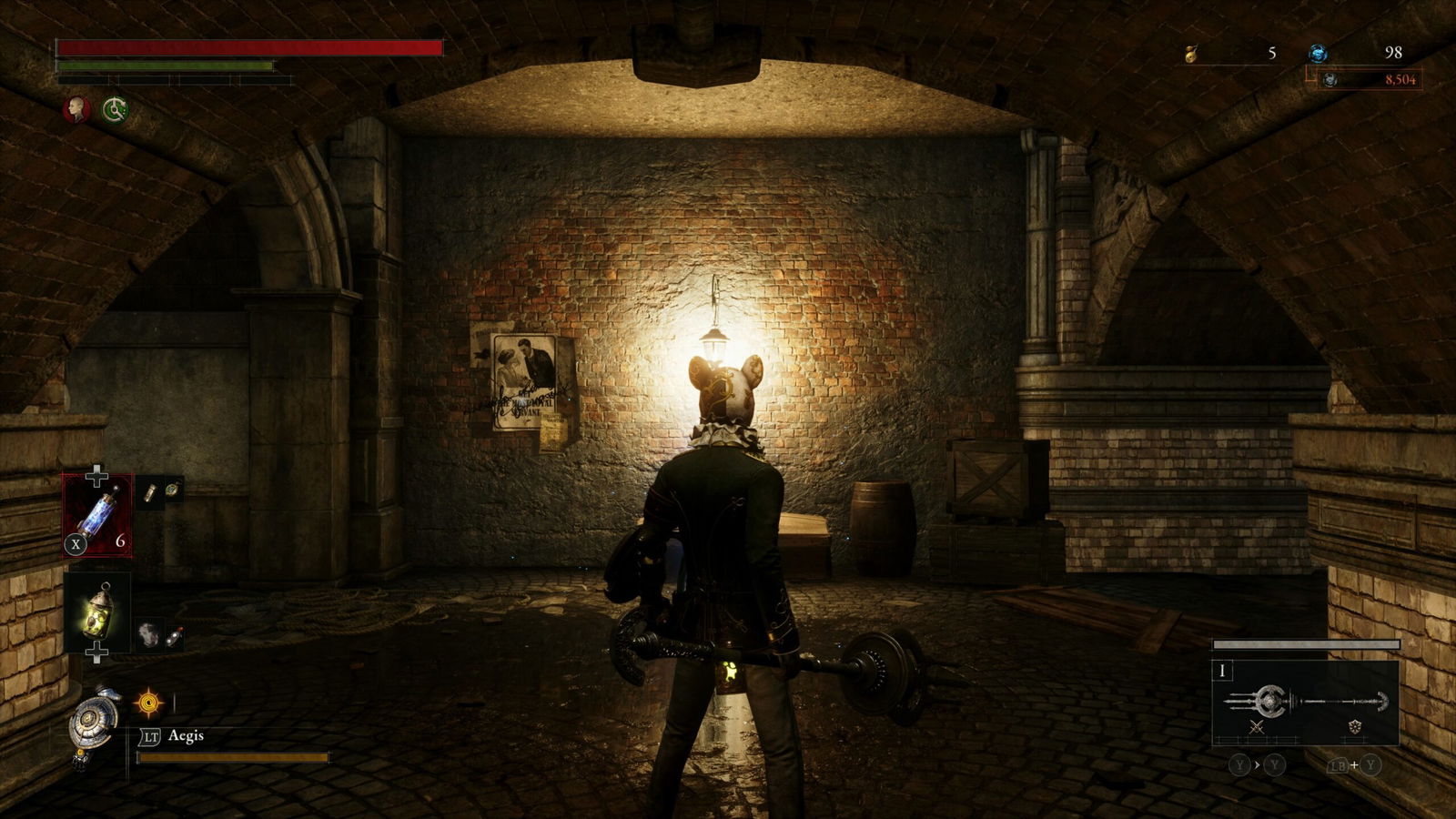
Sure, it’s challenging, but there were times when I had to put the controller down and walk away. Other times, I was screaming bloody murder throughout the night. I’d like Round8 Studio to take another look at some of these encounters and adjust them accordingly. Outside of that, character movement during battle is still a bit clunky. It’s better than it was in the demo, but it still feels like it could be more refined.
I’m also a bit saddened that there’s no multiplayer option. I couldn’t care less about PvP because the game wasn’t designed for that, but I would love to summon someone into my game or join someone else’s. While you can summon a CPU-controlled Specter, you have no control over what class it uses, and most of the time, it dies faster than anything else. Here’s hoping the Specter gets buffed at some point so it can be a bit more useful.
Overall
I couldn’t get enough of Lies of P. As I’ve said before, it blows my mind that a studio with no prior experience in the Soulslike genre managed to create a game that feels like it came straight from the genre’s originators at FromSoftware. Honestly, if you had someone play Bloodborne and then jump into this, they might assume Lies of P was a follow-up. It’s that good. The visual style, mechanics, tone, and pacing all echo the best parts of other Soulslikes while still delivering an identity of its own.
Yes, some enemy mobs feel overtuned, sometimes hitting harder than the actual bosses, and the boss fights themselves can feel unfair in certain situations. But that doesn’t take away from how incredible this game is overall. It’s a challenging experience, and at times, it’ll test your patience.
If you’re on the hunt for your next Soulslike fix, Lies of P should be on your list. As a die-hard fan of the genre, I can honestly say you won’t be disappointed. People have asked me, “Is Lies of P hard?” And I won’t sugarcoat it. Yes, it’s one of the tougher Soulslikes I’ve played. But it’s not impossible. And if you’re already familiar with the genre, you know exactly what that means.
Review Disclosure Statement: Lies of P was provided to us for review purposes. For more information on how we review video games and other media and technology, please review our Review Guidelines and Scoring Policy.
Affiliate Link Disclosure: One or more of the links above contain affiliate links, which means that, at no additional cost to you, we may receive a commission should you click through and make a purchase.
Lies of P wasn’t even on my radar until a few months ago, but ever since I played the demo, I haven’t been able to stop thinking about it. It’s easily one of the best Soulslike games I’ve played that didn’t come from FromSoftware—and that’s saying something. From the stunning visuals and immersive sound design to the satisfying gameplay, Lies of P delivers an experience that’s both familiar and fresh. Sure, I wish the parry window was a bit more forgiving and that the bosses weren’t quite so punishing. But even with those flaws, this is a fantastic game. If you’re a fan of Soulslikes, then Lies of P is a must-play.
Pros
- Amazing visual and audio
- Fantastic level design
- Enjoyable Soulslike combat
- Lots of cool stuff to keep you playing
- Soulslike fans will be in heaven
Cons
- Some of the boss encounters are bullshit
- The Parry system could use a longer window
