

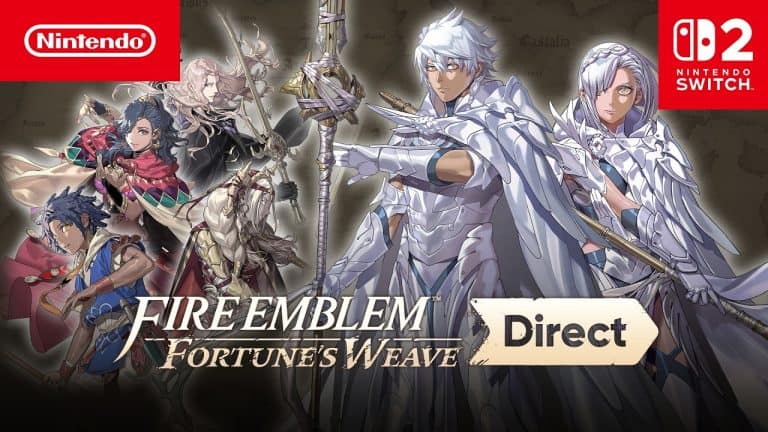
Today, Nintendo released a 22-minute Nintendo Direct all about Fire Emblem: Fortune’s Weave. They announced the Direct yesterday. Let’s go over what it had to say and try to sift through all the information it gives.
The Direct starts by discussing the empire of Dagda. It also explains the Heroic Games. Battle competitions dedicated to Dagda, the founder of the empire. Solel is the current king of Dagda and will grant a wish to the person who wins. There will be four heroes the story revolves around. These are the four heroes vying to win in the Heroic Games. Similar to Fire Emblem: Three Houses, you will decide whose side you will begin on. Based on your decision, the narrative will follow that hero’s team and change how the Heroic Games play out.
Cai
Cai is a young boy who lives a peaceful life. He currently resides in the village of Rivera. When Cai turns 15, his dad is suddenly taken to prison in Dagda. Cai joins the Heroic Games so he can use that wish to save his father from prison.
Dietrich
Dietrich is attacked by a giant monster while sailing. The ship goes down, and he is washed ashore in Dagda. He learns about the Heroic Games while helping fight bandits and monsters. Dietrich likes the thrill of battle, so he joins the battle with new allies he gained while in Dagda.
Theodora
Theodora hails from the kingdom of Seramis. Seramis is south of Dagda. Seramis is a kingdom that worships the Goddess of Death and Night. This Goddess is loathed throughout the world. Theodora joins the Heroic Games to bring respect to the land for her kingdom and Goddess.
Leda
Leda is a young woman with musical talent who is born into wealth and prestige. One day her father is murdered, and rage is created inside her. She learns that her father’s killer is planning to participate in the Heroic Games. She joins the games to seek vengeance against the killer.
Gameplay
The actual gameplay and combat of Fire Emblem: Fortune’s Weave is similar to other Fire Emblem games. You choose your units before you start a battle. Then you can place them anywhere on your side of the map. Afterwards, you can move them according to their movement and attack ranges. Once your units are done acting, your opponent acts, and it goes back and forth until victory is had by either side. Weapons are the normal rock-paper-scissors strength and weakness side of earlier Fire Emblem games. Spears do extra damage to cavalry, bows do extra damage to flying units, cavalry do extra damage to infantry, etc. One character in particular, though named Anatolia, has gauntlets that can transform with crest powers into a literal gun.
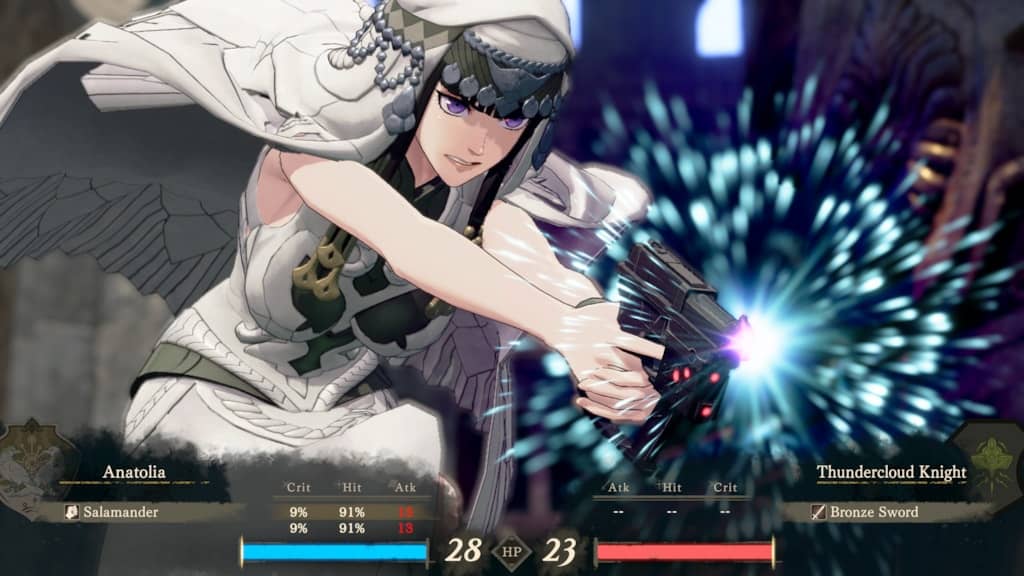
Terrain can give you an advantage like other Fire Emblem games as well, where long grass and forested areas make it harder to hit infantry units that are stationed there. Weapons have durability, and using normal attacks slightly hurts the durability of that weapon. Using combat skills increases the wear and tear of the weapon and hurts its durability more. The time mechanics that made their introduction in Fire Emblem: Three Houses make a comeback, as you can now turn back time during combat if you need to redo your turn.
In Dagsion, you are able to do more than just participate in the Heroic Games. In between matches, you can train in the arena; you can also watch the other matches from participants in the games. You can shop in Dagsion, and you can volunteer in one of the seven temples to receive a blessing from that temple. You can upgrade or change classes by talking to an exam proctor. You can get sidequests from the citizens of Dagsion to complete between matches. You can recruit warriors and powerful people you find in Dagsion. Increase your chances of success by giving them gifts and talking to them throughout your time in the Heroic Games. You can use inns to automate time passing with your characters to earn more experience and to gather resources at the expense of time. Inns are where support conversations take place too.
One thing I loved in the Direct is that you can swap your hero in between matches to play through the different heroes’ stories in tandem. You can interact with a white owl who will let you swap to a different hero but also save your progress with the hero you are currently playing as. This will probably make it much easier to complete all four stories without the pain of complete restarts.
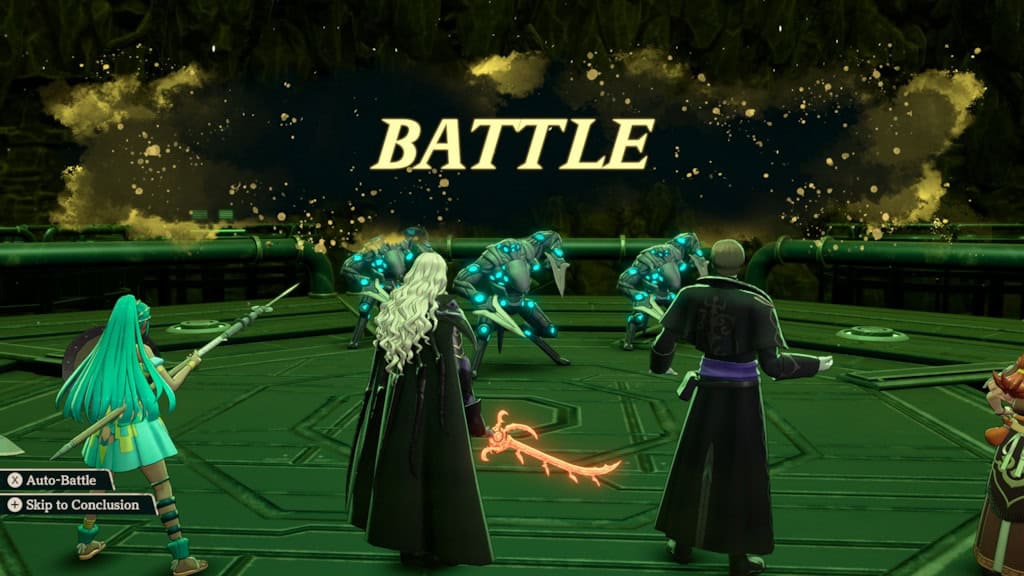
Another thing that I really loved in the Direct is the dungeons. You can go outside the town of Dagsion to dungeons and other towns. Dungeons allow you to collect minerals, resources, and treasure. They also allow you to fight monsters. If you fight a monster in dungeons, combat shifts to a traditional turn-based fighting system as opposed to the SRPG fighting system.
After The Heroic Games
The Direct did not end with the Heroic Games explanation. The year moves forward by five years for a time skip. We return to Dagsion and see it is absolutely destroyed. There are statues of the four heroes that are decimated. I don’t think Cai is getting that peaceful future he was hoping for. A being shrouded in blue flame is then introduced as it stands in front of an older and aged-up Sothis. This being is tasked with stopping the Demon King, Balore, from destroying the empire of Dagda. Your goal as the nameless will be to try to handle the threat on your own, or to go back through time and find the four heroes to help you with Balore’s forces.
That is right; this nameless being shrouded in blue flame is your character. The true story of Fire Emblem: Fortune’s Weave is about using the knowledge and camaraderie that these four heroes learned while fighting in the Heroic Games to defeat Balore, the Demon King. I do wonder what happened in those five years that made everything fall apart, but I imagine that is the appeal of this time skip and going back in time.
Fire Emblem: Fortune’s Weave will be released September 17th, 2026, for the Nintendo Switch 2.
