

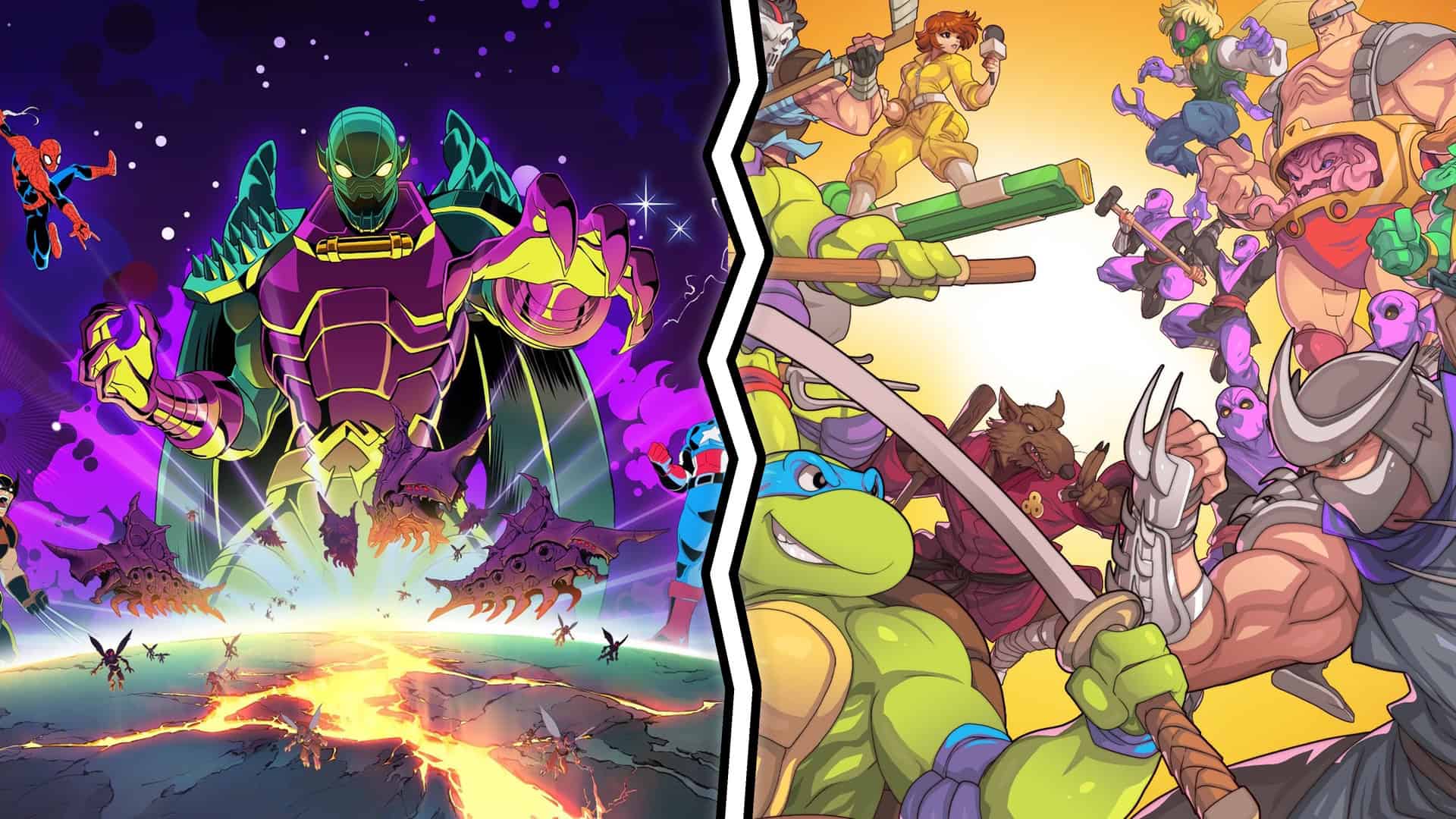
We recently had the opportunity to speak with Tribute Games about Marvel Cosmic Invasion, TMNT: Shredder’s Revenge, and what goes into creating modern beat ’em ups that still feel connected to the classics.
Taking part in the Q&A were Frederic Gemus, Game Director, Remi Lavoie, Producer, and Yannick Belzil, Narrative Designer. Together, they shared insight into how Tribute Games approaches retro-inspired design, character selection, co-op mechanics, and the challenge of making something familiar feel fresh again.
How did you and your team balance staying faithful to classic TMNT beat ’em ups, such as Turtles in Time, while making the gameplay feel more modern for new players?
Frederic Gemus: The most important thing is, of course, being in love with the source material. At Tribute Games, we are old-school beat ’em up fans, so this is a real passion project for us. But there is still work to do to get things right.
First, you need to take time to analyze and understand these games to really figure out what players really loved about them. We often remember the results, or content of a game, but not the recipe, meaning how the mechanics actually work. Then, you should adapt these mechanics and not reproduce them, as some of these games are often a lot rougher around the edges than we remember. This is the part where our modern expertise comes into play and creates the actual “plays like you remember” experience.
Finally, you should always add a new twist to the genre, like we did with the swap mechanic in Marvel Cosmic Invasion, so the experience remains relevant and serves as an evolution to the genre.
Did community expectations from retro fans who grew up playing classic TMNT beat ’em ups, as well as newer players who grew up with more modern beat ’em ups like Streets of Rage 4, shape your design decisions during development of TMNT: Shredder’s Revenge? If so, how?
Frederic Gemus: Most of us are part of these retro fan communities, so we are well aware of what they love about these games. But when we started TMNT: Shredder’s Revenge, nobody knew a new game was coming out. It was really focused on what we, as fans of the series, wished we could see in a new game. I think our main focus was delivering on that idea of a new entry and trusting our instincts rather than trying to over-analyze things.
However, we did listen to TMNT fans when it came to picking playable characters and villains, leading us to set up Shredder as the main antagonist in the end.
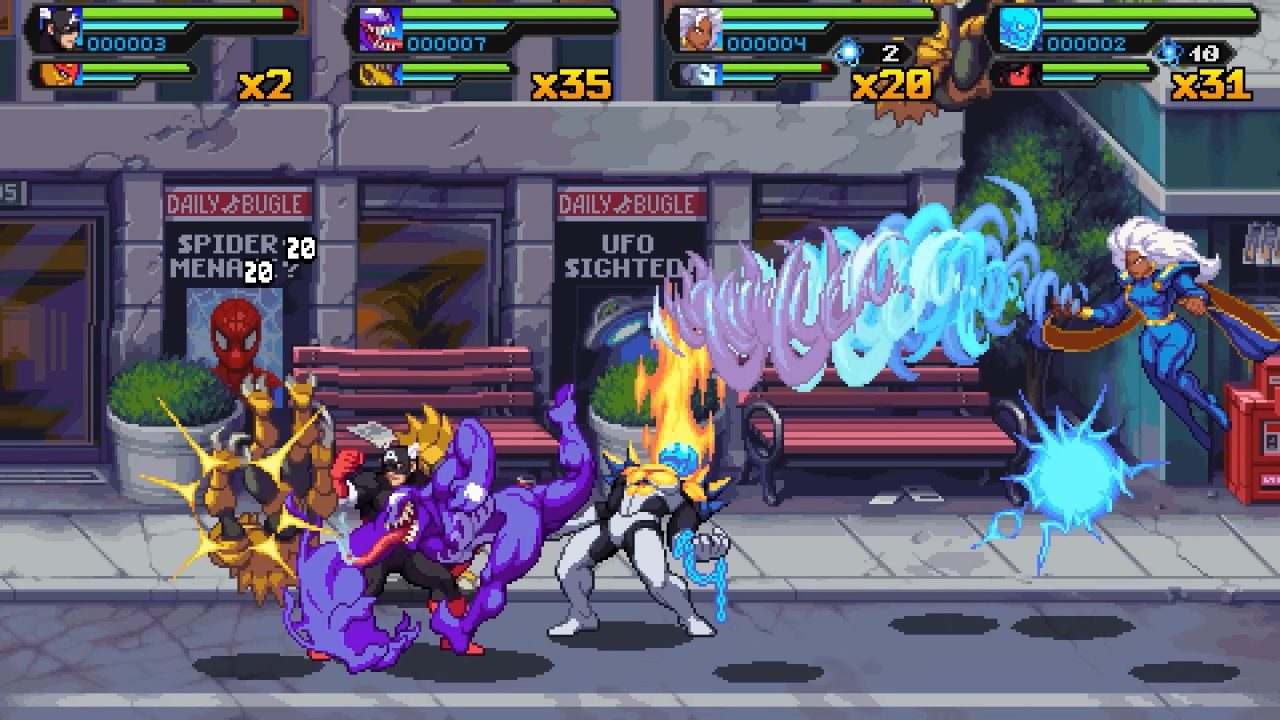
How did you balance choosing fan-favorite characters such as Spider-Man and Captain America with lesser-known characters like Beta Ray Bill and Phyla-Vell, while ensuring the game remained accessible?
Yannick Belzil: My own philosophy when choosing characters mirrors classic Avengers comic book runs. There are always three to four recognizable heroes, but the rest of the cast are either lesser-known or brand new. In doing so, it feels like there are always new characters to discover in the Marvel Universe, but also a discovery or surprise aspect for the players.
Which game mechanic or level went through the most iteration in both Marvel Cosmic Invasion and TMNT: Shredder’s Revenge, and what pushed those changes?
Frederic Gemus: Every time you make a game, the first level is always the one that gets the most iterations. In TMNT: Shredder’s Revenge, we wanted to avoid having any in-game tutorial, so all of the level design was built in order to teach the players how to play. Basic enemies with limited attacks teach combat, bad guys spawning from above or in formations teach movement, shielded opponents teach strong attacks, and adversaries with jump attacks teach dodges.
Even though Marvel Cosmic Invasion had a training sequence, as we felt the concept of Cosmic Swap needed a proper tutorial, we still kept that same design philosophy in the actual first stage of the game. If you compare both games, you’ll see some similarities for sure.
Were there any experimental mechanics, ideas, or levels that didn’t make it into the final game but still influenced the design philosophy of Marvel Cosmic Invasion or TMNT: Shredder’s Revenge?
Frederic Gemus: We always want to push cooperation in all of our games, but the online aspect is always the tricky part of the deal, as action replication can be affected badly by the internet connection. Therefore, this limits us in terms of game design for hard co-op actions, like two players performing a move together, as it tends to completely break the experience when things go south.
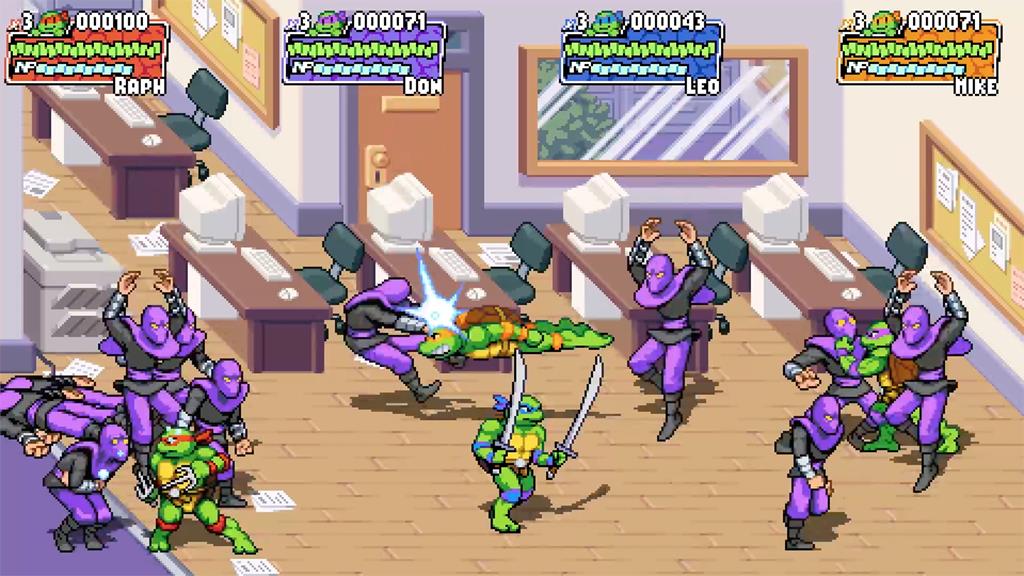
In TMNT: Shredder’s Revenge, we included some of these moves, like hitting an opponent with your shells when two players hit the same enemy from both sides, but these moves are rarely seen online due to replication.
This is why in Marvel Cosmic Invasion, rather than focusing on hard co-op actions, we decided to instead focus on how other players’ actions can improve yours. For example, we changed how we trigger special attacks so that if two players perform it at the same time, the strength of the attack is increased.
Can you describe a time when a mechanic or level design you believed in for either Marvel Cosmic Invasion or TMNT: Shredder’s Revenge didn’t work during playtesting, and how you adapted it?
Remi Lavoie: The first iteration of the Cosmic Assist was something automatically triggered during combos, specific attacks, or specific context. We tried it out for a little while, but ultimately, it left room for confusion. Players didn’t understand why another character was appearing, and it was not as satisfying as it could be. We ended up changing it to the version you see in the game now, where you have to trigger it manually through the Trigger and face button for different types of assists. It’s a much more deliberate use of the assist, and it feels better and is much easier to understand.
After the reception to TMNT: Shredder’s Revenge and the excitement surrounding Marvel Cosmic Invasion, are there other comic book, cartoon, or retro properties you’d love to tackle in the future?
Yannick Belzil: On top of Marvel, Scott Pilgrim, and TMNT, it almost feels obscene to ask for more. We really got to work on characters we’re passionate about across each of those universes.
We want to thank Frederic Gemus, Remi Lavoie, and Yannick Belzil for taking the time to answer our questions. It was a pleasure getting more insight into how Tribute Games approaches modern beat ’em ups, especially with games that carry as much history and fan expectation as TMNT: Shredder’s Revenge and Marvel Cosmic Invasion.
If you still haven’t played either game, now is a great time to fix that. TMNT: Shredder’s Revenge remains one of the best modern throwbacks to the classic arcade beat ’em up era, while Marvel Cosmic Invasion shows how Tribute Games continues to evolve that formula with fast action, character swapping, and plenty of comic book energy. You can check out our reviews for TMNT: Shredder’s Revenge and Marvel Cosmic Invasion to see why both are worth your time.

