

Back in 2020, Cold Symmetry released its first game, an action RPG, or more aptly, a Soulslike, called Mortal Shell. Rather than simply following the blueprint FromSoftware had established, Cold Symmetry introduced the Shell system, allowing players to inhabit different fallen warriors and change how they approached combat. It gave Mortal Shell an identity of its own, even if the developer’s ambition occasionally exceeded its execution.
With Mortal Shell II, Cold Symmetry feels like a studio that has spent the past several years understanding not only what worked in the original, but why it worked. The sequel is larger, more confident, and considerably more refined, with many of those rougher ideas finally feeling fully realized. More than simply giving us more Mortal Shell, this feels like the game Cold Symmetry was reaching for the first time around.
Game Name: Mortal Shell II
Platform(s): PlayStation 5, Xbox Series X|S, PC (Steam)
Reviewed On: PC (Steam)
Developer(s): Cold Symmetry
Publisher(s): Playstack
Release Date: August 20, 2026
Did I Complete The Game: Yes
Mortal Shell II takes place sometime after the events of the first game, but instead of returning as the Foundling, we’re stepping into the role of the Harbinger, another mysterious being capable of inhabiting the bodies of fallen warriors. The original protagonist hasn’t been forgotten, either, as the opening directly references the Foundling’s fate and makes it clear that what happened in the first game is still very much part of Fallgrim’s history.
This time around, the Harbinger has been sent to recover the Undermether’s stolen Ova, which puts you on a new journey while still tying everything back to the events that came before. The game never gives you a clear idea of exactly how much time has passed between the two stories, but enough has changed that this feels less like picking up where the original left off and more like returning to a world that has continued moving without you.
Story with a purpose
In the original Mortal Shell, the Shells were mostly a mechanical device, giving players different attributes and approaches to combat without much reason to care about who those characters actually were. Mortal Shell II expands that idea by tying every Shell more closely to the world and the events that shaped it. Some were reluctant heroes who died fighting for something larger than themselves, while others were scheming bastards whose actions helped leave the world in the miserable condition you find it in. Discovering a new Shell now feels less like unlocking another character and more like uncovering another part of the game’s history.
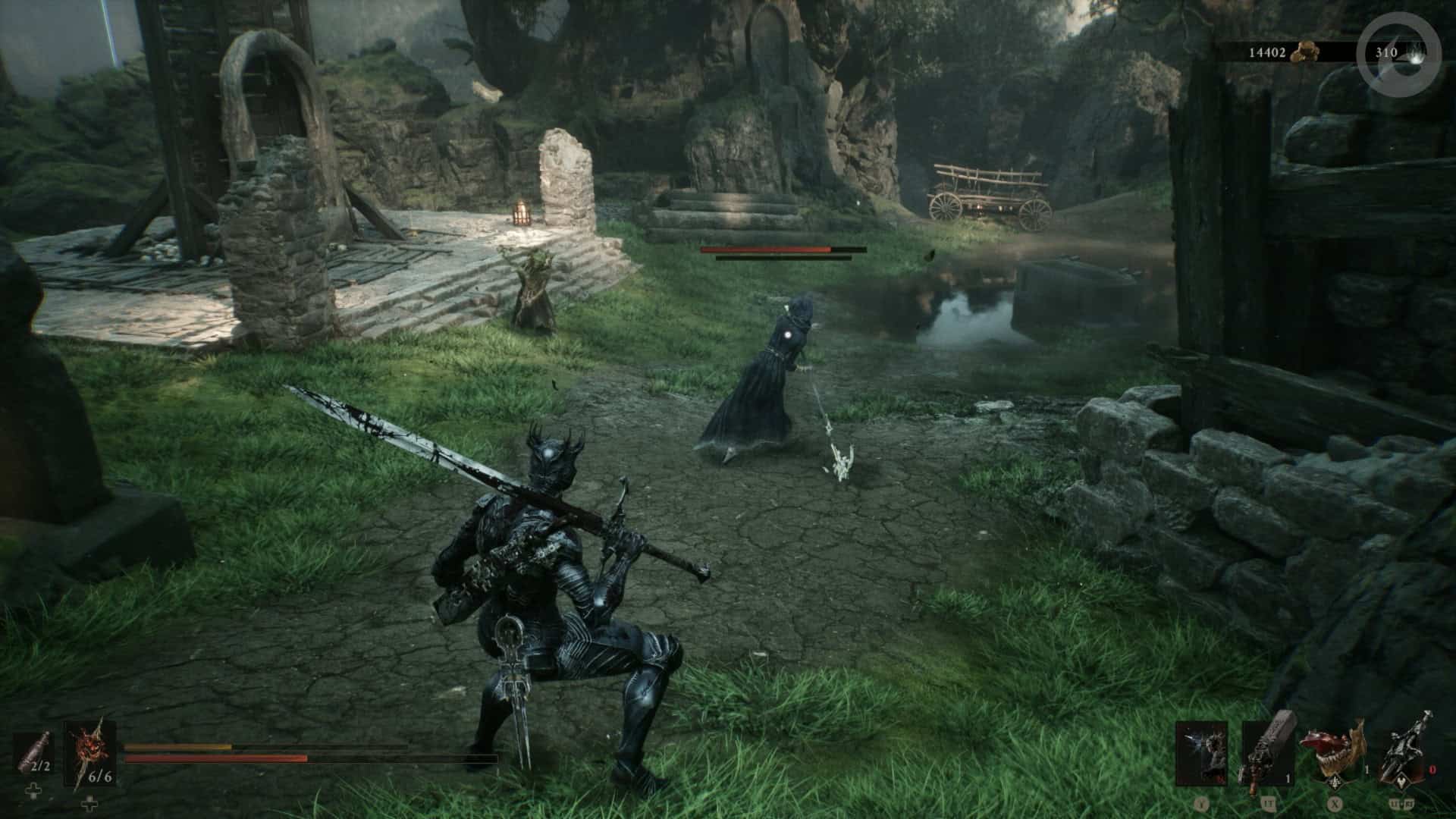
That gave me more incentive to find them all, but the game occasionally works against its own encouragement to experiment. Glimpse, a resource used to increase your bond with a Shell, unlocks both new abilities and more of that character’s story, yet it isn’t exactly handed out generously. During my initial playthrough, I had enough to fully max out only two of the game’s eight Shells. If there isn’t enough Glimpse available in a single run to see everyone’s complete story, tying so much narrative content to a limited progression resource could make one of the game’s better storytelling ideas unnecessarily restrictive.
Shells, combat, and progression
Mechanically, the Shells remain the defining feature of Mortal Shell II, but the sequel does a much better job of making their differences matter. Each has their own abilities and strengths, yet the combat fundamentals remain familiar enough that switching Shells never feels like relearning the game from scratch. Instead, they change how aggressively you can play, which risks you’re willing to take, and what tools you have when an encounter starts going sideways. I certainly had my favorites, but there were enough situations where another Shell made more sense that stubbornly sticking with one could actively make things harder.
Personally, I gravitated toward Promixa, who looks like she wandered out of Warframe and quickly became my preferred Shell. Her ability to inflict stasis and slow enemies gave me more control over fights, while her defensive abilities gave me some breathing room whenever several enemies wanted my head at the same time. Maxing out my bond with her also unlocked abilities that complemented how I was already playing, including one that helped keep my pockets full whenever I was running low on gold. And for no other reason, I swear.
At its foundation, Mortal Shell II isn’t trying to redefine Soulslike combat, and it doesn’t need to. If you’ve spent years playing these games, you already know the basics: light and heavy attacks, dodging, blocking, parrying, and weapon abilities. What matters is how those familiar pieces feel, and this is where the game generally succeeds. Attacks feel deliberate without becoming cumbersome, weapons have satisfying impact, and committing to the wrong action can leave you exposed long enough to immediately regret it.
 One of Cold Symmetry’s most consequential combat decisions is also one of the simplest: Mortal Shell II has no traditional stamina meter, and thank God for that. I’ve never been shy about my dislike for stamina systems when their primary purpose is to dictate how many times I’m allowed to attack, dodge, or reposition before my character suddenly decides they’ve had enough. Oh, I need to stop fighting because my character has to catch their digital breath. Removing that restriction makes combat feel faster and more responsive without automatically making it easier.
Instead of managing stamina, you’re focused on positioning, timing, and what enemies are actually doing. Blocking is governed by posture, so defensive play still has limits; take too much punishment and your Shell becomes winded, leaving you vulnerable, while harder hits can knock you down or even force you out of your Shell entirely. I greatly prefer this approach because it still punishes bad decisions without restricting every action behind the same resource. I’m reacting to the fight in front of me rather than waiting for a bar to give me permission to play again.
Break Damage is one of the more important parts of Mortal Shell II’s combat. Alongside regular damage, attacks also deal Break Damage, which builds toward staggering an enemy and opening them up for a riposte. Once that happens, you can land a nasty attack that deals some seriously meaty damage. It becomes even more important against bosses, where breaking them and landing a riposte can be required to properly damage them and push the fight into its next phase. In those encounters, simply attacking the health bar isn’t always enough; you need to focus on breaking their defenses first.
While there isn’t a traditional skill tree, you still level up the Harbinger by collecting Gloom. You don’t have to worry about picking individual skills when doing so, as those are handled through Tarstones and the abilities you unlock by increasing your bond with each Shell.
Weapon upgrades increase damage while also reducing the Resolve cost of special attacks, while Tarstones let you reinforce offense, defense, or support depending on what your build is missing. They can also be swapped freely whenever the situation calls for it. Once weapons, Shell abilities, and Tarstones start complementing one another, the progression feels cohesive without burying you under overly complicated systems.
Where Tarstones lose me is the upgrade structure. Improving the ones you actually want often means dumping resources into ones you don’t, just to unlock what’s further down the path. I understand wanting to encourage experimentation, but there’s a difference between encouraging it and making it compulsory. Give me a reason to try something new, absolutely, but don’t make it feel like homework.
A world worth getting lost in
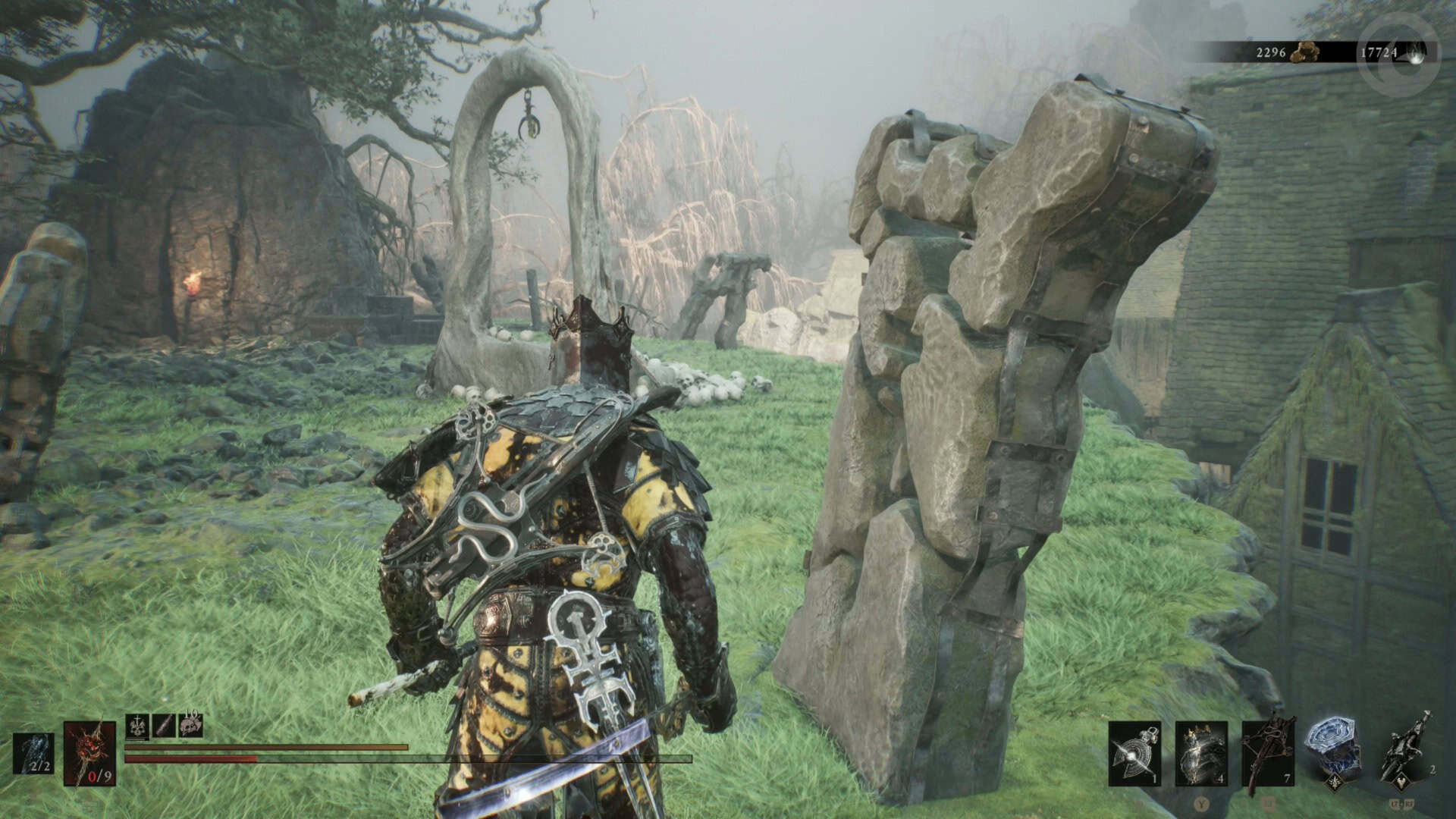
That sense of freedom extends into one of Mortal Shell II’s biggest improvements: its interconnected world. Outside of returning to the tutorial area, locations flow naturally into one another, while warp gates can send you across massive voids into places that initially appear completely disconnected. Fast travel eventually becomes available through beacons, but I frequently ignored it because walking somewhere often led to something I wasn’t expecting to find. That’s exactly what I want exploration in this kind of game to accomplish.
There were plenty of moments when I’d spot something in the distance, wonder whether I could reach it, and suddenly realize I’d spent the next twenty minutes traveling in the opposite direction from where I intended to go. At times, that reminded me of what I enjoyed about exploring Elden Ring, not because the worlds are structured the same way, but because both understand the appeal of visual curiosity. Side quests, weapons, Shells, Tarstones, and other discoveries give you reasons to wander, while forgiving fall damage and the ability to perform what is basically a superhero landing from ridiculous heights make traversal even more enjoyable.
While the game doesn’t point you in the direction of them, there are plenty of side quests that need solving, or NPCs that are worth your time if you seek them out, not to mention secrets. Again, exploration is encouraged and is a worthwhile endeavor.
Bosses that want you dead
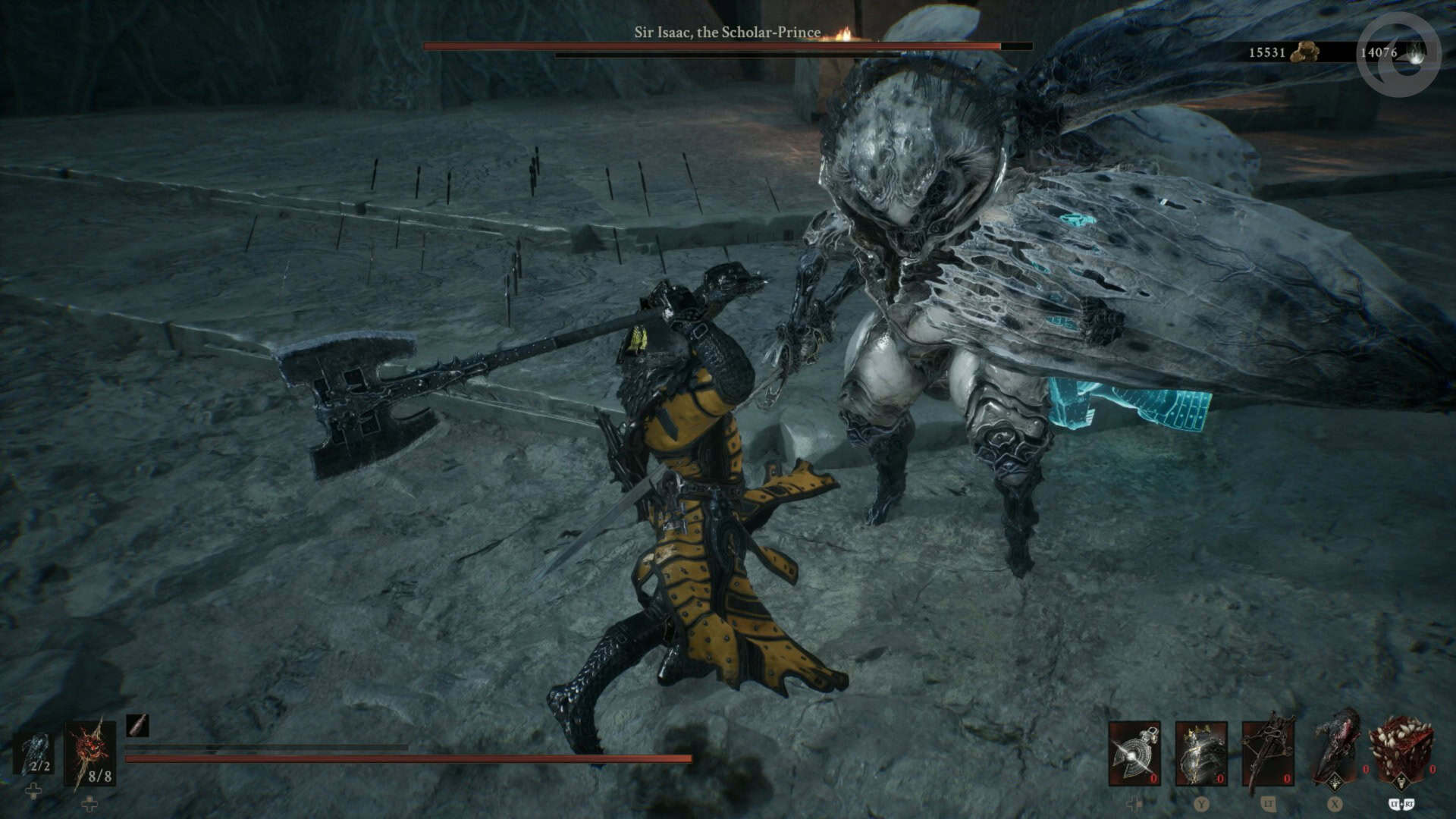
Naturally, none of these systems would matter nearly as much if the bosses weren’t capable of putting them to the test, and Mortal Shell II has some absolute bastards waiting for you. I mean that as a compliment. The better encounters don’t simply ask you to memorize attack patterns and wait for openings, because that’s expected from the genre at this point. They make you consider whether the Shell, weapon, Tarstones, and Break Damage you’ve relied on are actually the right answer for what’s standing in front of you.
That’s also when the Shell system makes its strongest argument for existing. There were fights where continuing to use my preferred Shell stopped being a matter of comfort and started making the encounter harder, forcing me to reconsider my setup. Few things in these games are more satisfying than struggling through attempt after attempt, making small adjustments, and finally putting some horrible bastard into the ground. Mortal Shell II delivers that feeling more often than not.
For everything these fights get right, though, there’s trouble in paradise, and I’m just going to say it: I hate the camera in this game. Combat becomes considerably more frustrating when several enemies surround you or something pushes you too close to a wall, because the camera has a habit of colliding with the environment and obscuring exactly what you need to see. At other times, I found myself trying to disengage from an enemy only for the targeting system to seemingly decide that, no, I actually wanted to keep staring directly at them. The issue gets worse against larger enemies and bosses specifically, where keeping track of animations can become more difficult than responding to the attacks themselves. To combat that, I highly recommend changing the camera from its default setting of immersive to action, it makes things a bit better.
In a game built around reading movement and reacting at the right moment, losing visual information isn’t a minor inconvenience. I can accept dying because I mistimed a dodge, got greedy, or misunderstood an attack, because those failures belong to me and I can learn from them. Getting killed because the camera decided I wasn’t allowed to see what the hell was happening provides no lesson beyond hoping it behaves better next time.
Visuals, audio, and performance
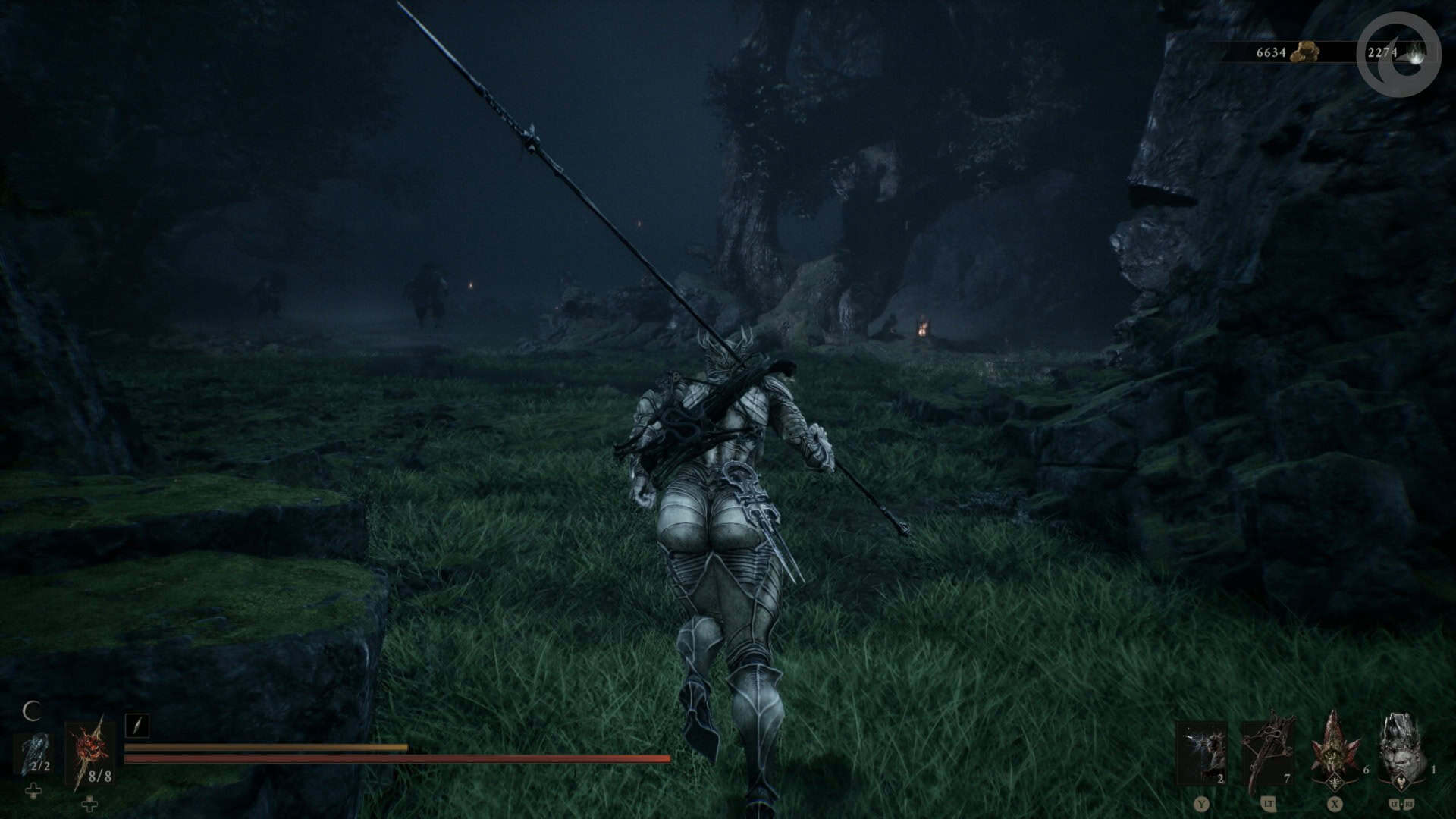
Visually, Mortal Shell II is a substantial improvement over its predecessor, but the biggest difference is its sense of scale. The original frequently felt confined, whereas the sequel gives Cold Symmetry’s grotesque and decaying art direction considerably more room to breathe. Massive structures dominate the landscape and ruined environments stretch beyond the immediate path, helping sell just how broken this world has become.
The audio complements that presentation, especially with headphones or surround sound. Weapons have enough force behind them to match the physicality of combat, larger creatures sound appropriately threatening, and environmental audio gives spaces a stronger sense of dimension. There were even encounters where hearing something approaching outside my immediate field of view gave me enough warning to react before I could see it, which became unexpectedly useful because sometimes the camera sure as hell wasn’t helping me.
On PC, my experience was generally stable. Outside of occasional stuttering, I didn’t encounter crashes or performance problems severe enough to interfere with combat or exploration, even during larger areas and fights with several enemies on screen. The game supports TSR, Nvidia DLSS, and AMD FSR, though Intel XeSS is noticeably absent. Considering Mortal Shell II is running on Unreal Engine 5, I came away impressed with what Cold Symmetry managed to accomplish.
What’s more impressive is being able to play this on a handheld device. I was playing
My PC Specs: AMD Ryzen 9 9950X3D, Nvidia RTX 5090, with the game installed on a Samsung 990 Pro SSD, and an ungodly amount of RAM.
The endgame gets a little ridiculous
The other major frustration appears toward the end of the game, where enemy density occasionally becomes excessive. I understand the intention: you’re approaching the conclusion, enemies should become more dangerous, and encounters should demand more from you. The problem is that Mortal Shell II sometimes substitutes quantity for complexity, filling areas with more enemies that have more health, deal more damage, and seem to be waiting around every damn corner. Earlier in the game, I entered new areas wondering what weapon, Shell, or strange location might be waiting ahead; toward the end, there were stretches where my first thought became, “Where the hell is the next beacon?”
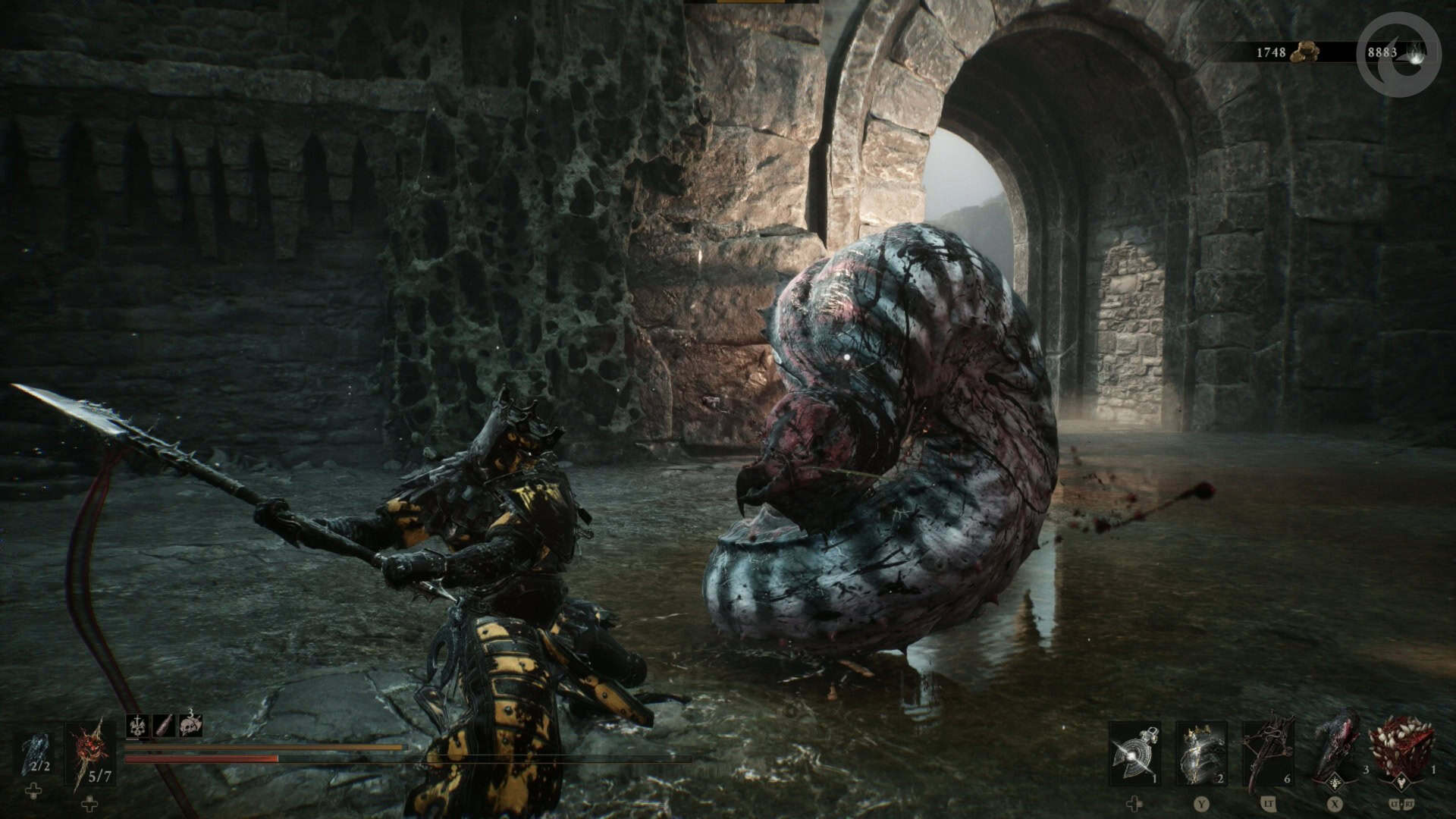
Running past everything isn’t always a reliable answer either. Enemies pursue aggressively, some seem aware of your presence despite never clearly seeing you, and others can close distances you might reasonably assume were safe. Those sections never ruined the game for me, but they expose the difference between challenge and attrition. Difficulty is most satisfying when it demands better decisions from the player, while exhaustion simply asks how long you’re willing to tolerate doing the same thing, and Mortal Shell II occasionally crosses that line.
It took me roughly 27 hours to finish Mortal Shell II, though a good chunk of that came from exploring, hunting down weapons and Tarstones, and tackling content I had skipped along the way. After defeating the final boss, I went back to take care of one specific boss I’d skipped, since I had already collected enough of the required items to reach the final location without defeating it, and continued cleaning up other things I’d left behind. I haven’t jumped into NG+ yet, especially with the day-one patch set to make a number of changes that could affect much of what I’ve already played.
Final thoughts
Mortal Shell II feels less like Cold Symmetry trying to prove it belongs in the Soulslike space and more like a developer that finally understands what its version of a Soulslike should be. The fundamentals remain familiar, but the expanded Shell system, flexible progression, unrestricted combat, Break mechanics, and interconnected world give the sequel a stronger identity than the original ever fully established. More importantly, those ideas now complement one another instead of feeling like separate mechanics competing for attention.
There are problems. The camera undermines otherwise excellent encounters, late-game enemy density occasionally mistakes attrition for meaningful difficulty, and the limited availability of Glimpse risks restricting one of the game’s better narrative systems. Yet none of that stopped me from wanting to explore another path, challenge another boss, experiment with another Shell, or see what horrible thing Cold Symmetry had waiting around the next corner. The original Mortal Shell introduced plenty of good ideas without always having the execution to bring them together; Mortal Shell II finally does, and even when it frustrated the hell out of me, I had a damn good time playing it.
If you enjoyed this review, explore more of our in-depth video game reviews across PlayStation 4, PlayStation 5, Xbox One, Xbox Series X, Nintendo Switch, Nintendo Switch 2, and PC.
Review Disclosure Statement: A copy of Mortal Shell II was provided to us by Playstack for review purposes. For more information on how we review video games and other media/technology, please review our Review Guideline/Scoring Policy.
Mortal Shell II Review
Mortal Shell II takes everything that worked in the original and turns it into a much stronger, more confident Soulslike. The deeper Shell system, satisfying combat, and rewarding exploration stand out, and despite the camera issues and some frustrating progression choices, none of those issues stopped me from having a damn good time with it. This is fantastic follow-up and Cold Symmetry has seated themselves at the big table with Mortal Shell II.
Pros
- The expanded Shell system adds meaningful gameplay variety and stronger storytelling.
- Satisfying combat and bosses
- Rewarding exploration
- Great world design
Cons
- Frustrating camera
- Excessive late-game enemies
- Annoying Tarstone progression
