

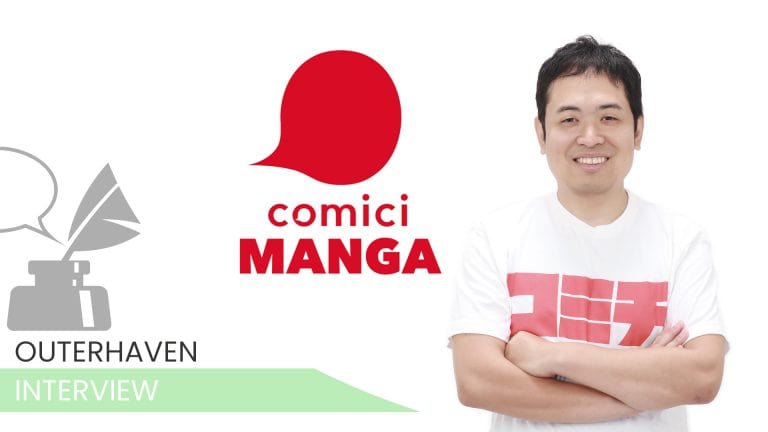
We had the opportunity to interview comici MANGA CEO Daisaku Manda about the launch of the manga-reading platform and how it differs from other services! Below, you will find the transcript of our interview!
Outerhaven: First of all, thank you, Manda-san, for taking the time to speak with us today. It is truly appreciated! To start off with, what inspired you to create comici MANGA?
Manda: Japanese manga is one of the most unique and diverse forms of entertainment in the world. In Japan alone, thousands of manga volumes are published every year, but many of these works never reach readers outside the country.
I felt that the industry needed better infrastructure to help bring these stories to global audiences. Our mission at comici is simple: **to introduce manga to the world**. comici MANGA was created as a platform to help creators and publishers share their works with readers everywhere.

Outerhaven: How did you come up with the name comici MANGA?
Manda: The name comici comes from the Latin word for comics. I chose it because I wanted a name that reflects the roots of comic storytelling while also feeling international.
By adding MANGA, we wanted to clearly express our goal of sharing manga as a cultural form with readers around the world.
Outerhaven: There are a lot of manga reading platforms available. What sets comici MANGA apart from the rest?
Manda: One key difference is that comici MANGA is built around the idea of manga magazines.
In Japan, magazines have traditionally been the center of manga culture. They are where editors curate stories, introduce new creators, and build communities of readers around different genres.
I often compare editors to DJs in music. Just like a DJ selects and mixes tracks to create a unique experience, manga editors curate and organize works to create a distinct identity for each magazine.
With comici MANGA, we want to bring that magazine culture to global readers.
Outerhaven: Some of the titles offered focus on yaoi, yuri, and fantasy romance. This seems to be a growing culture. Do you see these genres becoming more popular?
Manda: Yes, I believe these genres will continue to grow in popularity.
One of the unique aspects of manga culture is its diversity. In Japan, there are many genres that explore different perspectives on relationships, identity, and imagination. Genres like BL (yaoi), yuri, and fantasy romance often develop very passionate fan communities.
What is interesting is that stories that may feel niche in one country can resonate strongly with readers in another. As manga becomes more globally accessible, I think these genres will continue to find new audiences around the world.
Outerhaven: Right now, comici MANGA is available in 12 countries. Are there plans to expand into other countries in the future?
Manda: Yes, we definitely hope to expand in the future.
For now, we are focusing on learning from the markets where the service has already launched. Each country has different reader preferences, languages, and distribution challenges, so it is important for us to understand those differences first.
As we continue to grow and work with more publishers and creators, we hope to gradually expand comici MANGA to additional regions around the world.

Outerhaven: How do you envision the growth of comici MANGA in the future?
Manda: In the future, we hope comici MANGA will grow into a place where readers around the world can discover a wide variety of Japanese manga.
In Japan, manga culture is built around magazines where many different creators and genres coexist. Our goal is to bring that same spirit to global readers—creating a platform where people can explore new stories, discover new creators, and experience the diversity of manga culture.
Outerhaven: comici MANGA has partnered with some great publishers so far. It was teased that more was planned for the future. What are some important things you look at when deciding whether a publisher would be the right fit for comici MANGA?
Manda: The most important thing is whether the publisher shares the same vision of bringing manga to global readers.
We look for publishers who value creativity and diversity in their works and who are interested in reaching new audiences outside Japan. Since comici MANGA is built around the idea of magazine-style curation, it is also important that the publisher has a strong editorial identity and passion for discovering and nurturing creators.
When those values align, we believe we can work together to introduce more unique manga to readers around the world.
Outerhaven: Lastly, is there anything you would like to share about comici MANGA that readers may not know about the service?
Manda: One thing readers may not realize is how diverse the manga world in Japan really is. Every month, thousands of new manga volumes are published, covering a wide range of genres and styles.
Our goal with comici MANGA is not only to deliver well-known titles, but also to help readers discover new creators and unique stories that they might not encounter elsewhere. We hope the platform becomes a place where readers can explore the depth and diversity of manga culture.
We would like to thank Manda-san for his time! It was a pleasure to get to speak with him, and we at The Outerhaven deeply appreciate the opportunity!
Grab the comici Manga app:
