


Riftbound continues to evolve at a rapid pace. With Unleashed bringing the jungle experience to life through new mechanics like Ambush, Hunt, and the innovative XP system, we questioned key members of the Riot Games design team to dig deeper into the set’s vision and what’s next for the game.
We sent a few questions to Frank Skarren, Unleashed Design Lead, and Nik Davidson, Design Director for Riftbound, and received the following exclusive responses about the set’s vision, mechanical evolution, competitive future, and more.
Design Philosophy: Bringing the League Jungle to Riftbound
Question: Unleashed’s core theme revolves around “Power strikes from the shadows” and champions growing through the Jungle. What was the guiding vision for this set?
Frank Skarren: “We started from the core principle of capturing the experience of jungling in League of Legends. Our very initial explorations involved trying ‘the jungle’ as a new zone in the game to fight over. While that didn’t end up working out, we learned a lot and it inspired the design of Baron Nashor adding Baron Pit to the game as an extra battlefield.
We next tried to capture the entire feeling of jungling, both farming and striking from the shadows, into a single mechanic, which was ultimately too constraining. We found the sweet spot in two different keywords that come together to encapsulate the full jungle experience.”
- Ambush provides a feeling of never knowing when you’re going to get ganked or run into the enemy jungler.
- Hunt represents the safer side of the jungle and the iconic farming of neutral monsters.
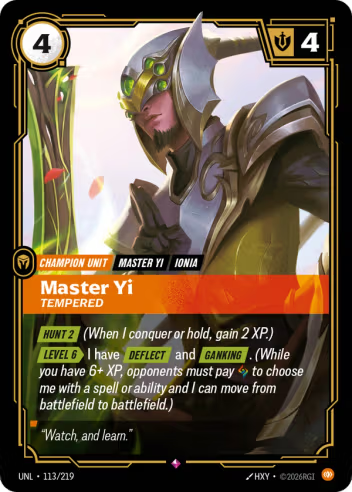
Skarren added that the team wanted players to feel the strategic weight of the jungle role: “In League, jungle is a strategic role involving shotcalling for your team and making risky, high impact decisions. We wanted Unleashed to feel the same way by creating perfect moments to execute your plan.”
The XP System: A New Layer of Strategy
Question: What were the design goals behind the new XP mechanic, and how does it change pacing and decision-making?
Frank Skarren: “XP came from a couple of different places. We felt it was a perfect tie-in to jungling in League of Legends where you farm to scale and gain power over time.”
Mechanically, the team wanted a resource they could give out more readily than points that converts directly into board impact. Skarren highlighted how XP creates more goals throughout the game and powerful late-game aspirations, especially with cards like Master Yi.
“We did explicitly create a fork with XP cards, so players can approach the mechanic in the way they prefer. Some XP cards reward you for amassing as much as you can, while some of them let you spend small chunks throughout the game for bonuses.”
Introducing Ultimate Rarity
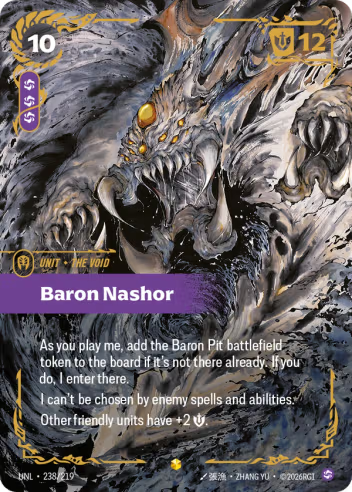
Question: What drove the decision to introduce the new “Ultimate” rarity?
Nik Davidson: “One of the things that we try to do with Riftbound is make every booster pack exciting to both players and collectors. When we looked at Unleashed and the focus on big jungle monsters, we wanted to do something special with the biggest jungle monster of all, Baron Nashor.”
The team commissioned a bespoke traditional media piece and created a special frame with multiple foil types, texture, and UV reactivity. Davidson noted they may have aimed slightly low on the first Ultimate’s rarity and are evaluating the balance between accessibility and chase value.
Mechanical Evolution Across Sets
Question: Looking across Origins → Spiritforged → Unleashed, what are the biggest mechanical shifts?
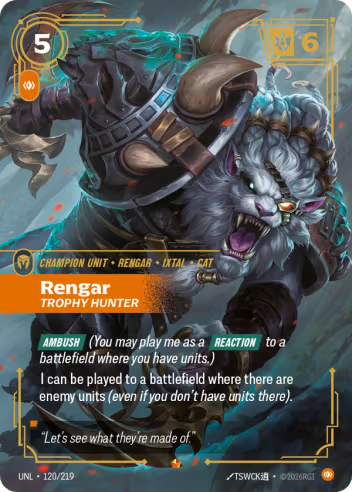
Nik Davidson: “For me, I believe the biggest changes that we saw were with Equipment in Spiritforged and Ambush mechanic in Unleashed.”
He explained how Equipment allows investment in Might to persist even after a unit dies, while Ambush turns units into combat tricks and changes combat expectations.
“Both of these mechanics are filling some gaps in Origins playstyles… Every set from here helps us branch out to a fuller expression of Riftbound.”
Competitive Play and Organized Play Growth
Question: How is the team approaching the growth of competitive Riftbound?
Nik Davidson: “We’re incredibly excited to see the depth and breadth of competitive play that has sprung up around Riftbound. We’re happy with the community response to Unleashed Pre-Rift and the Nexus Nights program.”
Davidson noted strong sell-outs for Regional Qualifiers and teased more ways to play and better connectivity in the next phase of Organized Play.
Metagame Surprises
Question: What has surprised the design team most about the emerging Unleashed metagame?
Frank Skarren: “The team has been blown away by how well players have solved finding powerful builds for LeBlanc.”
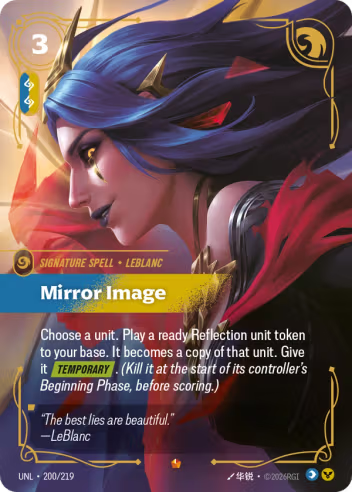
Skarren revealed the team playtested LeBlanc conservatively because they expected players to maximize her potential. “The ingenuity players show in finding creative ways to push cards to their absolute limit is always impressive.”
Lore, Rivals, and Narrative Integration
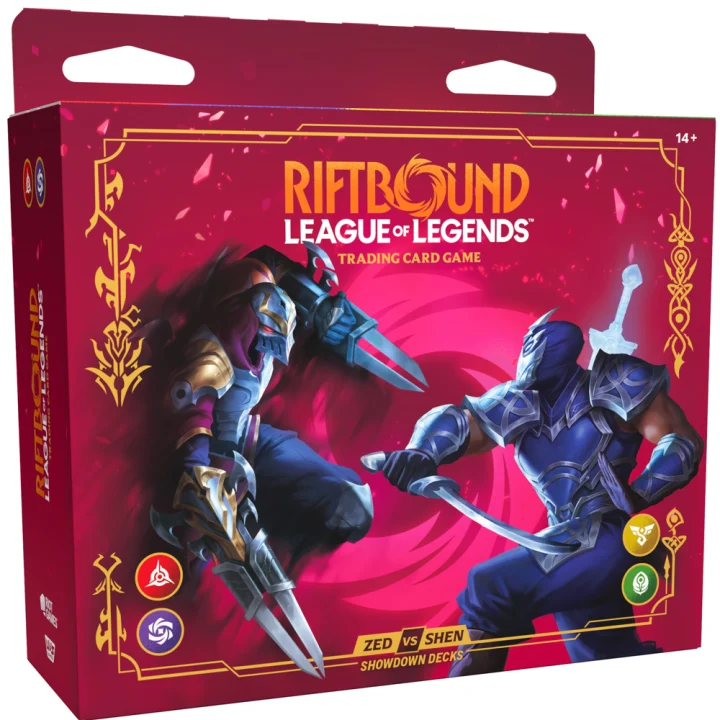
Question: With Unleashed focusing on the Jungle and Vendetta introducing rivals from the lore, how important is lore integration?
Nik Davidson: “I love this element of design. The cast of characters from across the world of League of Legends and lore of Runeterra is so deep and interesting.”
Davidson emphasized that the team uses every tool – including four cards per Legend (two Champion Units, Signature Spell, and Legend card) – to capture a champion’s personality, kit essence, history, and rivalries.
“When a player who mains a champion in League tells us that we’ve really captured the essence of that champion in Riftbound, it’s a really satisfying thing.”
Future Vision for Riftbound
Question: How do you see Riftbound evolving in the next 12-18 months?
Nik Davidson: “Riftbound is a game that we’re committed to for the long-term and we want every set that we release to teach us something to make the next set even better.”
He added that ongoing player feedback will help refine the ideal Riftbound experience as they continue experimenting.
Advice for New Players
Question: What advice would the team give players jumping in with Unleashed?
Frank Skarren: “For a new player coming in with Unleashed, the best place to start is the preconstructed champion decks for Vi and Vex.”
- Vi’s deck is straightforward and focuses on fighting over battlefields.
- Vex’s deck showcases the XP mechanic and battlefield control.

Skarren also recommended Pre-Rifts for casual play and community building, and encouraged players to explore the 12 new Legends to find a strategy that resonates with them. Existing decks can also be upgraded with Unleashed boosters.
Final Thoughts
Unleashed represents a confident step forward for Riftbound, successfully translating the thrill of League’s jungle into a compelling tabletop experience while setting the stage for the rival-themed Vendetta set coming in July.
A huge thank you to Frank Skarren, Nik Davidson, and the entire Riot Games team for their time and insights.
