

I recently got the opportunity to get some hands-on time with Resonance: A Plague Tale Legacy on PC, with the preview taking place across chapters five and six. That meant I was not seeing the game from the very beginning. Instead, I was dropped into a more developed slice of Sophia’s journey, with enough access to its combat, exploration, puzzle solving, and atmosphere to get a proper feel for what Asobo Studio is trying to do with this prequel.
That is important because Resonance: A Plague Tale Legacy does not feel like a safe continuation of the prior titles in the A Plague Tale series. Instead, it feels like Asobo taking the tone, world, and emotional weight of the series and pushing it into a much more direct action-adventure structure.
Set 15 years before A Plague Tale: Requiem, Resonance: A Plague Tale Legacy follows Sophia, a character fans will remember from Requiem, as she uncovers more about her past and the mysteries surrounding the Minotaur’s Island. It is still unmistakably connected to A Plague Tale, but based on what I played, this is not simply trying to recreate A Plague Tale: Innocence or A Plague Tale: Requiem with a different lead. With Sophia, the entire game feels very different from how I remember the previous titles.
A Much Deeper Combat System
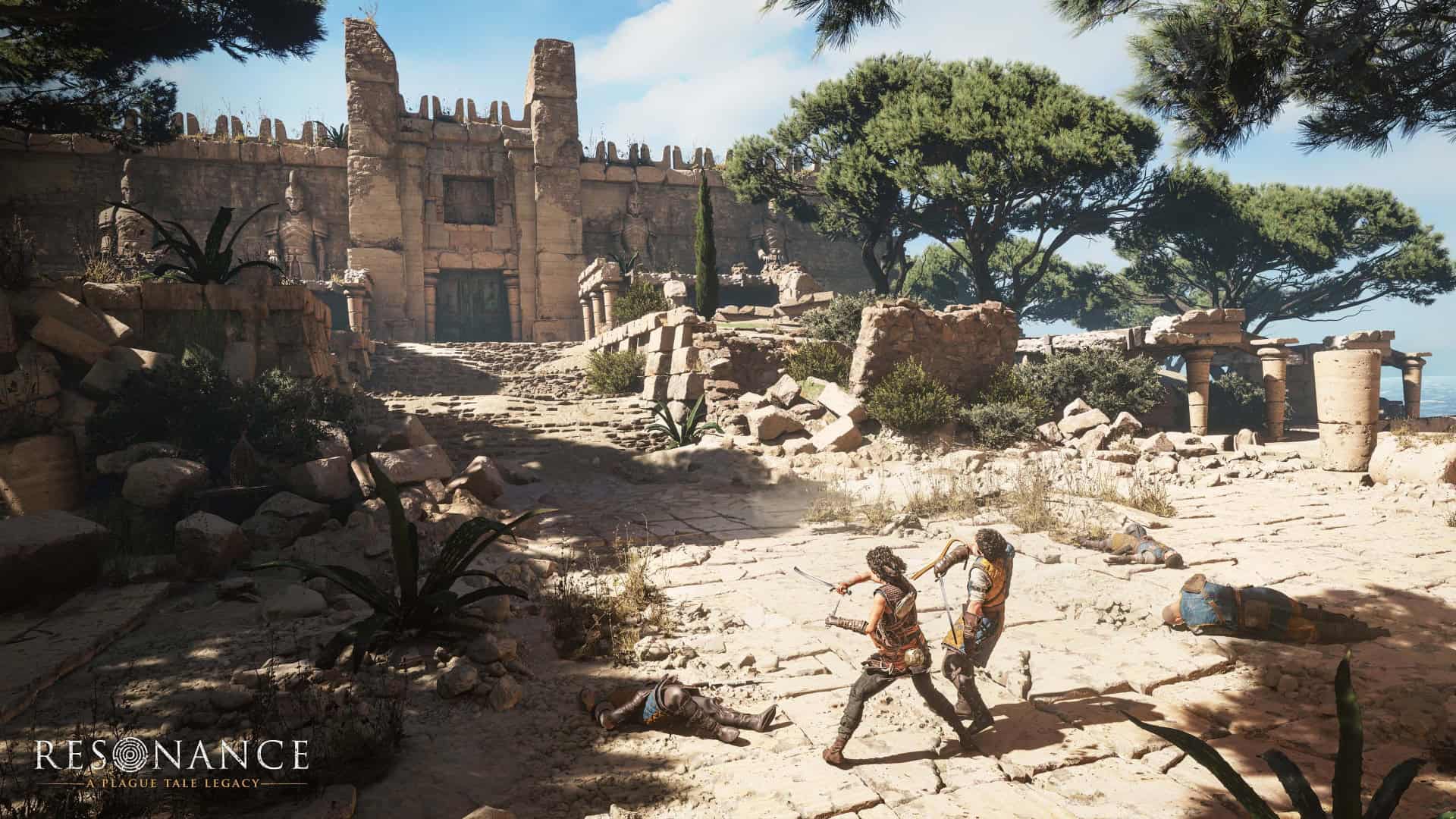
What immediately stood out to me was Resonance: A Plague Tale Legacy’s much deeper combat system. Compared to the previous A Plague Tale games, this is a huge shift. Unlike the other games, where the goal was to play defensively, Sophia is not simply surviving encounters or desperately looking for a way out. She can properly fight back, and that changes the entire rhythm of the game.
In many ways, the combat felt like a mix between Ryse: Son of Rome and God of War (2018). There is a heavy, cinematic quality to the way Sophia moves through encounters, with a real focus on timing, blocking, parrying, dodging, and finding the right moment to strike. It is not just about hitting enemies until they fall. You are constantly reading attacks, reacting to pressure, and trying to stay in control when enemies close the distance.
That comparison is not something I make lightly, because A Plague Tale has never been known for direct combat. However, Resonance: A Plague Tale Legacy feels much more confident in that area. Sophia’s attacks have weight, enemy encounters feel more involved, and there is a much stronger sense of physicality than I expected going in.
Enemy variety also helped sell how much more involved the combat is. Across the two hours I played, I encountered at least six different enemy archetypes, which is impressive for a preview slice covering only chapters five and six.
The brute was the most obvious example, using unblockable attacks that forced me to dodge rather than simply rely on defense. Spearmen created a different kind of pressure, taking advantage of their longer reach and making spacing much more important. Then there were the more familiar sword-and-shield enemies, the kind of standard close-range foes you would expect from this type of action-adventure game.
Archers presented a different challenge altogether. Unlike in the previous A Plague Tale games, Sophia does not have a slingshot for ranged attacks, which immediately changes how you deal with enemies at a distance. Instead, she has a grappling hook that can be used to pull enemies toward her, drag them off ledges, interrupt their positioning, and more.
That tool quickly became one of the most important parts of combat for me. Rather than simply giving Sophia a direct ranged replacement, the grappling hook encourages you to stay aggressive and control the battlefield. It gives you a way to counter archers without turning Resonance: A Plague Tale Legacy into a traditional ranged combat game, while also opening up more creative options during encounters.
It also fits Sophia’s more physical style perfectly. She is not standing back and picking enemies off from a distance. She is pulling threats into range, closing gaps, and using the environment against them. That small change says a lot about how different Resonance: A Plague Tale Legacy feels from the previous games.
On top of direct combat, Resonance: A Plague Tale Legacy also gives Sophia more options before a fight properly begins. You can sneak up on individual enemies and take them down quietly, giving encounters a light stealth layer that still feels connected to A Plague Tale’s roots.
There are also opportunities to attack from above, with Sophia able to drop onto enemies from higher positions. These moments gave some encounters a slight Uncharted feel, especially when moving through layered environments where height, positioning, and timing all mattered. It is not full stealth, and it is not trying to be, but these options make encounters feel more dynamic than simply walking into an arena and fighting everyone head-on.
What impressed me most is that all of these systems seem to feed into each other. You can thin out enemies quietly, use the grappling hook to control ranged threats, and then rely on Sophia’s more physical combat once things inevitably go wrong. That flexibility made the combat feel far more varied than I expected from an A Plague Tale prequel.
More Varied Puzzle Design
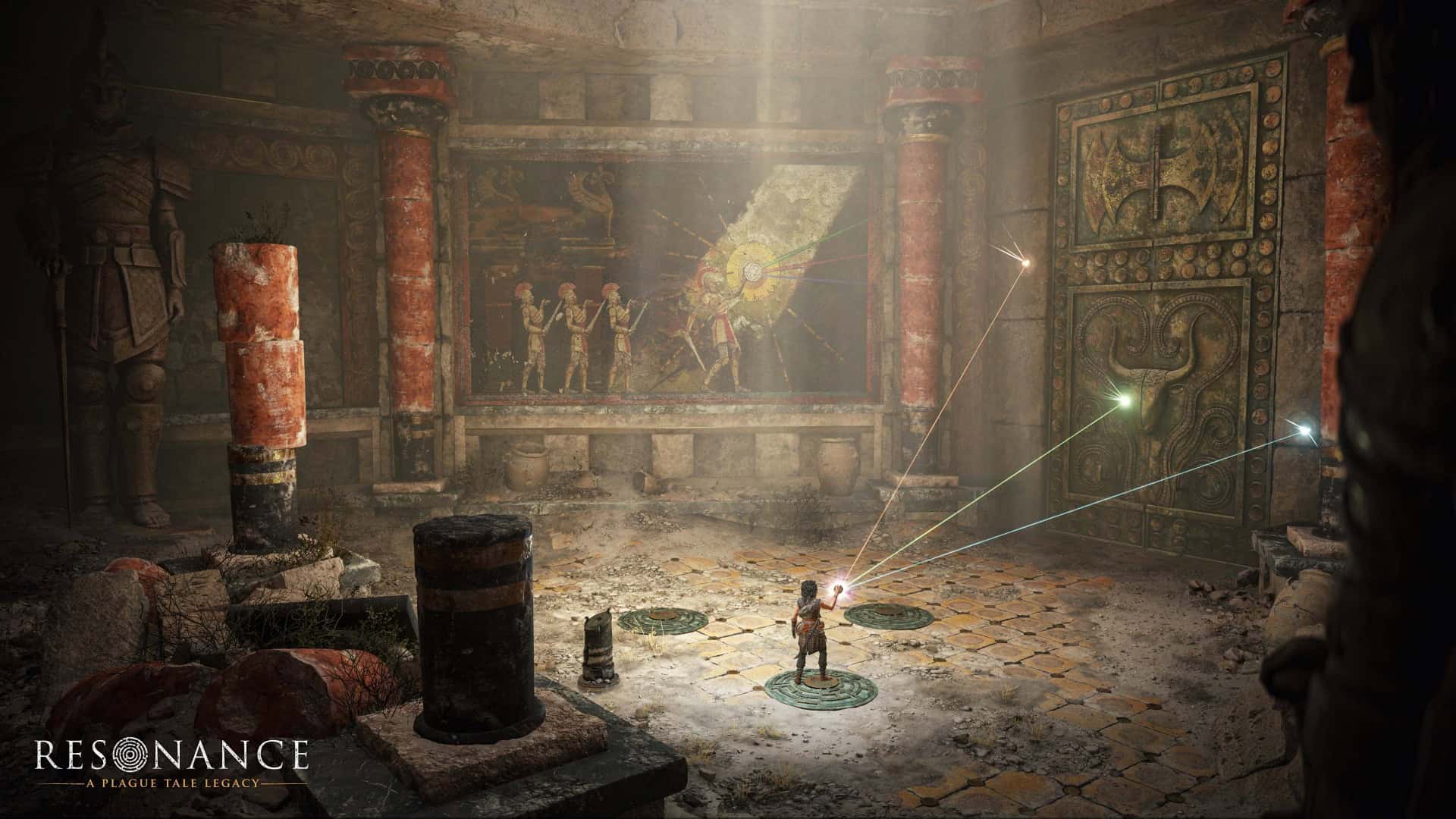
The improved combat was the first thing that stood out, but the puzzles also seem to have been given more variety this time around. During the two chapters I played, one of the main puzzle mechanics involved a sphere that could emit light. In some puzzles, this meant lining beams up with crystals of the same color to activate different parts of the environment. In others, the same sphere could be used almost like a torch, revealing hidden paths that helped Sophia avoid traps or move safely through areas that were otherwise impossible to read.
What I liked is that Resonance: A Plague Tale Legacy does not seem to treat these mechanics as one-off gimmicks. They are used multiple times across the chapters I played, but not always in exactly the same way. That does mean there is a risk they could become repetitive over the course of the full game, especially if the same ideas are leaned on too heavily. However, in this preview slice, the way Asobo combined those mechanics helped keep the puzzles feeling fresh.
Rather than simply solving the same light puzzle over and over again, Resonance: A Plague Tale Legacy asked me to think about how these systems interacted. Sometimes it was about color matching, sometimes it was about revealing the safest route forward, and sometimes it was about understanding how the environment itself was hiding the solution. It gave the puzzles a stronger sense of progression than I expected.
That matters because puzzle solving has always been a big part of A Plague Tale, but here it feels a little more adventurous. It is less about simply finding a safe way through a bad situation and more about uncovering the logic of a strange and dangerous place.
A Brighter World, But Not A Safer One
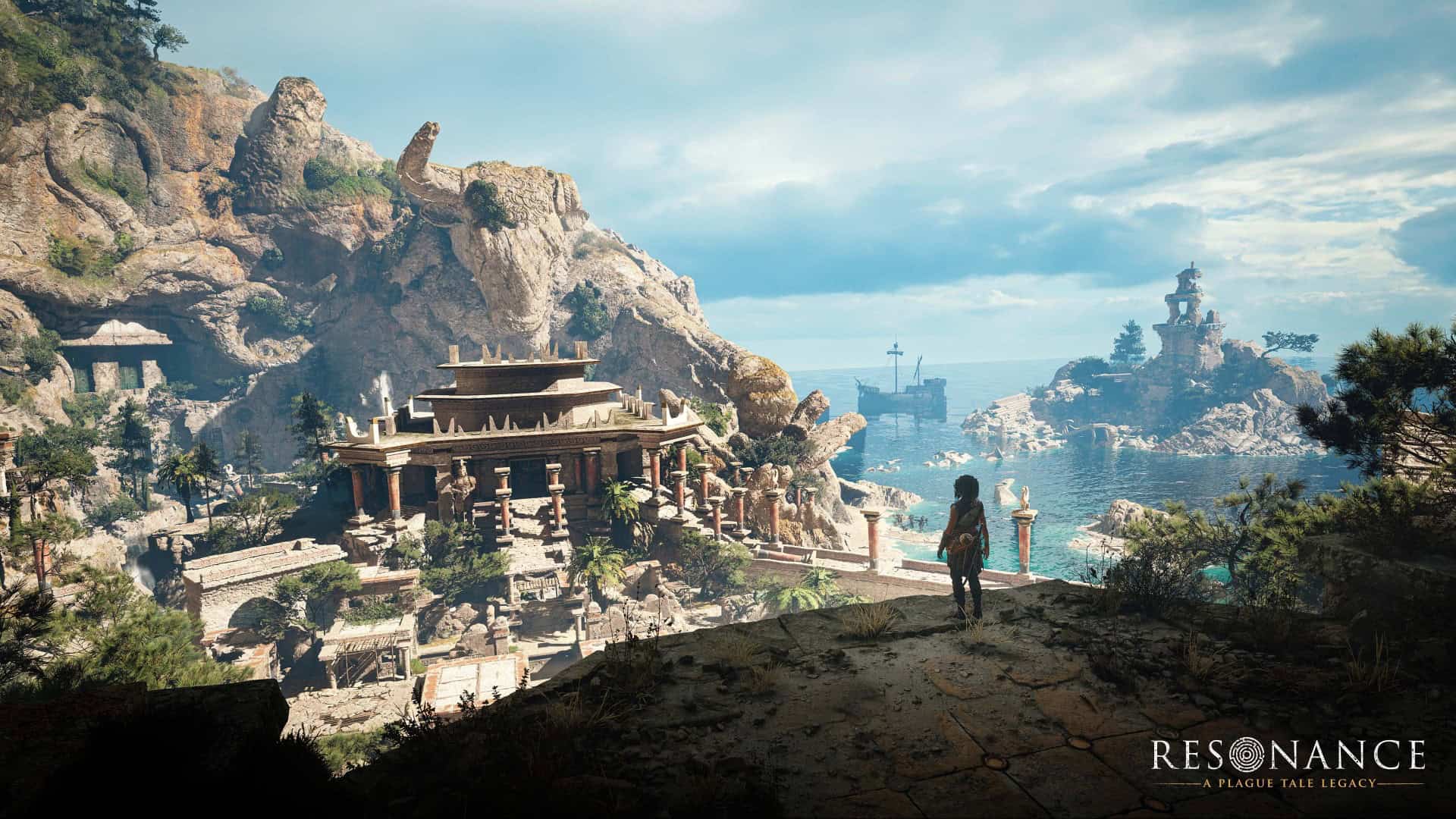
Graphically, Resonance: A Plague Tale Legacy appears to be on par with A Plague Tale: Requiem, at least based on the PC build I played, which is already a strong place to start. Asobo Studio has always been excellent at creating beautiful worlds filled with unease, and that seems to remain true here.
What has changed is the overall visual identity. The world and atmosphere feel very different, but also strangely familiar. The environments I explored were lighter, more colorful, and far removed from the plague-ridden towns and rat-infested darkness that defined Innocence and Requiem. In the two chapters I played, there were no rats to be seen, which immediately gives Resonance: A Plague Tale Legacy a very different feeling.
However, that does not mean the game has lost its sense of danger. Other threats are clearly lurking in the dark, and the game still knows how to make a beautiful location feel unsettling. There is a constant feeling that something is waiting beneath the surface, even when the world itself looks warmer and more inviting than before.
That tonal shift extends beyond the environments. The dialogue, music, and overall presentation feel a little more like a grand adventure than the end-of-the-world sadness of the previous games. Requiem, in particular, was a game built to emotionally destroy you. Resonance: A Plague Tale Legacy still has weight and mystery, but from what I played, it seems to be chasing a broader sense of adventure rather than asking you to bawl your eyes out every few hours.
That difference is not a bad thing. In fact, it might be exactly what this prequel needs. Resonance: A Plague Tale Legacy still feels connected to A Plague Tale, but it is not trying to recreate the same despair. It has its own flavor, one built more around myth, discovery, danger, and Sophia’s journey into the unknown.
Sophia Feels Like The Right Lead
A big reason this change works is Sophia herself. Fans of A Plague Tale: Requiem already know who she becomes later in life, but Resonance: A Plague Tale Legacy is clearly interested in showing how she got there. Playing as a younger Sophia gives the prequel a purpose beyond simple franchise expansion.
She is not here just because Asobo needed a familiar face. She brings a different skillset, a different attitude, and a different emotional angle to the world. In the chapters I played, she already felt distinct enough to carry the game.
She has confidence, but not in a way that removes danger. She feels capable, but still vulnerable to the larger forces surrounding her. That balance is key, because A Plague Tale works best when its characters feel human against something overwhelming.
Resonance: A Plague Tale Legacy seems to understand that. Sophia may be more aggressive and better equipped than Amicia, but she is still being pulled into something much bigger than herself.
That is what makes this prequel interesting. It is not just A Plague Tale with more combat. It is a game built around a character who naturally supports that change. Sophia feels more physical, more reactive, and more suited to this action-adventure direction, which helps the shift feel intentional rather than forced.
Final Thoughts
By the end of my two hours with Resonance: A Plague Tale Legacy, I was not ready to stop playing. In fact, I came away wishing I could continue the rest of Sophia’s adventure right there and then.
That is probably the strongest compliment I can give any preview build. The combat feels deeper, the puzzles seem more varied, the world has a different but still familiar atmosphere, and Sophia already feels like a strong lead for this prequel. More importantly, I have thought about what I played every day since.
So yes, it is safe to say Resonance: A Plague Tale Legacy is now firmly on my radar. This may be a very different kind of A Plague Tale game, but based on what I played, that could be exactly what makes it so exciting.
Resonance: A Plague Tale Legacy is scheduled to be released on August 27, 2026, for PC, PS5, and Xbox Series X|S. It will also be available day one through Xbox Game Pass.
