

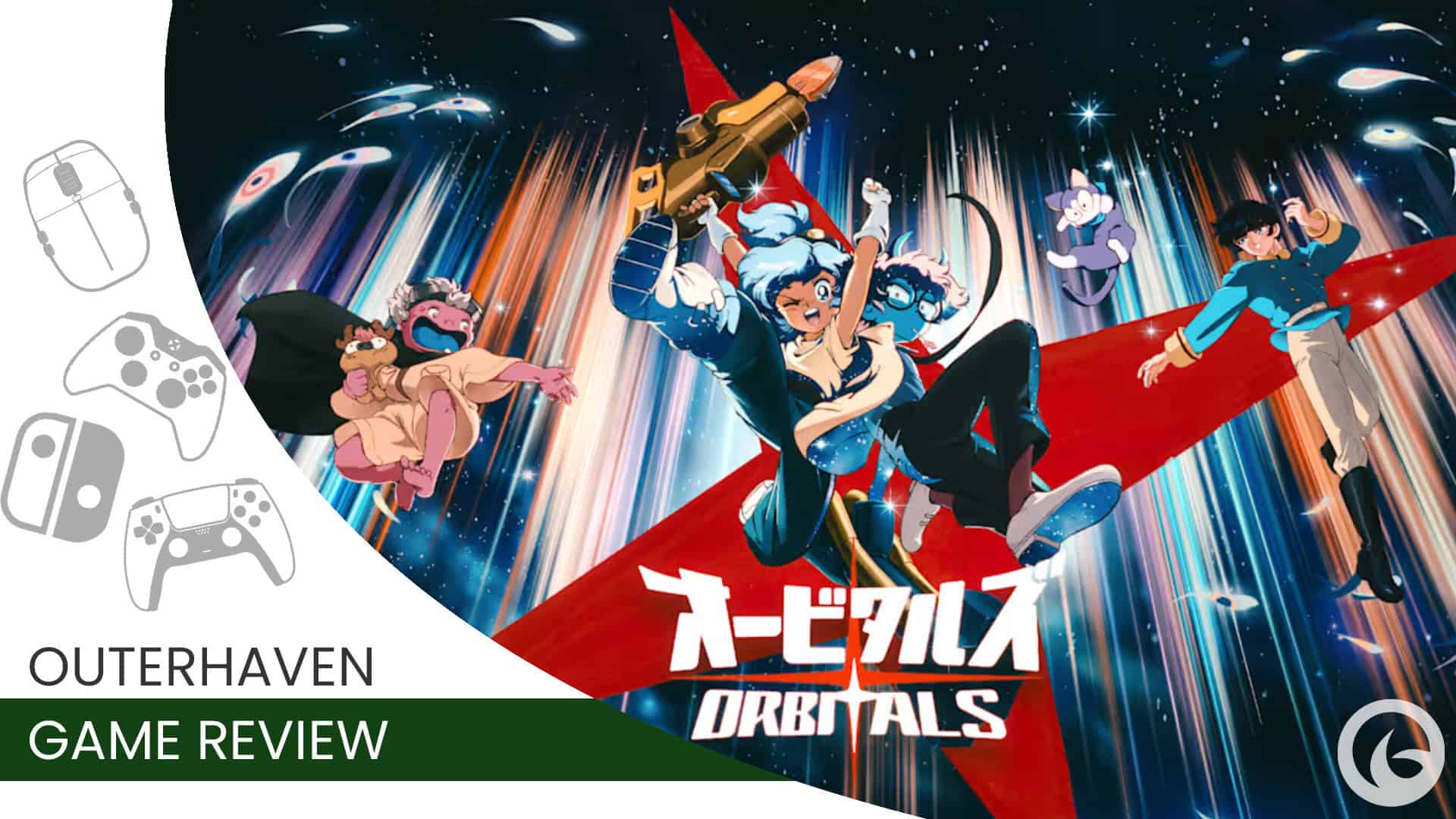
During The Game Awards 2025, one title struck my fancy and appealed to my nostalgia. That game was Orbitals, a co-op game inspired by 1980s mecha anime. You play with another person and live in a small colony as you scavenge through space.
Game Name: Orbitals
Platform(s): Nintendo Switch 2
Reviewed On: Nintendo Switch 2
Developer(s): Shapefarm
Publisher(s): Kepler Interactive
Release Date: September 3, 2026
Price: $39.99
In Orbitals, you play as either Maki or Omura. You are aboard a small colony spaceship that survives thanks to a storm wall holding back a supernatural cosmic storm. At the beginning, your characters are small children who are placed inside a tube. Once their essence is inside the tube, versions of them immediately appear outside it. This is called an I.M. in the game, and it essentially allows them to be created again if they get into trouble. A time skip occurs, and they become teenagers who help the colony by protecting and repairing the ship.
Repairing Ships and Scavenging in Space
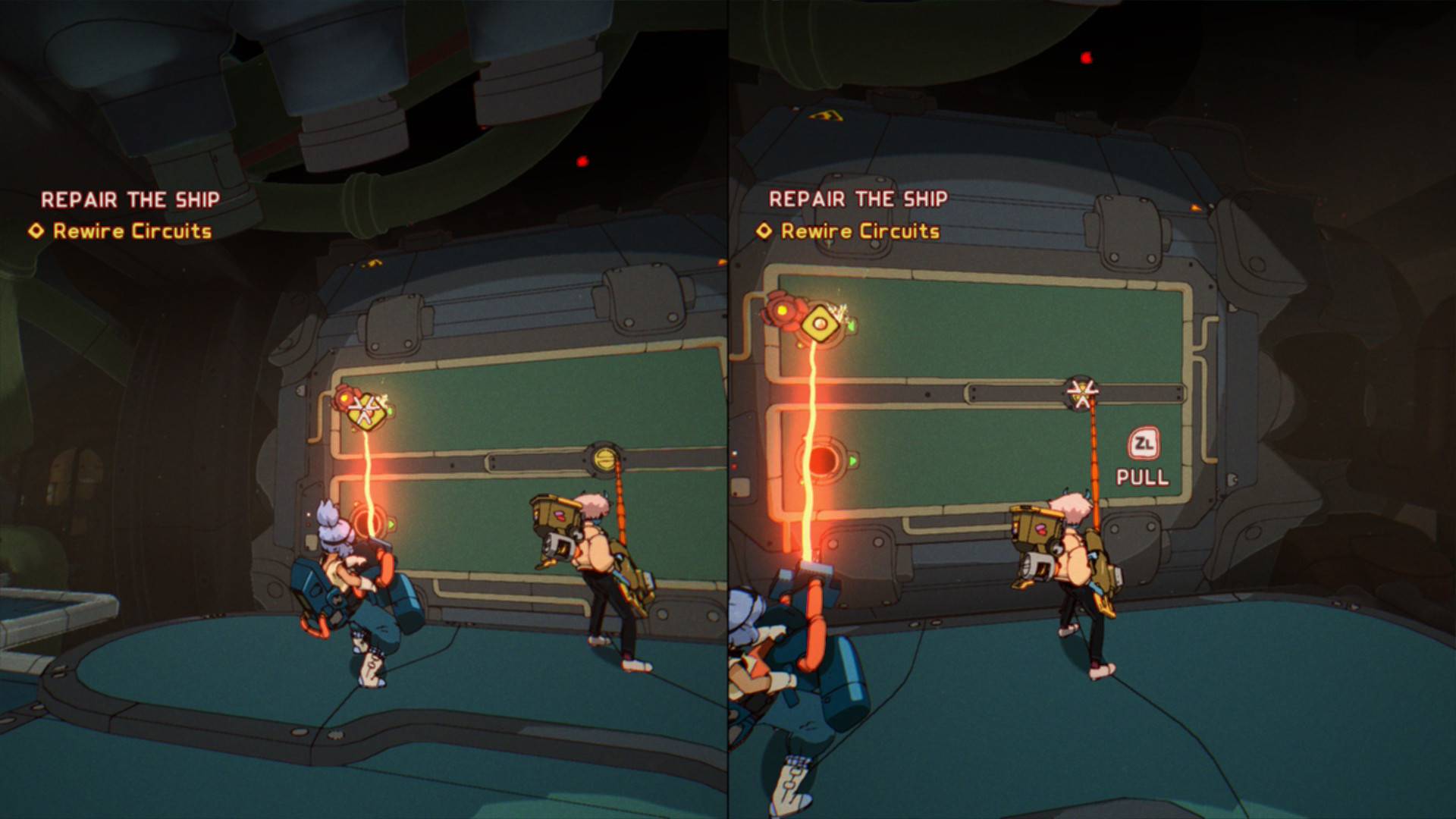
The gameplay in Orbitals is highly dependent on both players. You are given a range of gear at the beginning that you can use. This gear includes beam lasers, rope hooks, and water cleaners, and you will unlock more equipment as you continue through the story. Luckily, the game points you toward the two types of gear you will need for each chapter, so you will not have to guess.
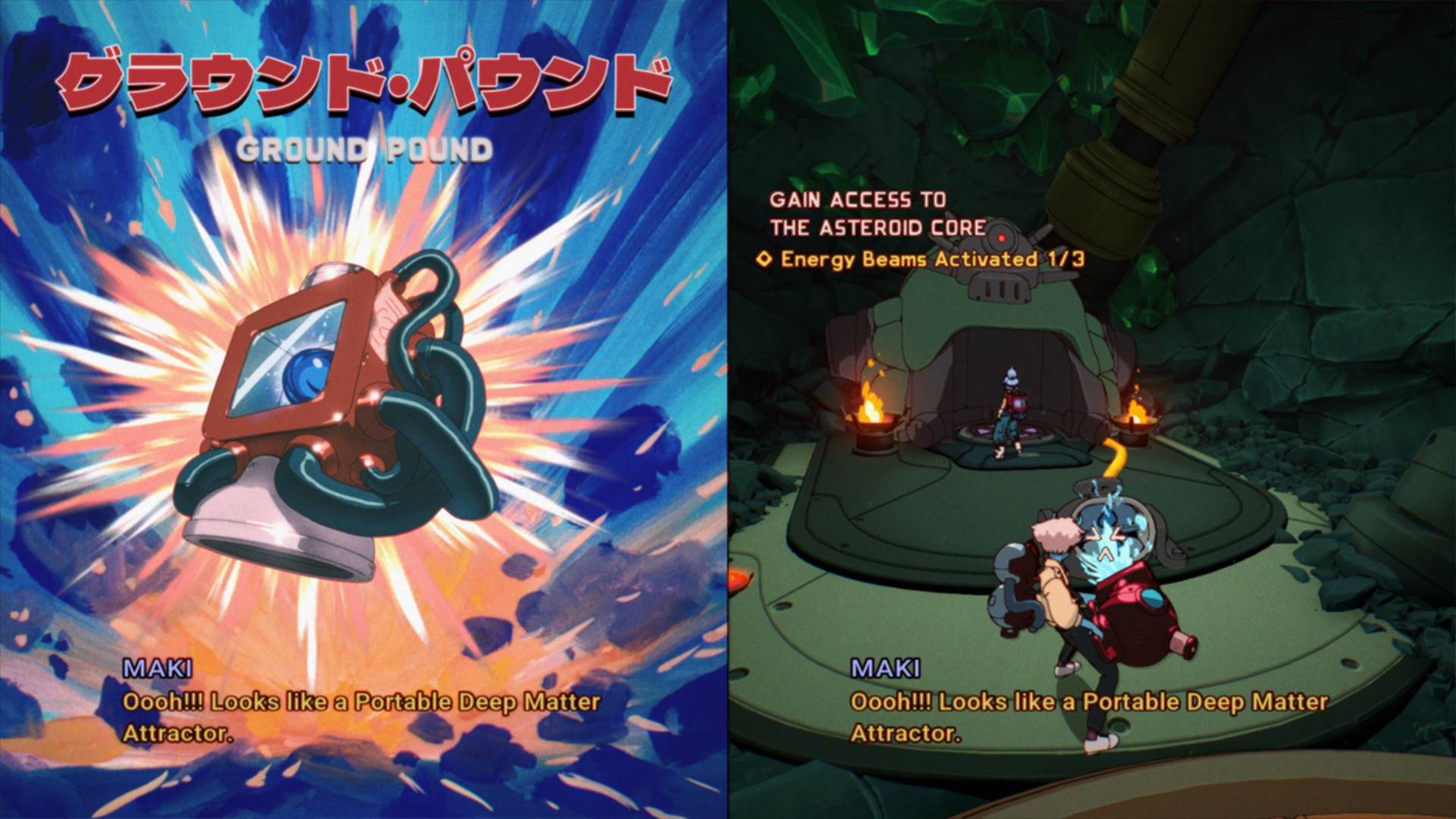
Each chapter is different, but some aspects of the game remain the same. Traversal allows you to jump, run, and dash. You can even dash in the air if you need to cover more ground during a jump. During certain stages, traversal can change for a portion of the level. You can sometimes use a ground pound to launch yourself high into the air or use a jetpack to boost yourself over obstacles. There is a lot of variety at play in Orbitals. Luckily, if you do not like a particular stage, it will not last too long.
That variety, however, can also become frustrating. I played the game with my wife, who wants to play more games but is not much of a gamer. She loves the art styles and aesthetics some games have, which makes her more interested in them than how they play. She was very excited to try this game because it has the vibe of certain 1980s anime she loves, such as Bubblegum Crisis. She enjoyed most of the game, but certain minigames almost made her rage quit. The one that came closest was the rhythm minigame.
You have to match the tempo of a particular sound based on the token or pot you are pointing at. Each player has to match a different note based on which side they are on. I figured out the puzzle more quickly than my wife, and she became confused about why some shapes changed when she focused her vision on a particular pot. I had to explain it to her several times, and at one point, she felt a seething hatred after missing one note at the end and wanted to throw the controller. I stopped her, mainly because controllers are not cheap anymore and I did not want to replace it, but also because I did not want her frustration to turn into hatred toward the game itself.
I offered to stop for the night and try again later, but she wanted to make two more attempts before getting off. We finished it successfully on the second attempt.
All of that is to say that if I had not been there to calm her down, she might not have finished the game because of that puzzle. The developers might want to consider allowing players to skip a puzzle after failing it enough times so they can continue playing the game.
Bringing 1980s Anime Back Into Style
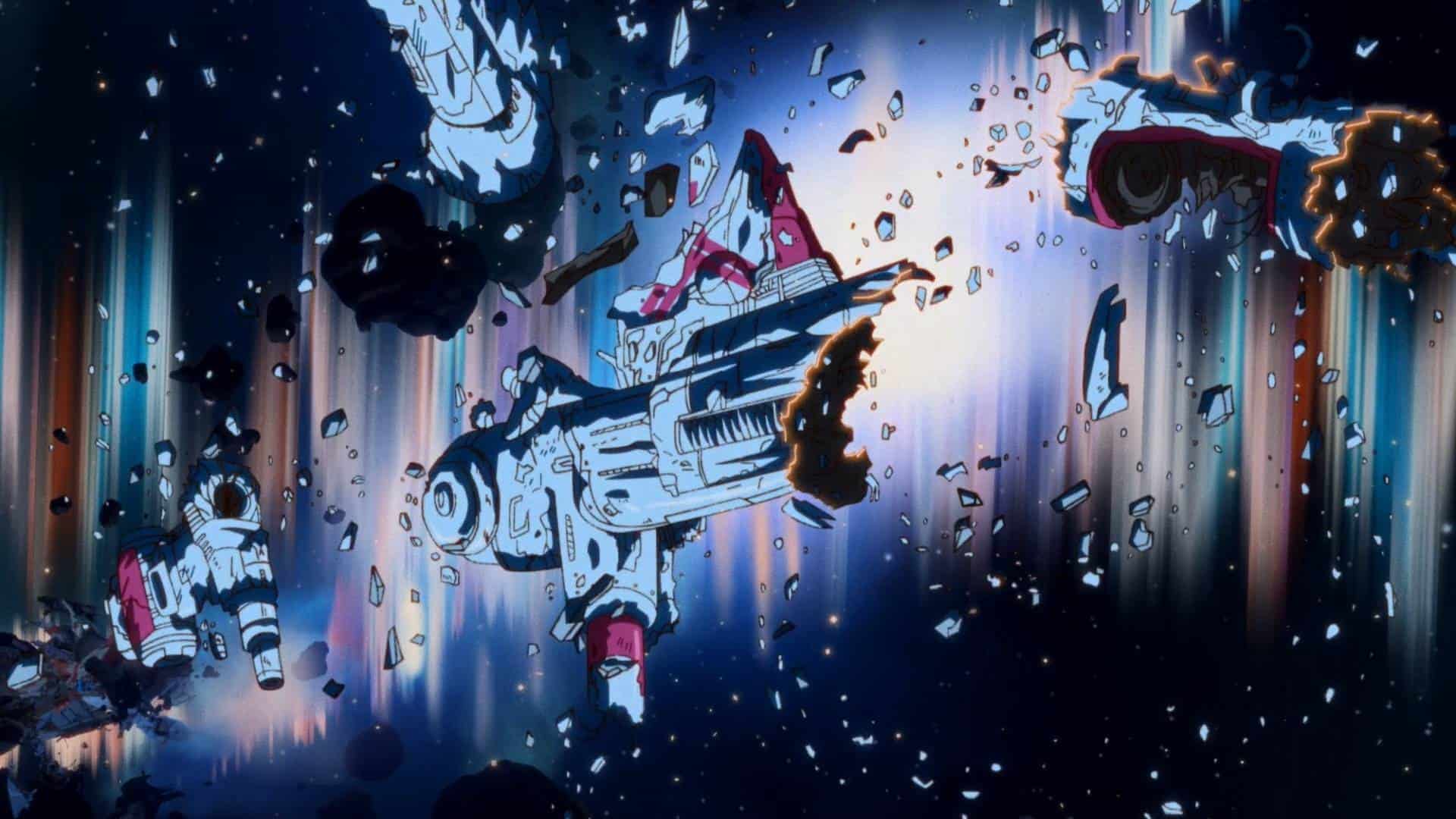
The design, aesthetic, and animation are all inspired by the anime style of the 1980s. This does not apply to every type of anime, but specifically to the mecha and science-fiction anime of the era. The way robotics, technology, and even space are depicted is reminiscent of that style.
Ironically, the animation also follows the same approach. Rather than being extremely fluid like other stylistic designs of the modern era, there are deliberate frame skips that make it look like hand-drawn animation cels being flipped through a book. I was surprised by how effectively this style of animation worked in a video game. I really enjoyed it! The presentation alone helps set Orbitals apart from other modern games.
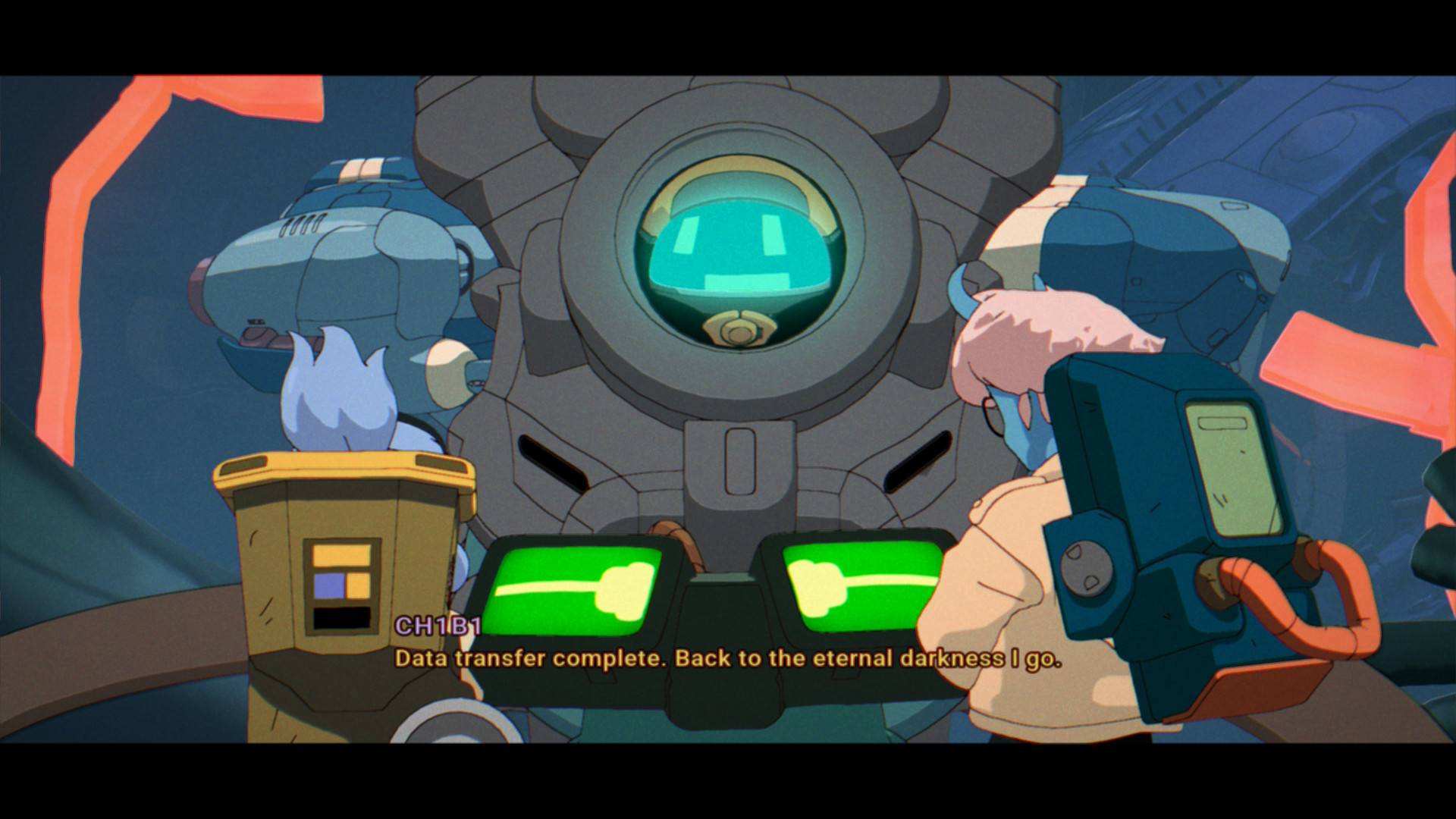
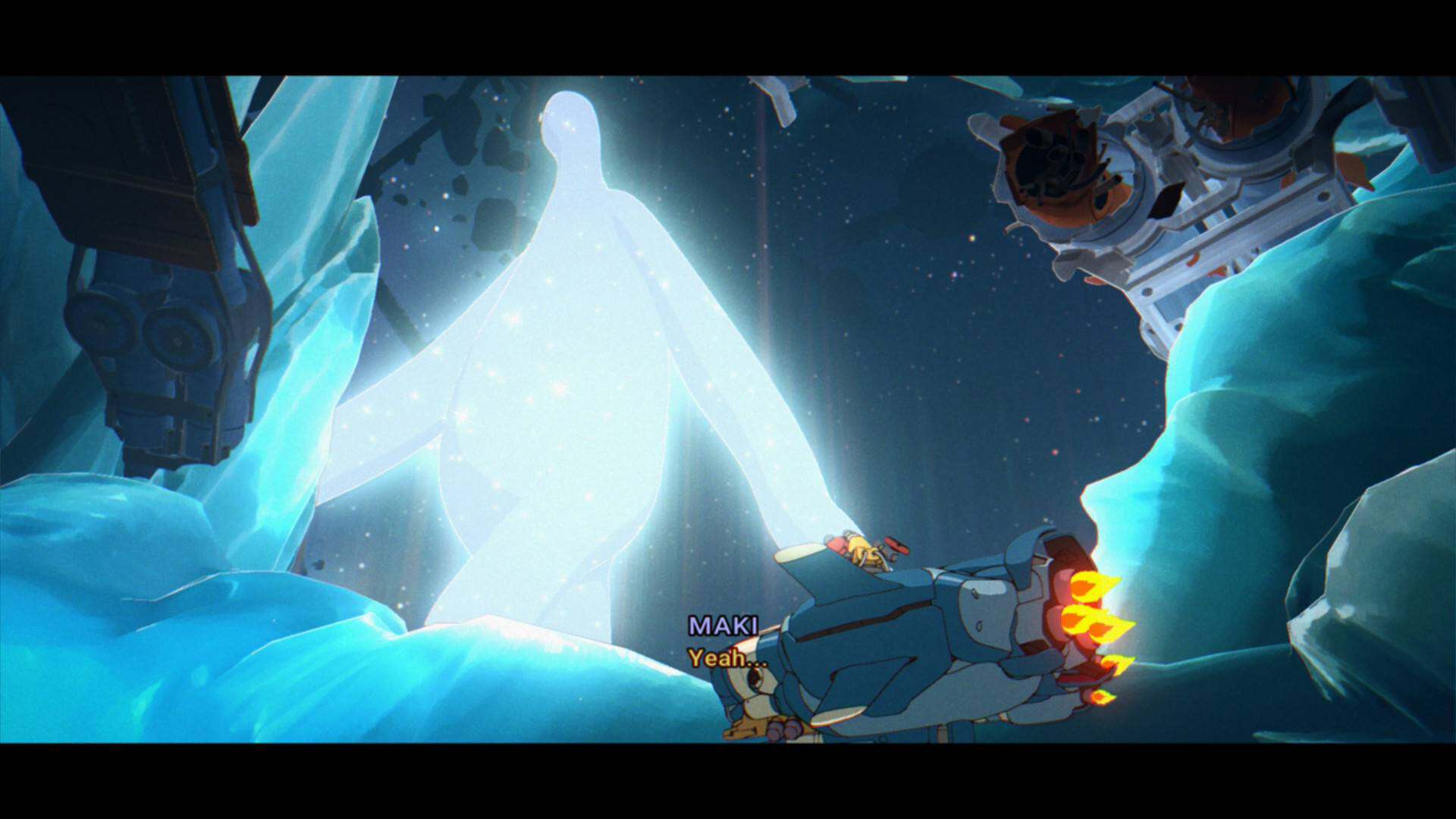
It does not stop there, of course. The music and atmosphere also capture the same existential mood that the mecha anime of the 1980s seemed to grasp so well. You are alone in the vacuum of space with the understanding that yours is the only colony around. The people in your colony are the only ones close to you, so you must rely on them. This is not a large group of individuals, but even with that as the game’s backdrop, the human will to survive perseveres.
That brings us to the two main heroes of Orbitals, Maki and Omura. Maki is upbeat, chipper, reckless, and a total nerd. She loves technology and learning about the technology of the past. Omura is more level-headed and a bit more serious, but when he gets his moments, he proves he is just as much of a tech dork as Maki. He is simply better at hiding it. You will be with these two characters throughout the entire game, and honestly, I was really happy with their dynamic.
Elephant In The Room
Orbitals pushes a lot for its aesthetic. It might be too much if we are to compare the performance of the game itself. The game runs at a locked 30 FPS, but that isn’t the full picture. Animation from characters that are close to the screen is a bit slower, at around 20ish FPS to give you a feel of the older anime animation. That adds even more to the background animation. Background objects and effects are at 12 FPS to give it a slowly moving object aesthetic that was present in the old anime shows.
Personally, my wife and I thought it was very charming, and it made the main game itself more immersive to the style it was replicating. Especially in cutscenes that showed the background of space moving slowly. It might deter people who care about smaller frames per second, but ultimately it just added to the experience while you play. Actually playing the game handles well, which is more how I judge the metric. There are no frame drops or stutters from what I played.
Orbitals Is Special
As I reflect on the time I spent with Orbitals, I really appreciate everything the game does. It offers plenty of variety through its gadgets, gizmos, and different gameplay modes. Even though I can understand the frustration of not grasping a puzzle or its solution, the overall experience adds a lot of depth to the aesthetic in which the game specializes.
It is going to be difficult to recommend if you do not have a friend, either online or offline, to play it with. It requires two people to experience the full game, and there are no CPU-controlled partners available to help you. Otherwise, this is absolutely a game worth your time and money. It is fun and satisfying, and it offers a world filled with space exploration!
Orbitals will launch exclusively for Nintendo Switch 2 on September 3, 2026, and is available to preorder now. A physical edition will launch alongside the digital edition. Fans can also purchase the Digital Deluxe Edition, which includes additional digital bonuses, including the game’s soundtrack, accessed through the base game’s main menu.
If you enjoyed this review, explore more of our in-depth video game reviews across PlayStation 4, PlayStation 5, Xbox One, Xbox Series X, Nintendo Switch, Nintendo Switch 2, and PC.
Review Disclosure Statement: Orbitals was provided to us by Kepler Interactive for review purposes. For more information about how we review video games and other media and technology, please review our Review Guidelines and Scoring Policy.
Orbitals Review - Bringing The Hits Of The 80's Back
Orbitals is a fantastic game that uses its inspirations to the highest degree. The art design and aesthetic are a true triumph. Interlacing the cooperative video game genre with the themes of 80’s mecha anime series is executed well.
Pros
- Gameplay is satisfying
- Art and graphics are rendered faithfully to the 80’s anime aesthetic
- Characters are fun
- Lots to explore and find
Cons
- Some puzzle gimmicks can be frustrating
- The weapon aiming can be janky
