

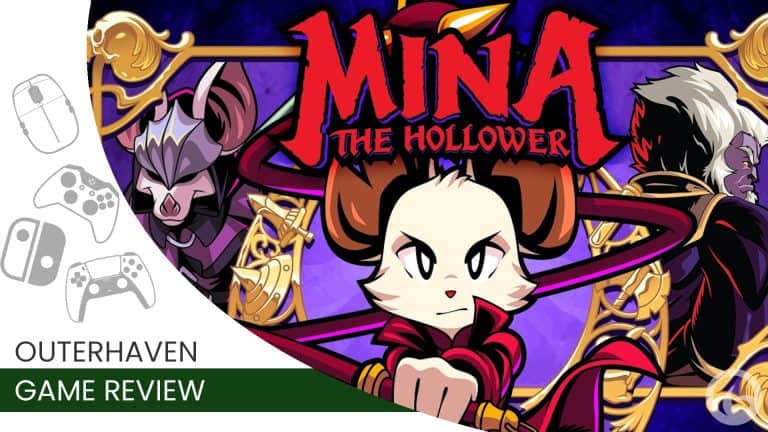
You can draw a direct line from the original The Legend of Zelda to the core design of open-world games. Mina the Hollower feels like drawing another line back in the other direction, an ingenious twist on the Zelda “formula” that puts a drastic focus on freeform exploration and fine-tuning your adventure to the exact way you like.
Quite simply, Mina is one of the best 2D action-adventure games I’ve ever played, a game that’s not content to just take inspiration from Zelda but twist the very idea of that signature style into something uniquely its own. I simply cannot stop playing it, even after rolling the credits and New Game Plus.
Game Name: Mina the Hollower
Platform(s): PlayStation 5, Xbox Series X|S, Switch, Switch 2, PC, Mac, Linux
Reviewed On: PC
Genre: Action / Adventure
Developer(s): Yacht Club Games
Publisher(s): Yacht Club Games
Release Date: May 29, 2026
Price: $19.99
You take control of the titular Mina, a brilliant inventor and “Hollower” renowned the world over. One day, Mina gets a letter from the ruler of Tenebrous Isle, an old friend named Lionel, who says the Spark Generators she constructed are malfunctioning, leading to power systems across the kingdom crashing and monsters running rampant. Mina sets out for Tenebrous, and after a short intro, you’re given free rein of Tenebrous, activating the six generators in any order you see fit.
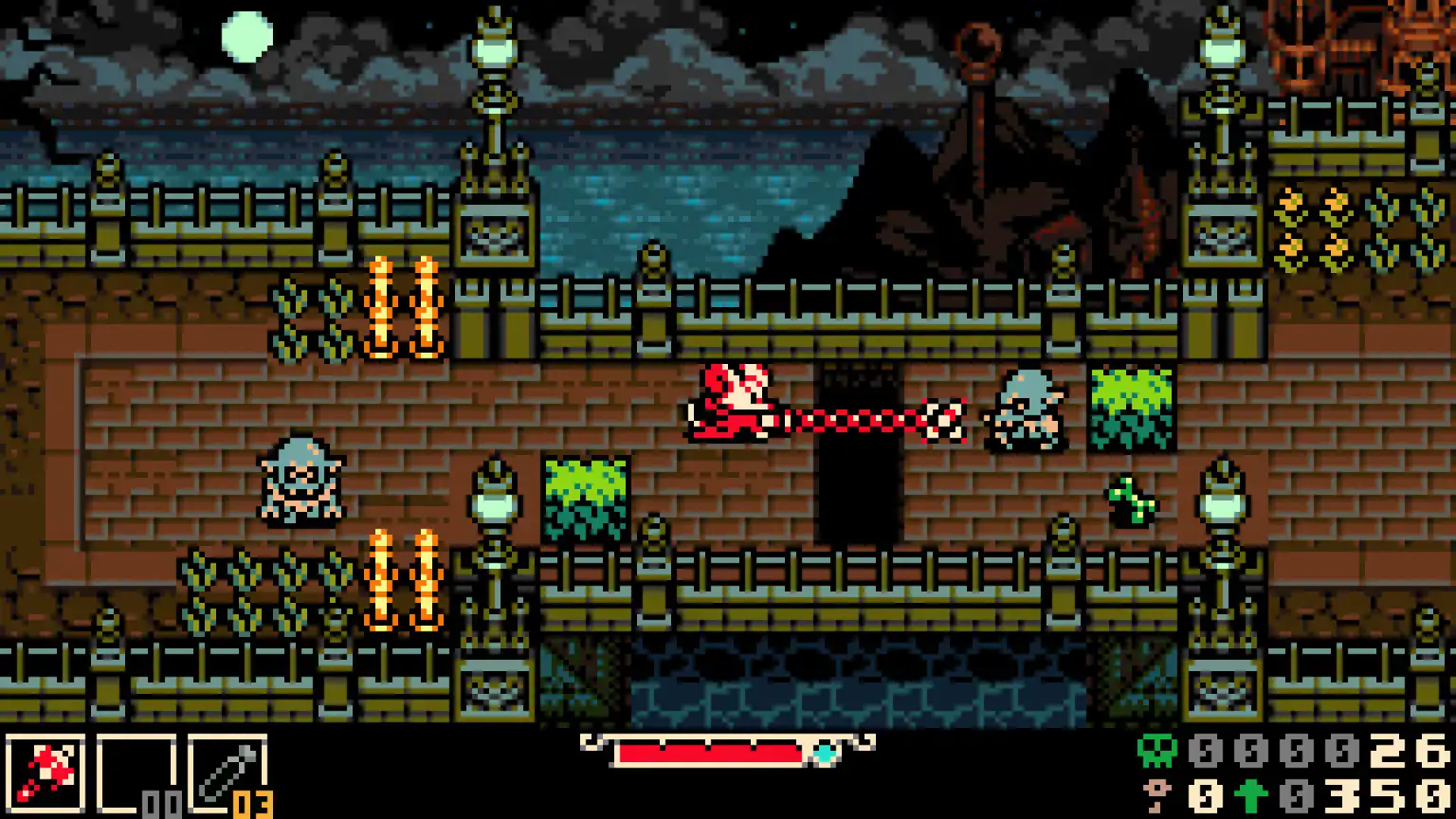
Mina the Hollower’s story is, intentionally, a bit simplistic, but it has some charming characters and moments, accentuated by a lot of little side narrative bits that you can pull together. It also immediately deserves saying that the game’s aesthetic is simply lovely, really evoking the nostalgia of the Game Boy and Game Boy Color era while pulling off some actually stunning visual feats with spritework. There’s some really sweet characterization that’s subtly woven into the largely gameplay-focused experience, through the way sprites emote and details in the environment.
The best way I can describe what it’s like to play Mina the Hollower is if you combine the structure of A Link Between Worlds with the sense of discovery of something like Dragon’s Dogma. There’s a massive world to explore filled with dozens upon dozens of little weirdos to talk to, story threads to uncover, bosses to vanquish, and a healthy dose of secrets. I honestly can’t think of another 2D-style game that does exploration and discovery in the way Mina does, which is why open-world games like Dragon’s Dogma or Crimson Desert are the only analogues I can come up with.
You can, realistically, tackle the dungeons in any order you want, or simply strike out and explore areas to gather resources and treasures. The six main dungeons of the game do have a “right” order based on difficulty, but Mina is all about letting you go at your own speed and do things how you want.
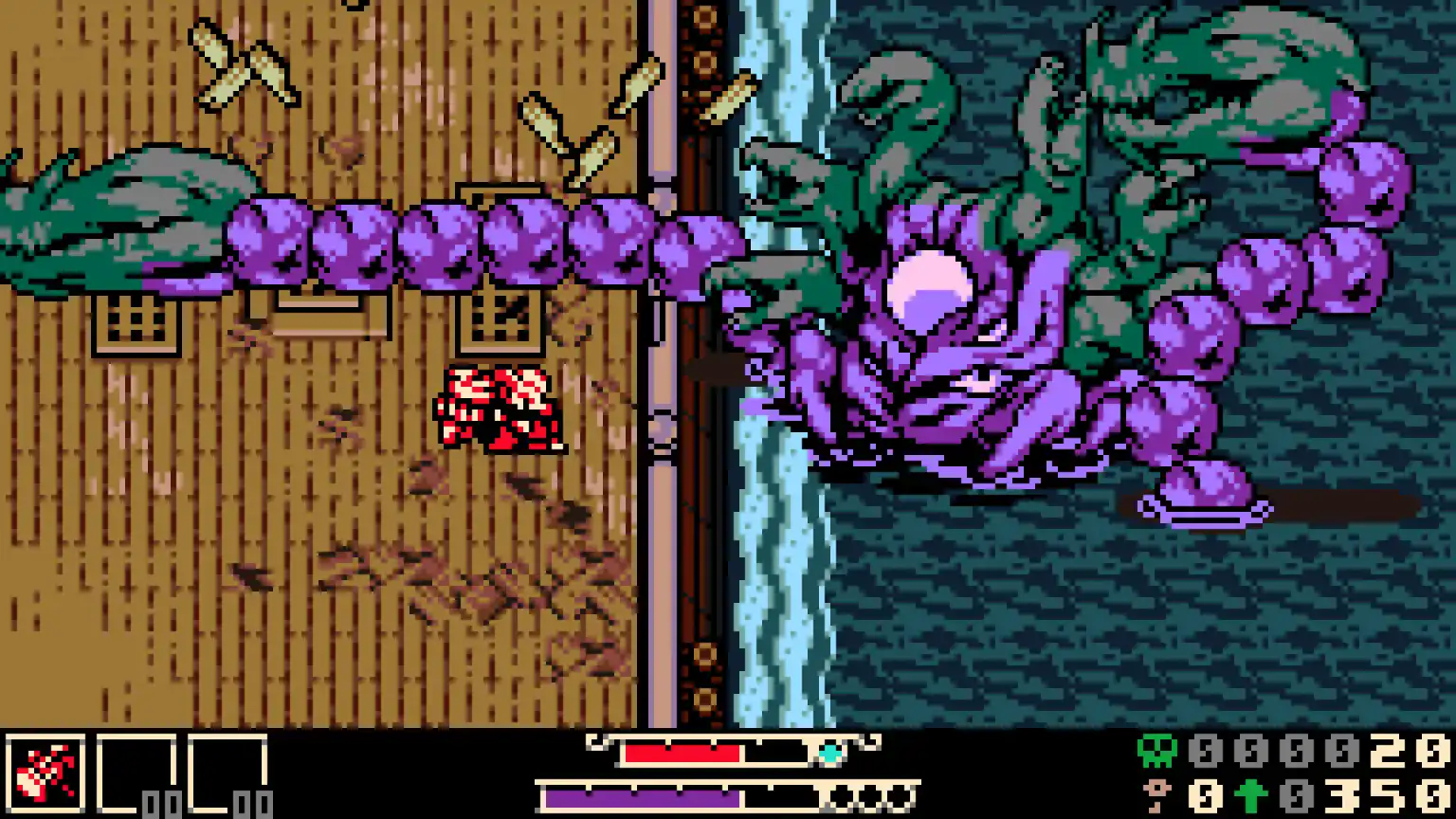
And poking around the world is genuinely my favorite part of the game. After finding three kinds of creepy merchants, I was pulled into a decrepit warehouse, where I came face to face with a terrifying shadow creature, although I won’t spoil what happens. In the swamp, I found a little country band that needed their composer, a frog in a water bucket, back before they could play.
These kinds of little discoveries are sprinkled throughout the world of Mina, truly making it feel vibrant and alive while simultaneously encouraging you to poke around every corner. But in a way, it’s hard for me to properly describe the actual wonder of Mina’s big discoveries, because I think the experience of doing that yourself is absolutely vital, and taking away some of the surprise might flatten it. But I can at least say it’s the same sense of wonder that I had in something like Dragon’s Dogma 2, when I stumbled upon the bizarre sphinx.
That exploration element alone makes Mina good, but what elevates the game to something truly exceptional is how every single gameplay system is tuned to support that idea of freedom. While there are core mechanics and tenets, everything about Mina encourages you to develop your own playstyle, from trinkets that can add a wide array of effects to in-game cheat-like modifiers that can make things drastically easier or harder.
There are four core principles that define Mina’s gameplay: attacking, jumping, healing, and burrowing. For that last one, by holding down the jump button, Mina can burrow into the ground and dig a short distance before popping back up. The other vital element is how the game approaches Mina’s health, clearly taking a page from Bloodborne.
As Mina lands attacks, a yellow gauge will fill your empty health bar, and if you can use your healing Plasma Vials in time, your health will be restored, while getting hit by an enemy takes down the gauge. This means Mina is squarely about aggression and offense, making you constantly stay on your toes. It’s an interesting approach that helps give the game a unique flavor different from most Zelda-likes, which are oftentimes about defense and positioning. Most everything in the game is built around these four core principles, with Mina then introducing layer upon layer of complexity, like a big cake.
Mina has five different weapons she can wield, all of which have a different attack style and moveset. I instantly gravitated to the Castlevania-style whip, which let me attack enemies from a distance. But later on, I discovered the arm cannon, which works as a hybrid melee and ranged weapon, with each melee hit on an enemy restoring one shot. All of these weapons can be upgraded twice for additional effects, but the most crucial element here is that they all feel drastically different. These aren’t little differences. They’re essentially different playstyles.
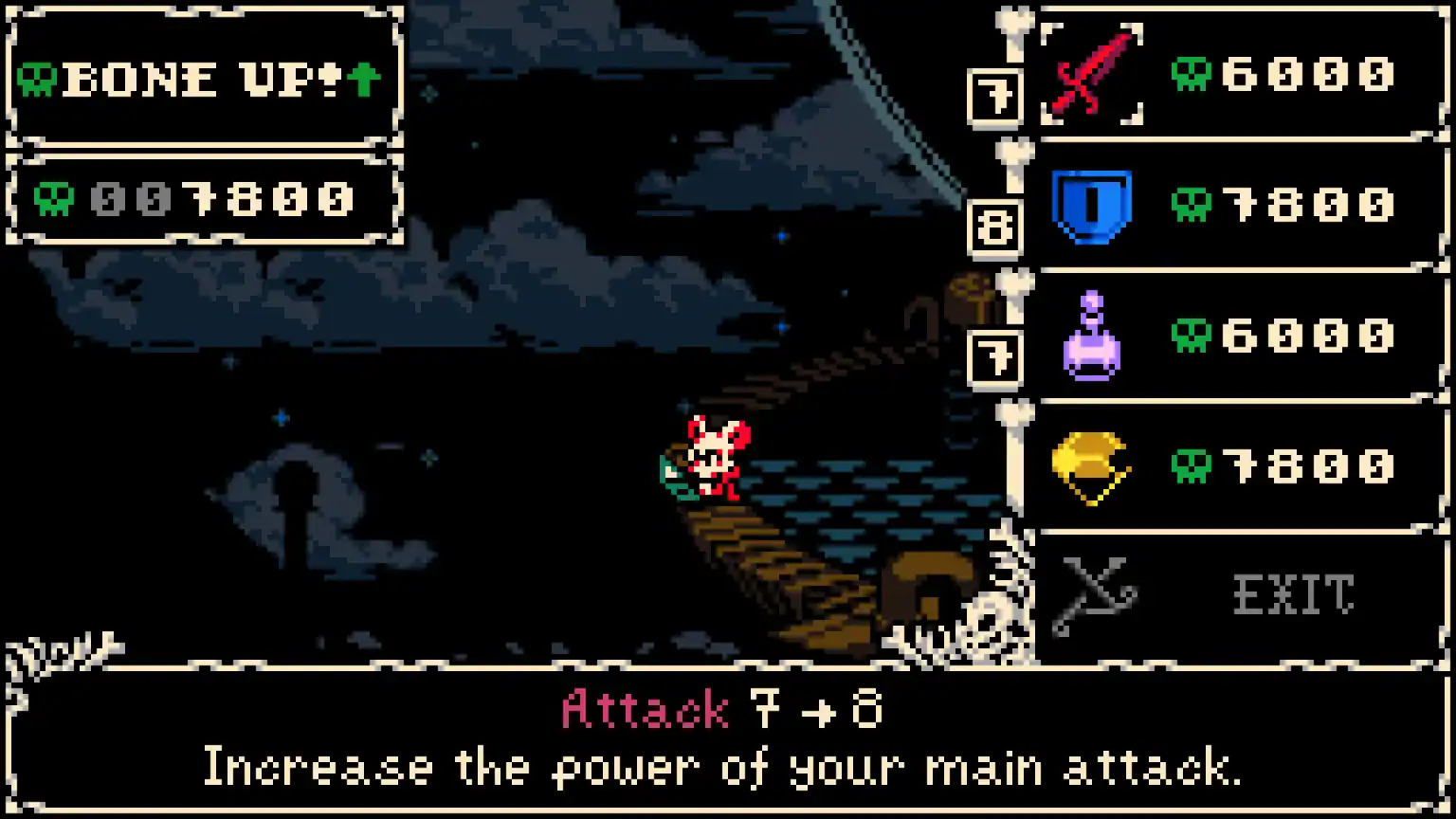
Layered on top of that are Sidearms and Trinkets, two systems that give you even more variety for your moveset. Sidearms are dictated by a Magic resource that you replenish by picking up bottles and are more like side equipment. One lets you put a little sprite on a leash that automatically attacks enemies, another lets you throw an axe in a huge arc with splash damage, while another lets you dash straight through enemies and obstacles while healing yourself. Trinkets, on the other hand, are equipable and more integrally change your skillset. One might add an explosion to your burrow, while another spawns a little sprite that heals you when you take damage.
Both of these facets of the game give you drastically more options and can oftentimes be integrated into not just combat, but puzzle-solving and platforming as well. What results is a complex array of systems that let you fine-tune Mina to your specifications.
But there’s another layer on top of all that, as each area introduces a wealth of unique little gimmicks and mechanics to shake things up even more, but they’re still defined by those core ideas. You might encounter platforms that shift in the direction you walk, requiring more finesse in your platforming. Another area has puffy plants that you can jump on and use to get over high ledges. Yet another has rails that you can slide along, timing your jumps over gaps and enemies.
What’s truly remarkable is how each and every area in Mina feels distinct and unique, both aesthetically and mechanically. I can genuinely say there’s not really a single minute that I felt bored or uninspired in my first roughly 30-hour playthrough. Through that blend of introducing new area gimmicks and unlocking more trinkets and options, Mina consistently keeps things fresh and interesting. But click that together with how good the exploration and discovery elements are, and you have something genuinely special, an engrossing experience from start to finish.
The only real caveat here is that Mina is an exceptionally difficult game, with a few really standout difficulty spikes to boot. This is a game that’s going to challenge your platforming and combat skills consistently. But even then, I can’t really fault that high difficulty ceiling because of the game’s robust Modifiers.
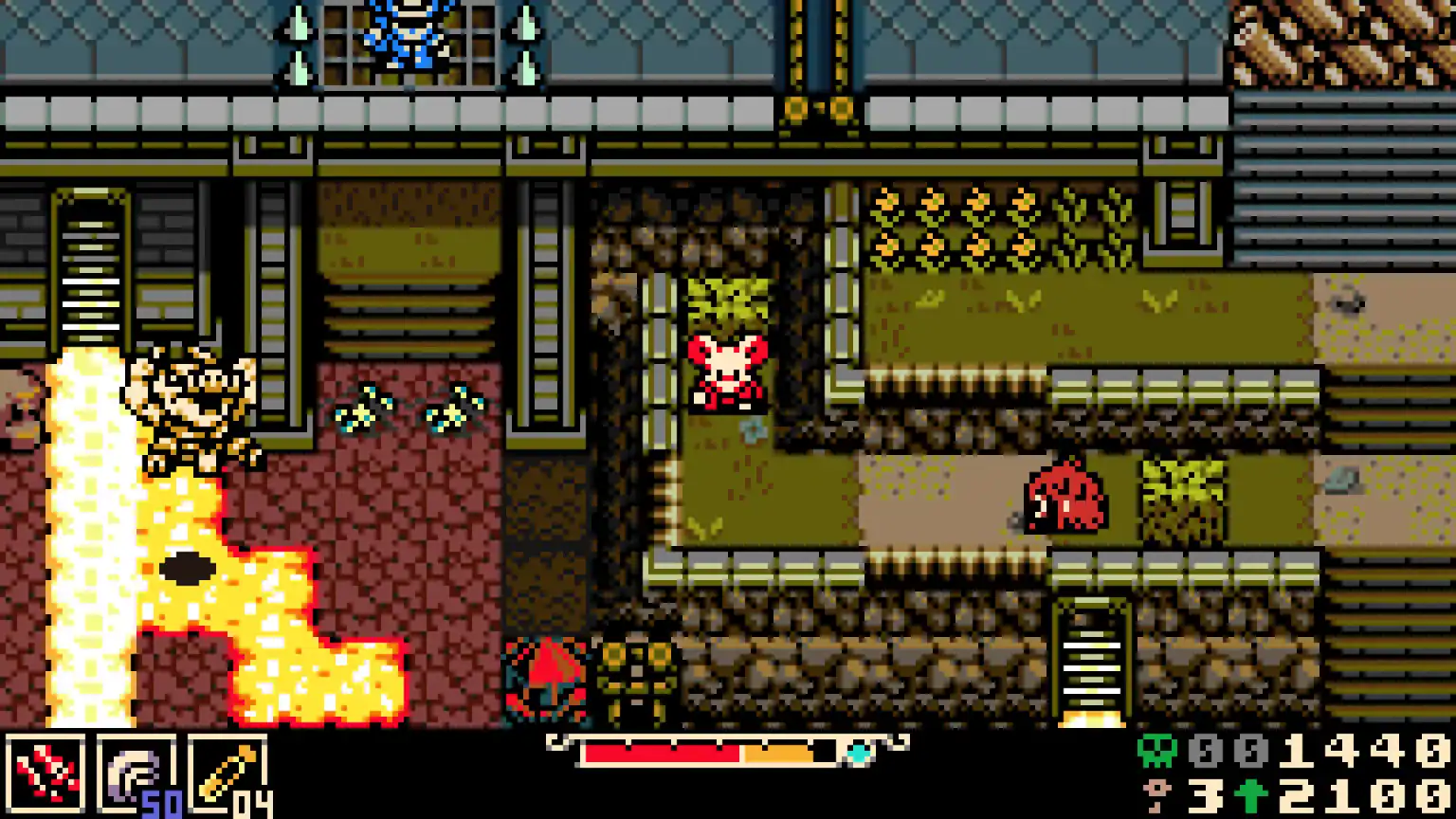
At any moment, you can open the menu and apply over 30 different modifiers to your game. Some of these are meant to make things easier, i.e., reducing the damage you take, letting you walk over pits, spawning a save point before bosses, or giving you more healing. But others can make the game significantly harder, mirroring the world, letting bosses one-shot you, etc. It’s a smart move to allow players to turn any modifiers they want on and off at will, as it, again, encourages that sense of ownership over your specific experience. If you don’t want to mess with them, you don’t have to, but the whole system is non-intrusive and packs in so much variation for how you can tweak things just right, subtly or largely.
Video games are, by their nature, iterative experiences, so much of what we play today is built upon the backs of everything that’s come before. You obviously can’t look at Mina the Hollower without seeing Zelda, but it isn’t focused on evoking the same feeling of Zelda or nostalgia, but rather how that formula can, integrally, be evolved with modern sensibilities. And that approach lets Yacht Club’s new game stick the landing with impressive poise.
I’m not afraid to say that Mina the Hollower is an instant classic.
If you enjoyed this review, explore more of our in-depth video game reviews across PlayStation 4, PlayStation 5, Xbox One, Xbox Series X, Nintendo Switch, Nintendo Switch 2, and PC.
Review Disclosure Statement: Mina the Hollower was provided to us by Yacht Club Games for review purposes. For more information on how we review video games and other media/technology, please review our Review Guideline/Scoring Policy.
Mina the Hollower Review
Mina the Hollower is a brilliant 2D action-adventure game that takes clear inspiration from classic Zelda while building something that feels fresh, challenging, and uniquely its own. Its open-ended exploration, clever combat systems, strong sense of discovery, and flexible modifiers make every part of the adventure feel personal. While its difficulty can spike, Mina the Hollower stands out as an instant classic and one of the best games in its genre.
Pros
- Superb exploration that rewards you liberally, both through narrative and gameplay
- Impeccable combat and customization options that allow a ton of freedom
- Genuinely incredible sprite work with a bright visual style and fun soundtrack
Cons
- The occasional odd difficulty spike
-
Mina the Hollower Review
