

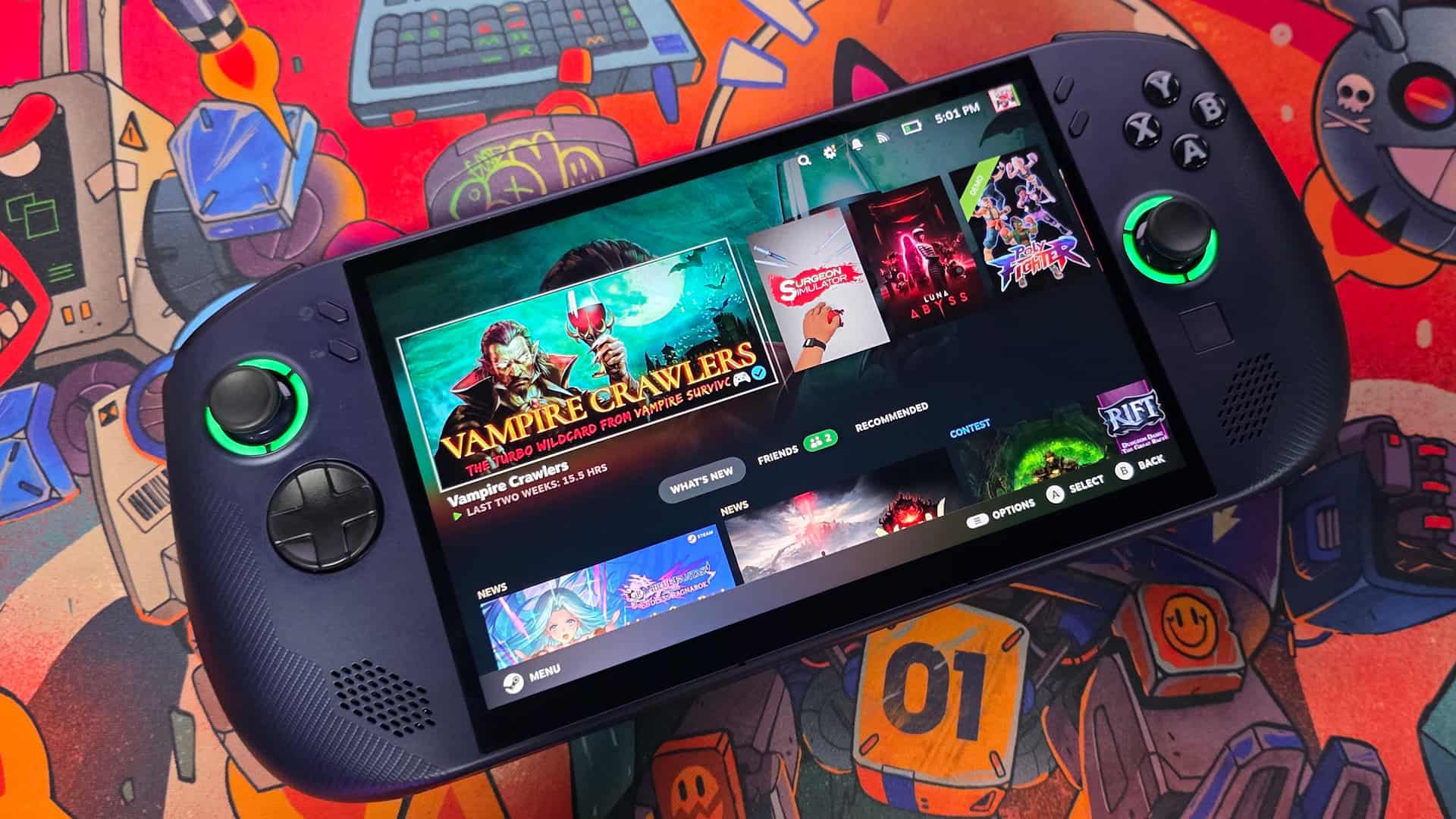
If you were thinking about picking up a Lenovo Legion Go S, especially after the recent price hike for the Legion Go 2, you may want to check those prices again. Seemingly overnight, all models of the Legion Go S handheld saw significant increases at Best Buy.
The base model with the AMD Z2 Go chip, 16GB of RAM, and a 512GB SSD has climbed from $649 to $989 for the SteamOS version, while the Windows version with the same specs now sits at $1,049.99. Meanwhile, the Z1 Extreme configuration with 32GB of RAM and a 1TB SSD has jumped from $899 to $1,579. That’s 1.7x the original asking price, and it’s now more expensive than the lower-end Legion Go 2, which features a faster processor at $1,499.99. At this point, it’s hard not to question how Lenovo expects consumers to justify these prices.
This follows the price hike of the Lenovo Legion Go 2 that we reported on nearly two weeks ago.

What makes this even more confusing is that this isn’t happening at just Best Buy. Listings across retailers like Amazon, Micro Center, and B&H, as well as Lenovo’s own website, have all been updated. That strongly suggests this is part of a broader pricing shift from Lenovo rather than a retailer-specific change. If your reaction is “What is going on?”, you’re not alone.

For anyone who managed to grab one before the jump, the timing couldn’t have been better. I can speak to that personally. I recently sold my Asus ROG Ally X and picked up a Legion Go S a few weeks ago, and I’ve been happy with it.
I got lucky with an open-box deal and essentially making it a near-new system at a great price. But for anyone who’s been on the fence, this kind of price jump either stings or completely changes the decision. Even with its shorter battery life, the Legion Go S still delivers a noticeable performance boost over devices like the Steam Deck, but these new prices make it much harder to recommend.
At this point, it’s hard not to see a pattern forming. Between this increase, last week’s adjustments to other Legion devices, and similar pricing moves across the handheld space, these systems are getting more expensive at a rapid pace. Handheld PC gaming is getting expensive, and it’s starting to mirror the rising costs we’ve already seen across consoles and traditional PC gaming. It’s no longer a question of if prices are going up. It’s how far they’re going to go.
