

Thanks to Playside, I recently had the opportunity to play a preview demo of the upcoming real-time strategy game Game of Thrones: War for Westeros. Ever since I first heard that Game of Thrones was getting its own RTS, I was immediately interested.
Given what Game of Thrones is at its core, the RTS genre has always felt like a brilliant fit for the franchise. Political alliances, massive battles, distinct factions, and larger-than-life characters all lend themselves perfectly to a strategy game.
Based on what I got to play in this preview demo, I would say that Game of Thrones: War for Westeros is absolutely fulfilling some of that potential. However, I came away from my time with the game still having some significant questions about the overall experience.
Taking Command Of House Stark
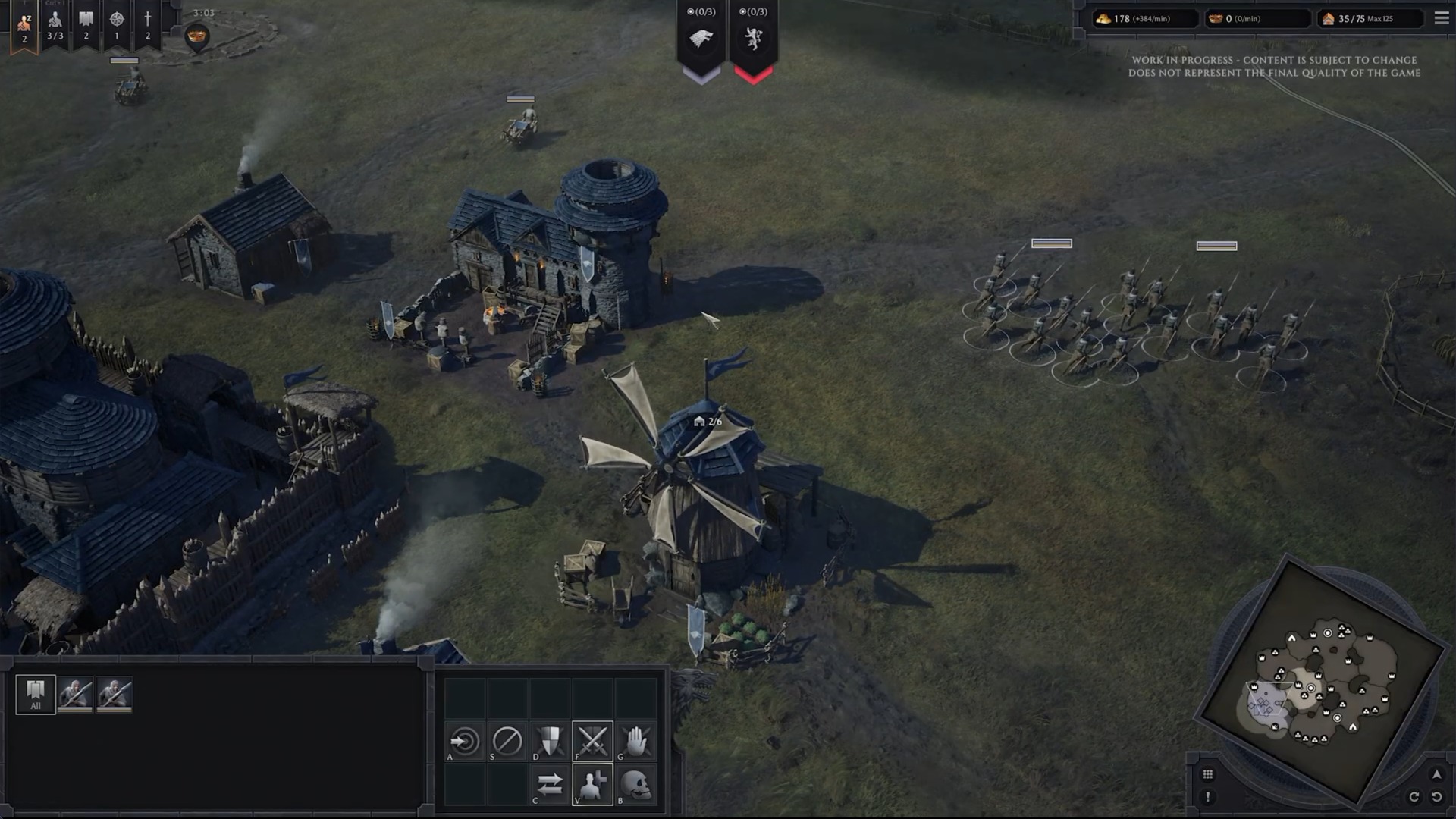
For this preview, I got to spend some time with the game’s skirmish mode, taking control of House Stark in a battle against the Lannisters. It was a fairly focused slice of the overall experience, but it gave me a good opportunity to get to grips with the fundamentals of War for Westeros, from building up my forces and managing my territory to eventually taking the fight directly to the enemy.
Playing as the Starks also immediately showed how important the different houses are to the overall experience. Rather than simply feeling like different skins placed over the same basic army, War for Westeros appears to be leaning into the identity of each faction, something that could prove particularly important when it comes to keeping skirmish battles and multiplayer interesting over the long term.
For example, I was able to build Wildling settlements, which let me train mammoth riders, giants, and more. Genre veterans won’t be surprised to hear that the different houses have unique buildings and military options. However, they might be surprised by just how different those armies can actually feel on the battlefield, especially when combined with the several hero characters that each house can train.
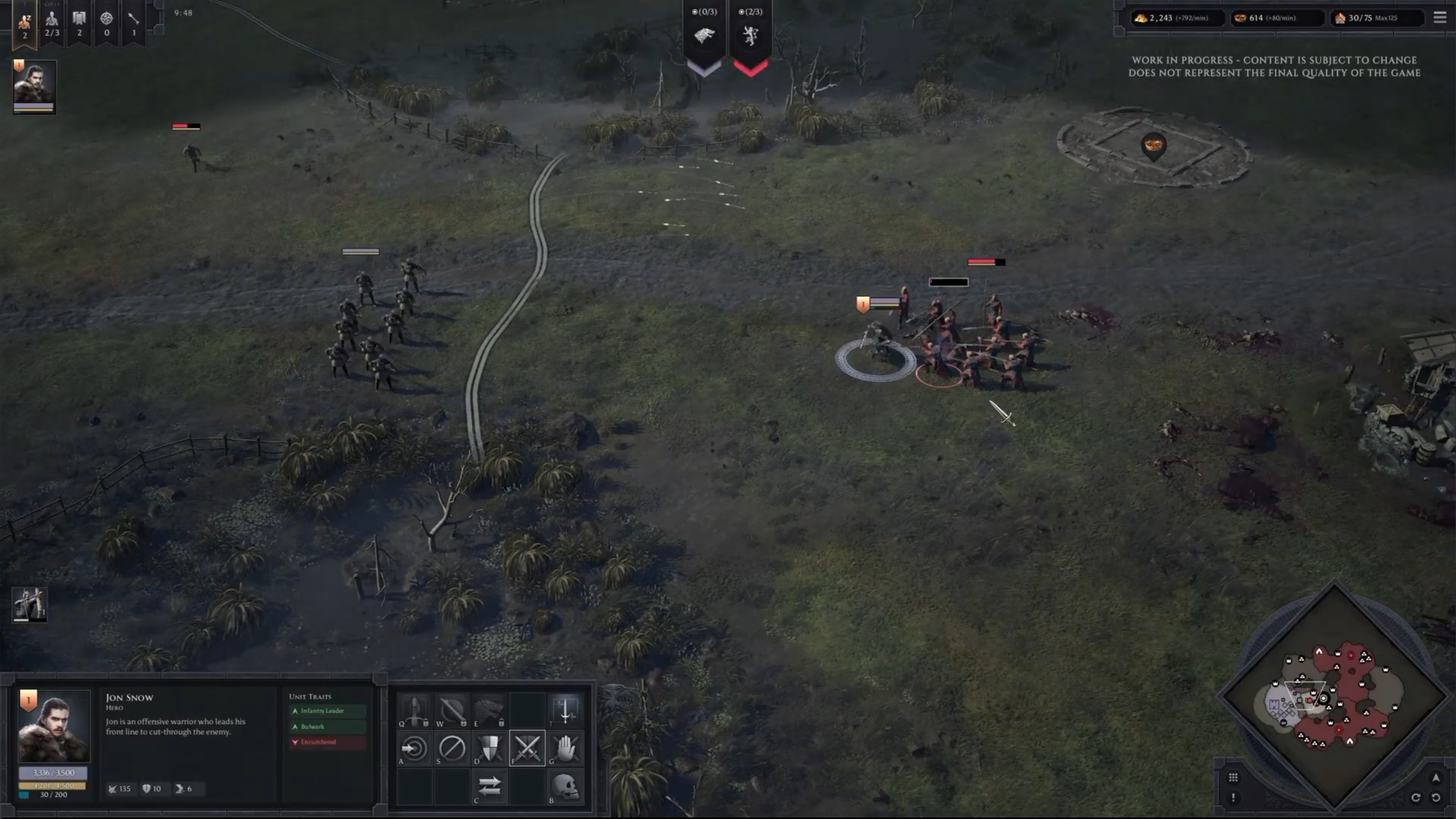
During my time playing as the Starks, I was able to gather enough resources to train both Robb Stark and Jon Snow. Each hero has their own unique abilities, including special attacks, buffs for specific unit types within a certain distance, and more. As these heroes engage in combat, they level up and become stronger, improving their existing abilities while also unlocking new ones.
Some heroes can even complement each other, offering additional buffs when fighting alongside one another. One example of this is Jon Snow and his beloved direwolf, Ghost. While they each have their own abilities, keeping Jon and Ghost close together on the battlefield allows them to buff each other, making them considerably more effective as a pair.
This hero system can make a huge difference when used correctly, even allowing you to turn the tide of a losing battle with some well-placed and well-timed abilities. Just keep in mind that your enemies will have heroes of their own, and they can do just as much damage to you if you’re not prepared.
Fighting For Territory
While the heroes and faction-specific units are naturally going to attract a lot of attention, one of the more interesting aspects of Game of Thrones: War for Westeros is how it handles resources and territory.
You can’t simply find a comfortable position, build an enormous base, and remain there for the entire match. Individual territories can only support so much development before resource production begins to become less efficient, while there are also limitations on how many workers you can have operating within an area. This means you’ll eventually have to expand.
It creates a constant push and pull over territory, because even when you’re not ready to launch a full-scale attack against your opponent, you’re still competing with them for control of the map. Securing another area gives you additional room to expand your economy and military, while denying that same opportunity to whoever you’re fighting.
I really liked this approach because it encourages you to be proactive. I’m often guilty of playing RTS games defensively, building up a huge force before eventually venturing out into the wider map. War for Westeros doesn’t necessarily stop you from doing that, but its systems certainly give you a reason not to become too comfortable.
It’s also another area where the differences between the houses become apparent. The Starks, for example, have their own methods of generating resources and building up their forces, which feeds into their wider identity as a faction. Based on what I’ve seen so far, choosing a different house won’t simply determine what your army looks like; it should meaningfully change how you approach an entire match.
When Armies Collide
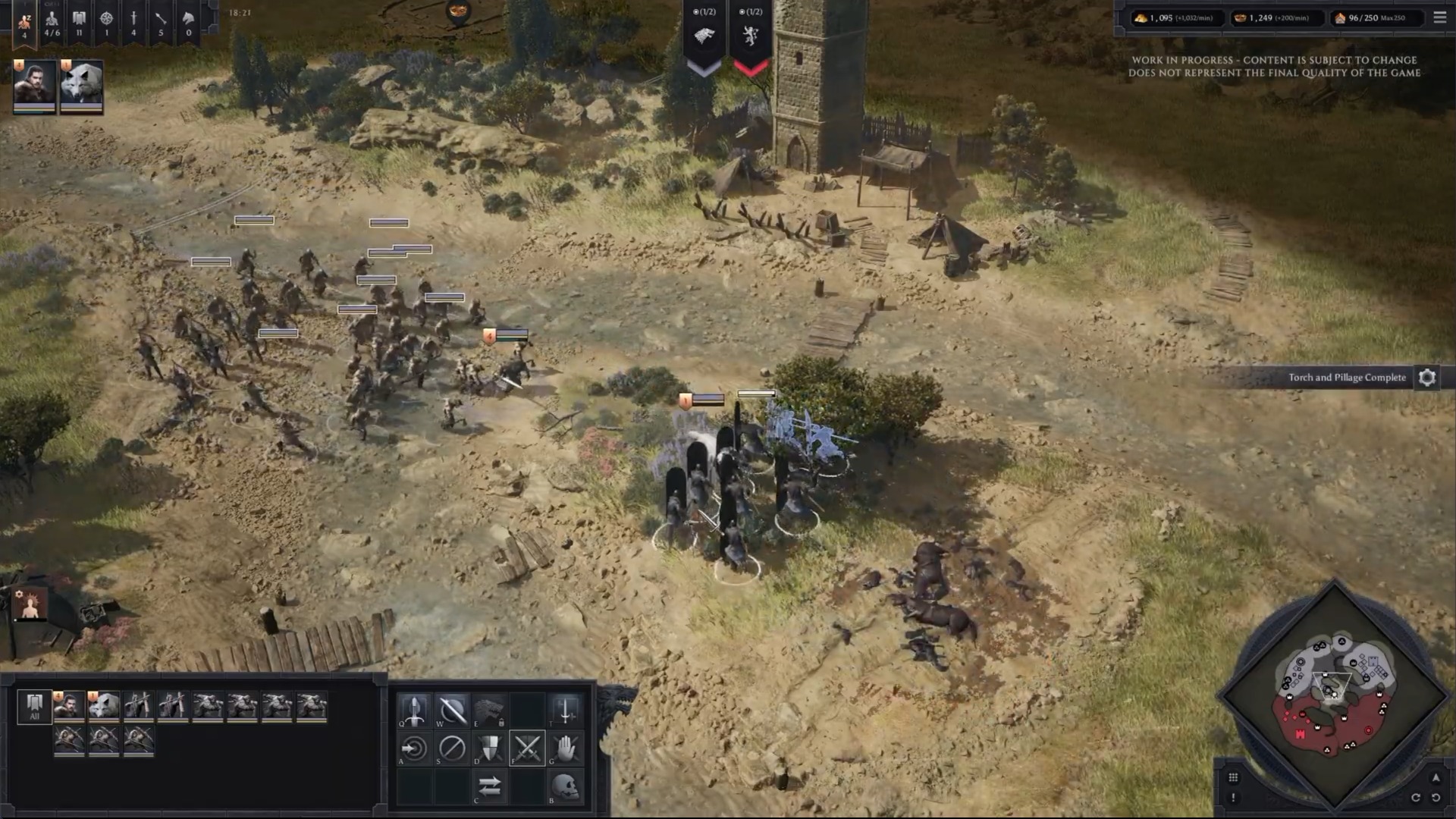
Once those armies eventually meet, War for Westeros follows a fairly familiar RTS combat structure, with different unit types having their own strengths and weaknesses. Cavalry, infantry, ranged units, and the more unusual faction-specific troops all have their own roles to play, and blindly throwing everything you have at the enemy isn’t necessarily going to end well.
Thankfully, the game makes it fairly easy to understand what each unit is designed to do. Once I had spent some time building up my army and experimenting with the different options available to House Stark, I quickly started thinking more carefully about my army composition rather than simply training as many units as I could afford.
This becomes particularly important once heroes enter the battlefield. As I mentioned earlier, characters like Jon Snow and Robb Stark can have a significant impact on a fight, but they aren’t unstoppable. Poor positioning can still see them surrounded and overwhelmed, meaning you need to support them with the rest of your army rather than simply sending them charging into battle alone.
That’s something I appreciated quite a bit. These are iconic Game of Thrones characters, so they should feel powerful and significant when they appear on the battlefield, but War for Westeros still needs to function as a strategy game first. From what I’ve played so far, Playside seems to have found a good balance: making these characters feel important without letting them completely overshadow the wider tactical side of combat.
A Taste Of The War To Come
Ultimately, I won my skirmish by pushing into Lannister territory and destroying their Keep. The entire match lasted around 40 minutes, and I had a lot of fun watching the battle gradually escalate from building up my settlements and forces to eventually launching an all-out assault on the enemy.
Even from this relatively small taste of the game, I can already imagine just how chaotic multiplayer could become. Multiple players competing for territory, building armies, deploying heroes, and trying to counter each other’s strategies could create brilliant battles, especially once more factions and maps are added to the mix. However, multiplayer isn’t actually where my biggest questions about Game of Thrones: War for Westeros remain.
What About Single-Player?
For someone like me who enjoys playing RTS games primarily as a single-player experience, the biggest question coming out of this preview is what exactly the campaign is going to offer.
We already know the story of Game of Thrones, and we have watched many of its biggest battles play out on screen. So, will the campaign simply ask us to relive those moments from the television series, or will War for Westeros allow us to take those familiar events in completely different directions?
Will we get to visit iconic locations from across Westeros? Can we change the outcome of major battles, save characters who were originally destined to die, or even completely rewrite the history of A Song of Ice and Fire?
Those possibilities are arguably what excite me most about the idea of a Game of Thrones strategy game. The world is already perfectly suited to stories built around shifting alliances, betrayals, territorial conflicts, and battles for power. Giving players the opportunity to influence those events themselves could make War for Westeros far more interesting than simply recreating scenes we have already watched. Unfortunately, this preview build couldn’t answer those questions. What it did do was leave me wanting to find out.
Based purely on the skirmish mode I played, Game of Thrones: War for Westeros already has some promising foundations. The houses appear to have meaningful differences, the hero system adds another tactical layer to battles, and the way territory and resources work constantly encourages you to expand and engage with your opponent.
I had a lot of fun during my roughly 40-minute battle against the Lannisters, and I can already see the potential for some wonderfully chaotic multiplayer matches. Now I just need to see whether the rest of the game, particularly its single-player campaign, can live up to the same promise.
