

When it comes to Action RPGs, more specifically, Soulslikes, there’s one thing you can be sure of: you’ll die a lot, you’ll get stressed out, and they don’t respect your time. Okay, so that’s three things, but you get my point. When I got my hands on Crimson Moon during Summer Game Fest 2026 and had the chance to play around with it, I was instantly smitten by what it was doing. It’s easy to get into, features a fun combination of Soulslike and roguelike mechanics, and holds up whether you’re going in solo or bringing a friend along.
Game Name: Crimson Moon
Platform(s): PlayStation 5, Xbox Series X|S, PC
Reviewed On: PC
Developer(s): ProbablyMonsters
Publisher(s): ProbablyMonsters
Release Date: September 1, 2026
Price: $19.99
What’s the Deal With Crimson Moon?
You play as a Nephilim, born from an unholy alliance between angels and humans. For your service in fighting the good fight, you’re forced to keep on fighting, because you’re taboo. But thanks for being awesome! But now you’re forced to locate several artifacts that will help put an end to this unholy war. That’s the story in a nutshell. Sure, there’s more going on than what I’ve glossed over, but the story isn’t why I enjoyed my time with the game.
Smacking Enemies and Collecting Better Loot
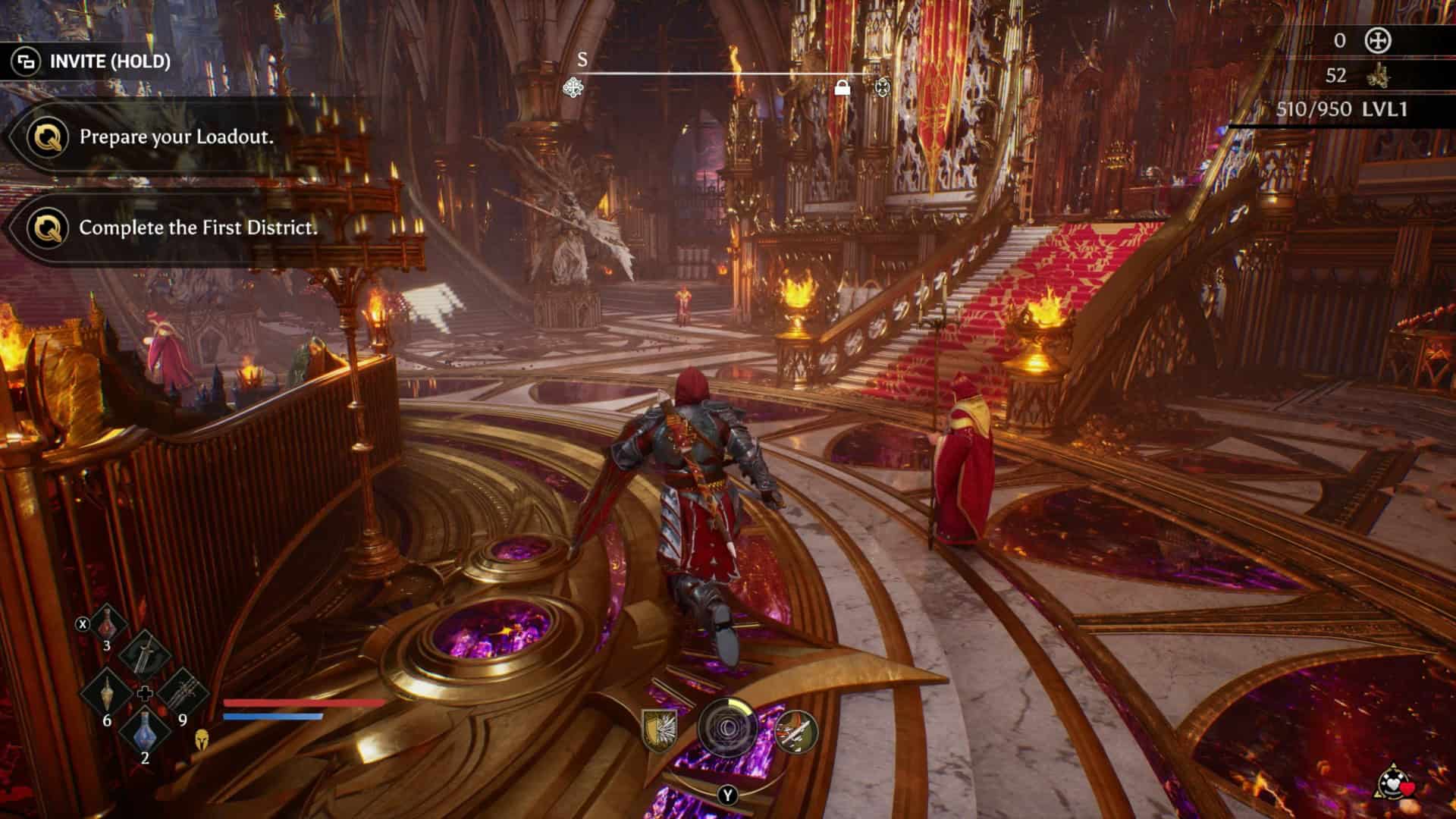
I really like what mashing of the Soulslike and roguelike approach that the game takes. When you first arrive at the game’s hub, you won’t have access to all the cool stuff, such as the blacksmith who sells and upgrades gear, the guy who sells trinkets and rings, or the character who provides additional lore. Those options open up as you level, and leveling itself doesn’t bother with stat allocation; it just hands you access to more and better gear, which comes in the usual Common, Uncommon, Rare, and Epic tiers. The rarer the item, the more perks it offers, and the better your odds of staying alive.
Getting into a run is refreshingly quick: pick a stage from the map, choose your gear and whichever Nephilim form you’ve unlocked, and you’re in. Each run throws you through three levels of objectives (clearing groups of enemies, taking down elites, hunting relics) before capping off with a boss fight.
Oh, and there are also some epic finishers when you’re prompted to do a light attack near an enemy when they’re exhausted. Seeing your character taking that massive mace that an enemy was using to smack you around, only to ram it right into their face is super satisfying.
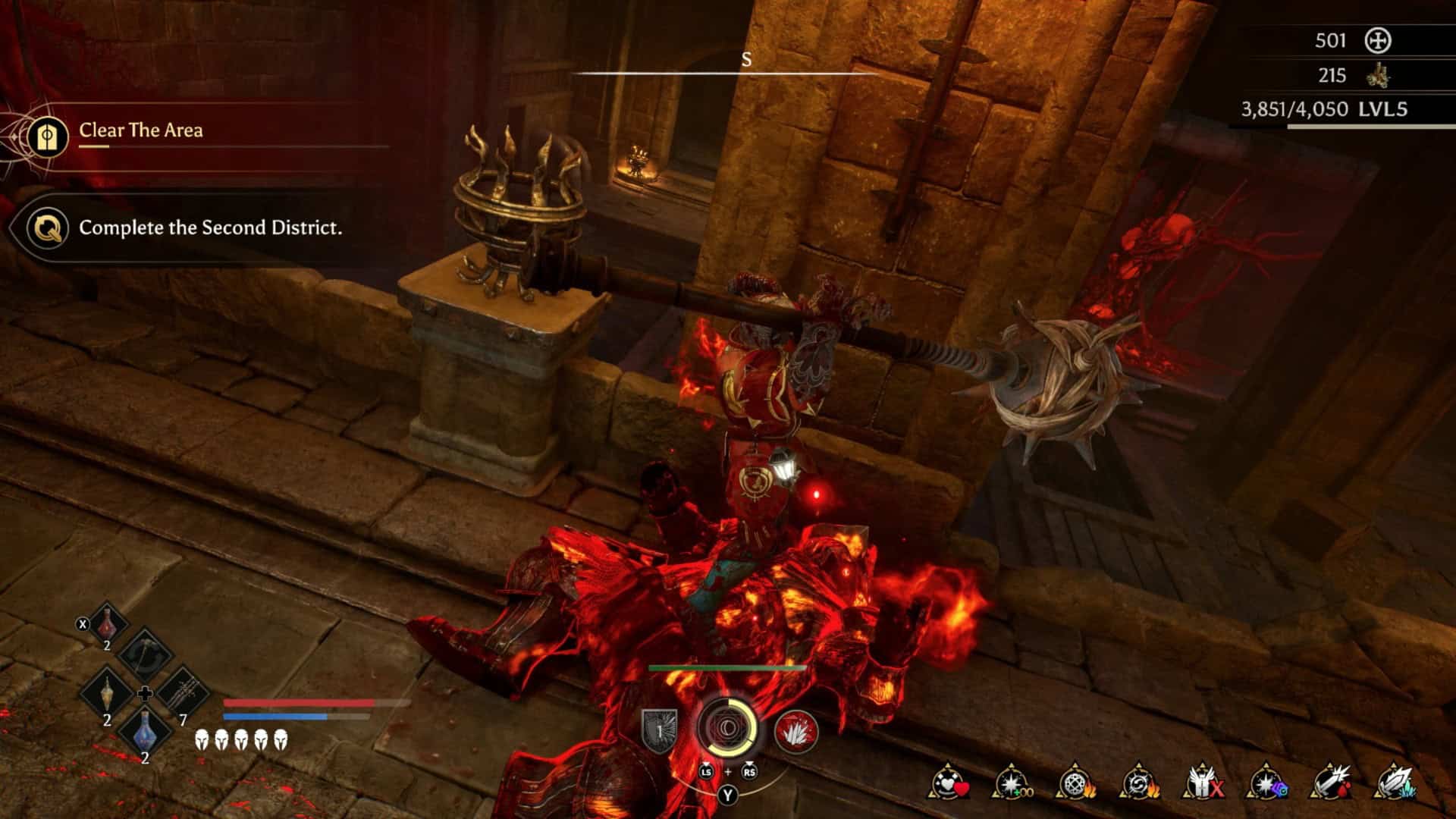
The gameplay of Crimson Moon felt familiar to me, and it will likely feel familiar to anyone who enjoys action RPGs. You have access to a light attack, heavy attack, dodge button, a jump action, and yes, you will need to learn how to parry. I know, I know. Circling around enemies also gives you access to a backstab, which was really useful, while the parry mechanic was so easy to pull off that it almost felt like cheating at times. You’ve got a one-hander and shield for a more defensive playstyle, or you can switch things up with a secondary two-hander for something more offensive.
And while there’s sadly no bow and arrow or crossbow for ranged duties, you do get access to throwing knives, bombs, and more, which are perfect for clearing out smaller enemies or pulling foes toward you. There’s no traditional magic casting, but you’ll find weapons that deal magical damage, with cooldowns of course, so you can’t just spam your way to victory.
Since it’s not always obvious where those tricky enemies are lurking, there’s an ability to see where they’re hanging out. It’s sort of like using wall hacks in an FPS game, and it came in handy, because there were moments where I was running around blindly trying to figure out where the last enemies were hiding.
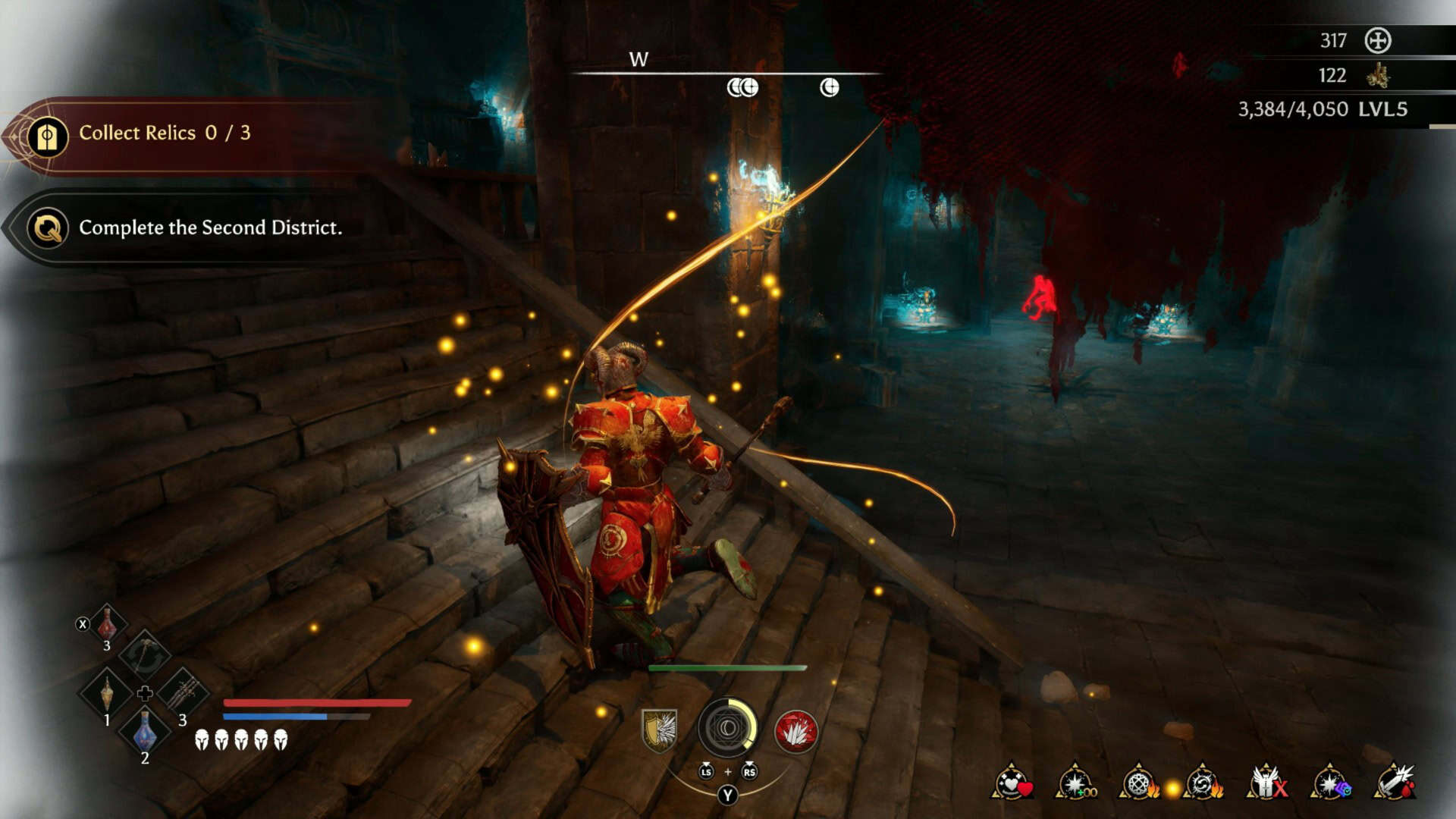
Then there’s your angelic Nephilim power, which builds as you attack enemies. Fill the meter and you can transform into a powerful, invincible form that lets you dish out damage without worrying about your health. The transformation is temporary, and taking hits drains the meter faster, but you’ll find items that build it quicker and extend how long it lasts.
Dying isn’t the end, and you’re afforded several chances to live on before you face the true death. But as you level up and progress, you’ll be awarded more lives, which makes taking on the roguelike structure a bit easier to digest. And if you’re playing with a second person, you’ll be sharing lives, but the upside is if one of you dies, you can resurrect the other person.
Loot, Perks, and What You Keep
The roguelike side comes through the loot scattered across each level, found in chests or dropped by enemies. It comes in all shapes and sizes (stronger weapons, armor, other useful gear) and every piece does something different, whether that’s a perk or a boost to your offense or defense. Early on, expect to spend real time inspecting everything you find and figuring out what actually works for your build. And that happens even when you think your setup is already decent.
I found some genuinely great pieces. Like a pair of shields: one gave me an extra healing flask if I hit enemies enough times, and another unleashed a fireball that was great for chipping in extra damage while I played keep-away. There was also this really cool sword that hammered foes with rays of light for some massive damage. But as cool as they were, I couldn’t upgrade them anymore, so they eventually became underleveled and underpowered.
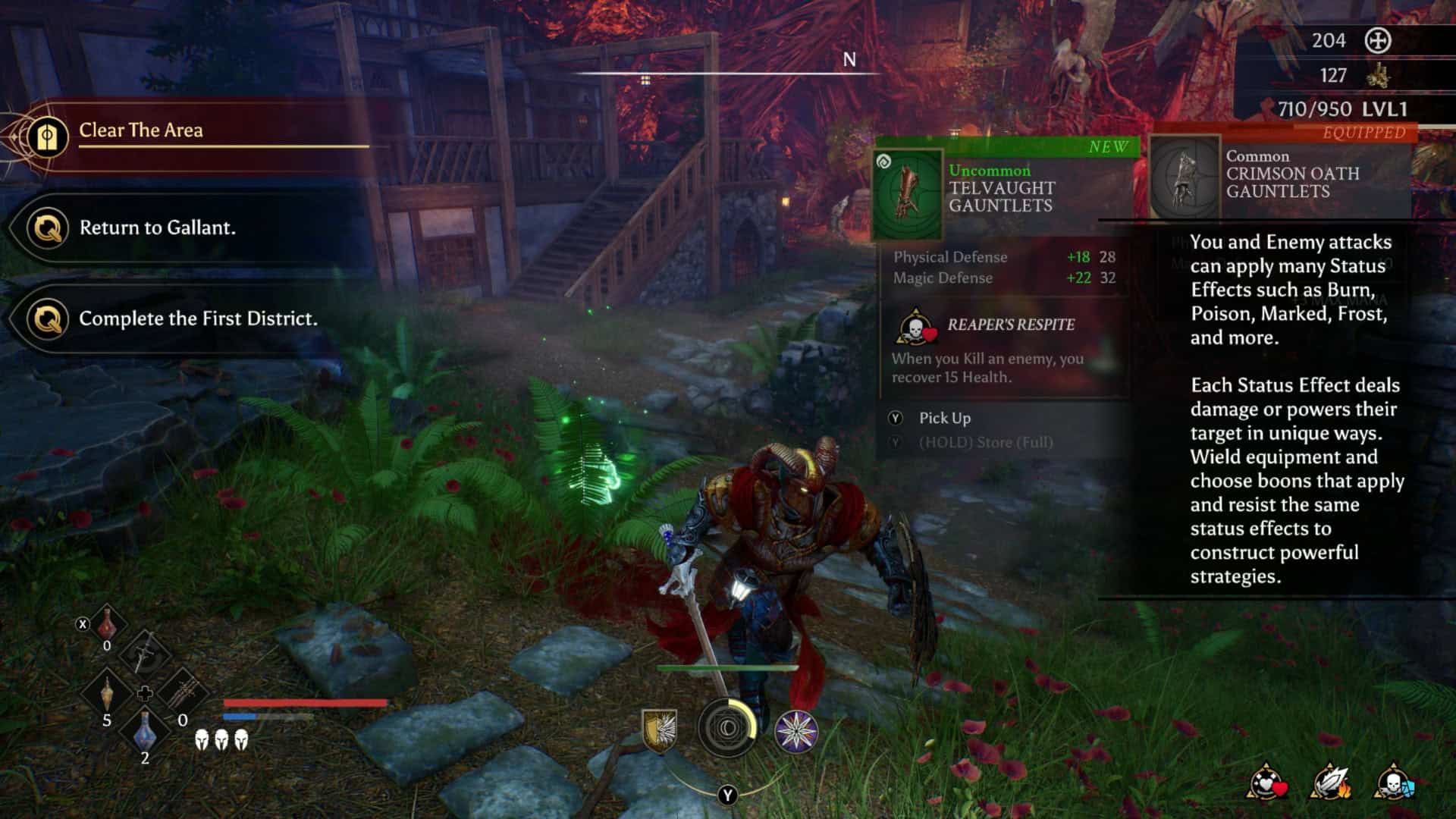
The game also borrows from extraction games. You can pick up whatever loot you find throughout the three levels, and if you manage to complete the entire run, including the boss fight, you’ll take it back to the hub as purified gear. From there, you can upgrade it, equip it for another run, or let it sit in your vault. Fail the run, however, and all the loot you picked up along the way gets left behind. Your equipped gear stays with you. That hurts even more when it was easily the best item you had managed to find.
At the end of every level, you’ll also choose from three randomized perks, adding another roguelike element to each run. Some picks are genuinely decent, others feel worth skipping entirely, but you’re forced to pick one before moving on anyway, so you might as well grab whatever looks the least useless.
Solo, Co-Op, and Not Wasting Your Evening
The whole thing is completely playable solo, start to finish, and I never felt like I was missing out doing it that way. But bring a second person in and the game ramps up enemy numbers and aggression to match, which honestly makes it more fun. My only gripe is that it caps at two players, and three would’ve been even better.
I love how simple co-op is to get working, instead of borrowing a page from other games that make it more frustrating than it needs to be. You can head to a section in the hub to invite a person, and invites arrive via an in-game mailbox instead of forcing you to alt-tab out to Steam. Jumping into a quick session or hosting your own game are also options.
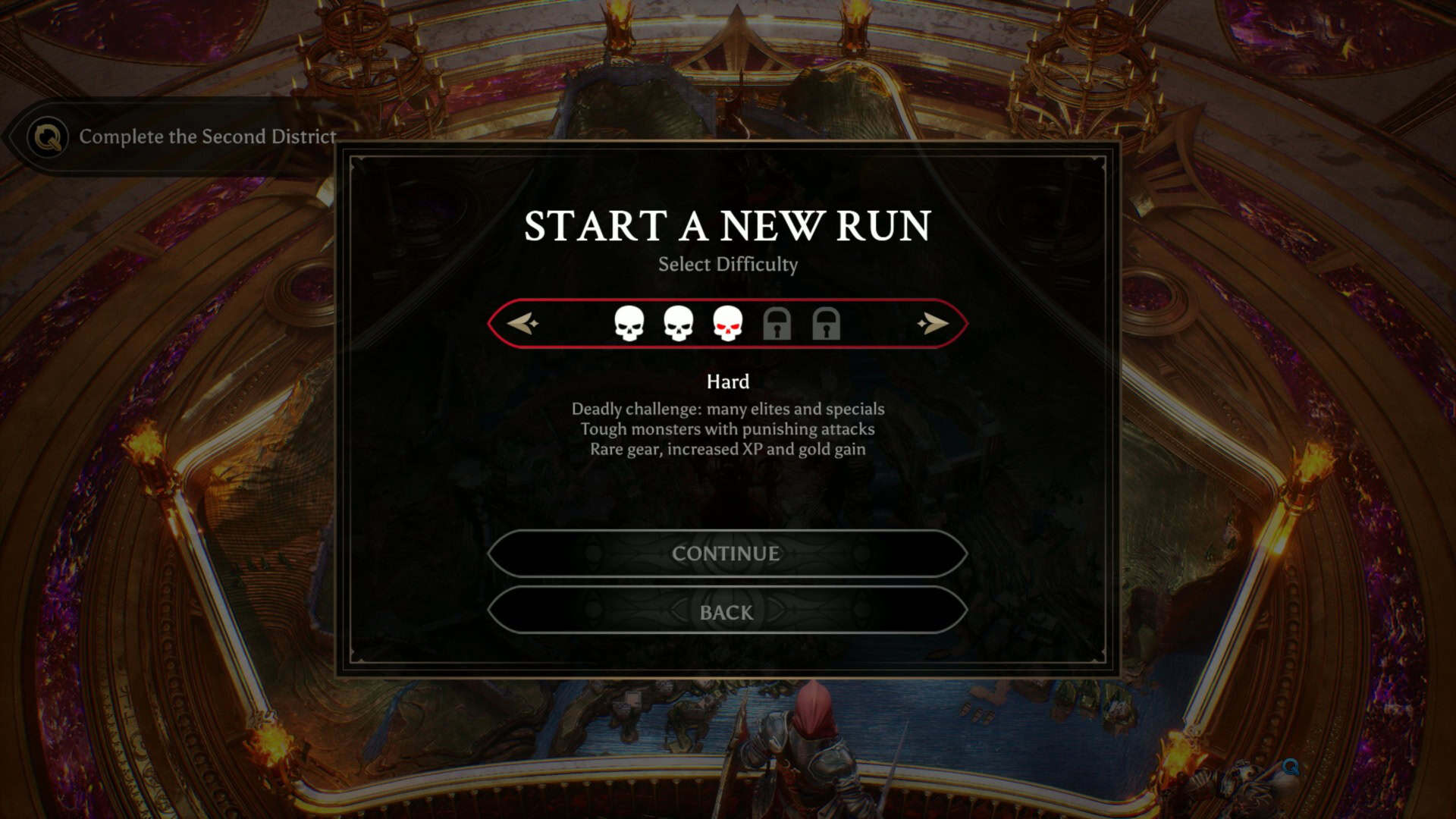
A full run only takes about 30 minutes, sometimes less depending on how geared up you are and if RNG has blessed you. The better your loadout, the faster you’ll move through each one. And if runs start feeling too easy, you can crank the difficulty up yourself as you level and finish more of them, unlocking access to higher tiers. It’s worth pushing for, too, since higher difficulties drop better loot, so there’s an actual incentive to push it rather than coast.
Controls and That Damned Camera
As far as the control scheme goes, it’s pretty basic: light and heavy attacks, dodging, jumping, and selecting items to use during combat. It’s everything you’d expect from a game like this. However, the game makes the odd decision to have sprinting share the same button as dodging, requiring you to hold it down instead of simply clicking L3. Just let me sprint with L3 like literally every other game in this genre. I get that it’s currently mapped to the ability to scan the immediate area and spot any enemies you missed. Surely there’s a better solution than making me fumble the stick every time I want to move fast.
Alas, there’s something funky going on with the camera, and not in a good way. For the most part it’s fine, but when you’re tackling larger enemies and you’re attacking them, or they’re attacking you, it causes the camera to go crazy. It gets worse when you’re near a wall, because then your entire view is blocked. I hope this gets addressed, because this can be the cause of you taking some cheap damage.
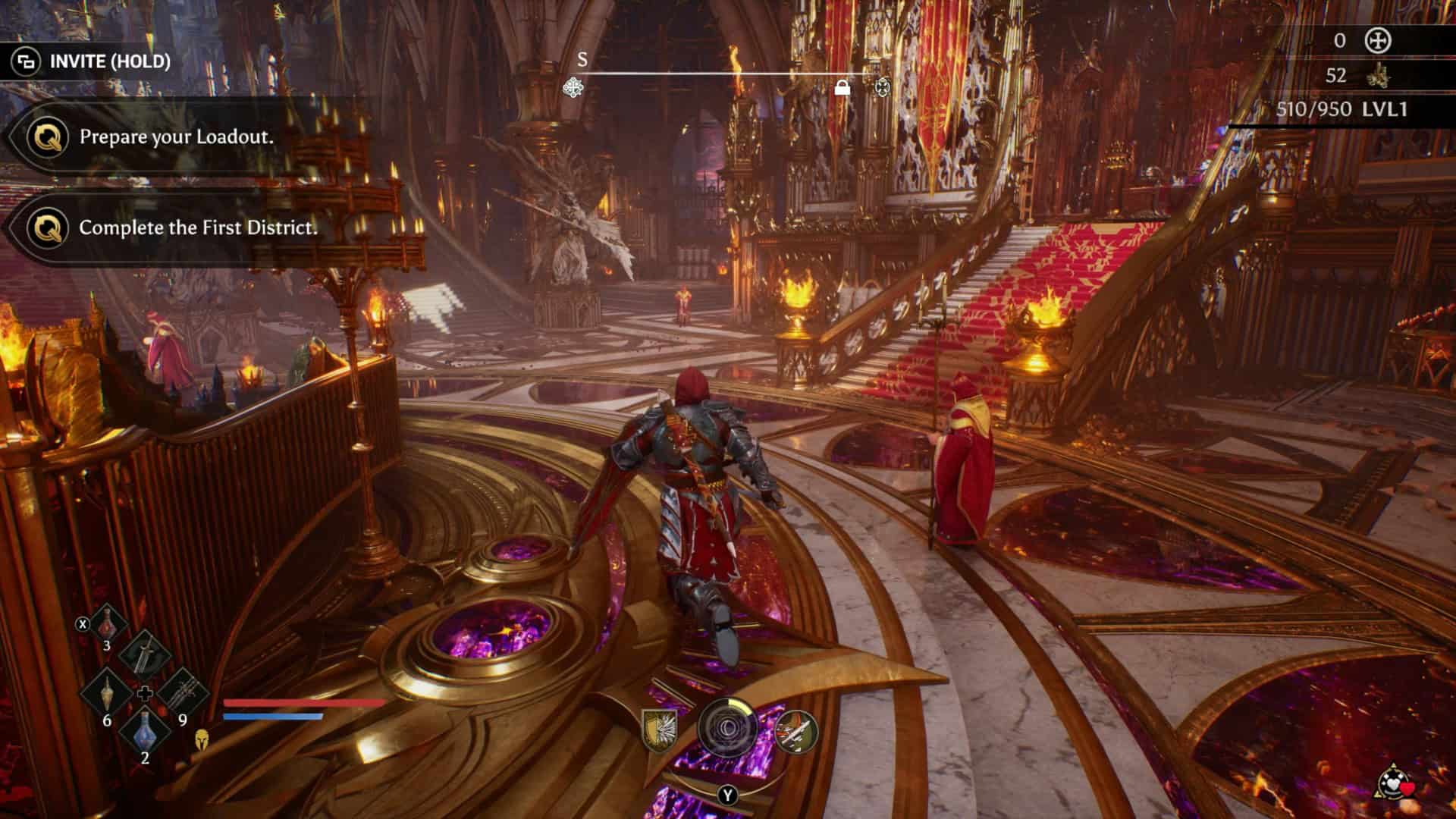
My only other real frustration is how the game handles the transition between missions. Finish a run, and you get a quick stop back at the hub before getting shuffled straight into the next one, except you can’t swap your gear or your Nephilim power during that stop. Nope. The only time you’re allowed to do that is after you’ve been defeated and sent all the way back to the beginning. Let me change my loadout before every run, even when I’m succeeding. That’s all I ask.
PC Performance
I played Crimson Moon on my main rig, which is stupidly overkill for this game (Ryzen 9 9800X3D, RTX 5090, with more RAM than I know what to do with), and unsurprisingly, I didn’t run into a single performance issue. But since that rig isn’t exactly representative, I also put it through its paces on my son’s PC: a Ryzen 5 7600X paired with an RTX 3070, which is a far more realistic build for most players. I had to drop the resolution a bit, but it still ran solid at 1440p with 60-plus frames per second the whole time. No complaints there.
More impressive for being $20 game is that there’s a ton of PC options for tweaking, while all of the upscaling tech is here; Nvidia DLSS, AMD FSR, and even Intel’s XeSS made an appearance. And here we have another game that’s running Unreal Engine 5, that actually runs well. No stuttering, or any other performance-related uglies to report on.
It’s Fun, and That’s All I Care About
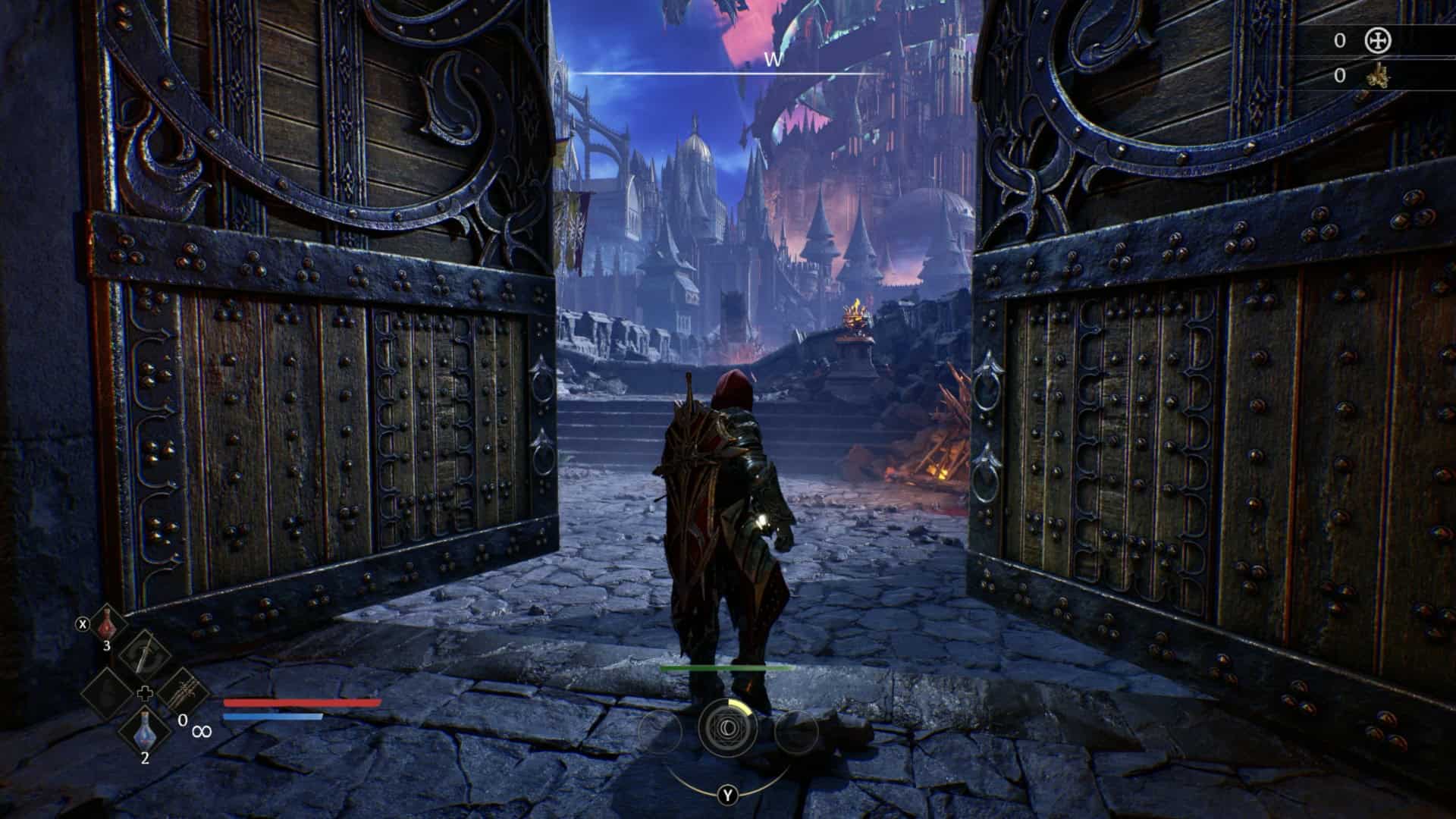
At the end of the day, Crimson Moon is a fun game that lets you beat up enemies, collect lots of loot, and do it either by yourself or with another player. Mechanically, it’s fine. There isn’t anything here that completely blew me away, but there also wasn’t much that upset or frustrated me outside of a few smaller issues. I jumped in, smacked enemies around, collected better gear, and had fun doing it.
That’s really all there is to Crimson Moon, and honestly, that’s perfectly fine. It doesn’t need to be the biggest, deepest, or most complicated Soulslike around. It feels like a smaller combination of Dark Souls and Diablo that you can enjoy without dedicating your entire life to it. Sometimes, a game can simply be fun for what it does, even if it doesn’t do much. For $20, the game is a solid pick for those who enjoy the genre, and don’t have the time to commit to a 40 to 50-hour game.
If you enjoyed this review, explore more of our in-depth video game reviews across PlayStation 4, PlayStation 5, Xbox One, Xbox Series X, Nintendo Switch, Nintendo Switch 2, and PC.
Review Disclosure Statement: Crimson Moon was provided to us by ProbablyMonsters for review purposes. For more information on how we review video games and other media and technology, please review our Review Guideline/Scoring Policy.
Crimson Moon Review
At the end of the day, Crimson Moon doesn’t need to reinvent the Soulslike genre to be worth your time. It knows exactly what it wants to be, a quick, loot-heavy romp you can tackle solo or with a friend, and it does that well enough to earn a spot in your rotation. The camera hiccups and a few control quirks keep it from being a home run, but for $20, it’s an easy recommendation. Sometimes a game doesn’t have to blow you away to be worth playing, and Crimson Moon proves that.
Pros
- Fast, satisfying runs that don’t eat your evening
- Co-op is painless to set up, with real stakes from shared lives
- Solid combat and constant loot/build variety
Cons
- Camera goes haywire near walls when engaged with larger enemies
- No loadout swaps between runs unless you’ve died
-
4
