

The fighting game landscape changed 30 years ago with the release of Street Fighter II. Since then, the series has gone through many innovations and evolutions. However, Street Fighter 6 feels like none of that and more like a reshuffling of Street Fighter V.
As mentioned in the title of this review, Street Fighter 6 has become the McDonald’s of fighting games. Where there was once innovation and great value, there are now the same plain burgers and fries at a higher price, with everything sold as piecemeal as possible.
Game Name: Street Fighter 6
Platform(s): PlayStation 4, PlayStation 5, Windows, Xbox Series X|S
Reviewed On: Xbox Series X|S
Developer(s): Capcom
Publisher(s): Capcom
Release Date:
Price: June 2, 2023

A World Tour with Very Little World (Story)
Story Review – Some Vague Spoilers
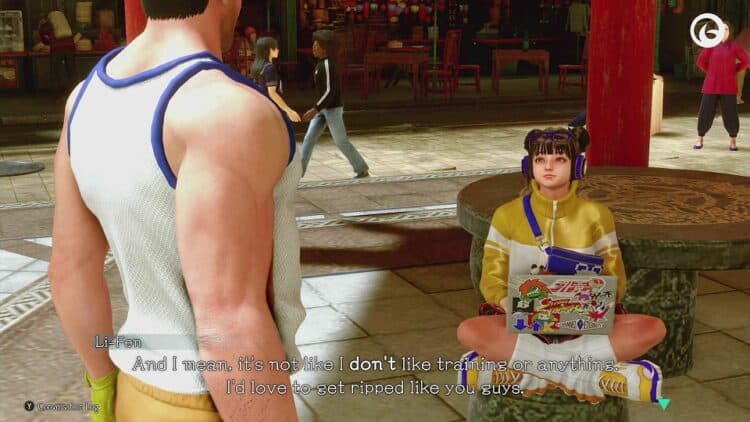
Normally, this part of the review would cover the good and bad aspects of the actual story. But at the time of writing, I’m not even halfway through World Tour mode. The reason for this is that World Tour mode is long and boring.
For those of you who played the World Tour mode demo a few weeks ago, you know that this is a story about the differences between each person’s understanding of what “strength” means to them. You’re a silent protagonist, even though you pick a voice in the Avatar Creation Suite, which is detailed and awesome, who ends up in a small rivalry with Bosch, one of Luke’s students in Metro City, USA, the main location where you’ll spend your time in this mode.
Bosch leaves Luke’s training after both of you are dropped into Metro City and steals a flash drive with something on it, probably something pertaining to Neo-Shadaloo. Yep, they’re back! You then follow Bosch around the world, uncovering more of the plot, and that’s about it for the story portion of World Tour mode.
Gameplay-wise, you’re going to be running around a very limited part of Metro City over and over, doing quests for random people on the street while working your way through the main storyline. Along the way, you’ll meet Street Fighter characters, known as “Masters” here, and unlock their move sets, Super Arts, phone numbers, and more as you SLOWLY build out your own character in the style of your favorite Master.
You’ll also unlock stats and skills through a talent tree, with choose-one-or-the-other options leading through multiple tournament-looking ladders over and over again. You can also increase your stats with clothing, making your character look more and more ridiculous in order to make your numbers bigger than those of the AI opponents you fight on the streets. These opponents consist of everyday people you can challenge or enemies who wait around on the streets and charge at you to engage in battle.
Since this is meant to be Street Fighter 6, and the mode is called World Tour, you would expect there to be more than just Metro City to wander around in. Well, you’d be wrong.
You do get to travel to international locations like England, Mexico, Italy, and more to encounter other Masters who live in those locations. However, after the flashy introduction is out of the way, you just get a small location with about three or four other people in it, plus your Master, and that’s it. This is where World Tour mode becomes a huge letdown. IT HAS NO WORLD! Outside of Metro City, there is nothing worthy of your time and effort unless you want to learn things from your Masters in those locations. A real shame.
The Shiniest Action Figures (Graphics)
CAPCOM decided to move Street Fighter 6 from Unreal Engine to its internal RE Engine. Yes, the same graphics engine that gave us the Resident Evil 2 remake, Resident Evil 3 remake, Resident Evil 4 remake, Resident Evil VII, and Resident Evil Village. The quality of the graphics has seen a major improvement.
Every fighter moves fluidly at all times, from simply moving back and forth to throwing fireballs and everything else under the sun. Where the graphics really shine is in the Level 3 Super Arts, which are small cinematic moments representing the most damaging moves of your selected fighter, normally doing 25% damage for most fighters. These moments, filled with Street Fighter 6‘s signature spray-art effect, are amazing and thrilling every time you see them come out. Unless you’re on the receiving end of one, in which case it feels like your heart is being ripped out of your chest.
Street Fighter 6 does have Performance and Presentation modes to select from. The former drops the quality of some graphics, such as the backgrounds seen in my screenshots, to boost gameplay to a smooth frame rate. The second mode is a higher-resolution option that gives you all the graphical glory the RE Engine can provide, but at the cost of a slight reduction in frame rate. Most hardcore players probably won’t want to use that mode since, in a fighting game like Street Fighter 6, every frame matters.
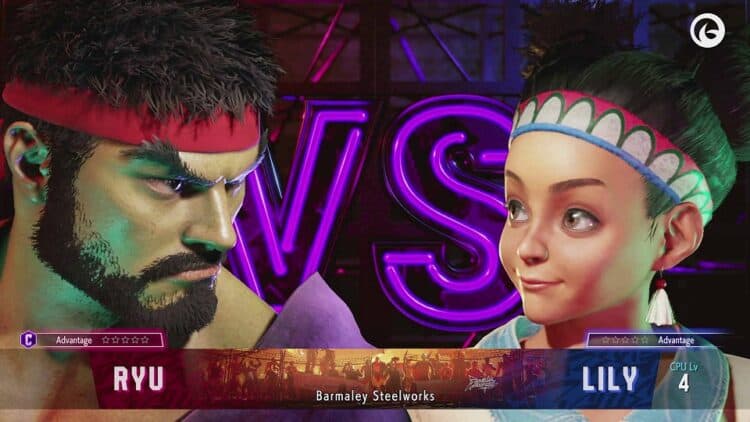
If there is any drawback to Street Fighter 6 using the RE Engine, it comes from the character designs, or more specifically, the faces themselves. Take Lily in the screenshot above. Yes, she’s a young kid, but the way her skull appears to be shaped makes her look like some sort of weird Bratz doll mixed with an anime VTuber. I think it comes from the eyes.
This look sometimes comes across as breaking the realism barrier, making the fighters look like cartoons. Try picking Luke and pressing right on the control pad to change his face, and you’ll see exactly what I mean. In the overall scheme of things, this is a small gripe about a graphics engine that is doing some amazing things with a game franchise that is over 30 years old and keeping it looking fresh.
Ready… Fig… Nope, Servers Down… (Gameplay)
Alright, let’s get into the meat and potatoes of Street Fighter 6.
As we all know, Street Fighter 6 is the usual one-on-one fighting game where you beat the crap out of each other until one fighter’s life bar goes down to zero and they’re knocked out for two out of three rounds by default. Nothing has changed here.
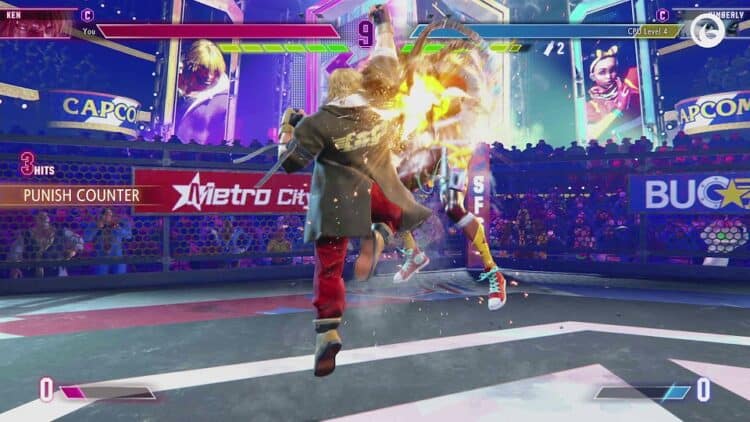
You might think that this “Drive Gauge” thing that’s now under your life bar is a new mechanic, but it’s essentially the move-enhancement mechanic from Street Fighter IV and Street Fighter V placed in a new position, filling based on offensive and defensive plays. You still have your counter-hit art move thing from previous games, but now it has a cool paint effect instead of the light or ink effects used previously. Super Art moves are still around, ranging from basic Supers to flashy cinematic versions for the Level 3 Super Art.
The selection of modes is plentiful in Street Fighter 6. Through the Fighting Ground section, which is the main single-player/local multiplayer mode, you have the standard Arcade mode, which features five to 12 matches that unfold a story based on each of the 18 characters you can pick from. You also have Team Battle mode, a 4 vs. 4 elimination mode, Practice mode, where you do just that, a special mode called Extreme Battle, and the basic online modes for those of you who don’t want to use the Battle Hub.
Playing online is a completely different monster. While you can play casual, ranked, and custom rooms, getting things going can be a nightmare. During our playtesting time, I tried to get a simple custom room going with The Outerhaven EIC Keith. Keith made a custom room, which I couldn’t find through a name search or anything else.
Instead, I tried to find Keith’s CAPCOM ID username. I couldn’t find it through a normal name search, but I could find it through a public search with no filters. Then we had issues with Keith finding the friend invite I sent him. However, once all that was sorted, we were finally able to enter a custom room and get some fights going. But first, there were some more problems.
Entering the online custom room presented more issues that Street Fighter 6 didn’t explain. First, you aren’t told that you have to select one fighter from the roster and that this fighter is the one you’re going to use during every online match you have. So, there is no fighter selection between matches.
The other thing you aren’t told is that the control scheme is set to the “Modern” setting, the new one added to Street Fighter 6. If you want to use the Classic control scheme, you have to manually set it and then configure the button mapping to whatever you want it to be, even if you’ve already done this for normal play. Jumping right into a match with Keith gave me Luke with the Modern control scheme, and it sucked. But once I made some changes, the matches were fun.
The biggest thing with online is the rollback netcode, a GLORY of online gaming for fighting games. Even with a 226ms ping between myself in Australia and Keith Mitchell (our amazing EIC) in the USA, the matches went buttery smooth with no input lag, graphical skips, or other negatives at all. Street Fighter 6 plays online like you’re in the same room as the other person, even if they’re on the other side of the world. But I think CAPCOM can do better, as I’ll explain below with Battle Hub.
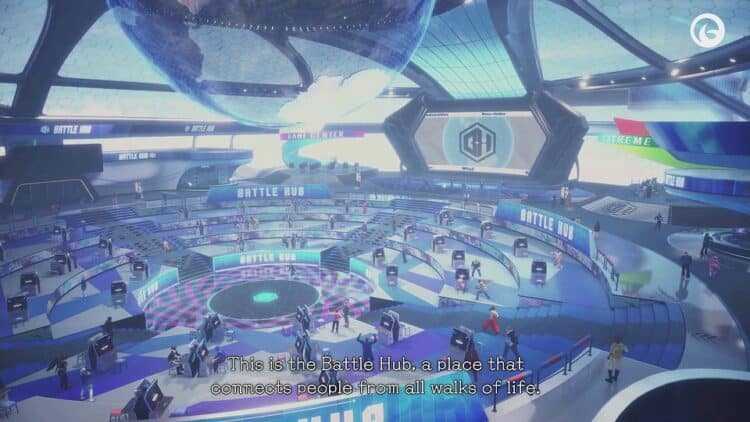
The Battle Hub, the online core of Street Fighter 6, is like gathering at EVO or a really fancy-looking arcade. This is going to be THE gathering place for online players all over the world. Or at least for those in North America, South America, Asia, and Europe, as those are the only available servers you can access for Battle Hub.
Sorry, Australian players. We’re losing out again, having to jump onto North American servers with over 200ms pings or Asian servers where the pings are just as bad and the servers are flooded with hardcore Asian players, meaning mostly Japanese players. Maybe one day CAPCOM will deem Australia worthy of having its own servers, as so many other companies already do.
There’s a nice addition this time around, as Street Fighter 6 will also show you whether someone is using a wired or wireless connection. We all know that wired is the optimal connection type, and there’s been a lot of conflict regarding people playing fighting games online using wireless connections. So now you can see who’s doing what, though we don’t recommend dropping out of a game because of it. But that’s your call.
But what can you do in Battle Hub? You can do everything you can do in the online mode found in Fighting Ground, including one-on-one casual matches and Extreme Battle matches. To be honest, it’s a lot simpler than trying to do these things through the online mode in Fighting Ground.
With Battle Hub, if you want to take someone on in a fight, you walk over to the representation of a Street Fighter 6 arcade cabinet, press “Access,” and off you go. Do you want next? Do the same thing! If you want to watch a match that’s already going on, you do the same thing. Accessing Spectator mode is just that simple.
However, when you load into a spectator match that’s already in progress, it’ll load everything at Dragon Ball Z speeds until you catch up with the live action. This is a little jarring at first, but once it catches up to the live action, things are great, with no lag at all.
But that’s not all you’re doing in Battle Hub. You can customize your avatar with exclusive clothing options that are only available through Battle Hub. You can then take your avatar into the middle of the Battle Hub to fight in Avatar Battles, where you fight as your avatar against other avatars. You can also head up to the top level, above the shops and event hub, and take photos in a pretty cool-looking photo booth area.
If you don’t want to jump onto one of the many Street Fighter 6 arcade machines, you can take a break and play some retro CAPCOM arcade games like Super Puzzle Fighter II, Street Fighter II, and Final Fight. When you sit down at one of these machines, Street Fighter 6 will load up the ROM for each game and allow you to play either a Free Play mode with unlimited credits or a single-credit High Score mode, where you try to get your best score on one credit.
The only issue is that if you want to play some retro versus or co-op with these games, you can’t. At this point, it looks like a completely single-player affair. Hopefully, CAPCOM will add more retro titles to this section of Battle Hub over time and add co-op/versus support, since a lot of these titles have appeared in the CAPCOM Arcade Collections before.
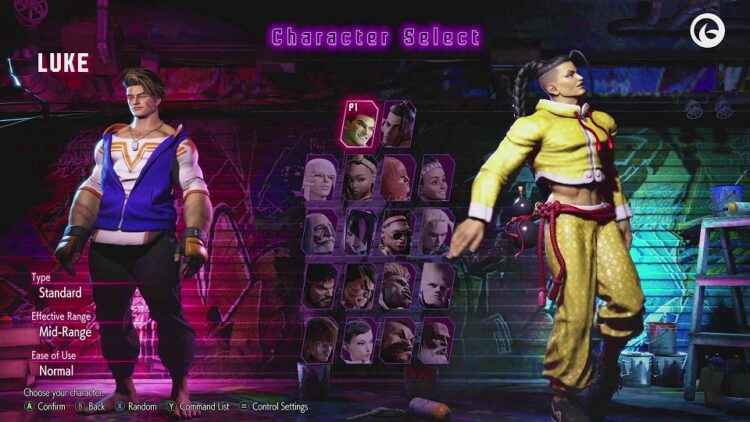
Who is involved in Street Fighter 6? Well, we have 18 fighters to choose from, which I’ll drop into three categories: Street Fighter Legacy (Street Fighter II), Modern (Street Fighter IV & Street Fighter V), and New (Street Fighter 6, obviously).
- Street Fighter Legacy
- Ryu
- Ken
- E. Honda
- Blanka
- Dhalsim
- Zangief
- Chun-Li
- Guile
- Dee Jay
- Cammy
- Modern
- JP (Street Fighter V)
- Luke (Street Fighter V)
- Juri (Street Fighter IV)
- New
- Kimberly
- Lily
- Manon
- Marisa
- Jamie
Remember what I said about Street Fighter 6 feeling like a reshuffle of Street Fighter V? This is why. A majority of the roster for Street Fighter 6 comes from older games.
I understand that people would complain if all the usual staples like Ryu or Ken weren’t involved, but there are too many characters in Street Fighter 6 that didn’t necessarily need to be there from the beginning. This feels like CAPCOM pandering to longtime fans who can’t let these fighters go instead of allowing CAPCOM to evolve its characters or replace them with someone who feels fresh.
Some characters, especially Kimberly and Lily, feel like previous fighters Guy and T. Hawk. Do you know who feels fresh and makes Street Fighter 6 feel like it’s actually attempting to change things up? MARISA & JAMIE! These two are great new additions to the roster and will make people really rethink who their mains are and why CAPCOM isn’t doing more to shake up the stale Street Fighter formula.
However, Manon should be avoided at all costs. She’s terrible. Ballet is not a fighting style.
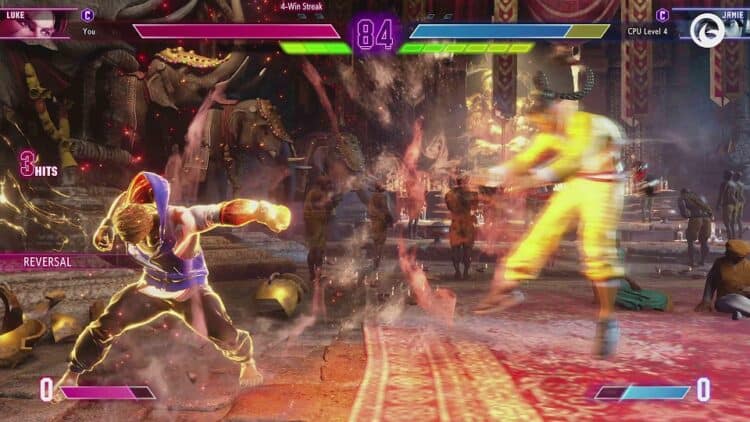
So, what is new with the gameplay? A few small things. The major one is a new control style where you have Light, Medium, Heavy, and Special buttons that activate moves, combos, and basic attacks without requiring you to understand the difference between a punch or kick.
This is the new “entry” control scheme for Street Fighter 6 and is used as the DEFAULT control scheme throughout all modes. While this control scheme works really well in World Tour mode, it is horrible to use anywhere else. I would make sure you change this control scheme as soon as possible to the classic six-button control scheme Street Fighter is well known for. And do it for every mode, because Street Fighter 6 is intent on making you use the new control scheme as much as possible.
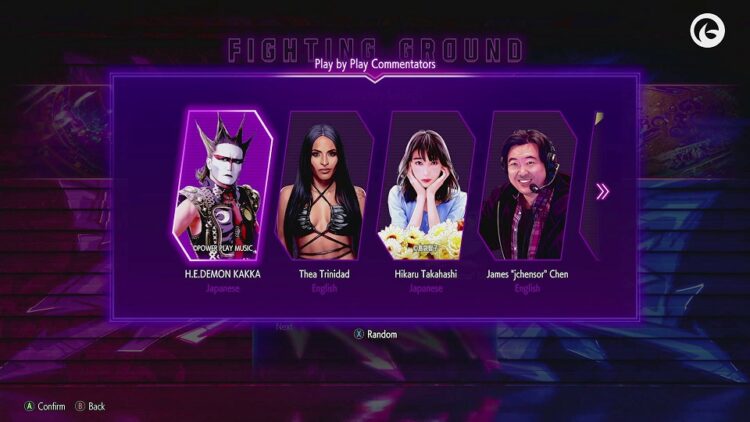
The other new addition is commentators. You get a choice of four play-by-play commentators, ARU, Jeremy “Vicious” Lopez, KOSUKE HIRAIWA, and Steve “TastySteve” Scott, and four color commentators, H.E.DEMON KAKKA, WWE Superstar Zelina Vega/Thea Trinidad, Hikaru Takahashi, and James “jchensor” Chen. You can mix and match them to create your preferred commentary team.
What these people do is add more of an esports feel to your matches, as they’ll actually commentate your matches like you’re live on the EVO stream on Twitch. Though their voice lines are somewhat limited, each commentator does a good job of following the action and reacting to things in a timely fashion without too much repetition. It would be interesting to see if CAPCOM adds more commentators to the list as it adds more fighters through Season Passes.
Want a Rematch? (Replayability)
Outside of World Tour mode, which plays exactly the same way every time, Street Fighter 6 is a treasure trove of modes for you to play over and over again. If you want to play against friends, you have options. If you want to play online, you have options. If you want to relax with some old-school games, you have options. Do you want to play alone? Well, there are options for that too.
Street Fighter 6 has come out of the gate swinging with options for every play style. If there was anything I would have added, it would be the traditional-style Arcade mode that was in Street Fighter V, which might come along once CAPCOM drops another two or three Season Passes over the next couple of years.
When looking back at the bare-bones array of modes that Street Fighter V had upon release, Street Fighter 6 is a completely different game. It looks like CAPCOM actually listened when it came to what was missing last time and made sure fans had little to complain about.
I’ll Take a Number 6 with Extra Season Passes (Closing)
Coming away from Street Fighter 6 as a longtime Street Fighter player has left me with mixed emotions. I’m happy to see CAPCOM actually trying to do something more with its premier fighting game franchise than simply giving us a lackluster one-on-one fighting experience.
Street Fighter V was so bare-bones that it was terrible to begin with, but after many patches, updates, and Season Passes, the game became something CAPCOM could be proud of. With Street Fighter 6, CAPCOM has listened and put a lot into the initial offering of the game with World Tour mode, Fighting Ground, and Battle Hub. There is a lot of content here, except when it comes to the actual fighters presented in Street Fighter 6.
While Street Fighter 6 has a lot of thought and effort put into it, you can’t help but feel the money-grabbing Grim Reaper of the Season Pass monster looming overhead, with the first one giving us ONE new fighter, two returning characters from Street Fighter V, and one legacy character that everyone wants ASAP.
This gives off the feeling that CAPCOM is once again putting its greedy hands out and demanding more money for what will probably become a full, complete roster by the game’s end, with some fancy Super, Arcade, Ultra, or Champion Edition label slapped onto it.
All of this makes Street Fighter 6 very hard to recommend to the general public right now since we don’t know CAPCOM’s roadmap for Street Fighter 6. But if you’re a diehard fan, one of those people practicing for local tournaments, or someone who wants a chance at EVO, something we are now banned from attending due to conditions in CAPCOM’s release for review copies, then go out and buy it from day one.
Like you were going to anyway.
Review Disclosure Statement: Street Fighter 6 was provided to us by CAPCOM for review purposes. For more information on how we review video games and other media/technology, please review our Review Guideline/Scoring Policy for more information.
Street Fighter 6 takes all the mistakes made with Street Fighter V and tries to not make them again. From the one on one traditional fights that we know, have been improved thanks to the addition of the Drive Gage mechanics, to the online modes where a lot of people are going to play. There is very little that Street Fighter 6 does that people won’t be happy with… Unless you live in Australia… However, the looming nickel-and-dime ride of Season Pass after Season Pass could make things worse down the line. Street Fighter 6 is an easy day-one buy for the hardcore eSports player base, but casual players might want to wait for a year or more for a more complete game before buying.

Pros
- Drive Gage works well once you work it out
- Battle Hub has a lot of great options
- Rollback Netcode
- Plenty of options for all types of players
Cons
- Forced Modern control scheme
- No Oceanic/Australian servers
- More Season Passes in the future
