

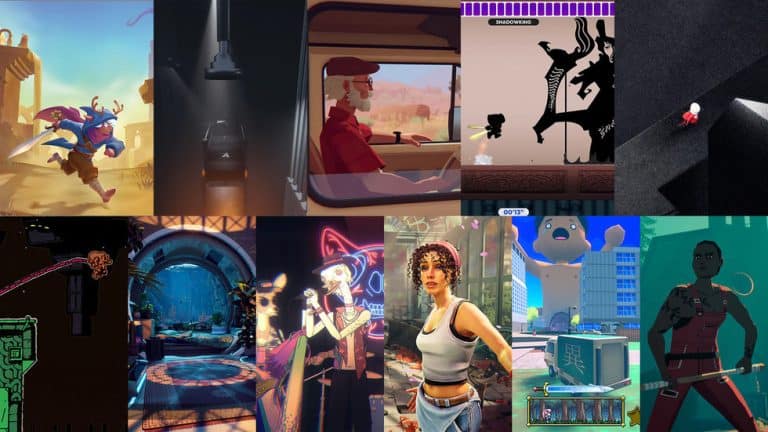
If you’re in New York City this weekend, head down to Pier 57 for one of the most underrated gaming events in the world. For the last few years, Tribeca Festival has showcased a number of indie games for people to check out early. In the past, the small but mighty Tribeca Games gallery has included everything from Blue Prince to Dispatch. And it’s entirely free to attend.
If you’re wondering which of the 12 games to check out – a record number for this year’s festival, I’m told – have no fear. I played the demos for all 12 games so you can find out what interests you most.
Not in the New York City area or missed the festival? Some of these games have online demos as well. And all of these game will debut in the next year or so. Peruse as you like and figure out which of these titles you’d want to wishlist.
Not only does Tribeca Games showcase quantity here, but also quality. Honestly, I had fun with every one of these titles. The question really becomes, what kind of games do you like to play? There’s everything from platformers and puzzle games to action and adventure titles. Let’s dive in.
Demi and the Fractured Dream

My preview kicked off with Demi and the Fractured Dream. A kindly press representative told me this would be a nice crowd-pleaser to ease in with first. And they weren’t wrong. The action adventure game immediately gave me big Wind Waker vibes. As the antlered hero Demi, you solve environment puzzles and engage in sword-slashing combat as you traverse a vibrant world.
The Tribeca demo takes place in a desert dungeon. Some exposition mentions Demi having just received the Feather key item, which lets you solve wind-based puzzles. The sword combat is quick and intuitive and after fighting goblin-like enemies, the demo caps off with a boss battle.
If you’re like me and have a strong affinity for the cel-shaded Zelda trilogy, you’ll want to check out Demi and the Fractured Dream. It plays very similarly with its own twist on some mechanics. Demi has Void powers, appearing in the demo as a riposte: timing a dodge then attacking deals more damage. I found this a little finicky but I loved the combat and puzzles overall. And the boss battle was particularly tense, rewarding my patience for learning patterns and openings.
Bad Magpie

If I had a nickel for every puzzle game in which you play as a badly-behaved bird I’d have two nickels. Not a lot, but interesting that there are two. Bad Magpie swaps out the titular goose of Untitled Goose Game for a particularly thievery-inclined magpie.
This wounded magpie has been abandoned by her flock. The demo tasks players with finding a shiny trinket to appease an anthropomorphic star. The puzzle gameplay does set it aside from other fowl games as this magpie is a bit of a mag-pyromaniac. You can easily set fires which burn through boards and other obstacles.
Finding the trinket ultimately boils down to collecting 20 gems. Some gems prove easier to acquire than others. Various puzzles of varying difficulties unlock gems. Thankfully, the suburban area of the demo has more than 20 gems. This let me pick and choose which puzzles I wanted to engage with, something I really appreciated.
Virtue and a Sledgehammer

How far would you go to stop a family member from doing something terrible? This is the question that kicks off the demo for Virtue and a Sledgehammer. You have a number of responses to choose from, and protagonist Pratelle even asks follow-up questions.
But lest you think this is mostly an esoteric title about morality, the demo then puts you into Pratelle’s sledgehammer-holding hands. She arrives at the outskirts of a town, a town with computers, terminals, and other electronics lying around. It’s one big outdoor rage room. You know what to do.
Going to town on this, well, town proves cathartic. Find a door? Smash it. Find a wall? Smash it. There’s very little to slow you down. Robots appear, with some attacking and others cowering in terror of your sledgehammer prowess. But there are still more introspective moments. A flashback of Pratelle and her sister sheds light on their relationship as we learn Pratelle is looking for her and that the robots play some role in what went down between them. I love when a game combines weighty themes with heavy doses of fun. Case in point, the demo ends with the one-liner, “I’m bringing you 20 pounds of physical media.”
Drifted

Now for something a bit lighter, figuratively and literally. Drifted tasks players with guiding a paper airplane through an industrial city. That’s it. That’s the game.
The paper airplane moves a bit slow at first. But eventually this helps as the terrain becomes tougher to navigate. In the demo, the airplane flies from a prison over to a lecture hall across to a concert hall and down into the subway.
Despite the lack of any people in this dystopian city, the game features lively sound design. You do hear people chatting in the classroom and an orchestra warming up before their concert. I found it a soothing experience, as I got into the flow of moving this little plane up and down while watching the cityscape go by.
Rebounder
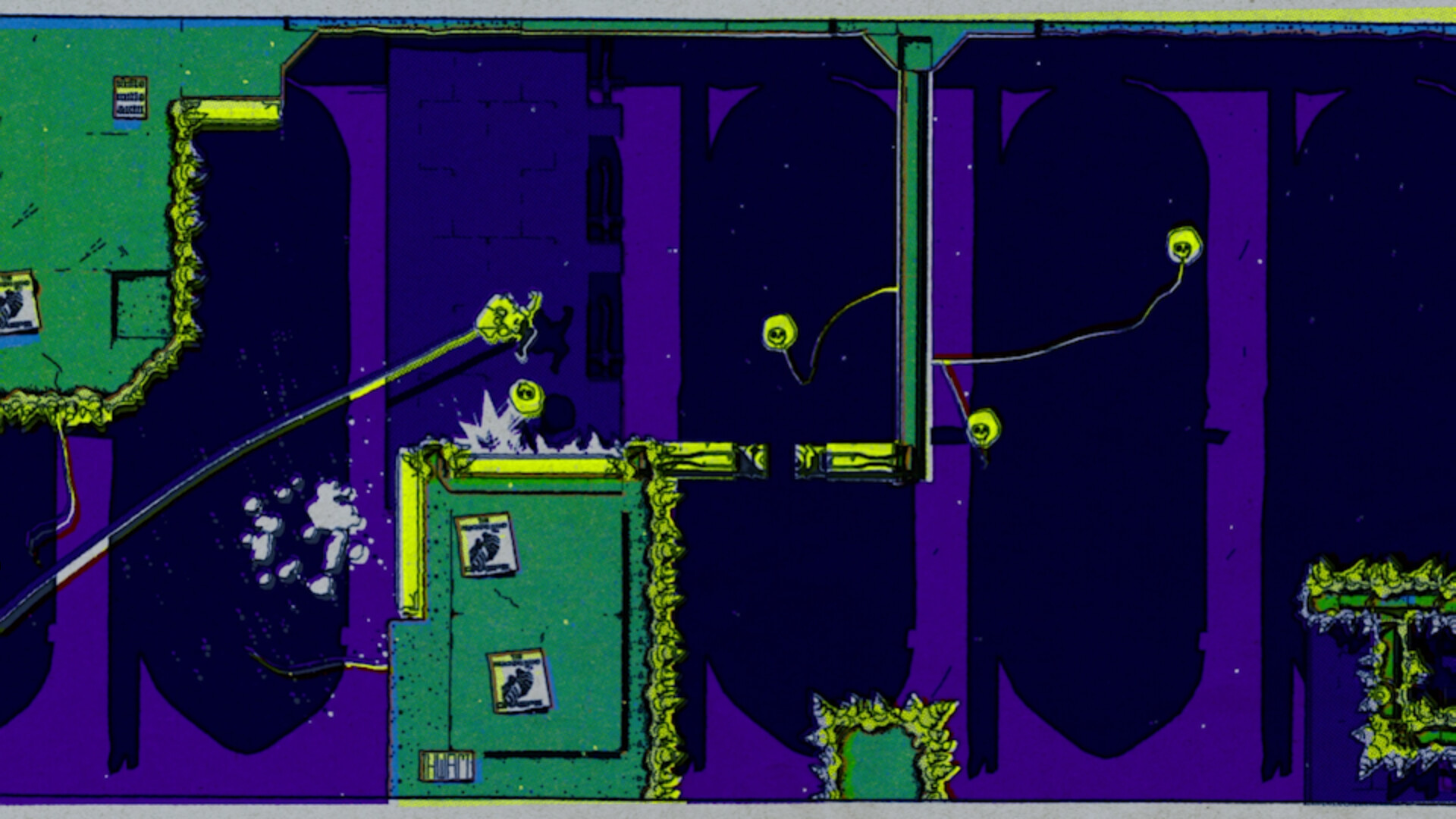
Rebounder isn’t your parents’ platformer. But it sure looks like it could be. The platforming game unfolds, literally, across zine-like screens. Not only do the ink-stained visuals evoke a comic book, but even the design of the game has “pages” filled with gameplay across from instructions made to look like comic-style art. In short, it’s a stylish game.
As for gameplay, Rebounder has players tap a button to jump and hold it for a longer jump. The title of the game comes from the orbs – later fish – that players can grab and throw to rebound off of if you need an even bigger leap to reach a platform. These orbs also play a role in light puzzle-gameplay. You can throw one to open a door and then rebound off of it before the door closes, for instance.
I’ll admit, I’m not the biggest platformer player. I sometimes found myself short-jumping when intending to long-jump and vice-versa. I’m not sure if that was the game or me, so we’ll give the benefit of the doubt and say it was me. The style kept me going though, as it absolutely feels like something eye-catching at an arcade or like a stylish SNES game you never had.
Kidbash: Super Legend

Platformer fans have not one but two platformers to check out at Tribeca. And they’re quite different from each other. Kidbash: Super Legend has a colorful color palette and features action as well as platforming. It’s even a roguelike.
And there’s a lot of action to be had. The main hero gets access to a sword for melee attacks and rocket for range attacks. The demo features these two weapons, but the full game looks to have a few more. Clearing a stage gives access to power-ups for players to choose, such as increased healing or damage-dealing leaves. Upgrades increased weapon power. And attacking builds up a Mix bar that, when activated, combines both your weapons into one stronger one for a brief time.
After each stage, you get a choice between two rewards to find in your next stage, denoted by icons like floppy disks or clocks. I’m not quite sure how these come into play, they may be for the full release. After going through these chosen stages, eventually you end the demo with a boss battle. It’s a nice way to engage all of your combat abilities and platforming skills in one encounter.
There are No Ghosts at the Grand
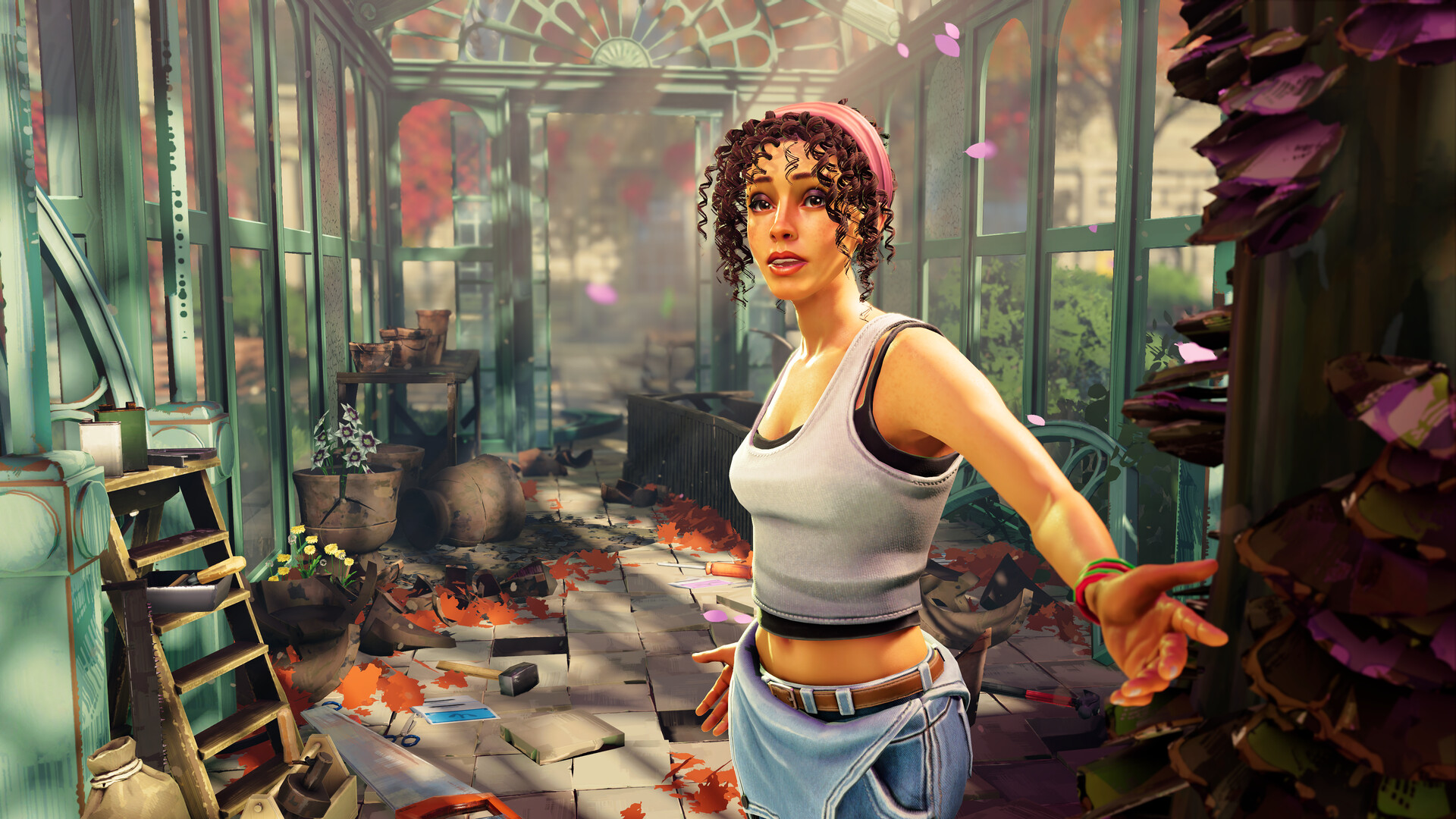
Of all the Tribeca Games official selections, There are No Ghosts at the Grand is the only one I had previewed previously. The Tribeca demo is the same one I played last year. So you can imagine my pleasure at getting the choice to check out a brand new “song” demo.
For context, There are No Ghosts at the Grand is part-mystery adventure, part-renovation game, and also a musical. In this demo, out-of-towner Chris meets Lily, who serenades/berates Chris with a song featuring the chorus, “This old house is falling apart.” In between song segments, you can use a talking multipurpose tool to vacuum, organize the garden, and decorate. Additionally, listening to Lily’s questions prompts responses to choose from; some of them resonate with her more than others.
On a side note, There are Not Ghosts at the Grand won the Tribeca Games Award Friday out of the 12 selections. I’m not surprised. It came off as pretty polished when I previewed it last year, so time has allowed the developers to continue to refine it and expand upon it with this second demo.
Rockbeasts
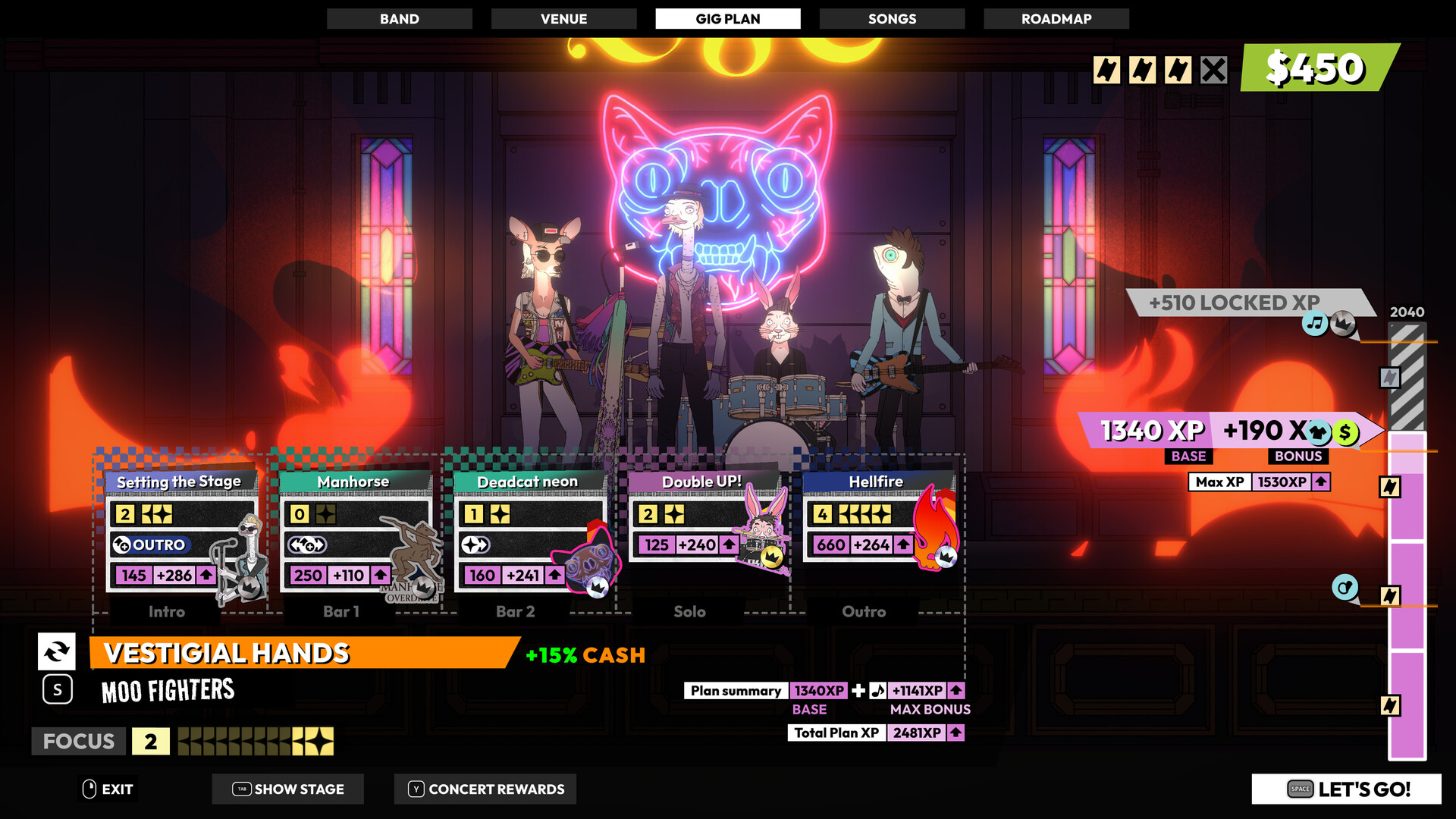
And just as we have two very different platformers, Tribeca also serves up two different musical titles. Rockbeasts has players step into the shoes (paws?) of the manager of an all-animal rock band. Your choices affect the band and the story, and performances include their own rhythm game.
The demo begins in 2009 in the Florida Keys, as a radio program suggests this band found success. But it wasn’t always this way. The clock dials back to 1993 as the game kicks off in the Midwest with the hiring of the band’s manager: you. The Bojack Horseman-like visuals introduce you to the quirky band, including a sea bass who plays the bass and a deer who says “oh deer god.”
Oh, and you get to name the band. I named mine “Bandimals” because it’s a band comprised of animals and I had to get moving. As the manager, you manage the band through dialog choices but also through the resources of health, hype, mood, and of course, cash. I’m not the best at rhythm games but it didn’t seem to matter too much. Doing well gets you more cash, but you actually can’t get a perfect score this early in the game – with certain prompts greyed out. I liked this synergy of role-play and rhythm game, as each one feeds into the other.
Rivage

The year is 2467. 80% of the crew of ARES space station is missing. You must evacuate.
Thus begins Rivage. The sci-fi puzzle game tasks Miranda, that’s you, with figuring out what went down in this space place and getting out of there. Solving puzzles unlocks more areas of the space station. At one point you’re tasked with cataloging anomalies, such as fruit floating in a orbiting rotation in the kitchen. All objects must be manually interacted with, encouraging patient playthroughs as players turn handles, flip switches, turn dials, and more.
I’ll confess, I perhaps didn’t vibe with Rivage as much as some of the other Tribeca games. That’s not the game’s fault, I just don’t do well with mind-bending puzzle games when I’m on the clock. I still had a few games to preview, and Rivage also seemed to have a timer of its own. At one point it set me back to the beginning, calling it “Loop 2.” I still found much to enjoy, as Miranda’s crewmates have unique and strong personalities that shine through in audio files and messages.
Lofsöng

Now Lofsöng is my kind of puzzle game. As a small red-garbed guy, venture across a Brutalist landscape while interacting with sound-based puzzles to make progress. Sounds come from holes, and players must “vocalize” to have the protagonist match the sounds to unlock doors.
Sometimes, unlocking a door lets you progress directly while other times it lets you find more signal fragments, letting you vocalize for longer. In the demo, an open desert area provides a compass and a kite. The compass leads you to the next objective while the kite lets you glide across the dunes, featuring a boost to bring you over steep sections of the sand.
In addition to copying sounds, vocalizing in the demo can also illuminate symbols on rocks, which come into play for other puzzles. I personally found all of the puzzles in the demo fairly intuitive. And naturally, Lofsöng has solid sound design.
Forever Ago
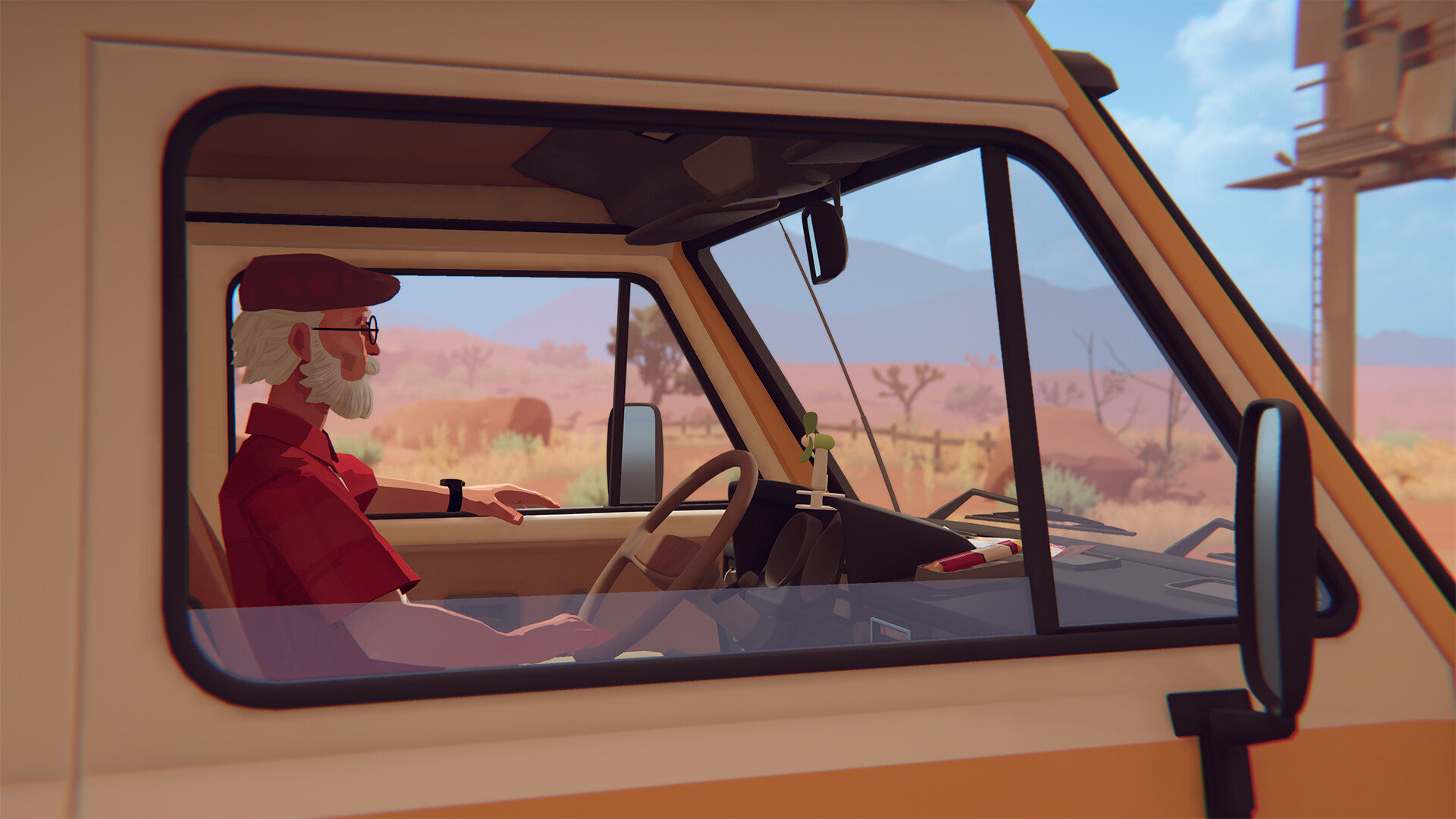
I recently got into the show Man on the Inside starring Ted Danson. Danson plays an older adult who “infiltrates” a retirement home to solve a mystery. Of course, it’s also a show about coming to terms with aging. And while Alfred, the protagonist of Forever Ago, isn’t as charismatic as Danson, he nevertheless elicits empathy for seniors.
In Forever Ago, Alfred embarks on a road trip planned by his wife Audrey. Based on a letter, it appears she may have recently passed away. The demo tasks Alfred, who has arrived at a roadside motel, with finding Audrey’s favorite flower, eating in the booth they’d sit in at the local diner, and playing their song on the diner’s jukebox. Easier said than done. The diner seat requires an in-app membership and the jukebox doesn’t work. At least the flowers are there.
In expressing frustrations to hapless diner waitress Maddy, Alfred can take various tones chosen by the player. Even the softer tones I went with still expressed his exasperation. It’s easy to write off obstinate seniors as curmudgeonly, but by giving a heartfelt reason for Alfred’s requests, Forever Ago sheds light on his adamant point of view. There’s a nice button to the interaction, as like Danson’s character in Man on the Inside, Alfred agrees to investigate a disturbance for Maddy in exchange for her help.
Truck-Kun is Supporting Me from Another World?!

Let’s end on a silly note, shall we? After much hard work at her company, Carissa is about to become the VP of marketing. She’s crossing the street aaaand she’d hit by a truck. She’s a goner, despite being “so young and smart and conventionally attractive,” as one onlooker notes. But this isn’t the last we’ll see of Carissa, or the truck that hit her.
Because in Truck-Kun is Supporting Me from Another World?!, you’re the truck now. Carissa has been isekai-ed, sent into a fantasy world and transformed into a buff elf lady. She tasks you with hitting even more things to aid her on her magical adventure. Run over people to spawn enemies for her to fight, hit objects to power her up, and honk truck-kun’s horn to unleash her ultimate attack.
Driving around the city and creating chaos, you can also boost, drift, and sideswipe, among other moves the truck could never do before. This is one of those games where the premise really elevates the gameplay. At its core, it’s a game in which you drive around hitting things. But the comedic context and extra mechanics add flavoring as you work to hopefully bring Carissa back to life – traffic laws be damned.
Tribeca Games Takeaways
So, enough games for you? The great thing about Tribeca Games Fest is that it always does a nice job of curating a variety of indie titles. While personally I had some titles that appealed more to my taste, I didn’t find a single bad game in the batch. Each one has something to offer, it really just depends on what genres you like to play. So if you have time today, head down to Pier 57 in New York City and find your next most-anticipated indie title.
