

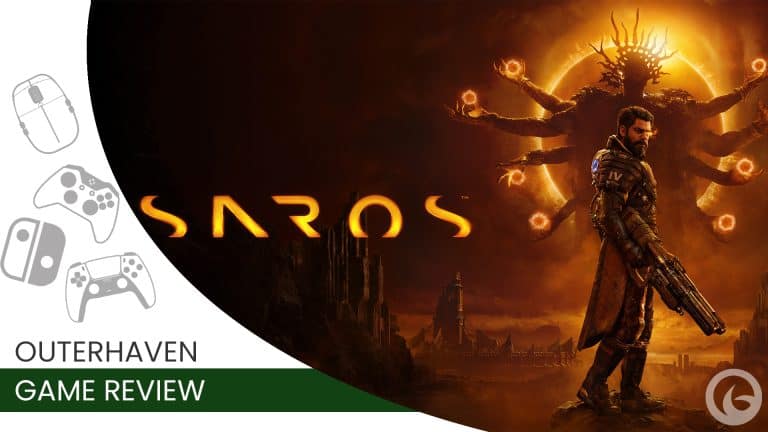
Saros, starring Rahul Kohli, is the latest game from Housemarque and Sony Interactive Entertainment. I’d be lying if I said I wasn’t initially skeptical about this newest PlayStation first-party release. From its reveal, I kept coming back to the same question: why isn’t this just called Returnal 2? Everything, from its biomes to enemy design, movement, and gunplay, felt strikingly familiar.
If it looks like a duck and quacks like a duck, then it’s a duck. So I was left wondering: how would Saros stand out, and what would make it different enough to justify becoming its own IP? After spending 10 to 15 hours with it, I completely understand, and it’s not the answer I expected. I’ll break it all down in The Outerhaven’s review of Saros.
Game Name: Saros
Platform(s): PlayStation 5
Reviewed On: PS5 Pro
Genre: Action, Third-person Shooter, Roguelite
Publisher(s): Sony Interactive Entertainment
Developer(s): Housemarque
Release Date: April 30th, 2026
What Is Saros?
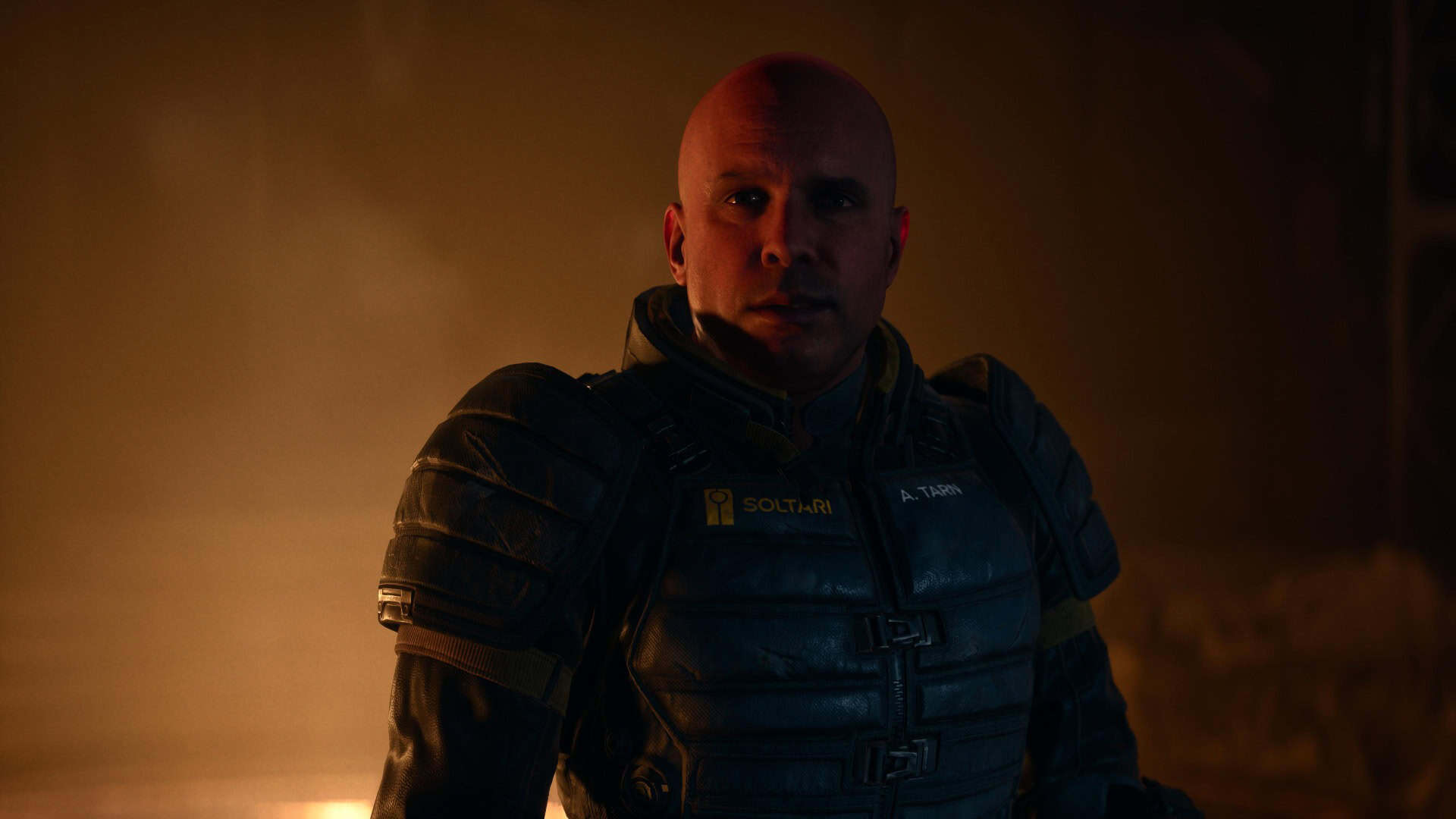
Saros, much like Returnal before it, is a sci-fi action game with roguelite elements, but it quickly establishes its own identity through its narrative focus and structure. You play as Arjun Devraj (Rahul Kohli), an enforcer sent to the planet Carcosa as part of the fourth expedition by his employers, the Soltari Corporation. Carcosa is home to a rare mineral known as Lucenite, which Soltari hopes to exploit. Thousands have already been sent to the supposedly lifeless planet in an attempt to establish a mining colony, but none have ever reported back.
With no contact from the previous expeditions, Arjun and his team are deployed to uncover what went wrong. It quickly becomes clear that Arjun’s reasons for joining the mission are personal, and that mystery unfolds through a mix of high-quality cinematic cutscenes, alongside text and audio logs.
There is a dual narrative at play here: the mystery of Carcosa and what has happened there, and the personal story of Arjun Devraj. I found both to be deeply compelling throughout, particularly in how these two threads connect and build toward a satisfying conclusion. That being said, the way the story is delivered can be confusing at times, especially as certain scenes and conversations can occur in a different order depending on how well or poorly you perform.
Returning To A Winning Formula
When it comes to gameplay, Housemarque has returned to a winning formula in Saros, but they have done so while refining and improving virtually every aspect of Returnal.
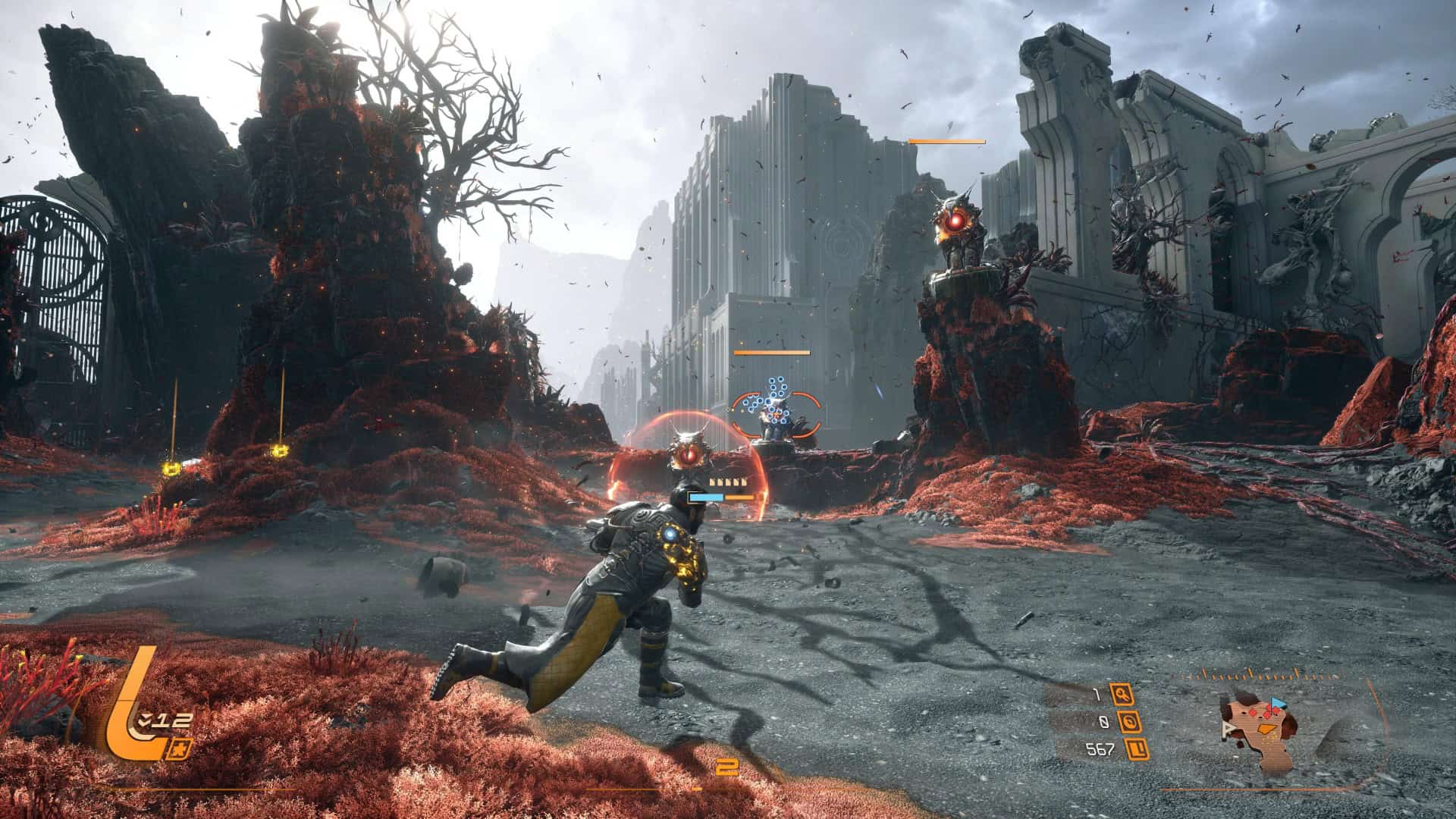
The core loop remains familiar: you battle your way through different biomes, with a boss waiting at the end of each area. Within these biomes are optional paths and side areas to explore, where you can find augments and weapons to strengthen your build.
Combat Feels Familiar But Has A Better Flow
In combat, weapons feel great to use, each offering distinct strengths and trade-offs. I found myself gravitating toward the hand cannon with explosive rounds. Every weapon also features an alt-fire mode, activated by a half pull of L2. These attacks are slower, but deal significantly more damage, which is particularly effective against larger enemies.
If you can master the game’s active reload system, which speeds up reloads by tapping R2 at the right moment, you can maintain a consistent rate of fire. Because of this, I found it best to use alt-fire modes as frequently as possible. Regardless of your weapon choice, their damage output is noticeably higher, dramatically lowering time to kill and helping reduce the risk of being overwhelmed in more chaotic encounters.
Your highest damage output comes from your power weapon, which functions as an extension of Arjun’s suit. These come in different variants with unique perks, but all operate in the same way. Holding L2 fully brings up the aim, with R2 used to fire, provided you have enough battery charge.
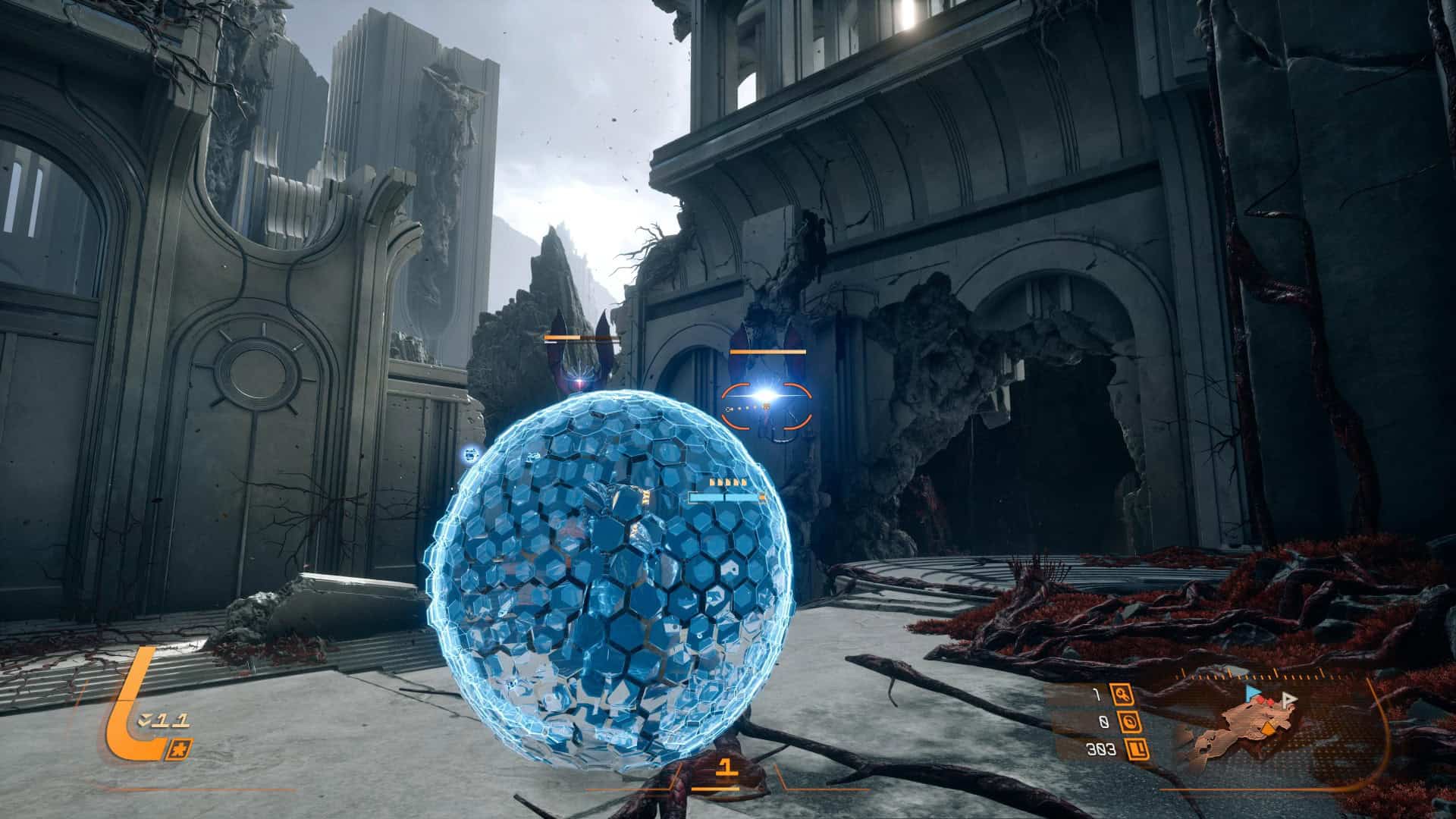
Battery is generated by absorbing blue projectiles using your shield, which can be raised at any time by holding R1. However, timing is crucial, as tapping R1 instead triggers a melee attack. Managing this resource becomes essential, as your power weapon is not only vital in combat, but also used to break through certain walls during exploration. In some cases, having enough charge can be the difference between finding much-needed healing and facing certain death.
The addition of the shield and power weapon, alongside the returning dash, melee, and shooting mechanics from Returnal, makes Saros’ combat feel even more fluid while also adding greater depth. This creates tense decision-making moments, where using your power weapon during combat might actually put your overall run at risk.
Progression Has Been Perfected
There is no doubt in my mind that the biggest improvement Saros makes over Returnal is its progression system.
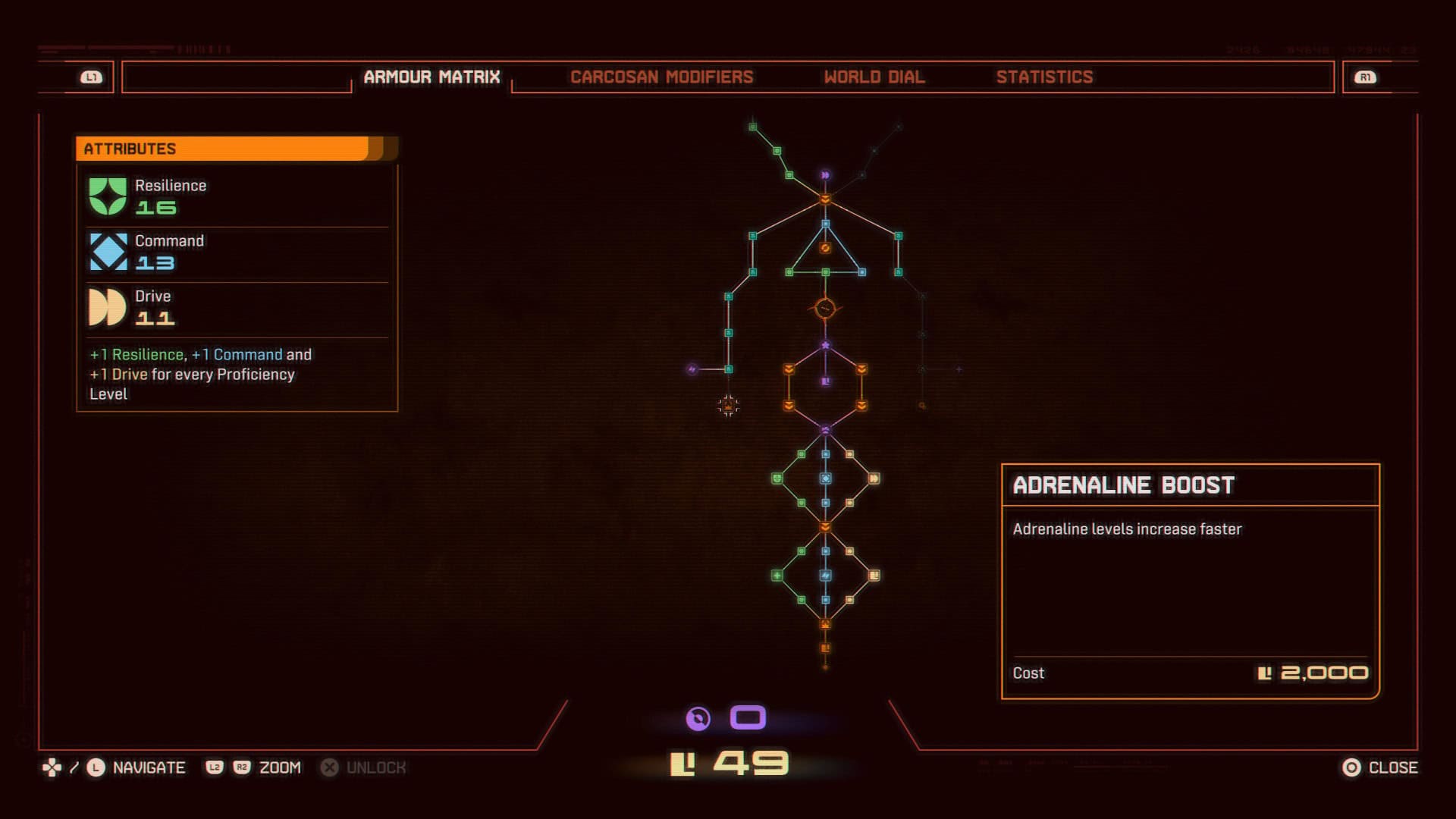
As you defeat enemies, they drop Lucenite, the same resource the Soltari Corporation is attempting to exploit. Collecting Lucenite increases your proficiency, making you stronger within a run, but it also serves a second, more important purpose. It can be spent between runs at the Soltari AI Primary to unlock permanent upgrades within Arjun’s armor matrix. However, death comes at a cost, as you will lose at least 50% of the Lucenite you are carrying at the time.
These matrix upgrades have a meaningful impact. They enhance core stats such as Drive, Command, and Resilience, which affect resource gain, damage output, and overall survivability. Beyond that, they can introduce additional healing drops, improved scaling for weapons and stats, extra keys, revive mechanics, and more.
This system fundamentally changes how Saros feels to play. Unlike Returnal, where progression was largely tied to player skill, Saros introduces a consistent sense of forward momentum. Every run contributes to long-term growth, making the experience feel more rewarding over time and significantly more approachable for a wider range of players.
However, this shift does come with a trade-off. While the added progression makes Saros more accessible, it slightly reduces the tension that defined Returnal’s risk-reward loop, where each run felt more punishing and unpredictable.
On top of this, permanent upgrades such as jump pads, grapple abilities, and Overdrive further expand traversal and combat options. While I won’t spoil all of them here, these additions introduce a light Metroidvania element that makes revisiting earlier areas more engaging.
Overdrive, in particular, stands out. The simplest comparison is to Kratos’ Rage in God of War. It builds over time and, once fully charged, can be activated by pressing both sticks to unleash a powerful attack. Used at the right moment, it can completely turn the tide of a fight, but its slow charge rate means timing is everything.
Mesmerizing Visuals, Stunning Audio
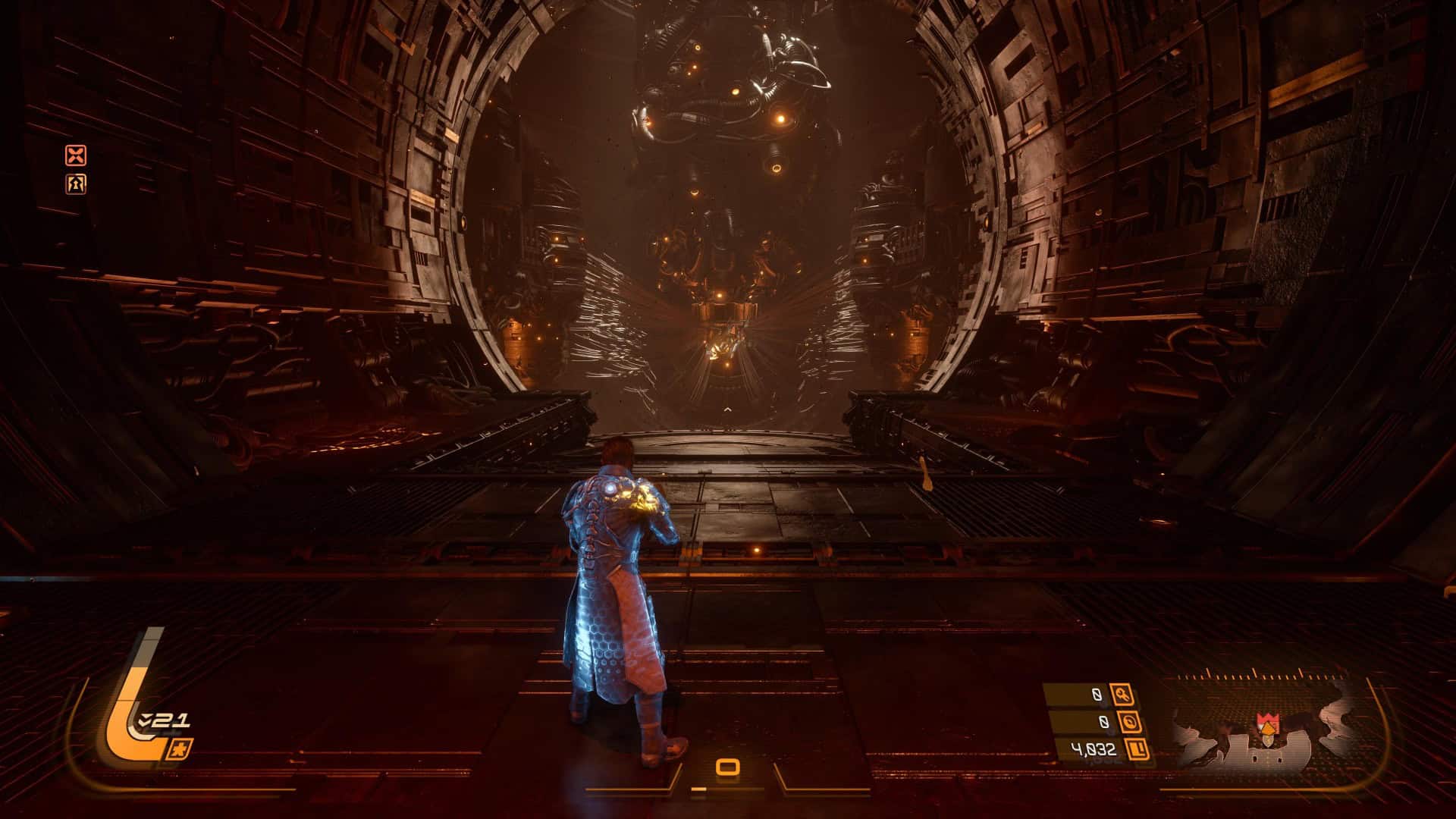
Now we have to talk about presentation, which is another area that has been greatly improved in Saros. Returnal already impressed with its alien environments, vibrant bullet-hell visuals, and atmospheric sound design.
In Saros, all of these elements return, but everything feels sharper. Animations are smoother, environments are more detailed, and the overall visual clarity is a noticeable step forward. This is paired with an outstanding score from Sam Slater. A game’s music rarely makes its way into my regular Spotify rotation, but Saros is absolutely joining that select group.
Where Saros truly elevates itself above Housemarque’s previous work is in its cinematic presentation. Performance capture plays a huge role here, with character models and facial animations feeling a generation ahead of what we saw in Returnal.
Rahul Kohli Puts In A Career-Defining Performance
A key part of that cinematic presentation is the acting, and the entire cast delivers strong performances. That said, it’s Rahul Kohli who stands out, delivering what I would describe as a career-defining performance as Arjun Devraj.
Kohli has always been capable of delivering emotionally impactful performances, even with more restrained characters. At the same time, he has shown a strong sense of comedic timing and an ability to portray complex personalities through subtle delivery.
All of those strengths come together here. Arjun is a character who rarely speaks unless necessary, but when he does, every line carries weight. Kohli’s performance is measured, nuanced, and consistently compelling, elevating Arjun into one of the most memorable protagonists I’ve encountered in a video game. If he isn’t nominated for Best Performance at this year’s major game awards, it would be a genuine surprise.
Playable But Not Necessarily Accessible
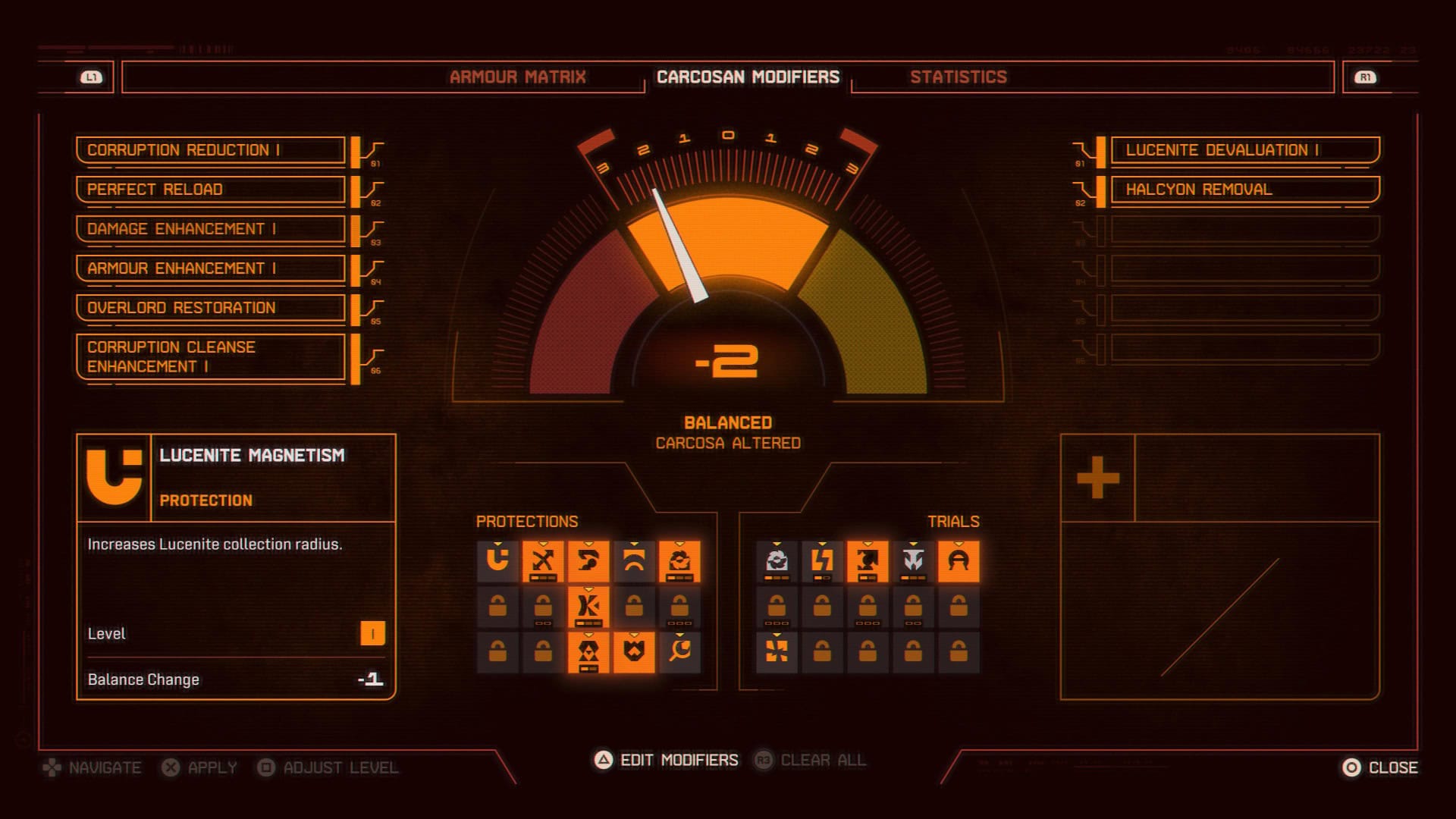
I mentioned earlier that Saros is playable for a much wider audience thanks to its progression system and the inclusion of modifiers that can be used to tailor the experience. However, highly playable does not necessarily mean accessible.
When it comes to purpose-built accessibility features, Saros feels limited, especially when compared to other PlayStation first-party titles.
There are some options available, such as enemy attack color adjustments, subtitle size customization, and a handful of other basic settings. However, it may not be enough for players who rely on more robust visual or audio accessibility features. In those cases, the game’s built-in combat readability may not be sufficient to meet their needs.
To be clear, accessibility has improved over Returnal, but the lack of deeper, purpose-built options is disappointing to see from a PlayStation studio, particularly given the high standard set by other first-party developers.
One potential way to improve this would be to allow Carcosan Modifiers to be enabled without requiring a negative trade-off, giving players more flexibility to tailor the experience without being penalized.
Rock Solid On PS5 Pro
I played Saros on PS5 Pro, and it delivered a rock-solid experience. This is one of the most polished games I have played in recent memory, with no technical issues or noticeable bugs during my time with it.
Performance is equally impressive. The game targets 60fps and maintains it consistently, with only occasional minor dips during more intense moments. On a VRR-capable display, these drops are effectively unnoticeable, resulting in a smooth experience throughout.
It is somewhat surprising that only a single mode is available on PS5 Pro, running at 4K upscaled using PlayStation’s latest PSSR technology. However, given how stable the performance already is, there is little need for a separate performance mode. That said, it would have been interesting to see how close Saros could get to 120fps for players with high refresh rate displays.
Final Conclusion
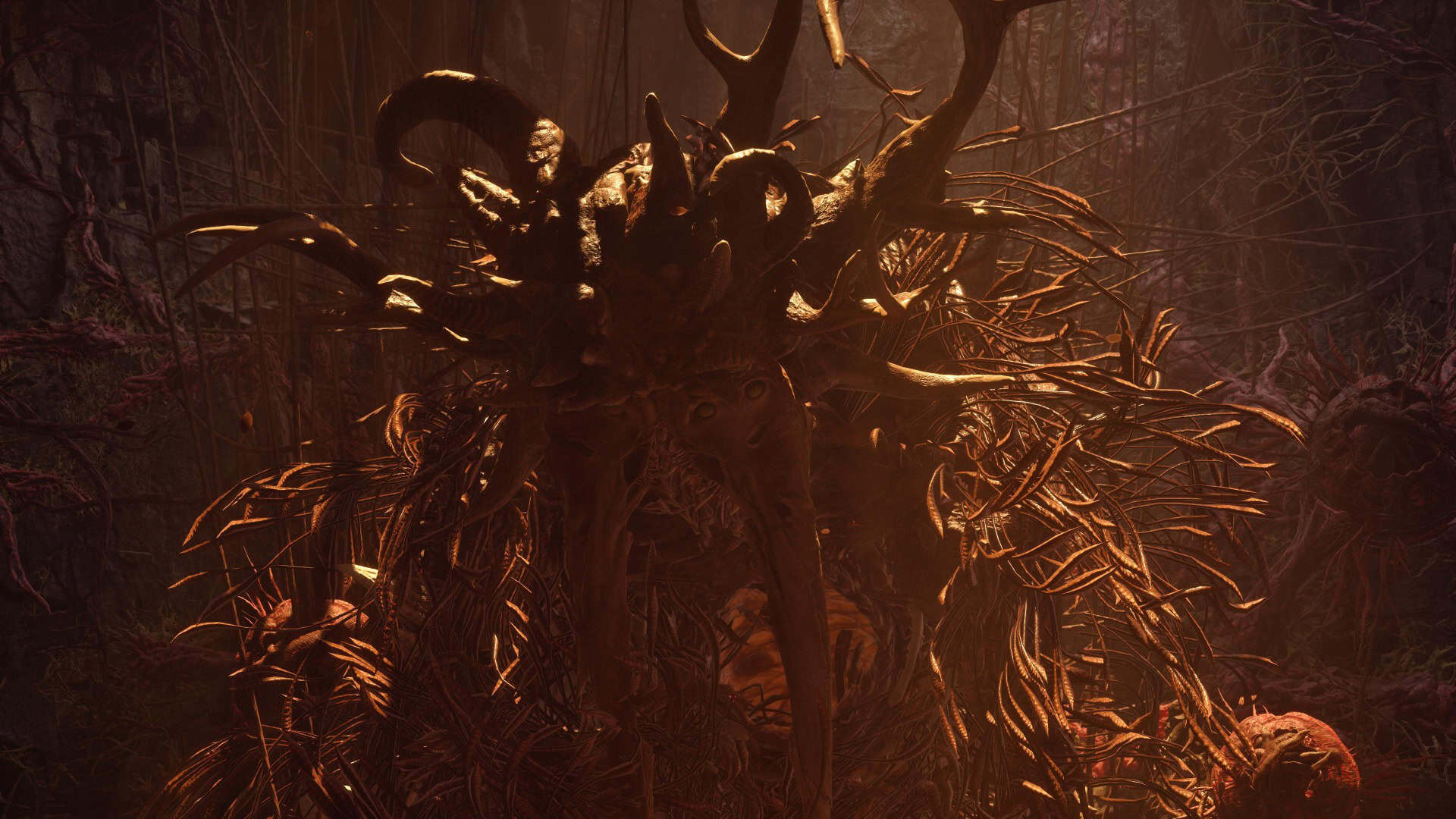
With Saros, Housemarque has come back stronger than ever, delivering what I would consider their best game to date. Building on the foundation of Returnal, Saros refines its core gameplay loop with more fluid combat and a significantly improved progression system that creates a stronger sense of long-term growth. At the same time, it elevates the studio’s storytelling and presentation, with cinematic delivery and a standout performance from Rahul Kohli helping bring its world to life.
However, these improvements do come with trade-offs. The added progression makes Saros more approachable, but slightly reduces the tension that defined Returnal’s risk-reward loop. Additionally, while accessibility has improved, the lack of deeper, purpose-built options remains a notable drawback, particularly for a PlayStation first-party title.
Even with those caveats, Saros is a confident evolution of Housemarque’s formula and a compelling experience from start to finish. It may not carry the same punishing edge as Returnal, but what it gains in accessibility and progression makes it a game that more players can engage with and enjoy. If you can play it, you absolutely should.
Saros is available to purchase on PlayStation 5.
If you enjoyed this review, explore more of our in-depth video game reviews across PlayStation 4, PlayStation 5, Xbox One, Xbox Series X, Nintendo Switch, Nintendo Switch 2, and PC.
Review Disclosure Statement: A copy of Saros was provided to us for review purposes by PlayStation. For more information on how we review video games and other media/technology, please review our Review Guideline/Scoring Policy for more info.
Building on the foundation of Returnal, Saros refines its core gameplay loop with more fluid combat and a significantly improved progression system that creates a stronger sense of long-term growth. At the same time, it elevates the studio’s storytelling and presentation, with cinematic delivery and a standout performance from Rahul Kohli helping bring its world to life.
Pros
- Free Flowing Combat
- Interesting World
- Great Performances By The Cast
- Outstanding Audio & Visuals
- Modifiers Allow Customization That Adds An Extra Layer Of Playability
- Come Back Stronger Isn’t Just A Tag Line
- Progression Is Noticeable Between Runs
Cons
- Story Is Diminished Slightly By Over Complication
- Very Few Purpose Built Accessibility Options
-
Saros Review - Housemarque Comes Back Stronger Than Ever
