

Marathon is the first non-Destiny game to release from renowned developers Bungie in over a decade. This PvPvE first-person extraction shooter isn’t a completely new IP because the first Marathon released in 1994, however this latest entry isn’t a sequel either it’s more like a reinvention of the franchise. So, how does this new Marathon handle the legacy of a beloved studio and cult franchise while being reimagined for a new audience? Let’s talk about it.
Game Name: Marathon
Platform(s): PS5, Xbox Series X|S, PC
Reviewed On: PC
Developer(s): Bungie
Publisher(s): Bungie
Release Date: March 5, 2026
Before we get into this review, we do want to express that this game was handled a bit differently than our other reviews. Since this is a co-op game, we spread it apart between three different reviewers, all of which have had experience in a number of extraction shooters, and first-person shooters. Between us, we have well over 100 hours of game time. We also delayed this reveal as we wanted to give Bungie more time to flesh things out and to introduce its first end-game raid, the Cyro Archive. But now that we’ve done all that, we can finally deliver our Marathon review
What is Marathon?
For some, Marathon might be just another extraction shooter, but for me, this goes deeper than that. I played the original Marathon games, where the narrative focused on AI, evolution, struggle, and ultimately, identity. If you’re like me, you might feel a bit disappointed at first, since this new Marathon doesn’t deal with those themes directly.
That said, Marathon drops you onto the mysterious planet Tau Ceti IV, where the prior settlers have all vanished, leaving behind an empty but dangerous world that constantly pushes you to loot, fight, and hopefully survive. You play as a Runner, a once-human who gave up their physical body and had their consciousness transferred into synthetic shells, each with its own abilities. Your goals are simple on paper: loot, survive, and extract with whatever you can carry, whether that’s weapons, shields, consumables, or materials.
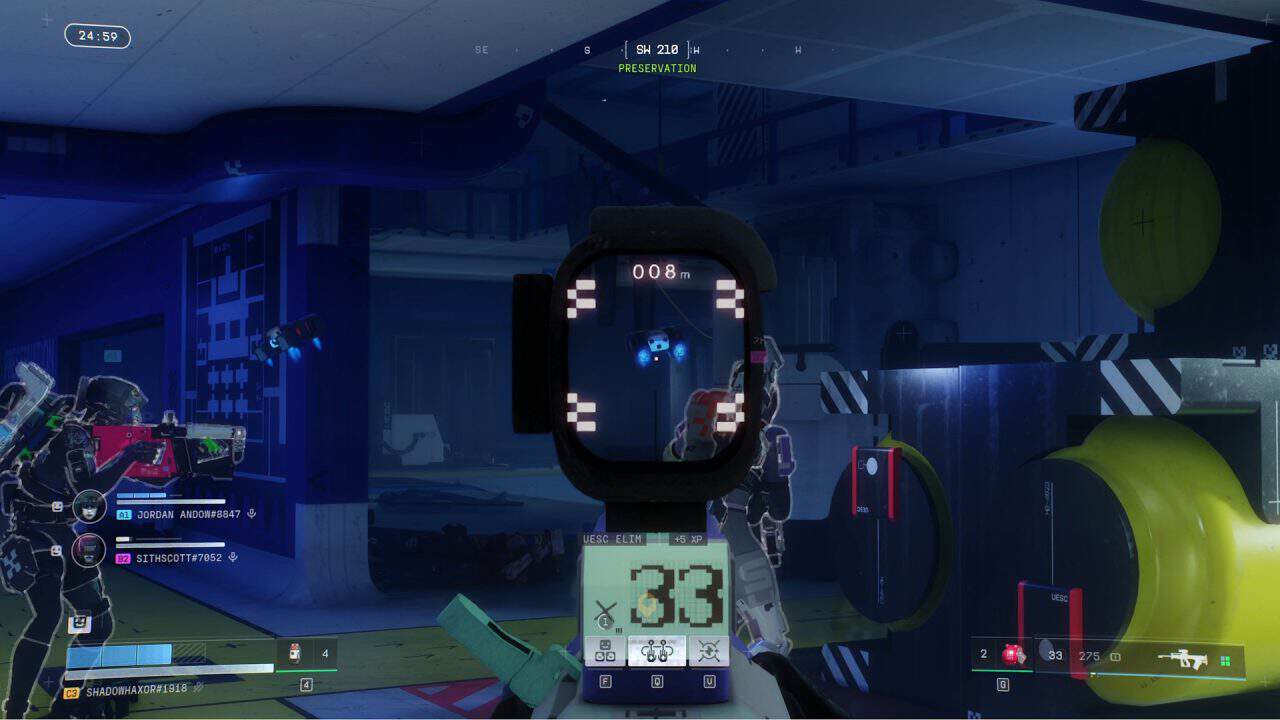
Every time you pick your Runner shell and drop into one of the locations on Tau Ceti IV, you’re making a decision. Do you play it safe, or do you go all in? No matter what you choose, there’s this constant tension that never really lets up. Even the quiet moments feel off, like something’s about to go sideways. You’re never fully comfortable here, and that’s very much by design. You start second-guessing everything. Is someone around that corner waiting to ambush you? Do you risk pushing deeper for better loot, or do you cut your losses and head for extraction? And even if you make it to the exfil point, what if someone’s already there waiting? That’s the thing, you’re not just thinking about the game, you’re thinking about everyone else playing it, too.
No matter how you approach it, there’s always this pressure and uncertainty hanging over every run. It makes the game feel alive, unpredictable, and yeah, sometimes downright frustrating. But that’s also what makes it so hard to put down. I’ll admit there were times I told myself I’d play just a few matches, only for that to turn into “one more run” over and over again. Before I knew it, I’d lost track of time. That’s what this game does. If it hooks you, it doesn’t let go easily.
The Gameplay Is Very Satisfying
Within Marathon are two systems, PVE and PVP, hence the PVPVE label. The PVE encounters pit you against robotic bullet-sponge enemies that come in a handful of varieties. Most are rank-and-file fodder you can drop solo or with a crew, though some have notable tricks like cloaking, shields, or mimicking players. Others swarm you in hordes, and that’s honestly the only time the enemies feel genuinely threatening. Then there are the elites who are function as bosses, are super hard to take down but are so rewarding once you do.
Then there’s PVP, which is not only the most intense stretch of any run, but thanks to each character’s traits, turns into a game of cat and mouse with a layer of meta sprinkled on top, that also spreads into the PVE. This is where the game starts running into problems.
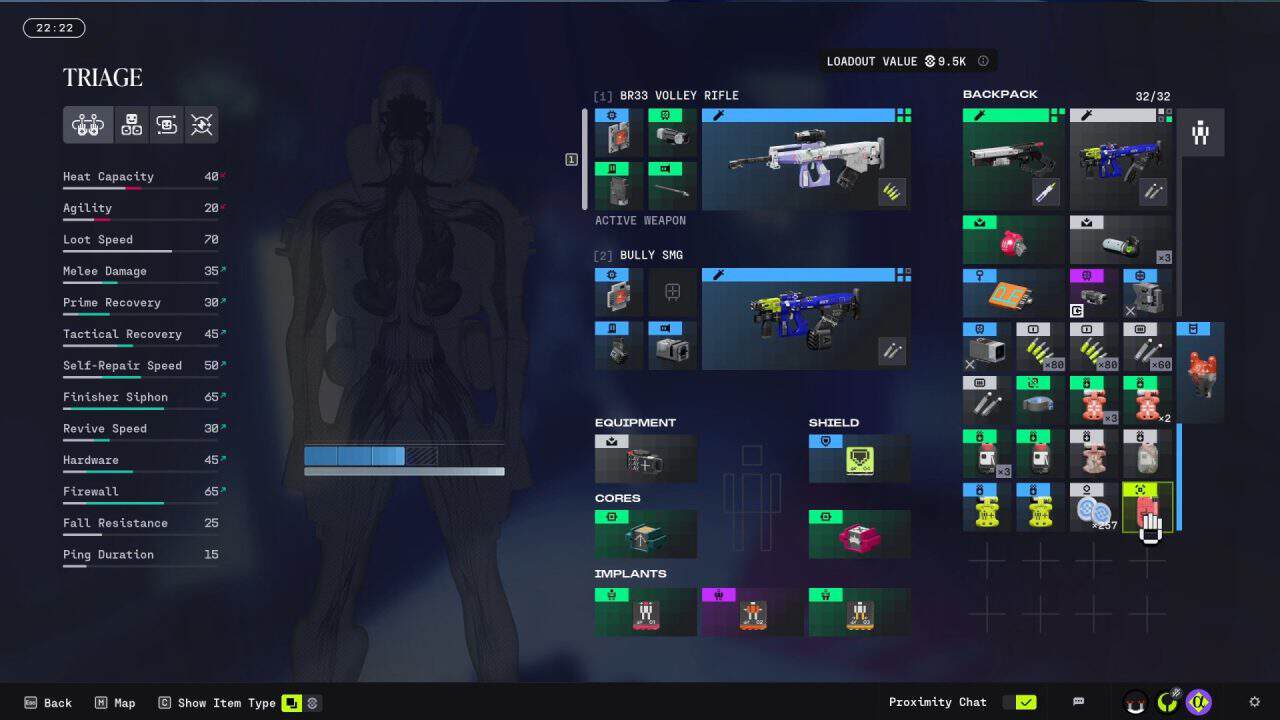
Most people can stomach getting outclassed by a better player. What’s harder to accept is when gear is the deciding factor, and right now, especially in those first few hours, earning gear is a grind with little reward. You simply don’t accumulate enough currency to buy anything decent, and the maps aren’t generous about surfacing loot either, so you’re left farming PVE enemies and hoping for scraps. You’ll find something eventually, but it’s a slow, frustrating crawl.
When you start running into players who either got lucky on drops or are skilled enough to have stacked decent gear, it becomes an exercise in frustration. If you do die and find yourself stripped of everything, you can fall back on a free or sponsored kit, which gives you a random weapon, an ammo crate, and bare minimum heals and shield charge. In a game with a very fast TTK, that’s not a safety net, that’s a head start for whoever you’re about to fight. The balancing of these free kits has admittedly improved in post launch patches, but they still don’t serve their purpose very well.
Of course, you can play the game by yourself, which is admittedly, easier or tougher, depending on what time of day you play, which map and of course, what class you pick (more on that later). Sometimes I’d have the entire map to myself, not running into anyone or seeing other players heading in the opposite direction. Other times, it’s a full-on battle with just a few seconds after I’ve spawned by myself. While playing with a team can be easier, depending on, once again, the make-up of that team, and if the players are communicating using the in-game ping system, or better, using microphones.
Honestly, even if I get wrecked, as long as I was enjoying myself, and my company, I rarely cared, since it’s part of the game. Still, every time I died, a part of me was still angrily shaking its fist at the screen.
How Does It Feel To Play?
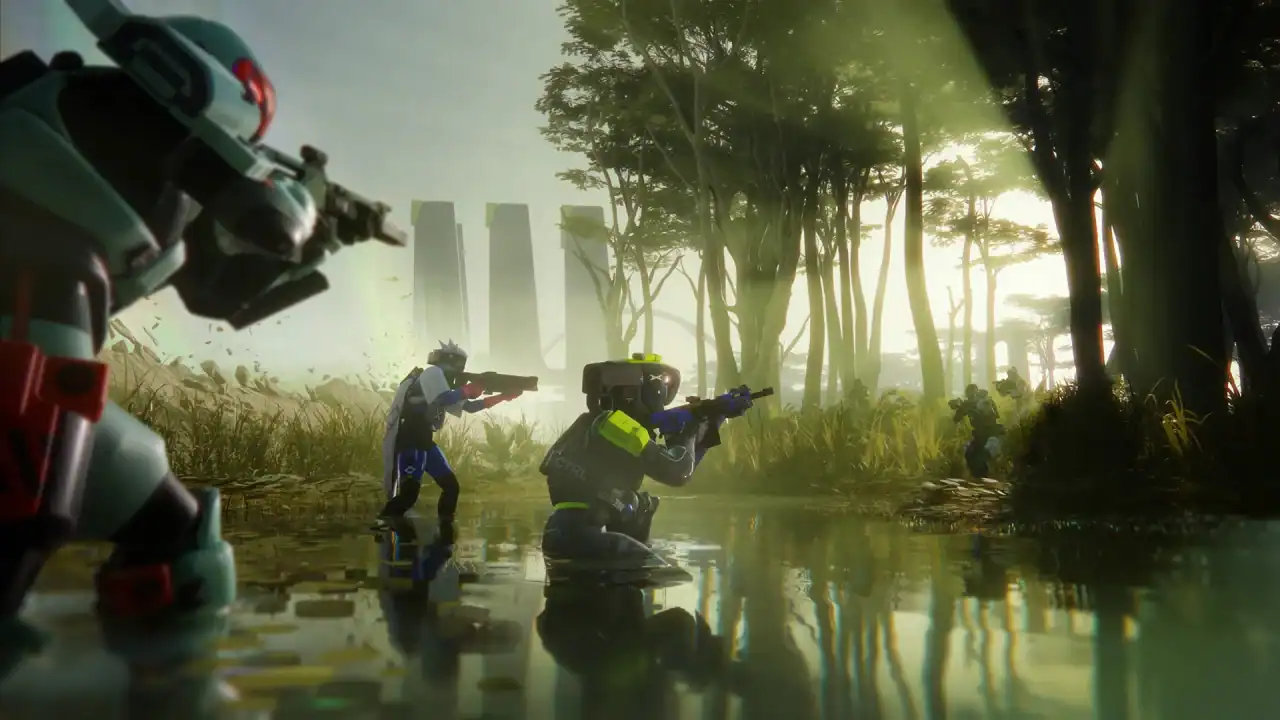
Bungie have a reputation for being one of the best first-person shooter developers in the industry and we have to say they have lived up to that reputation with Marathon. Whether, your fighting at close range with a shotgun or engaging at range with a sniper rifle, every weapon in Marathon feels superb to use. With believable range and damage for each type of firearm, it’s rare to find a game that balances the feeling of weapons this well.
Of course you have futuristic battery powered guns as well but even those feel appropriate to the class they are part of. You aren’t going to be sniping someone across the map with your futuristic battery powered SMG. Just because they are like weapons out of a Sci-Fi novel or movie, doesn’t mean they can’t be grounded within some form of reality. Bungie has done a great job at making all the weapons believable and most importantly serviceable within the world of Marathon.
And while there’s just one melee weapon, which doesn’t make sense, it’s extremely satisfying stabbing people in the back or running towards them as they’re reloading. It’s fun.
Progression, Factions and Contracts
Thankfully, you can earn some decent loot by levelling up one of Marathon’s Factions, which you do through completing contracts. These contracts come in two forms: priority contracts, which are more like missions, giving you a specific map and location to go to before completing an objective. The other form is standard contracts, which can be rerolled and completed on any map. Standard contracts normally involved some sort of gameplay-driven objective, such as killing other runners, dealing explosive damage to enemy robots and much more.
Early on, these faction contracts are relatively simple and straightforward. Later on, they can be a bit more frustrating as they require multiple objectives in a single extraction run. They aren’t confusing, but they do rely on a bit of luck as they can make you cover a lot of ground in a single map. Going from one end of the map to the other end can be dangerous with the many player teams that show up. Hopefully, your objective isn’t the same as a player on a different team, so you aren’t trying to do the same thing at the same place.
Though the problem with the objectives are they are not the most descriptive. They will say a certain facility or south of a certain location. That leads to running around the facility, hoping you can find a marker that stands out. When you come close to an objective on your contract, a marker will highlight on your screen, and you can then follow the marker. The marker, though, won’t generally show up unless you are like 10 feet away from it. Nothing, though, is quite as satisfying as completing the final objective in a three-objective single-run contract.
Classes Make Marathon Stand Out From The Others
With most extraction shooters, your gear usually dictates your playstyle. That’s not the case here. In Marathon, you choose from six distinct Runner Shell classes: Assassin, Destroyer, Recon, Thief, Triage, and Vandal. Each comes with unique abilities and traits that define how you approach every match. It’s like a cross between the typical extraction shooter and a team-based shooter, like Overwatch.
Want to sneak around and pick your moments? The Assassin lets you go invisible, making it perfect for escaping bad situations or setting up ambushes. Prefer supporting your team? Triage focuses on healing and can even revive teammates from a distance. Then there’s the Destroyer, built for raw damage output, with abilities that let you go on the offensive or hold your ground with a defensive shield. Every class brings something valuable to the table, and when you’re running with a capable team, the synergy can completely change how the game feels and more importantly, how every PVP encounter will play out.
And then there’s the Rook, or as I call him, the “Damned Bastard”. Unlike the others, the Rook is designed purely for scavenging. Its role is to enter the map after some time has passed, searching for leftover loot or picking through the remains of fallen players before making a clean escape. It’s a lone-wolf experience, often going up against full squads, which naturally puts it at a disadvantage. That said, the Rook isn’t helpless. With the right approach, you can still outplay others, especially by staying patient and striking at the right moment. In fact, the Rook has built a reputation for sneaking in late and catching players off guard right as they’re about to exfil.
Final Verdict
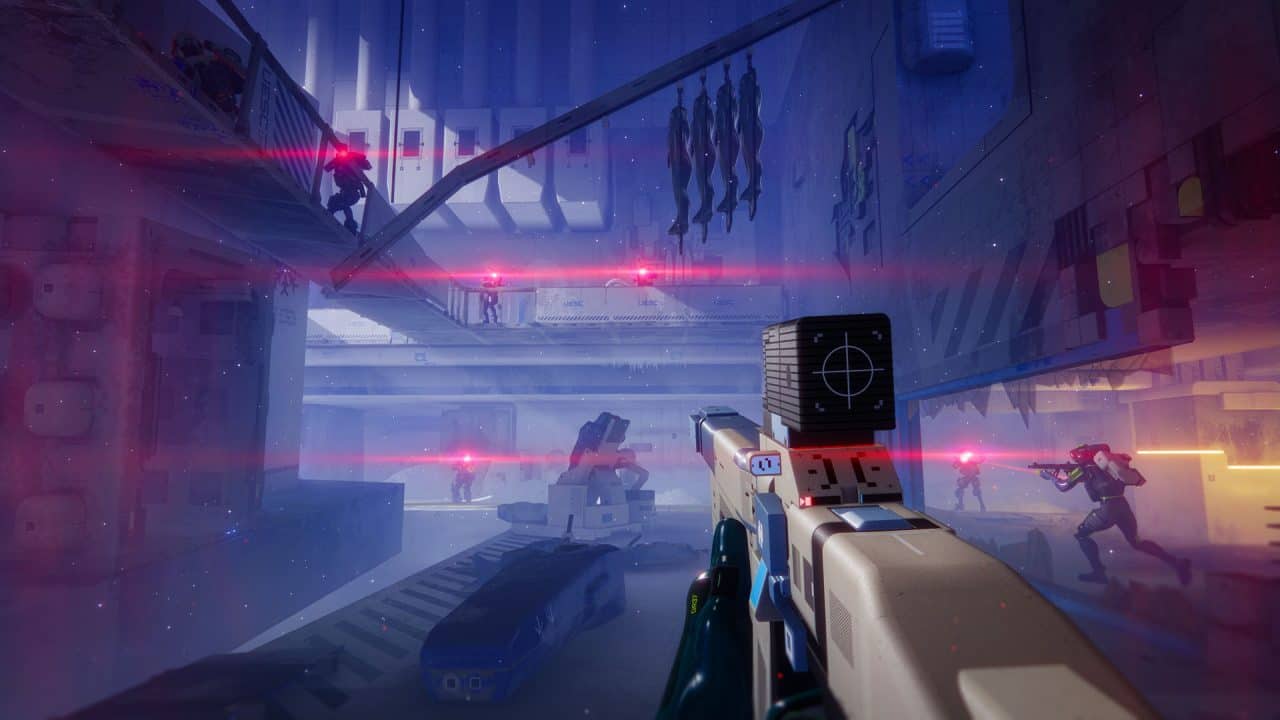
At the end of the day, Marathon is a game that absolutely nails the moment-to-moment gameplay, but struggles to support it with a progression system that feels consistently rewarding. When everything clicks, when you’re in a tense firefight, tracking another squad across the map, or barely escaping with a backpack full of valuable loot, it creates a kind of adrenaline-fueled experience that few games can replicate. Those moments are where Marathon shines the brightest, and it’s clear that this is where Bungie’s strengths still lie.
But those highs are constantly at odds with the systems surrounding them. Progression feels slower than it should, especially in the early hours, and too often it feels like you’re putting in more time than you’re getting back in meaningful rewards. When gear becomes the deciding factor in fights instead of skill, it can quickly turn what should be exciting encounters into frustrating ones. Add in inconsistent balancing and contracts that aren’t always clear or satisfying to complete, and you start to feel the friction between what Marathon does well and where it still needs work.
There’s also a lingering sense that the game isn’t quite sure who it wants to be yet. It leans heavily into the hardcore extraction shooter experience, but doesn’t always do enough to ease new or casual players into that loop. As a result, it can feel unforgiving in ways that don’t always feel intentional or rewarding. For players willing to push through that, there’s a deep and engaging experience here, but it’s one that asks a lot from you upfront.
That said, the foundation is undeniably strong. The gunplay is excellent, the tension is real, and the core loop has that “one more run” pull that can easily eat up hours without you realizing it. This is a game that, with the right adjustments to progression, balance, and overall player onboarding, could evolve into something truly special.
Right now, Marathon feels like a game caught between what it is and what it’s trying to become. If you’re already invested in extraction shooters or thrive in high-risk, high-reward PvPvE environments, there’s a lot here to sink your teeth into. Just know that the experience comes with its share of frustrations, and whether those are worth pushing through will depend entirely on the kind of player you are.
If you enjoyed this review, explore more of our in-depth video game reviews across PlayStation 4, PlayStation 5, Xbox One, Xbox Series X, Nintendo Switch, Nintendo Switch 2, and PC.
Review Disclosure Statement: A copy of Marathon was provided to us by Bungie for review purposes. For more information on how we review video games and other media/technology, please review our Review Guideline/Scoring Policy.
Bungie delivers a shooter that excels in moment-to-moment gameplay, with tight gunplay and a tense, addictive PvPvE loop that keeps you coming back. However, that strong foundation is held back by slow progression, gear imbalance, and systems that don’t always respect the player’s time. Marathon shows real potential, but right now, it feels like a game still trying to fully find its identity.
Pros
- Excellent gunplay and combat feel
- Strong tension and addictive gameplay loop
- Unique class system adds depth
Cons
- Seasonal resets make no sense
- Early progression is very grindy and unrewarding
- Unclear direction and onboarding issues


