

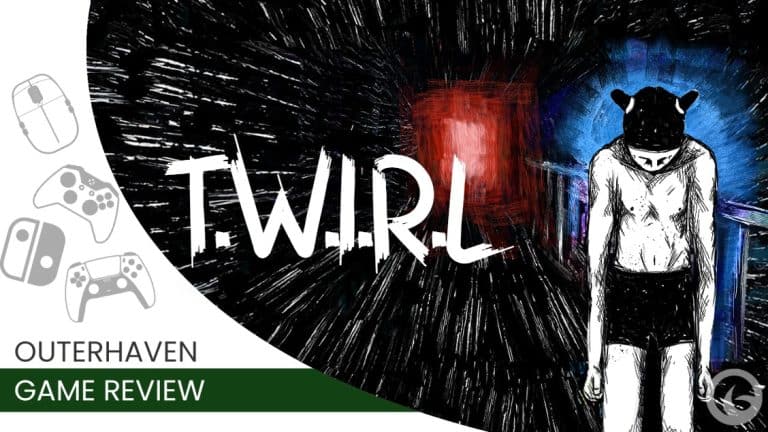
The late, great film critic Roger Ebert often referred to films as “empathy machines.” They let people step outside their own lives to understand the hopes or fears of another. Ironically, Ebert never saw games as art. But in allowing players to literally embody a character, narrative-driven games can promote empathy. T.W.I.R.L., a short indie horror game by Genie Boy Games, admirably fosters empathy by placing players in the shoes of a young person navigating identity through a late-night ritual.
Game Name: T.W.I.R.L.
Platform: PC
Reviewed On: PC
Developer: Genie Boy Games
Publishers: Haunted Publishing Syndicate, Genie Boy Games
Release Date: August 10, 2026
Price: TBA
It’s 3 a.m. You get out of bed. Your family is asleep. You are free to wander. If ever asked to look at yourself… don’t.
T.W.I.R.L. throws players into its nighttime setting with that one piece of direction. This is after they’ve adjusted their settings and gone over the controls, of course. I opted to turn on the “interaction prompt” after finding it lacking during the demo. Some interfaces require precision, so it helps to have the prompt on to know where the interactable part is located. A couple of times, the prompt still didn’t appear, but I could figure out where it should’ve been. I did encounter a couple of other bugs as well, but nothing too major.
T.W.I.R.L. notes that players can walk and investigate. You start out moving quite slowly, but you’re nine; as you get older, you get a speed-walk button. You can also zoom in via a “P.T.-inspired ‘look’ function,” referencing Hideo Kojima’s lost hallway-horror demo.
It’s obvious why Genie Boy would make the P.T. comparison. T.W.I.R.L. similarly involves repeatedly walking down a hallway late at night. There’s something uniquely eerie about sneaking around a darkened house in the middle of the night. It’s a literal everyday environment at a time when we’re least accustomed to it.
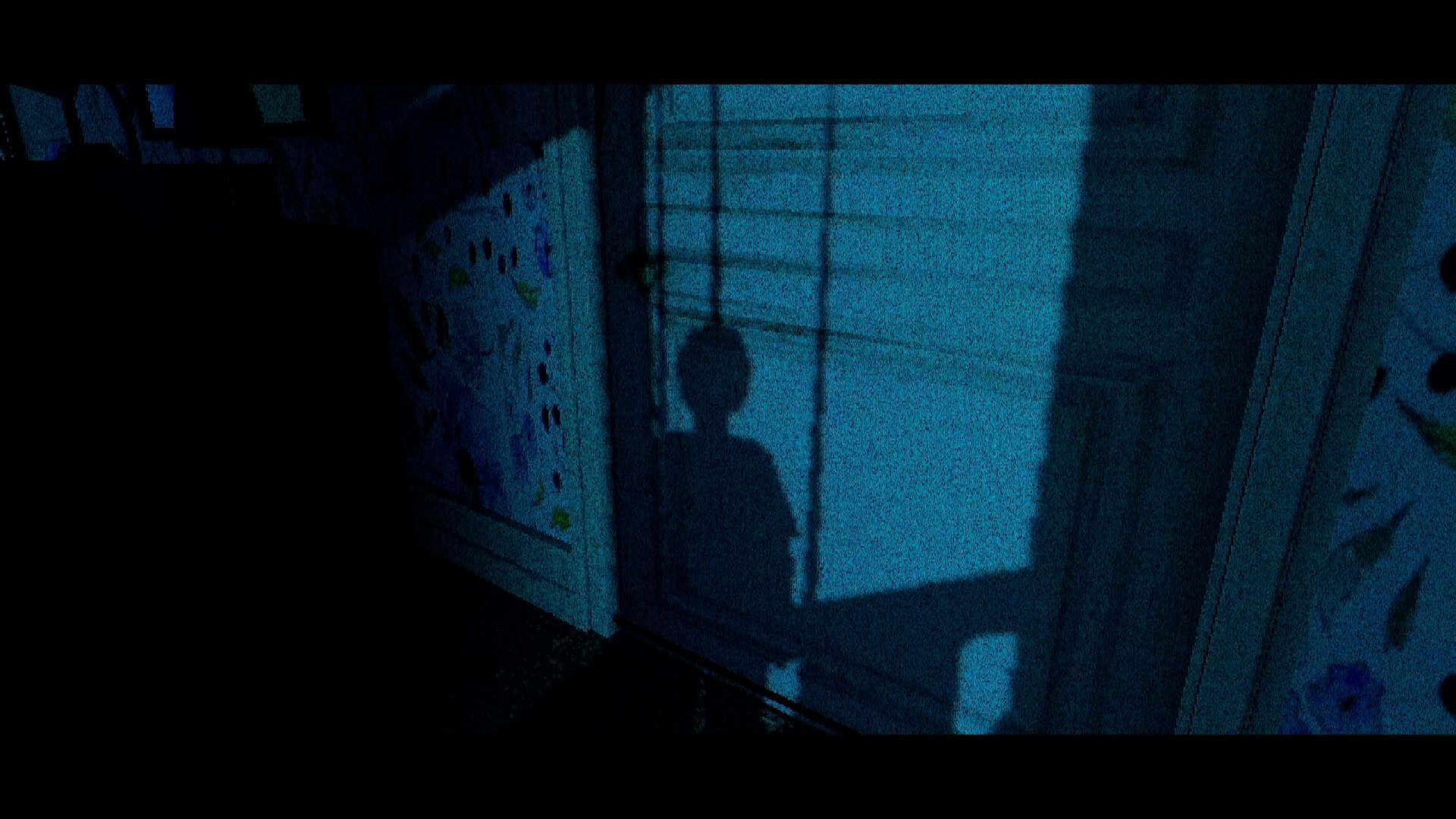
And T.W.I.R.L. brings its surreal suburban setting to life through delightfully nostalgic PS1-style graphics. When you wake up in bed, your room is decorated like an early 2000s boy’s room, complete with a notebook bearing “The Cool S” and a PlayStation 3. The environment is also strengthened by eerie sound design, as you hear the ambient sounds of the neighborhood at night. The voice acting delivers hushed nighttime tones while also conveying emotion and nuance well.
That said, while T.W.I.R.L. superficially resembles P.T., I’d argue that its bones are fundamentally different. P.T. uses its infinitely repeating hallway to generate a variety of potential scares, and no two walkthroughs are alike. T.W.I.R.L., on the other hand, is a much more scripted experience. It sacrifices the use of unpredictable scares to tell a specific story.
That’s not to say that T.W.I.R.L. isn’t scary. It does have a couple of effective scares. They’re just scripted. Some hallway jaunts, denoted by chapters, won’t have any scares at all. The majority don’t, in fact.
As such, T.W.I.R.L. is more of a story-rich adventure than pure horror. So what is the story of this game? Why is this young person waking up in the middle of the night to tiptoe down the hallway in the home of their religious family? Why does this nightly ritual necessitate not looking at a reflection?
I don’t want to say too much, as I enjoyed playing through the first night of this seemingly haphazard sequence of events and realizing how they all aligned. Some of you may already have a suspicion about what’s happening. I don’t want to take that discovery from you. But I would like to discuss the themes for those still wondering if this game is for them. So if you’re already sold, go play T.W.I.R.L.. If you’d like to know more, keep reading.
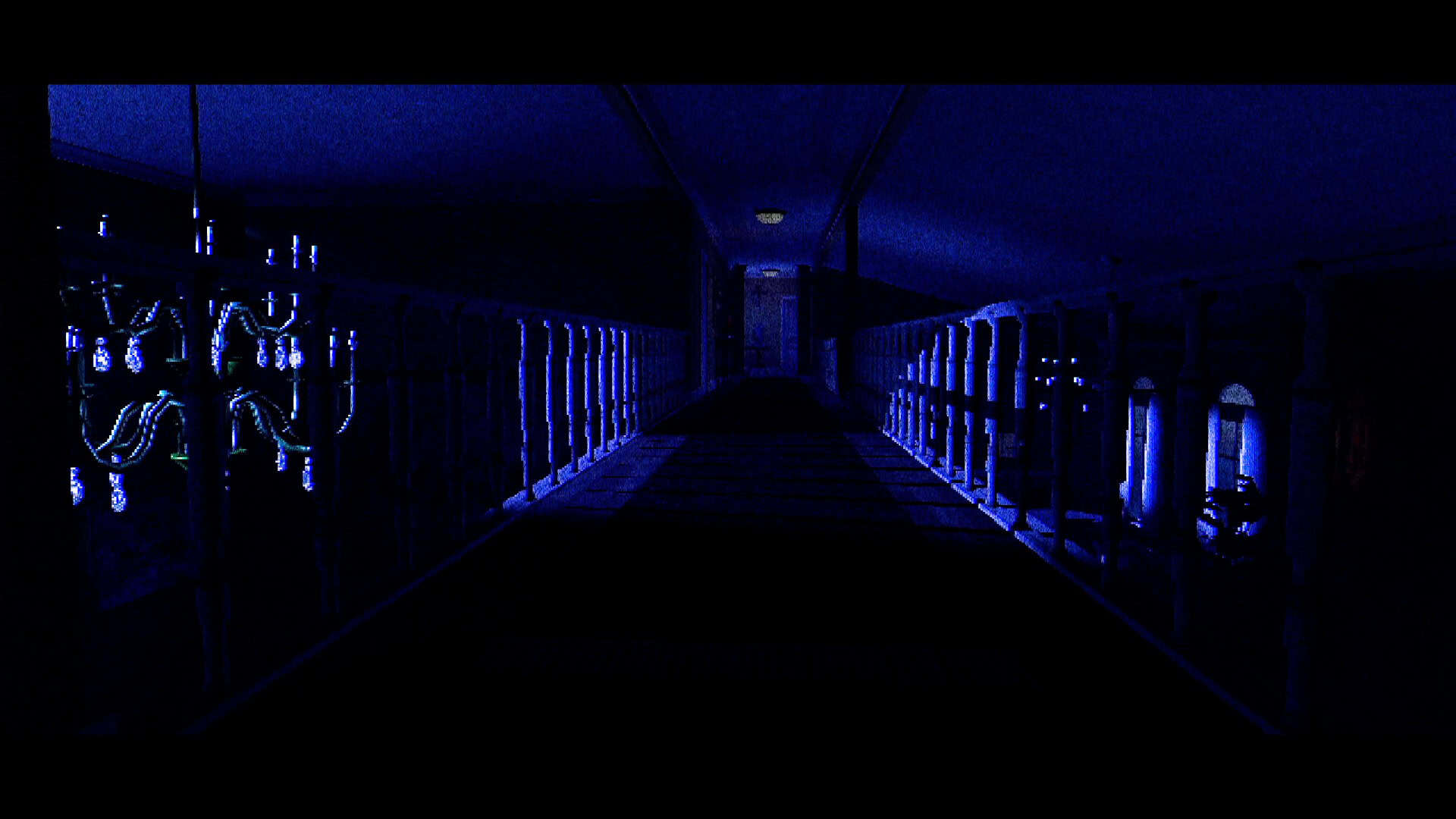
Still with me? T.W.I.R.L. is absolutely a game about exploring gender identity alongside religious identity. Spread across nights ranging from preteen to teenage years, you sneak past biblical paintings, occasional phantoms, and into your sister’s room to put on a dress. Presumably, you’re trans, or definitely gender non-conforming in some way.
But the genius of T.W.I.R.L. is that it never outright tells you what’s happening. It’s not interested in feeding you a moral or lecturing you. It’s slightly interested in player agency, as there are a handful of choices players can make to determine how far to embrace gender expression.
Really, T.W.I.R.L. is most interested in presenting a set of circumstances and letting players interpret them. For example, in lesser hands, it would be tempting to make religion an easy boogeyman. Instead, T.W.I.R.L. shows how Catholicism could drive the mother’s compassion and/or the children’s fears. There’s a wonderful chapter set during Christmas, with the house fully decorated, that raises questions. Is the protagonist afraid of religion? Afraid of their parents? Afraid of themself? You could ponder any of these points, and T.W.I.R.L. does not provide clear answers.
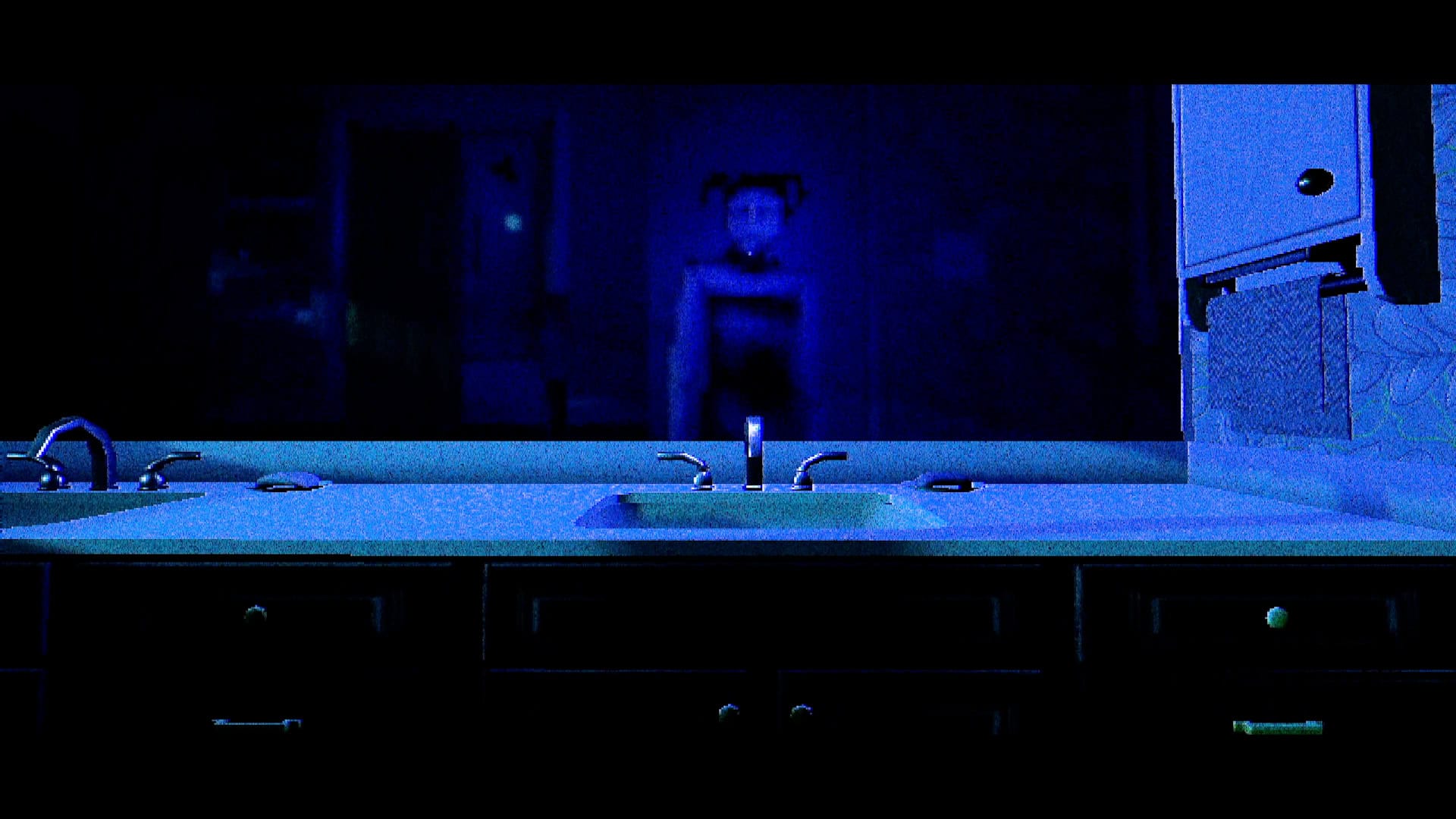
I imagine there may be some folks who might take umbrage at this ambiguity, as T.W.I.R.L. doesn’t openly discuss queerness, positively or negatively. I’d say that it does reveal where its heart lies by creating a metaphor for struggling with identity: roaming around at night, the protagonist is literally haunted by how they look. I am not trans, but I imagine this may strongly resonate with those in the community. For those outside it, it allows us to consider how we as humans present ourselves to others in general. And for those afraid of queerness, it’s an open invitation to engage with it free of any perceived agenda.
T.W.I.R.L. is more interested in posing questions than providing answers. You can decide what this abstract story means. But one thing is certain: for roughly an hour, you get to experience the hopes and fears, mostly fears, of a young person as they form a sense of self.
If you enjoyed this review, explore more of our in-depth video game reviews across PlayStation 4, PlayStation 5, Xbox One, Xbox Series X, Nintendo Switch, Nintendo Switch 2, and PC.
Review Disclosure Statement: T.W.I.R.L. was provided to us by Genie Boy Games for review purposes. For more information on how we review video games and other media/technology, please review our Review Guideline/Scoring Policy.
T.W.I.R.L. delivers a short horror experience aided by retro visuals and haunting sound design. Furthermore, its narrative highlights the power of games to promote empathy. It doesn’t tell players what to think; it gives them space to feel.
Pros
- A thought-provoking psychological horror narrative that asks players to consider themes around identity and self-doubt.
- Solid visuals, spooky sound design, and strong work from first time(!) voice actors.
Cons
- Interactions with surroundings can prove finicky.
-
T.W.I.R.L Review
