


Wisageni Studio’s newest release, K-Pop Idol Stories: Road to Debut, takes players on a journey to create their own K-Pop girl group. You will have to scout, recruit, and manage your trainees while dealing with their day-to-day schedules. After the gruelling recruitment process, training sessions, and evaluations, will you be able to lead your group to its debut?
Game Name: K-Pop Idol Stories: Road to Debut
Platform(s): Xbox Series X|S, PlayStation 5, Nintendo Switch, PC
Reviewed On: Xbox Series X
Developer(s): Wisageni Studio
Publisher(s): PQube
Release Date: July 16, 2026
I’ve played quite a few visual novels and management sims over the years, but K-Pop Idol Stories: Road to Debut surprised me with how well it blends storytelling, character relationships, and career progression into one package. Rather than simply throwing you into the spotlight, the game focuses on the journey of becoming an idol, and that’s what kept me invested.
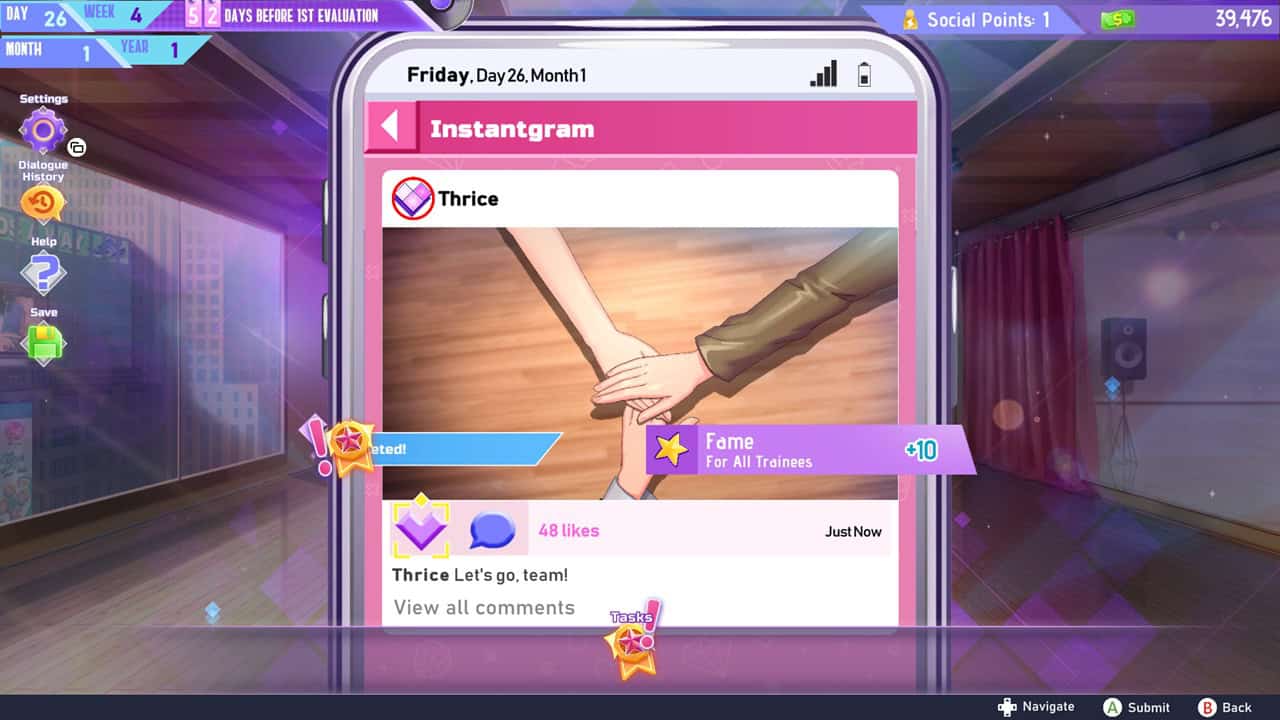
Something I personally like about games with clear real-world inspirations, but without the resources or backing to use real names, is seeing the parody names the developers come up with. You want them to be close enough that you know who they are talking about, but they can’t use the actual names for legal reasons. K-Pop Idol Stories has some fun examples. As long as you’re familiar with the K-Pop world, some prime examples are JIP Entertainment, which is clearly meant to be JYPE, and BTZ, which, if you didn’t know, is a reference to BTS.
With this in mind, I decided to parody my favourite K-Pop girl group, TWICE, with my group being called Thrice!
Beginnings
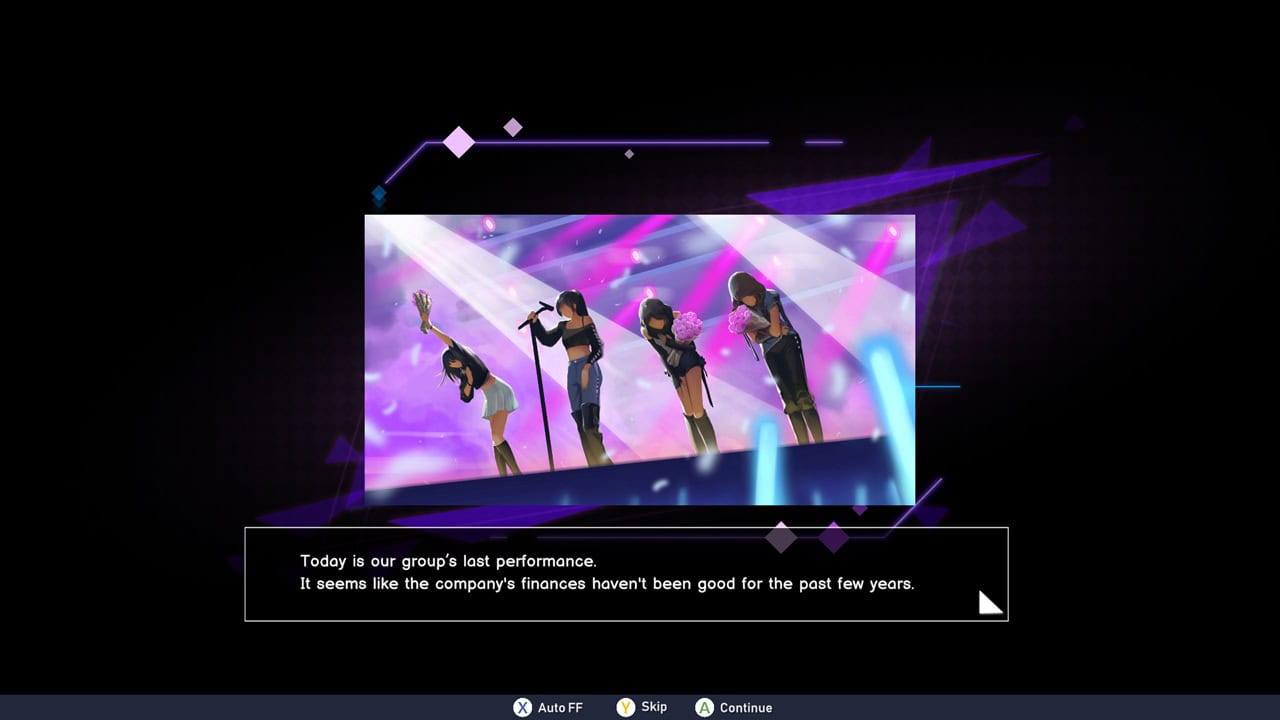
Right from the start, you are thrust into a subplot that sets up the game’s main story. The company you work for has been shut down, meaning you’re out of a job, and the group you had been managing has disbanded. Upon leaving, you are gifted a ticket to a concert. Afterwards, you receive an email from WG Entertainment with the heading, “Application for Position of Project Manager.”
This is when you will have the opportunity to enter your name, date of birth, and choose what type of manager you would like to be. There are three management styles to choose from: The Marketer, The Realist, and The Risk-Taker. Each one has a specific bonus track.
The Recruitment Phase
Upon completing the application form and choosing your management style, you meet Maya, one of the producers from the KIS Project, and the head of WG Entertainment, Mr. Jae. These two people will be your main contacts as they help you through your journey towards debut. Maya will ask you to name your group and decide what style of group you want to manage. The three available styles are Cute, Glamour, and Fantasy.
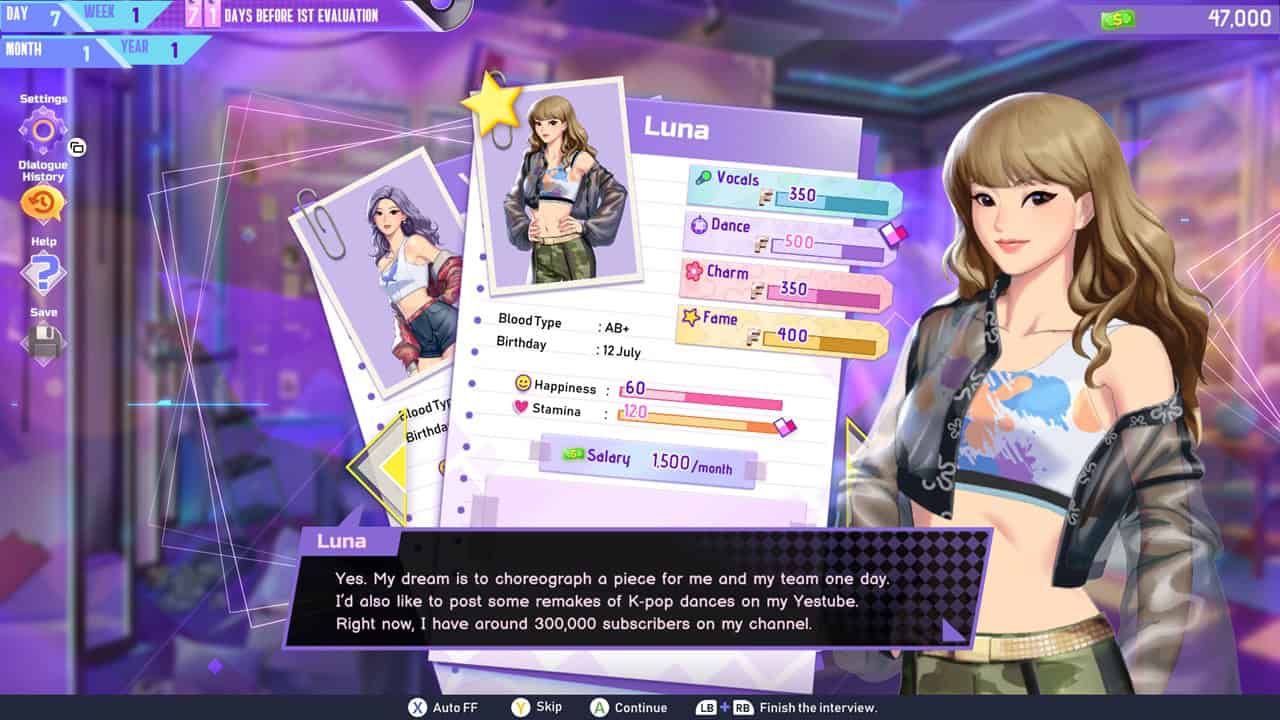
This is when you get into the meat and bones of the game, scheduling how each week will play out. In the beginning, you will choose how you want to start recruiting the girls who will have a chance to become part of the group. A mini-game will coincide with the recruitment process, and the better you perform, the more girls you will have to choose from.
A Story That Keeps You Invested
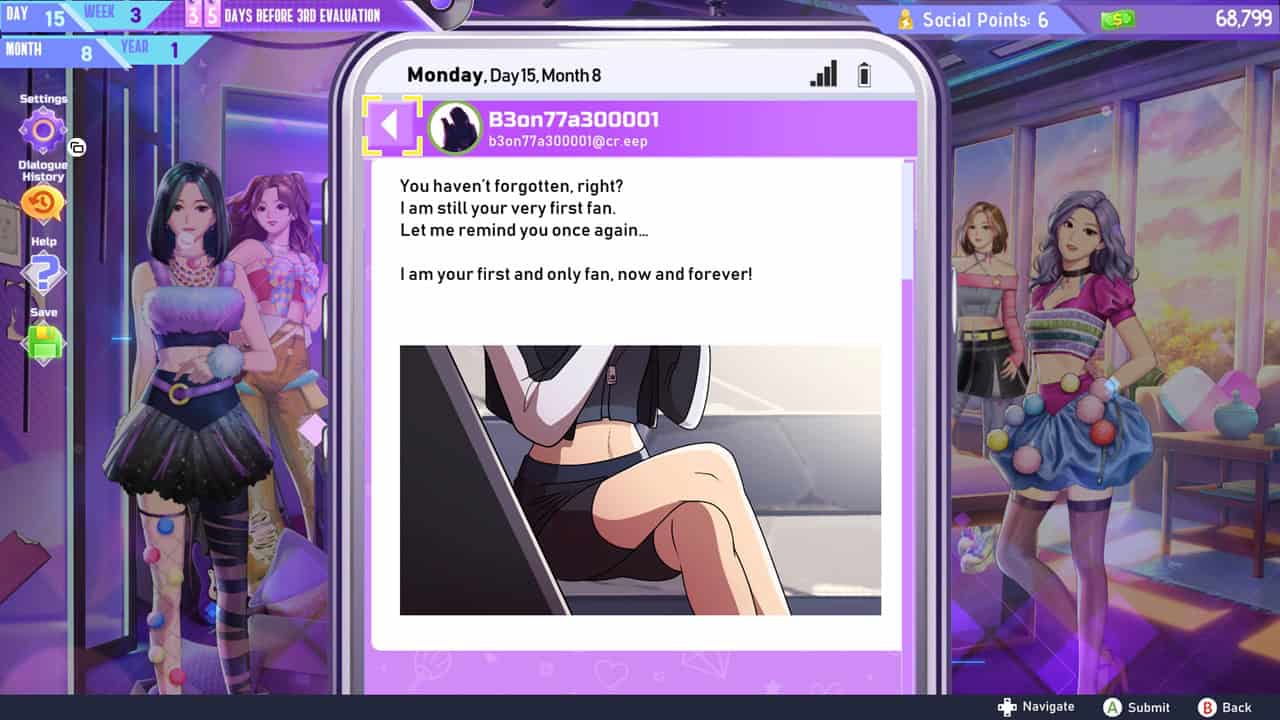
The strongest part of Road to Debut is easily its writing. Every trainee has their own personality, motivations, and struggles, making the interactions feel meaningful rather than simply existing to unlock the next event. I found myself genuinely interested in learning more about the cast, and several storylines took turns I wasn’t expecting.
Choices also matter more than I anticipated. Conversations can influence friendships, rivalries, and even future opportunities, giving the story a sense of ownership. While the overall narrative follows a fairly traditional underdog journey, the smaller character moments are what make it memorable.
Gameplay
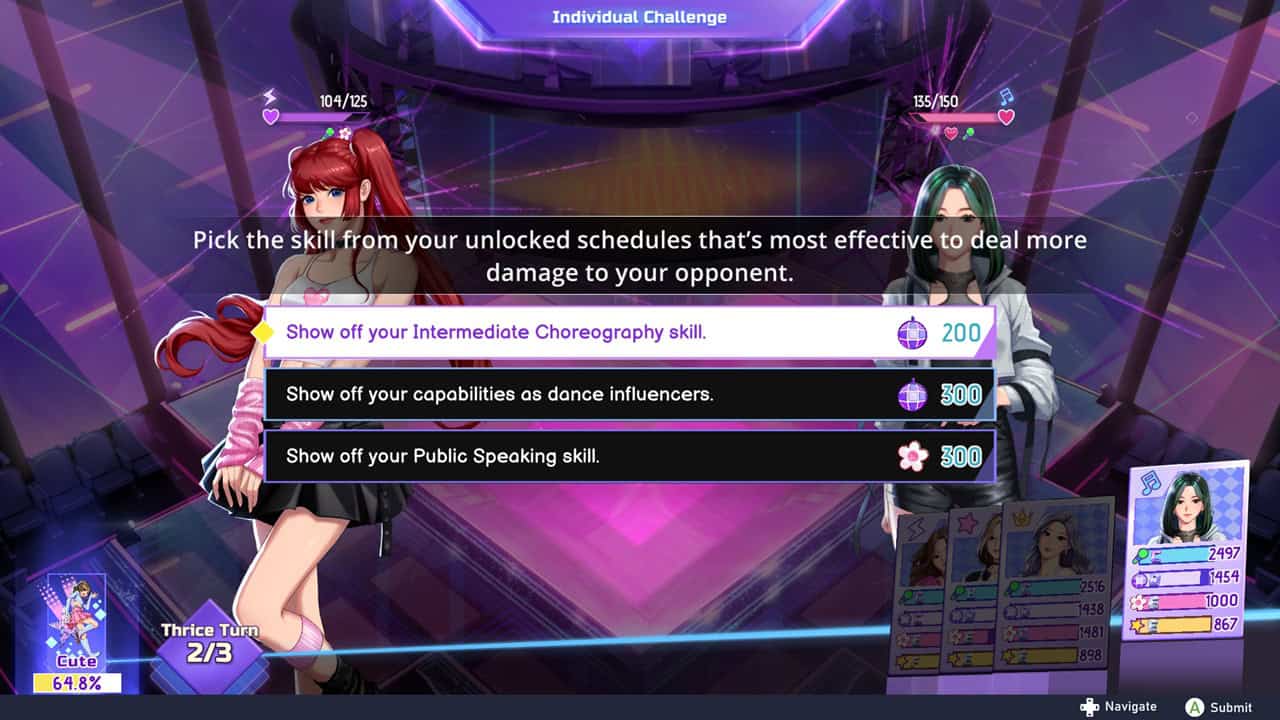
While K-Pop Idol Stories is a fun game on the surface, it doesn’t add anything particularly new to gaming as a whole. Outside of a few mini-games, the gameplay only really uses one button. The magic of the game is more about strategy, making sure the girls you manage aren’t tired or injured while also ensuring they continue to improve.
Each group member has six categories that you need to maintain. Four of them are focused on progression: Singing, Dance, Fame, and Charm. You use your seven-day schedule to assign different training sessions, relaxation activities, or jobs. You then run the schedule, and the game tells you how the recruits performed during the tasks you assigned. Choose singing lessons, and their Singing stat will increase. Have them work as backing dancers for a senior company singer, and you will earn some money. You can even give the group the day off, which helps with the other two categories I haven’t mentioned yet: Stamina and Happiness.
Presentation Fits the Genre Perfectly
Visually, the game is exactly what I had hoped for. The character artwork is colourful, expressive, and full of personality. Different costumes, hairstyles, and event illustrations help major story moments stand out, while the user interface remains clean and easy to navigate.
The soundtrack deserves praise as well. While there aren’t dozens of full-length K-Pop tracks, the background music captures the atmosphere perfectly. Whether you’re dealing with a tense evaluation or spending time bonding with your trainees, the music complements the mood without becoming repetitive.
Not Everything Hits the Right Note
Despite enjoying my time with the game, there are a few areas that frustrated me.
The pacing slows considerably during the middle portion. Training sessions begin to feel a little repetitive before the next major story beat arrives, and I occasionally found myself skipping through routine management screens just to move the narrative forward.
I also would have liked to see more meaningful variety in the performances. While the story events differ, many of the gameplay systems repeat with only minor changes, making the later chapters feel slightly too familiar.
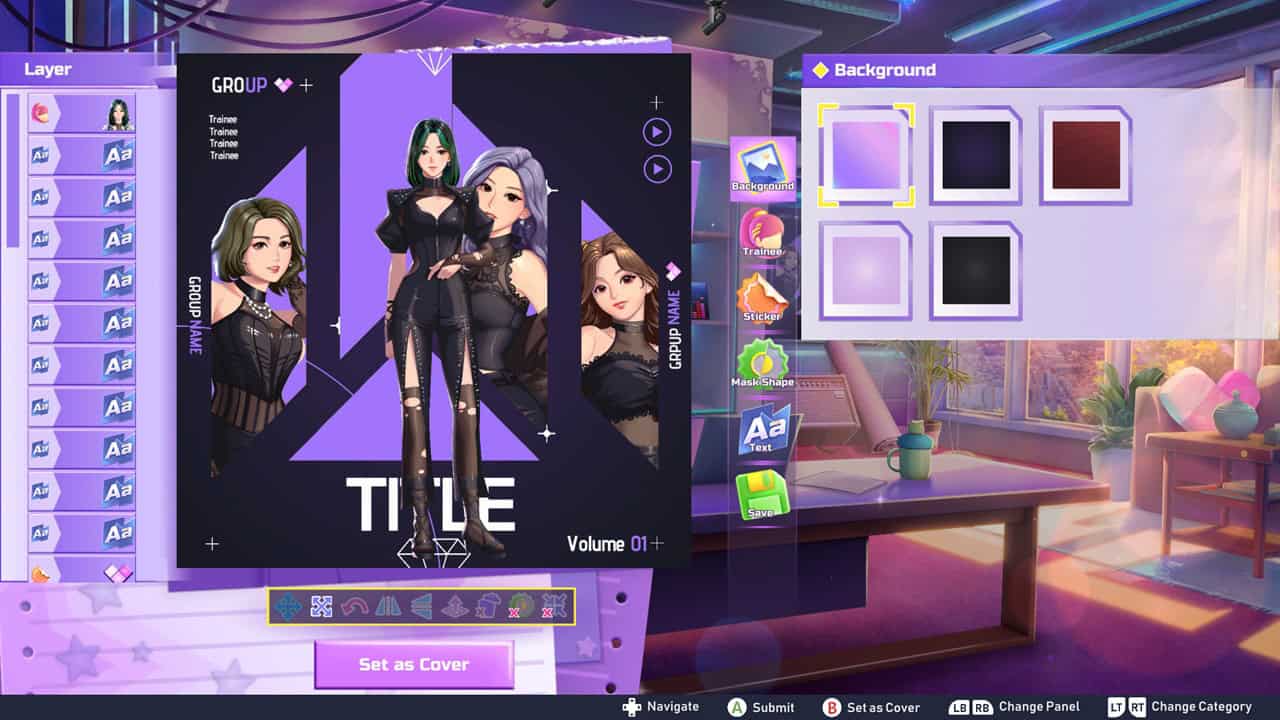
One major bug that occurred, and one that really disappointed me, happened while I was trying to create my group’s single cover art on Xbox. I was unable to move any of the assets, making it impossible to create anything. This was such a bummer because it happened towards the end of the game, after I had already spent a lot of time with my group and had a clear idea of what I wanted the cover to look like.
Final Thoughts
I thoroughly enjoyed my time with K-Pop Idol Stories: Road to Debut. However, this is a game that I don’t think many people will play, and I’d honestly be surprised if this review is even read. Still, as a lover of Korean culture and K-Pop, this game was a nice and refreshing experience. Yes, it isn’t groundbreaking. Yes, it isn’t Game of the Year material. But it is what it is, and it knows exactly what it wants to be: a fun, six-hour management, lifestyle, and music simulator that lets you relax and enjoy some K-Pop fun.
If you enjoyed this review, explore more of our in-depth video game reviews across PlayStation 4, PlayStation 5, Xbox One, Xbox Series X|S, Nintendo Switch, Nintendo Switch 2, and PC.
Review Disclosure Statement: K-Pop Idol Stories: Road to Debut was provided to us by Wisageni Studio for review purposes. For more information on how we review video games and other media and technology, please review our Review Guideline/Scoring Policy.
K-Pop Idol Stories: Road to Debut is a heartfelt blend of visual novel storytelling and management simulation that captures the highs and lows of chasing K-pop stardom. With an engaging cast of characters, meaningful choices, and rewarding progression, it delivers an enjoyable journey from trainee to idol. While repetitive training sessions and occasional pacing issues prevent it from reaching superstar status, its charm, strong writing, and satisfying sense of accomplishment make it well worth the debut.
Pros
- Good Management Gameplay
- Fun fake K-Pop references
- Great Writing
- Each Person Feels Different
- Relaxing soundtrack that fits the atmosphere.
Cons
- Short
- Some Bugs
- Not Groundbreaking
- A little repetitive after a while
- Performance events could offer more gameplay variety.
