

Fallout has always been about survival… and what you’re willing to become in order to ensure it.
Fallout: Power Play takes that idea and zooms out. You’re no longer just trying to survive the Wasteland, you’re shaping it. Leading one of Fallout’s iconic factions, you’re fighting for control of key locations, pushing out rivals, and deciding exactly how ruthless you’re willing to be to stay on top.
It’s still survival at its core. It just looks a lot more like domination once you have the power to choose.
Publisher: Modiphius Entertainment
Designer: Resurrectionist Games
Players: 2-4
Playtime: 30-45 minutes
Genre: Competitive Card Game
Release: 2026
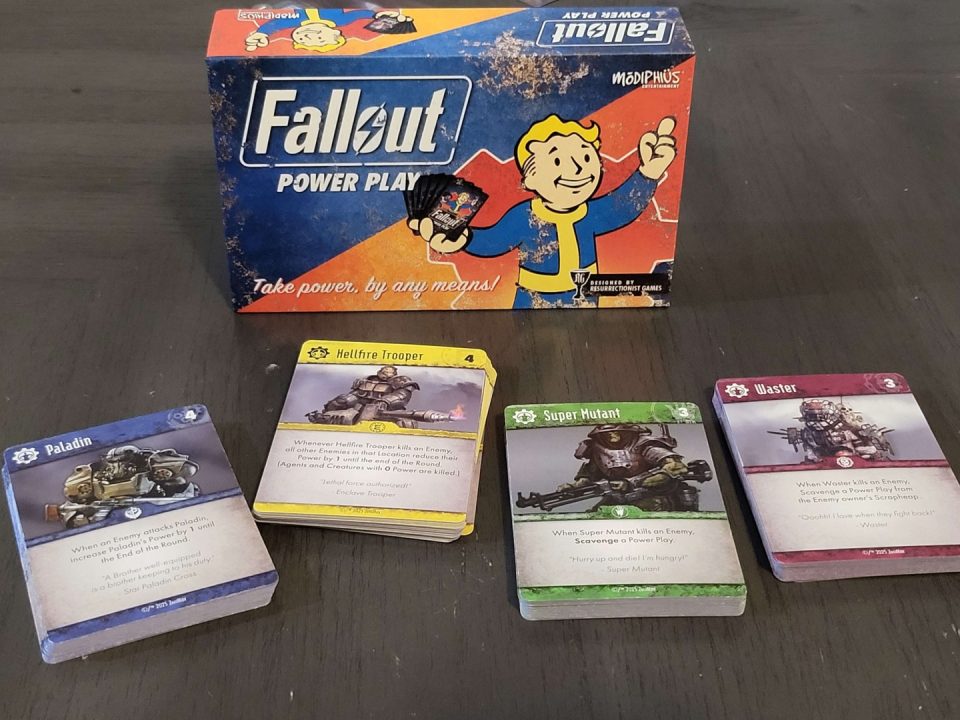
Overview / Core Gameplay
At its core, Power Play is about controlling locations through Influence and scoring victory points over multiple rounds.
Each round, players take turns playing one card per turn until they pass.
On your turn, you’re doing one of three things:
- Deploying Agents or Quests
- Activating Faction abilities
- Using Location abilities
The real fight happens on the board:
Locations have limited slots (4), so space is tight. Agents bring Power, which determines control. You can attack and replace enemy units directly.
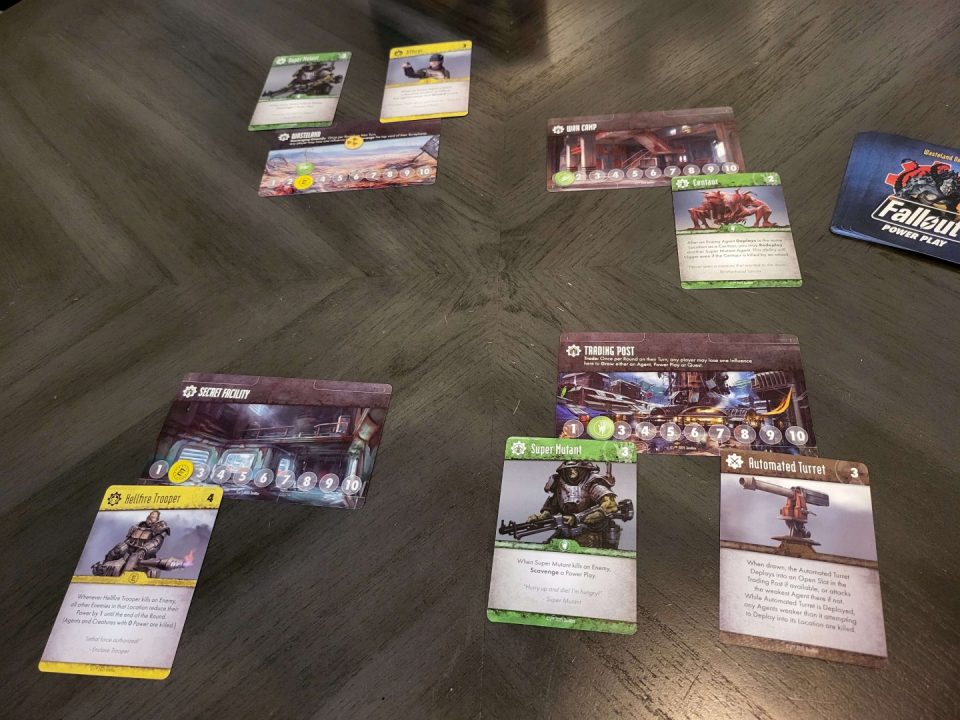
At the end of the round:
Highest Power = more Influence per Foothold. Dominating a Foothold = Victory Points. First to 10 VP wins.
Simple on paper. Messy in practice. Exactly how it should be.
Mechanics & Flow
This is where the game earns its keep.
- Area Control with Teeth
Most card games flirt with interaction. Power Play walks in and flips the table. You don’t just build your board, you invade other people’s plans: Deploy directly onto enemies to kill them. Equal power? Both die. Lower power? Your unit gets wrecked. It’s clean, brutal, and very Fallout. - Quests Add a Second Layer
Quests aren’t just side objectives, they’re positional plays. You replace your own Agent with a Quest, complete objectives for rewards, and trade board presence for long-term gain. That tension actually works. Do you hold territory or gamble for payoff? - Wasteland Events = Controlled Chaos
At the end of each round, the game throws a wrench at everyone: Events or creatures trigger globally. No one controls them. Everyone suffers (or benefits) equally. It’s basically the game reminding you: “You thought you were in control? That’s adorable.”
- The Degradation Mechanic (Sneaky Good)
If you don’t maintain presence in a location, you lose Influence there. This stops passive play dead in its tracks. You can’t just win early and coast. You have to keep showing up, which creates constant pressure across the board. - Turn Structure Keeps It Moving
One action per turn. Pass when you’re stuck (or smart). Round ends when everyone passes. No downtime spiral. No “I’ll just calculate this for 5 minutes.” Play flows fast, and that matters.
Theme & Fallout Connection
This is where Power Play quietly wins.
It doesn’t try to retell Fallout stories. It captures the feeling of faction conflict.
You’re not the Lone Wanderer. You’re:
- Brotherhood securing territory
- Raiders disrupting control
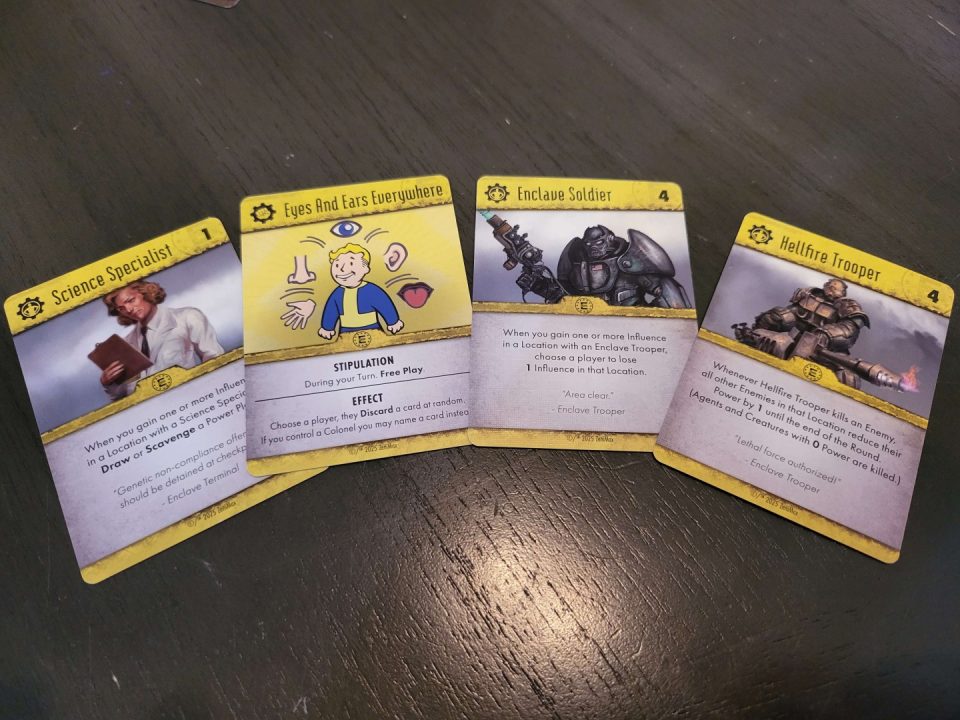
- Enclave doing Enclave things (which is usually “worse for everyone else”)
The mechanics mirror Fallout themes: Territory control = power in the Wasteland. Events = unpredictable chaos. Scrapheap = nothing ever really disappears, it just gets reused.
Even the aggression fits the games: Fallout isn’t fair. Neither is this.
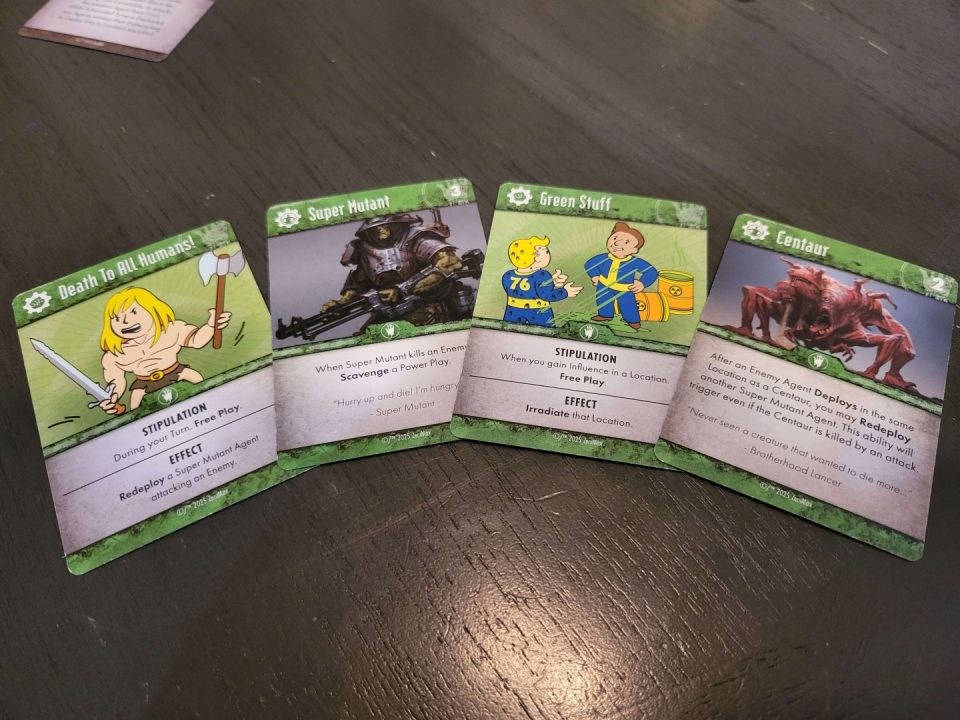
I really felt the theme of each faction in the decks, Super Mutants are immune to rads and pop up everywhere to “Kill All Humans”, Raiders will “String Them Up” for an outright kill just to steal someones boots.
Ease of Learning / Accessibility
Let’s be honest. This isn’t a “teach grandma in 5 minutes” game.
But it’s also not some bloated rules monster. Mostly it’s knowing your deck.
What works: Core loop is simple. Keywords are consistent. Actions are limited and clear.
What doesn’t: Rulebook clarity is… fine, not great. Some interactions need a first-game stumble.
You’ll spend your first game asking: “Wait, can I do that?”
Second game: “Oh… I absolutely should have done that.”
The Table Experience
This is where the game gets fun in a slightly mean way.
You’ll attack people constantly. You’ll lose locations right before scoring. You’ll think you’re winning… until degradation kicks in.
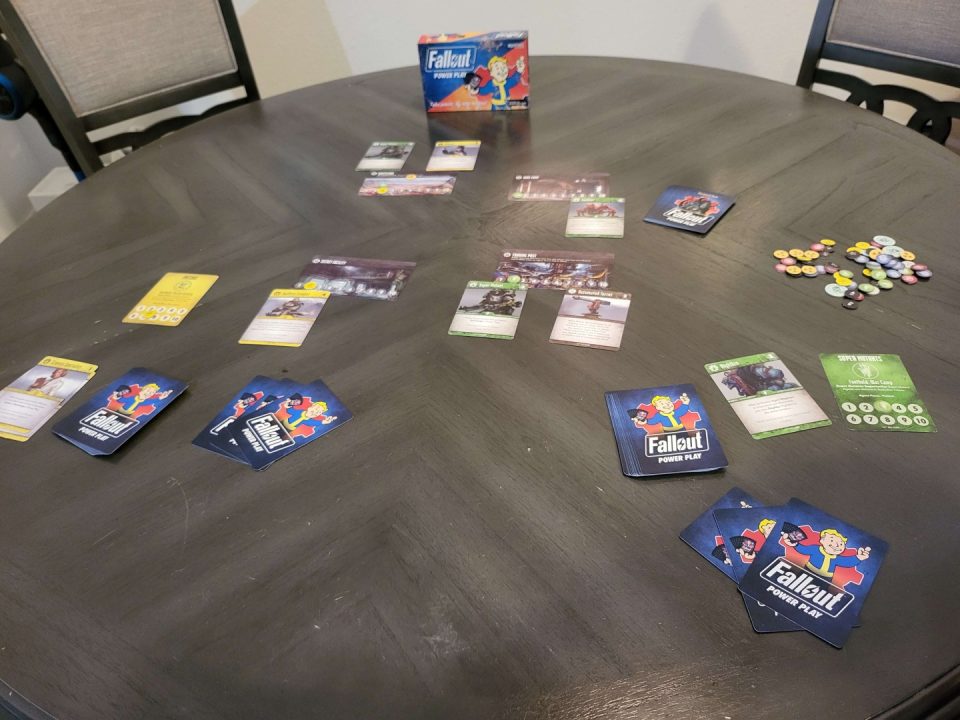
There’s a constant push-pull: Expand too thin = you lose control. Focus too much = you get outmaneuvered. And then a Wasteland event hits and ruins everyone’s plans anyway.
It creates those perfect moments: “I had that locked down.” “No you didn’t.” “The game literally killed my unit.”
That’s Fallout energy right there.
Final Thoughts / Verdict
Fallout: Power Play is a lean, aggressive area-control card game that actually understands what makes Fallout interesting: power, instability, and constant conflict.
It doesn’t try to be an RPG. It doesn’t drown you in systems.
It gives you just enough tools to feel clever… and just enough chaos to remind you you’re not.
Who will love it:
- Fallout fans who want faction conflict, not story campaigns
- Players who enjoy direct interaction and conflict
- Groups looking for a quick but meaningful strategy game
Who won’t:
- Players who hate having their plans ruined
- People looking for solo or narrative experiences
- Anyone allergic to confrontation at the table
Replayability:
Solid. Different factions, constant interaction, and variable events keep it fresh.
I absoutely look forward to more Factions and more cards to build a deck.
Thank you Modiphius for the copy to review.
Fallout: Power Play is a tight, mean little strategy game that captures the politics of the Wasteland perfectly.
Pros
- Fast-paced with meaningful decisions
- Strong player interaction (actual conflict, not passive nonsense)
- Smart use of Fallout themes without overcomplication
Cons
- Rulebook could be clearer in spots
- Early mistakes can snowball
- Passing doesn’t end other players turns
