

A World Beyond the Rift
A battered cargo plane tears through a glowing rift in the sky and crash-lands into a realm that feels painted by dreams and edged with danger. Sleeping Gods: Distant Skies drops you – and your small, determined crew – into that impossible place
Publisher: Red Raven Games
Designer: Ryan Laukat
Players: 1-4
Playtime: 60-600 minutes (campaign ~15 hours)
Genre: Cooperative Narrative Adventure / Campaign
Release: 2023
Opening Hook/First Impression
Picture this: It’s 1937, your cargo plane punches through a shimmering portal in the sky, and suddenly you’re crash-landed in a breathtaking, untamed realm of towering peaks, ancient ruins, and scheming gods who slumber no more. Sleeping Gods: Distant Skies feels like stepping into a watercolor painting that moves – Ryan Laukat’s signature art style wraps you in whimsy and danger from the first page flip. As a standalone sequel to the beloved original, it refines the formula into something smoother, more focused, and arguably more inviting for new crews ready to explore without needing the full backstory.
Overview/Core Gameplay
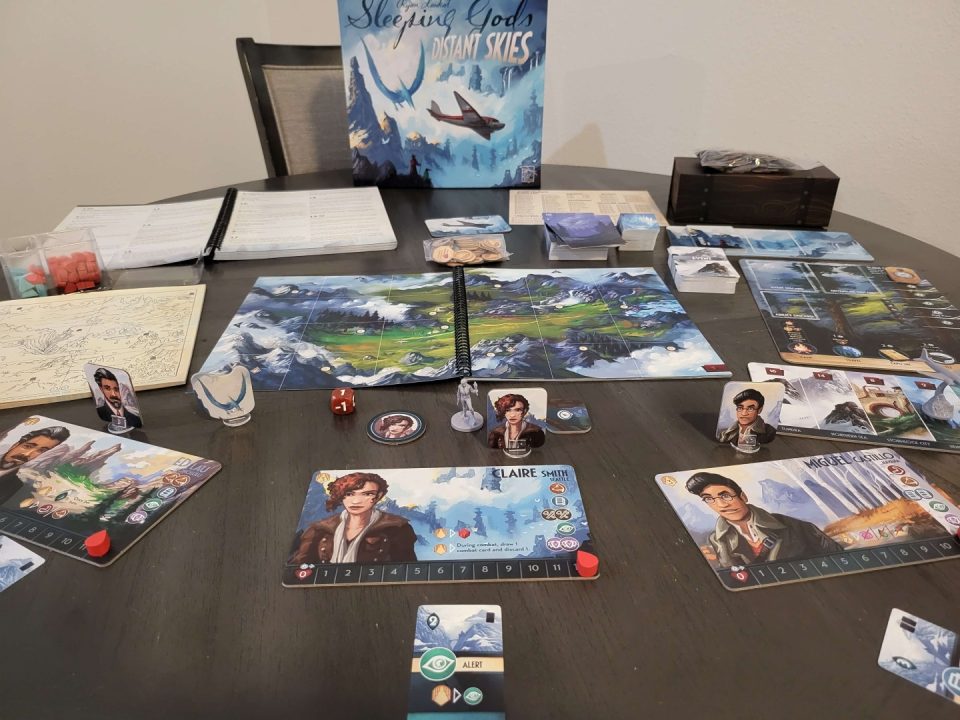
You control a small band of five adventurers led by pilot Claire Smith, stranded in the Wandering World. The main goal is to awaken ancient totems scattered across the massive atlas map, gathering quest resources to power your way back home before the portal closes forever.
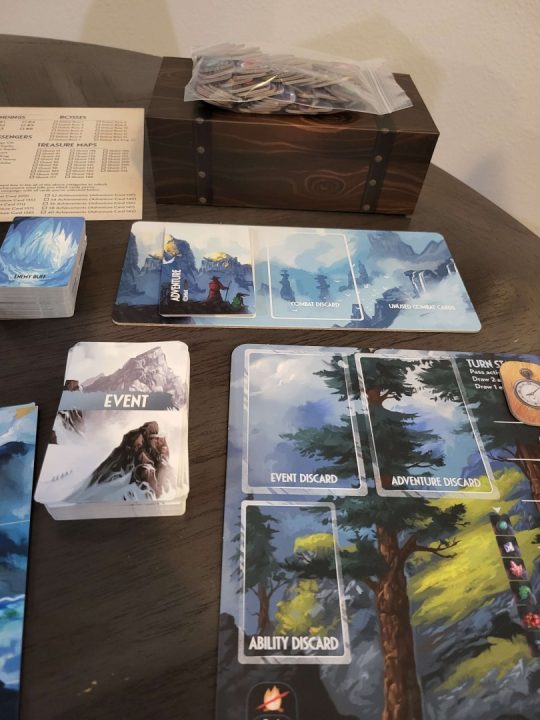
Each turn, the active player spends up to 5 “time” points on the pocket watch track for actions: Travel (move your explorer pawn across the map), Explore (flip to a storybook page for narrative encounters, challenges, or combat), Camp (heal, draw cards, and rest – often the smartest move), Fly (use your plane for fast travel, burning fuel), or Repair the aircraft.
Meanwhile, your other crew members handle “wandering encounters” – side challenges that keep everyone engaged. The game thrives on choice: Do you push forward into unknown hexes, or play it safe and camp? Every decision branches the story, building tension as resources dwindle and threats grow.
Mechanics & Flow
The core loop hums with elegant simplicity. Laukat strips away the original’s clunkier command tokens for a clean time-track system that feels more dynamic and less fiddly. Combat steals the show — a shared deck-building puzzle where you play cards to deal damage, block enemy attacks, and manage escalating “power” levels. Boss fights span multiple pages with zones and special rules, turning fights into tactical brain-burners that reward clever card synergy.
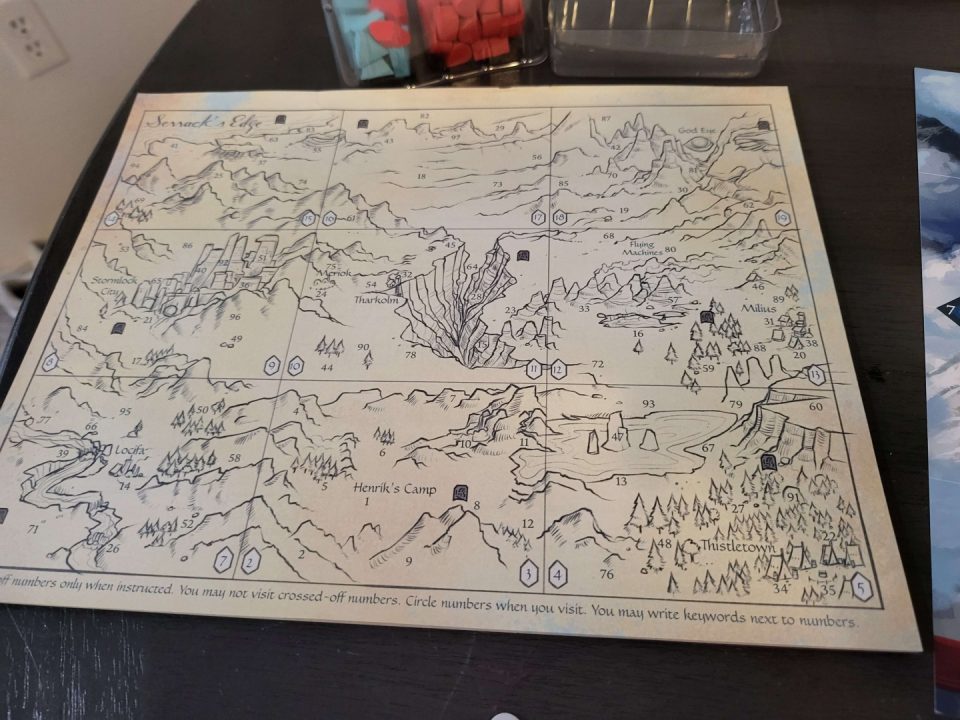
Pacing starts gentle but builds momentum as you unlock abilities and gear. The atlas opens up gradually, revealing secrets and side paths that encourage exploration. At 1-2 players it shines brightest – solo feels perfectly balanced with full crew control, while 3-4 can dilute combat hands and slow decisions. Compared to the original, this version is more streamlined and mature, trading raw chaos for guided narrative depth.
Theme & Components
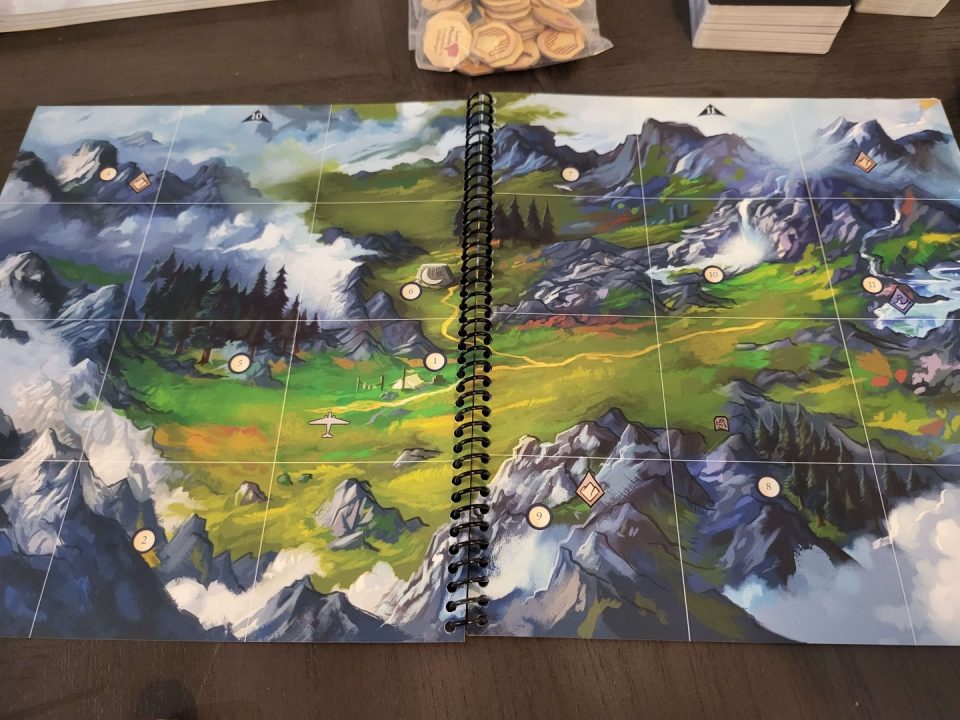
Laukat’s watercolor illustrations are pure magic – every atlas spread bursts with vibrant landscapes, from misty forests to jagged mountains under endless skies. The art doesn’t just look pretty; it pulls you into the story, making every location feel alive and wondrous.
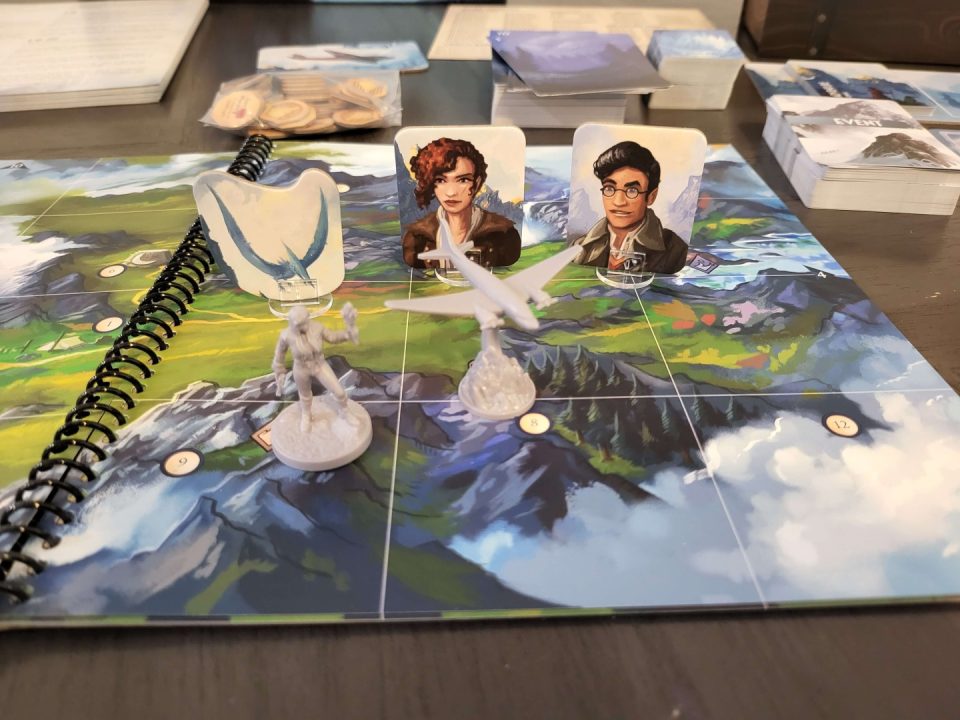
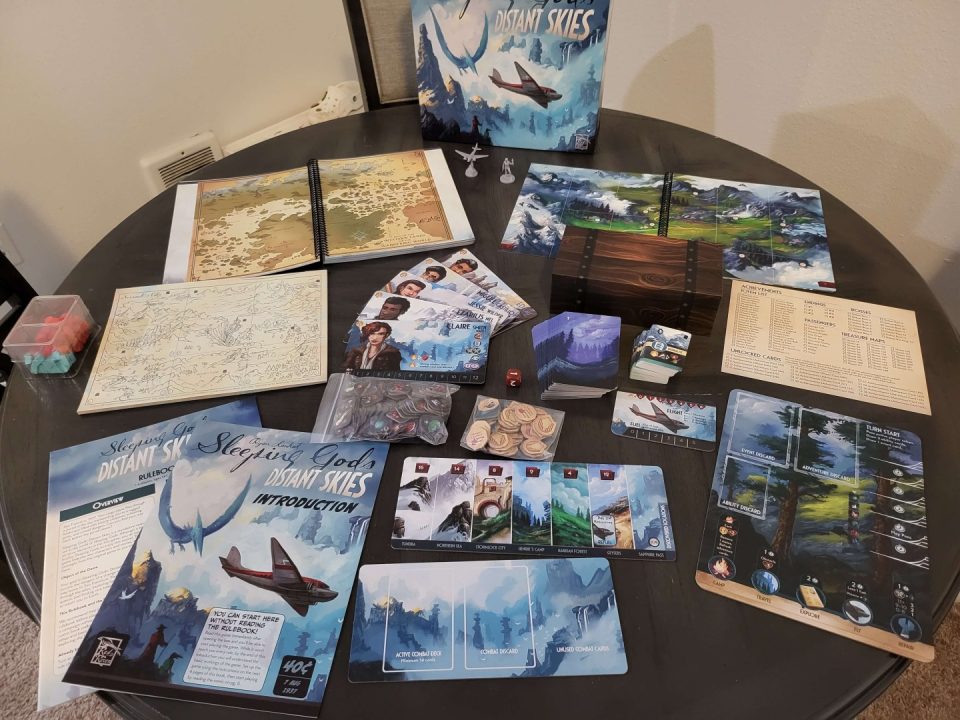
Components are top-tier: a spiral-bound atlas that lays flat beautifully, a thick storybook with hundreds of branching entries, character folios with health/stamina trackers, wooden resource tokens (food, wood, iron), gem quest markers, and a chunky plane miniature that looks right at home soaring across the table. The wooden time token and status cubes add tactile delight. Setup/teardown is reasonable for a campaign game, though the box is hefty – many players add organizers for longevity. No deluxe edition needed; this is premium out of the box.
Ease of learning/Accessibility
The intro comic book gets you airborne fast, and the rules are clear with good examples. First plays feel approachable – the core loop clicks quickly, though mastering combat takes a session or two.
Complexity sits medium-light (around 2.95 on BGG), making it welcoming for hobbyists dipping into campaign games without overwhelming casuals. It’s ideal for families who enjoy story-driven co-ops (with some light combat) or solo players craving epic adventure. Expansions or veteran mode can crank difficulty for heavier gamers.
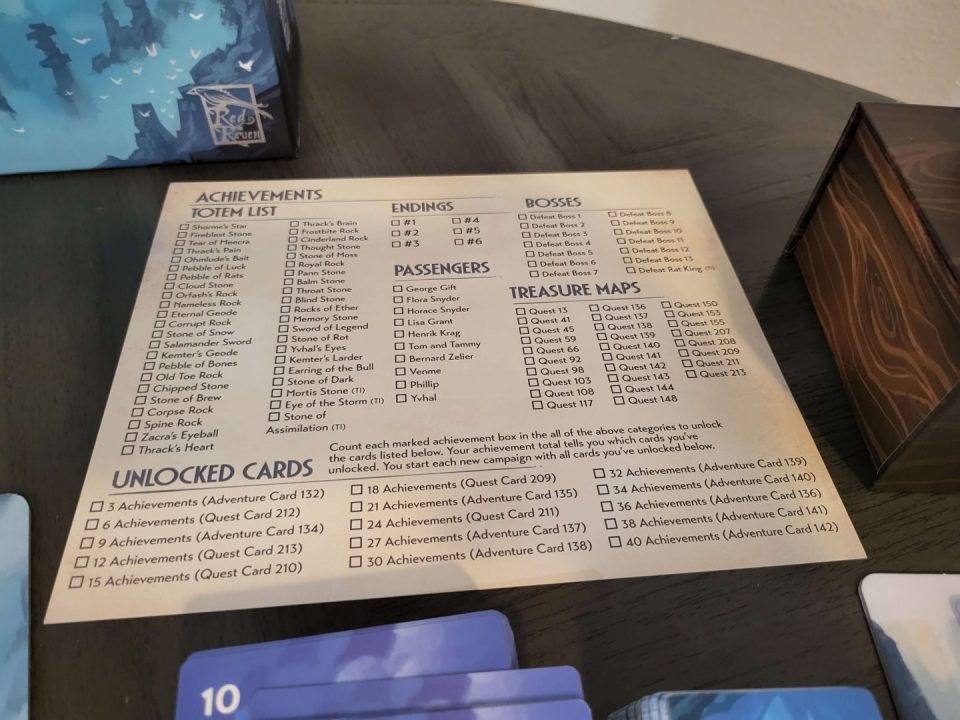
The Table Experience
There’s something quietly magical about gathering around Distant Skies. You laugh at absurd NPC encounters, hold your breath during a desperate combat roll, and cheer when a long-planned combo finally pays off. Tension simmers as fuel runs low or a boss powers up – “We can camp… or we can risk it?” becomes the group’s mantra.
Losing a fight stings but rarely feels unfair; wins feel earned through smart crew placement and card play. Memorable moments pile up: stumbling on a hidden village, debating whether to trust a shady merchant, or watching your plane glide to safety just as night falls. It’s cozy yet epic, the kind of game that lingers in conversations long after you pack it away.
Final Thoughts/Verdict
Those who loved the original’s wilder edges might find it a touch too streamlined, but most will see it as evolution, not regression. It’s the board game equivalent of a great open-world adventure that respects your time while delivering wonder. Highly recommended for anyone ready to fly into the unknown.
Purchase it here or on Amazon here (a coupon gets it below $50 right now on Amazon)
Special thanks to Red Raven Games for providing the copy to review
Summary
Sleeping Gods: Distant Skies refines an already beloved formula into a more polished, accessible masterpiece. If you crave immersive storytelling, meaningful choices, and gorgeous table presence, this is essential – especially for solo or duo play.
Pros
- Stunning art and immersive world-building that make every page flip exciting
- Streamlined mechanics and excellent combat that feel rewarding and tactical
- Flexible campaign play – save anywhere, perfect for episodic sessions
- Strong solo/duo experience with high replayability through branching paths
Cons
- Can feel too easy on standard difficulty for some veterans
- Multiplayer scaling slightly dilutes combat focus
- Large box and component count demand lots of table space
