

I’ve been having vivid dreams the last few nights. I wonder if it’s because of SLEEP AWAKE. The psychological horror game explores a world in which going to sleep often means one won’t wake up again. As such, the entire game is presented as a kind of fever dream, with psychedelic visuals, haunting audio, and surreal world and story.
Game Name: SLEEP AWAKE
Platforms: PlayStation 5 (reviewed), Xbox Series X│S, and PC
Developer: EYES OUT
Publisher: Blumhouse Games
Release Date: December 2, 2025
Price: $29.99
The design comes courtesy of developer EYES OUT. Cory Davis of Spec Ops: The Line and Robin Finck of Nine Inch Nails co-founded the studio. And the offbeat partnership has led to a suitably idiosyncratic title. Whether or not SLEEP AWAKE is your cup of bedtime tea is up to you. But it’s certainly an original blend.
The Setting of Sleeplessness
The game places you into the sleepless shoes of Katja, a young woman living in a city called The Crush. Some time in the recent past, people started disappearing in their sleep from a phenomenon known as The Hush. Nobody can leave the city as it’s surrounded by a wasteland called The Fringe (not all of these can rhyme).
The story begins in medias res. Katja’s father, a sleep scientist, has left the family behind to search for a cure. The Hush has taken Katja’s brother Bo. So now it’s up to Katja to make an infusion to take to Amma, another loved one, to help stave off sleep.
In playing SLEEP AWAKE, I became invested in the story from both a micro level and a macro level. Sometimes Katja and her family took my interest, other times the mysteries of the city rose to the forefront. But I always found something to intrigue me even if one storyline fell to the backburner.
Early on, Katja falls asleep for a short time, which is not great for Katja. But it’s great for us, the players, as the game treats us to eerie FMV sequences between having us traverse an ever-shifting dreamscape. A mysterious figure known as Het guides us across surreal landscapes through various visual tricks.
You may notice that I haven’t gotten to much of the gameplay yet. If there’s one drawback of SLEEP AWAKE it’s that it gets off to a slow start. While we learn a bit about this world through Katja’s musings, it takes some time before we witness these events first-hand. Even when Katja leaves her home, the stakes start out pretty low.
Exploring for the Lore of SLEEP AWAKE
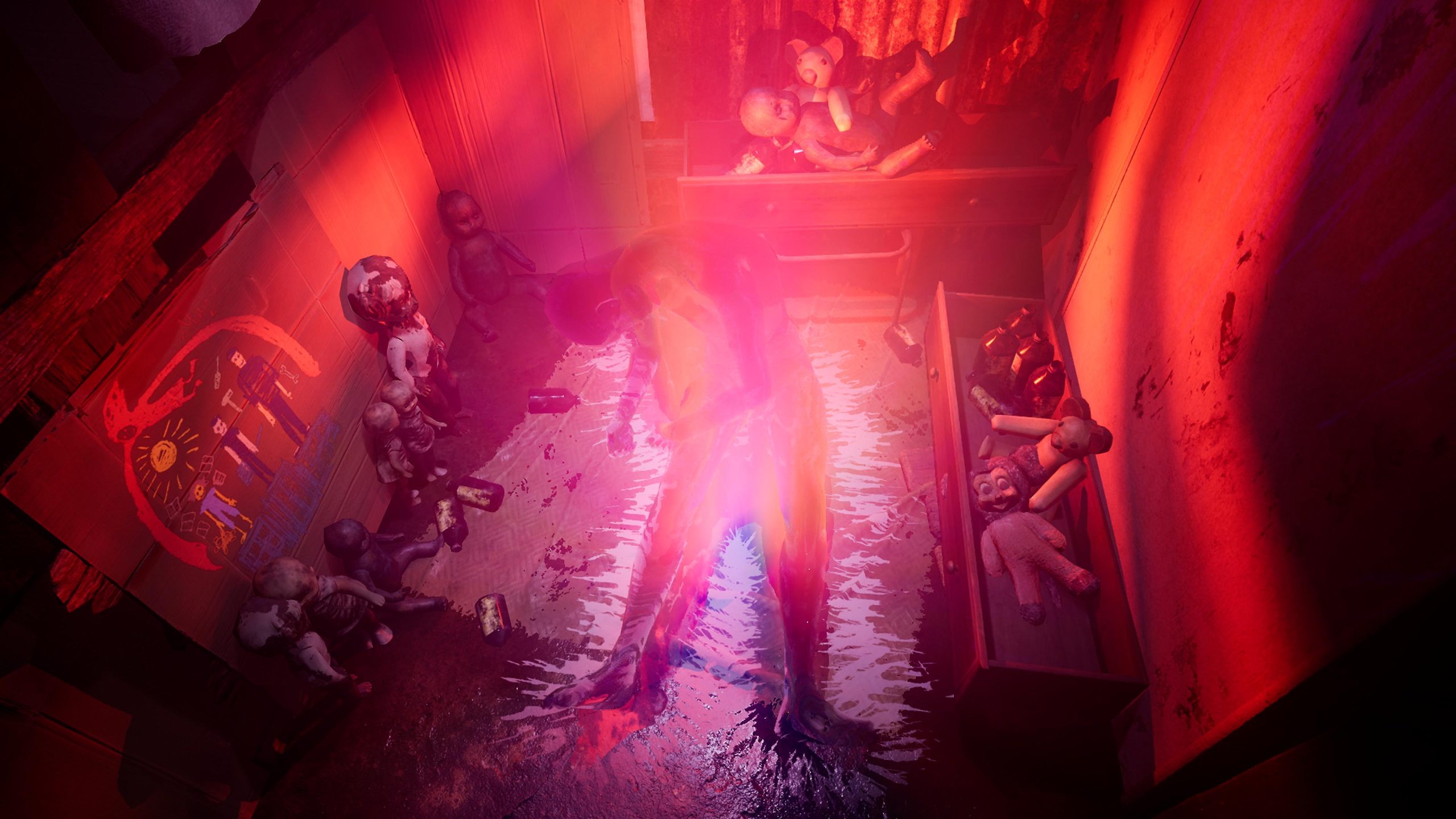
SLEEP AWAKE is at its best when it works lore into environmental storytelling. Every location in The Crush builds narrative, whether that’s of the various factions vying for control or of the last moments of families taken by The Hush. Houses feel like lived-in places. They have graffiti scrawled on the walls, trinkets on the shelves, and the occasional void shadow left behind—a remnant of someone taken by The Hush that Katja can interact with to hear their last words. All of these offer clues as to what is happening, not the least of which are microfiches that Katja can collect that contain reports on specific happenings.
As a bit of an aside, I appreciate the way the game uses microfiches to drip feed lore. Rather than regular letters that one can read in the moment—and SLEEP AWAKE has these too—microfiches can only be read at a microfiche reader. This encourages players to seek them out to learn more. And as one does, the readers scan through quick snapshots of other images and events. These give SLEEP AWAKE a sense of scale before the machine settles in on the desired document.
The main faction controlling The Crush is the Delta Transport Ministry, or DTM, who believe that they have the “true” means of keeping people awake and alert through their medications and Delta Theaters. There are other factions that don’t like them, including the macabre Pain Eaters, who inflict pain to stay awake, as well as other factions I won’t spoil.
Sneaking Not Sleeping
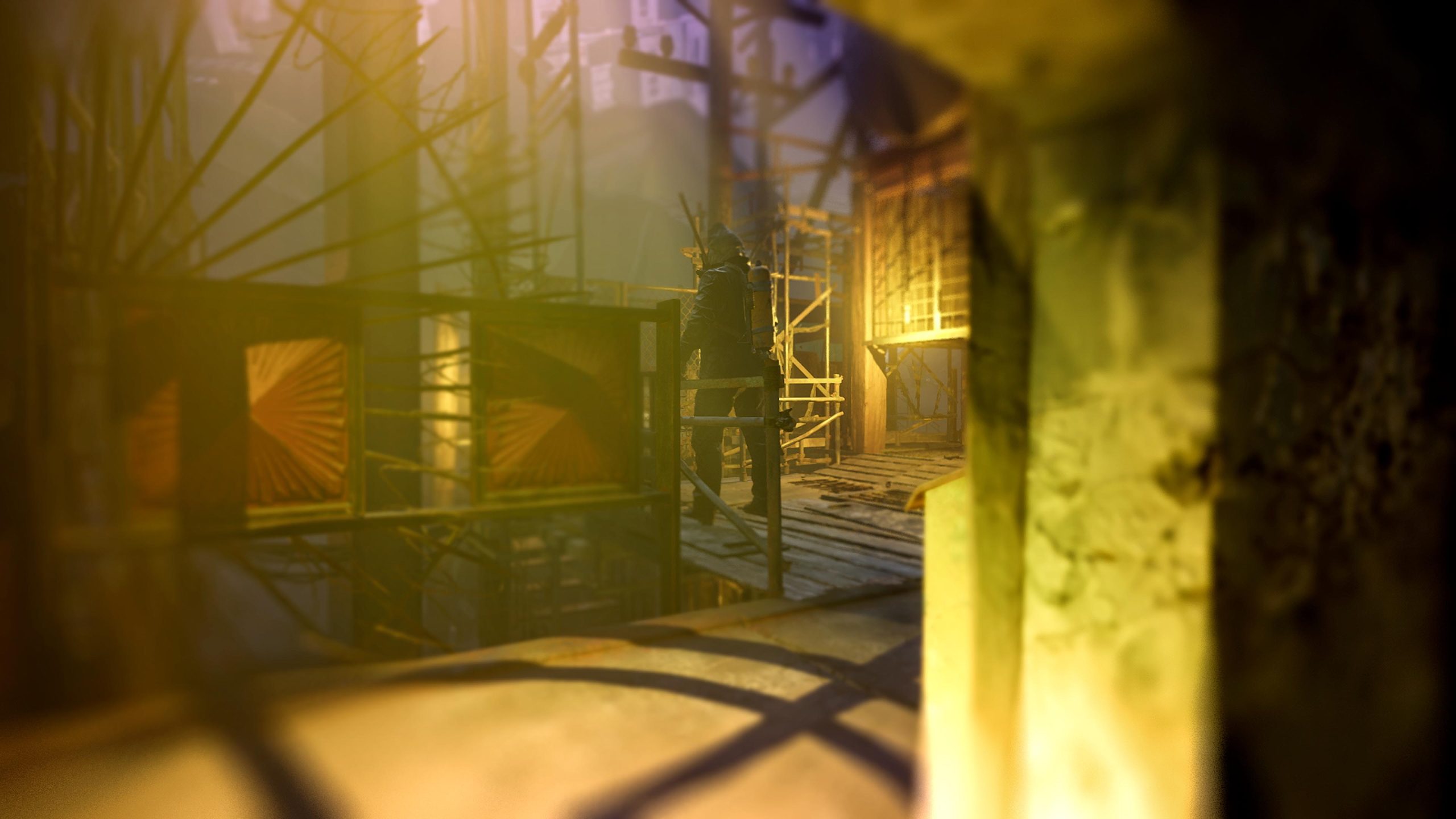
These factions prove the source of SLEEP AWAKE’s stealth gameplay. In traversing the city, Katja occasionally has to sneak through their territories. I found the sporadic stealth sections fair and intuitive. Crouching means you make little noise when moving. Hiding in the shadows or beneath something gives you an icon that means you’re out of view.
Some moments I was almost certain an enemy would’ve spotted me, such as when I hid in the shadows and one came right up to me. Personally, I prefer a system that sets its parameters and sticks to them rather than one that sacrifices rules for realism.
And while the stealth system is generous, it’s not overly so. An enemy only has to hit you twice to take you out. This is nice for times when you’re right near an exit but otherwise it leaves little room for error. There were a couple of moments when I went the wrong way and got cornered, but I could always figure out the correct path on the second try.
Thankfully, death in SLEEP AWAKE is its own psychedelic experience. Rather than a loading screen following by an unceremonious drop at a checkpoint, SLEEP AWAKE puts you in a surreal tunnel that materializes the area you were in once you start walking through. It’s a small touch, but a stylish one.
Some players may not even see this, as dying is rare outside of stealth sections. Otherwise the gameplay consists of light puzzle sections and traversing the environment. The stealth gameplay builds on itself as it goes, incorporating other mechanics the player learns along the way. I love the moments of seeing SLEEP AWAKE iterate on its own gameplay like this. I wish it pushed this idea even further.
The Short Sharp Shock of SLEEP AWAKE
SLEEP AWAKE is not a long game, with the psychological sci-fi horror game clocking in at about four to five hours. It’s not so much a walking sim as what I’d call a “tour guide” sim. The game takes you on a linear path where you’ll occasionally stop to interact—say with a puzzle or stealth section—and then move through its galleries.
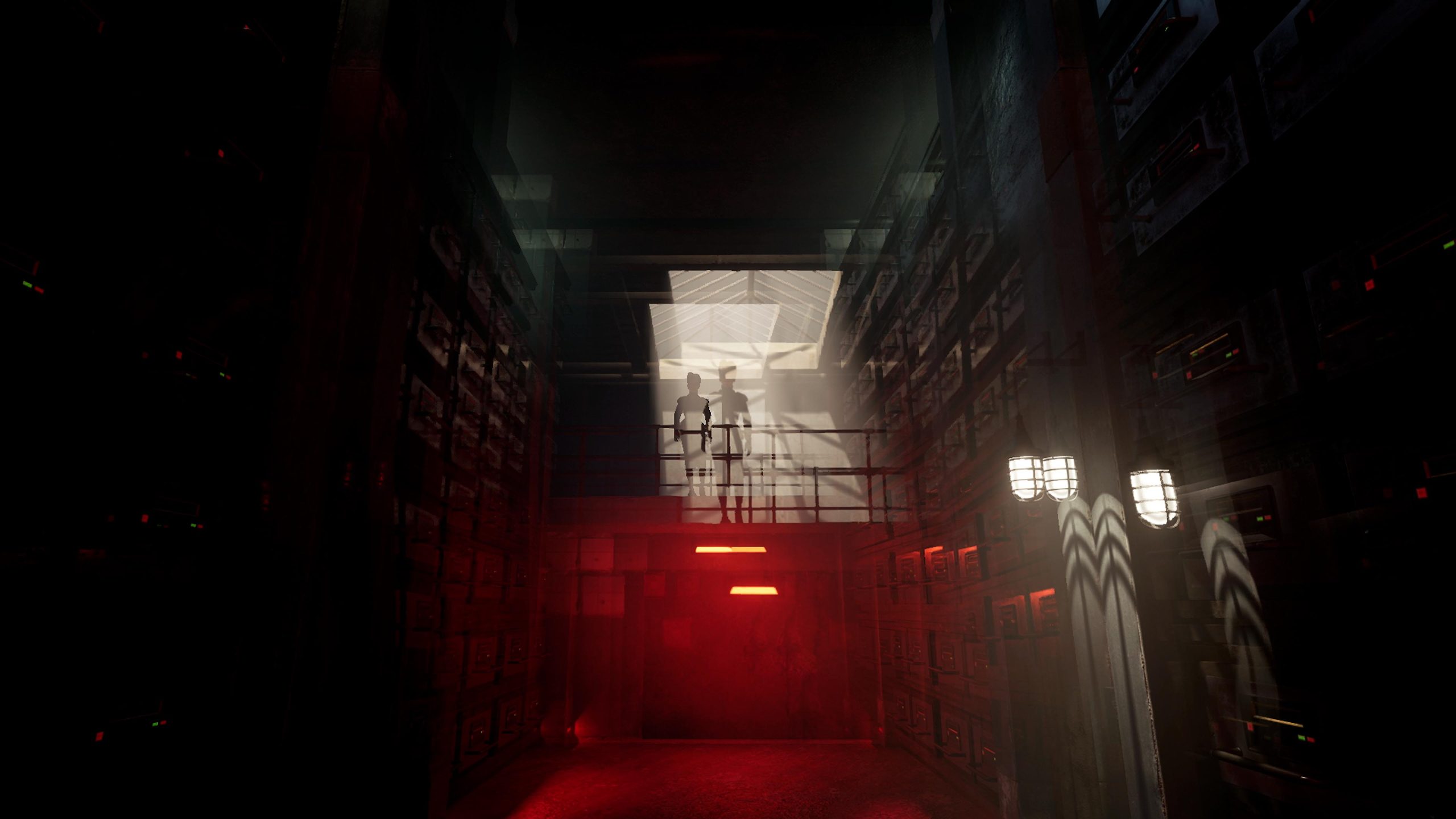
“Galleries” may be the perfect metaphor, as SLEEP AWAKE is a deeply artistic psychedelic journey. The environments of The Crush are suitably stark and industrial, conveying the feeling of a dystopian city falling apart. But it’s not all doom and gloom. The Fathom, one dreamscape that Katja visits, is lush and otherworldly, with hints of a Japanese garden. SLEEP AWAKE is one of those titles that you could easily imagine in a “games as art” exhibit. Every image has sublime lighting and coloring but also tells a story.
And of course, I would be remiss not to mention the sound design and audio. The score comes courtesy of Finck himself, with a haunting industrial soundtrack that feels like the natural audio transposition of what we see on screen. The score leans more into sci-fi when it needs to and more into horror when that genre comes into play.
Dream or Nightmare
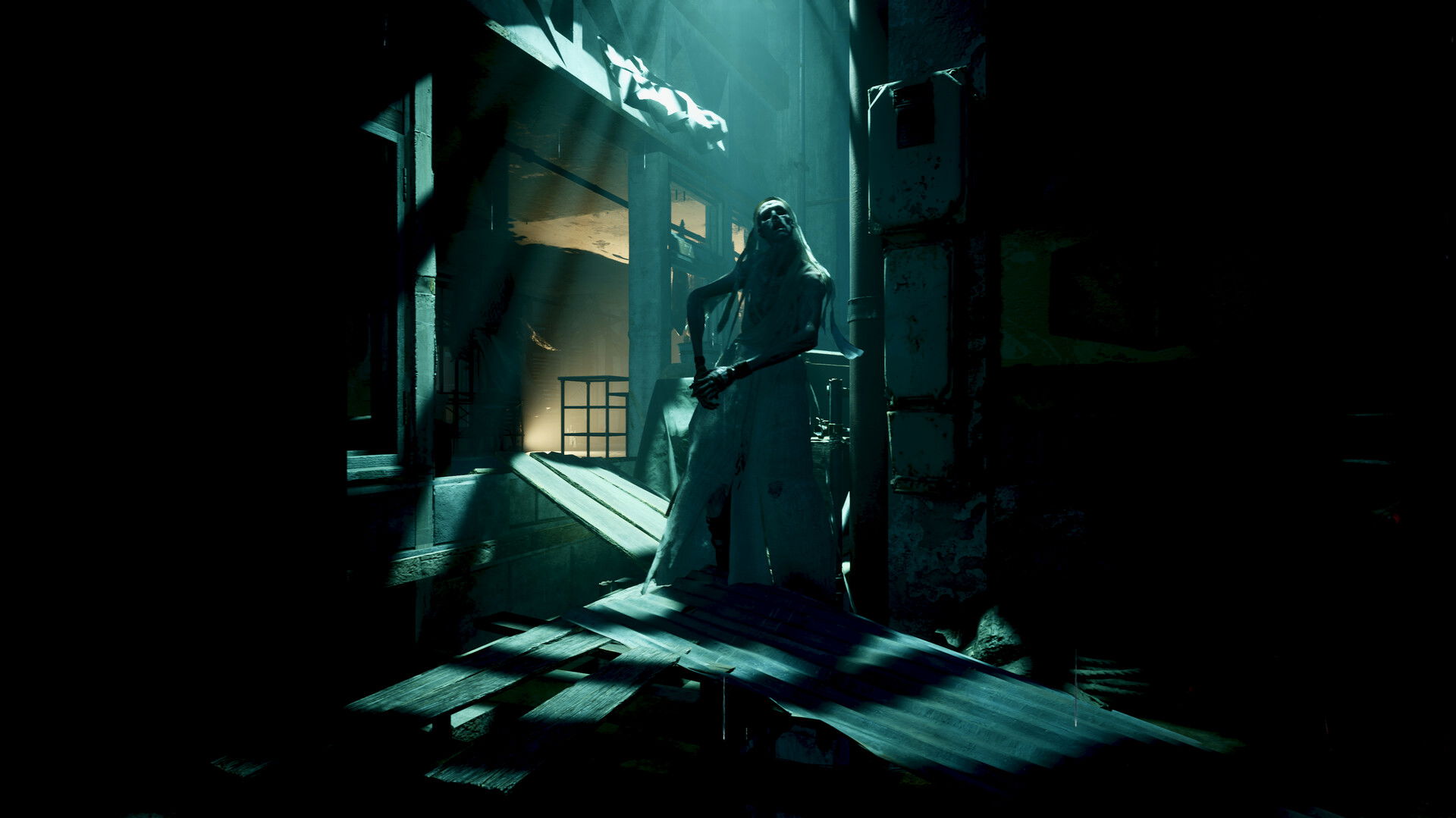
As for scares, I personally wouldn’t call SLEEP AWAKE a scary game. I’d call it more of an unsettling one. There’s plenty of eerie imagery throughout. The FMV sequences are the closest I’d say the game comes to jump scares, but these are more Lynchian montages than events popping out while actively playing. That said, some of the enemies towards the end did lean strongly towards horror, with creepy designs and even creepier animations.
I often played SLEEP AWAKE just before bed, which may explain my vivid dreams. Aside from night being an ideal time for a sci-fi horror, it really attuned me to the dreamlike visuals and logic. By the end of my time with SLEEP AWAKE, I can’t say I fully grasped every aspect of the story. Nor do I believe I was meant to. The game perfectly captures the feeling of a dream, that there’s an internal logic that everyone affirms in the moment but seems surreally strange after the fact.
Review Disclosure Statement: SLEEP AWAKE was provided to us by Blumhouse Games for review purposes. For more information on how we review video games and other media/technology, please review our Review Guideline/Scoring Policy.
SLEEP AWAKE Review
SLEEP AWAKE is a deeply artistic game that feels like navigating a beautiful yet eerie dreamscape. It’s a bit light on gameplay aside from its eerie stealth sections. But with a haunting atmosphere of psychedelic visuals, otherworldly sounds, and creepy FMV moments, it’s got style for days—or sleepless nights.
Pros
- Affecting visuals and sound design
- Intriguing environmental storytelling
- Stealth gameplay that iterates on itself
- Spooky FMV sequences
Cons
- Gets off to a slow start
- Puzzles can be a bit simplistic in places
-
SLEEP AWAKE
