

Seven years ago, Asobo Studio introduced us to the world of A Plague Tale with A Plague Tale: Innocence. It was followed several years later by the fantastic A Plague Tale: Requiem, and together the two games told the incredibly emotional story of Amicia and Hugo. So, where exactly do you go after that? Rather than simply continuing their story or trying to recreate what made those games successful with a different protagonist, Asobo has gone in a very different direction with Resonance: A Plague Tale Legacy.
Set 15 years before the events of Requiem, Resonance follows a much younger Sophia, who fans of the previous game will remember as the smuggler known as the Sea Scorpion. In Requiem, we knew very little about Sophia’s past. We knew who she had become, but not what had shaped her into that person. Resonance finally answers those questions, but more importantly, it does so without feeling like Asobo is simply using a familiar character as an excuse to make another game in the franchise.
Game Name: Resonance: A Plague Tale Legacy
Platform(s): PlayStation 5, Xbox Series X|S, PC
Reviewed On: PC
Publisher(s): Focus Entertainment
Developer(s): Asobo Studio
Release Date: August 27th, 2026
Sophia’s Story Deserves To Be Told
When I previewed Resonance: A Plague Tale Legacy earlier this year, I was dropped directly into chapters five and six. Because of that, I got a good understanding of how the game played, but almost none of the context surrounding how Sophia had actually reached that point. Now that I’ve experienced her journey from the beginning, I appreciate the character more and understand why Asobo chose her to lead this new chapter of the series.
Sophia’s fascination with the mysterious Minotaur’s Island stretches back to her childhood, when she began experiencing strange visions connected to an ancient Greek warrior. Those visions eventually become intertwined with her father Alec’s obsession with uncovering the island’s secrets, something he spent years pursuing. Years later, Sophia is 22 and determined to prove herself among the smugglers she calls family, but a betrayal eventually forces her toward the very island that consumed so much of her father’s life, with her closest friend, Leni, at her side.
From there, what initially feels like a fairly traditional treasure-hunting adventure becomes something much darker. I don’t want to get too deeply into the story because Resonance goes to places that are significantly more interesting when experienced without knowing what is coming. What I will say is that the game leans heavily into Greek mythology, particularly the legend of Theseus and the Minotaur, while putting its own spin on those ideas. Some revelations are easier to predict than others, but the larger mystery surrounding Sophia, her visions, and the island kept me invested throughout.
The story also fundamentally changed how I see Sophia as a character. I already liked her in Requiem, but after playing Resonance, she might now be my favorite character in the entire franchise. She has considerably more depth than I ever expected, and understanding what happened to her before meeting Amicia and Hugo makes several aspects of the woman she becomes much more meaningful. Asobo has always been extremely good at telling personal stories, and despite Resonance being a much more action-focused game, that hasn’t changed.
A Much Deeper Combat System
One of my biggest questions going into Resonance was whether it would actually feel like an A Plague Tale game. Innocence and Requiem were built heavily around vulnerability, with Amicia capable of defending herself but direct combat rarely being the preferred option. You survived by using stealth, the environment, distractions and, of course, an absolutely horrifying number of rats. Sophia is completely different. She knows how to fight, and Asobo has built an entire combat system around that fact.
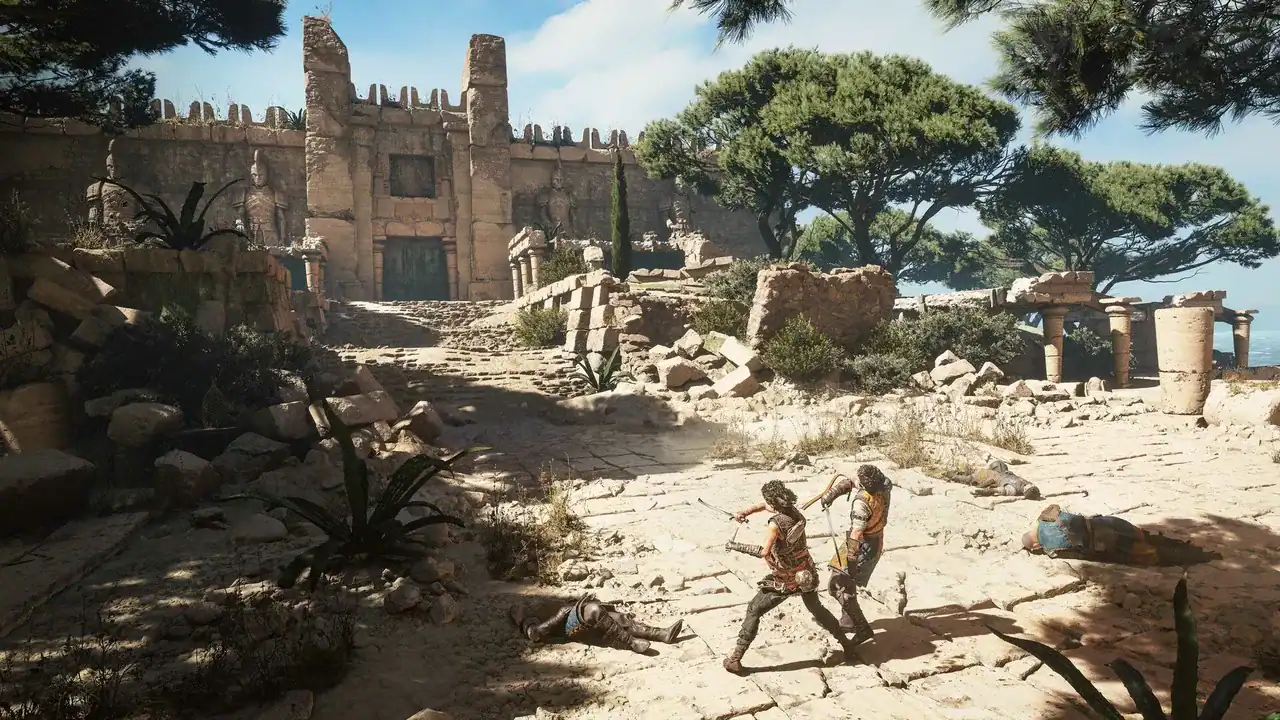
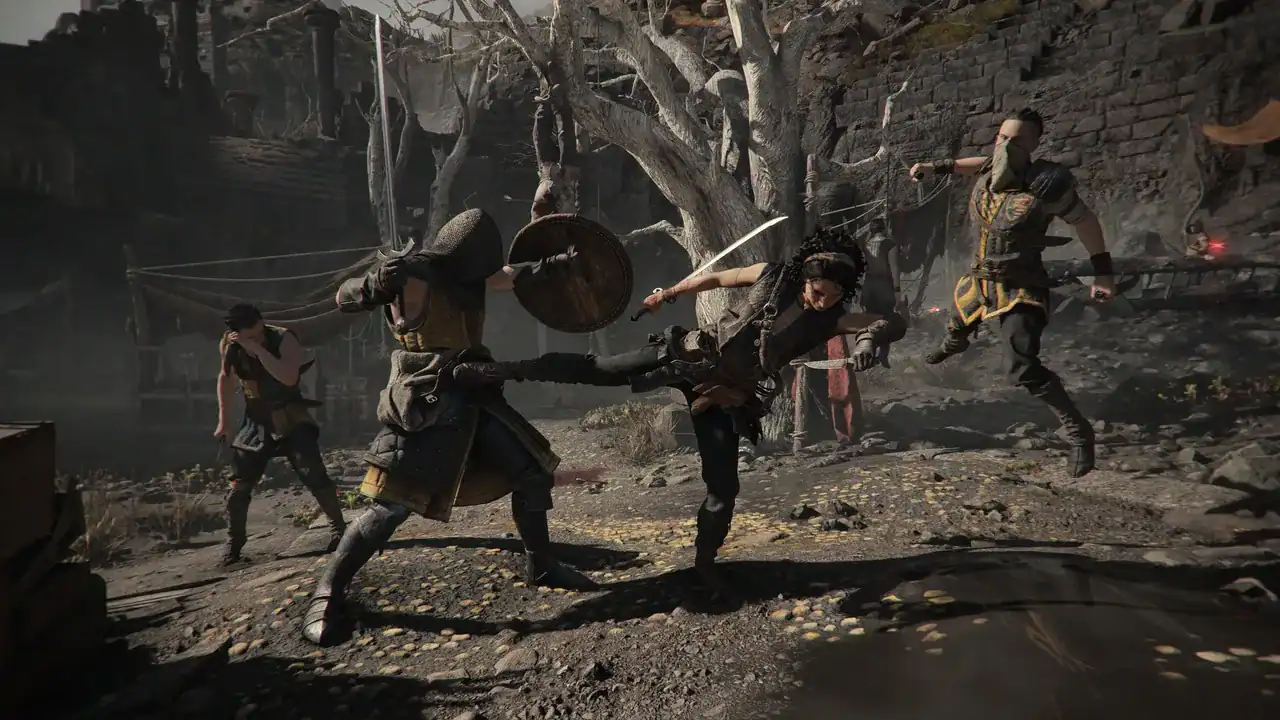
When I first previewed the game, I compared its combat to a mixture of Ryse: Son of Rome and God of War (2018), and having now played the entire game, I still think that comparison works surprisingly well. There is a heavy, cinematic quality to combat, with Sophia able to attack, block, parry and dodge, while heavier strikes can break through an opponent’s defenses. Larger enemies regularly throw out unblockable attacks that force you to dodge instead, so you can’t simply sit in one position and parry everything that comes your way.
Parrying quickly became my preferred way of dealing with most enemies. Successfully defending against attacks builds an enemy’s stagger meter, eventually opening them up to a finisher, and once you get comfortable reading attack animations, there is an extremely satisfying rhythm to moving between enemies, parrying attacks and finishing them off. There isn’t an enormous combo list to memorize, and the combat system doesn’t dramatically reinvent itself as the game progresses, but I don’t think it needs to. It is simple, responsive and, most importantly, satisfying.
Enemy variety also helps keep encounters interesting. You have standard swordsmen and shielded enemies alongside spearmen, archers and larger brutes whose unblockable attacks force you to change how you approach them. Different combinations of those enemies can completely change an encounter, especially when ranged opponents are positioned away from the main battlefield.
Sophia’s grappling hook remains one of my favorite additions and provides the answer to those ranged threats. Unlike Amicia, Sophia doesn’t carry a slingshot around for dealing with enemies from a distance. Instead, the grappling hook essentially allows her to bring ranged enemies to her. Archers positioned above an arena can be dragged from ledges, while other enemies can be pulled toward Sophia and brought into melee range. Rather than giving her a traditional ranged replacement, Asobo uses the grappling hook to reinforce how aggressive and physical Sophia is as a character.
She can also kick enemies, which is particularly useful against shielded opponents or anyone unfortunate enough to be standing next to a cliff. The skill system gradually improves these abilities using Resonance Points discovered throughout the world, allowing you to unlock things such as additional dodges, improved kicks and stronger parries. One of my personal favorites eventually allows you to parry attacks that would otherwise need to be dodged, making aggressive defensive play even more rewarding.
There are also different swords and charms hidden throughout the game that alter Sophia’s abilities. Some provide bonuses to parrying or critical attacks, while certain weapons come with more substantial trade-offs that can change how you approach combat. It’s not an enormously complicated equipment system, but there is enough here to let you push Sophia toward the playstyle you prefer.
Bosses Are The Weak Link
Unfortunately, the combat system also leads directly into one of my biggest criticisms of Resonance: its boss fights. Normal encounters work because you’re usually dealing with multiple enemies, managing positioning, deciding which threat needs to be eliminated first and making use of Sophia’s wider toolkit. Boss encounters remove much of that complexity, and several ultimately become variations of the same basic pattern: attacking when an opportunity presents itself, dodging a larger attack, and then repeating the process.
Considering how satisfying the normal combat can be, I expected the boss fights to act as genuine tests of everything I had learned, but they rarely do. One encounter toward the end of the game initially gave me trouble, but once I stopped trying to approach it creatively and instead found a safe opportunity to chip away at the boss before backing away again, most of the challenge disappeared. Even the final encounter, while narratively appropriate, isn’t particularly exciting mechanically. It isn’t enough to seriously damage the overall experience, but the bosses are easily the weakest element of Resonance.
More Varied Puzzle Design
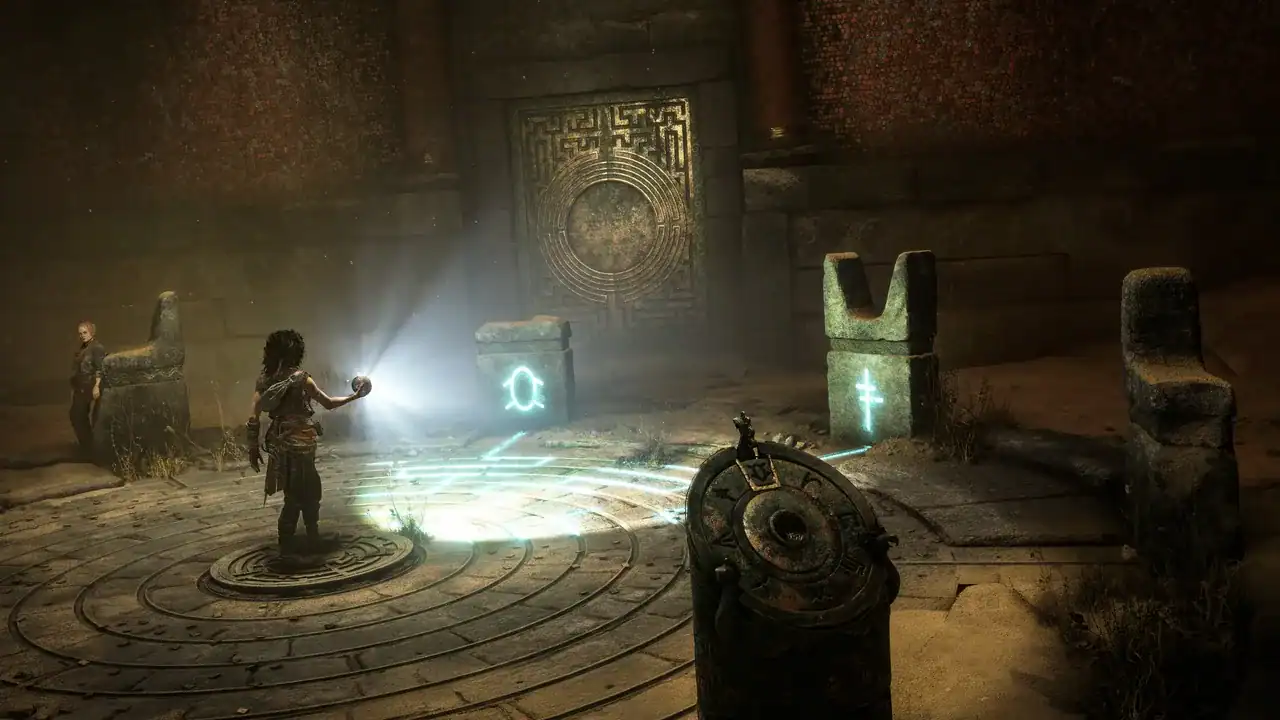
Despite combat receiving significantly more attention this time around, Resonance hasn’t forgotten about the puzzle-solving that has always been a major part of A Plague Tale. In fact, I think some of the puzzles here are among Asobo’s best. One of the game’s central mechanics involves the mysterious spherical key Sophia carries, which can emit light and reveal information hidden in the environment, from symbols to pathways and connections between different mechanisms.
Other puzzles involve manipulating red, green, and blue beams to activate matching locks, requiring you to find the right position or perspective to connect everything. What I really appreciate is that the game doesn’t constantly spell out exactly what it wants you to do. Hints are available through dialogue and Sophia’s journal, but I regularly found myself stopping to examine an environment and figure out how everything connected, which is exactly what I want from this kind of puzzle design.
When I previewed the game, I worried these mechanics could become repetitive if they were leaned on too heavily across the full adventure. Thankfully, that never really happened. Asobo continues finding new ways to combine the same core mechanics, with something that starts as a relatively simple light puzzle eventually becoming part of much larger environmental challenges. The puzzles aren’t particularly difficult, but they make you think just enough that solving them remains rewarding rather than feeling like busywork.
A Brighter World, But Not A Safer One
One of the biggest differences between Resonance and the previous games is immediately obvious from its environments. The earlier sections have an almost Uncharted-like sense of adventure, with Sophia climbing across ruins, using ziplines, exploring enormous ancient structures, and solving puzzles while fighting soldiers who have arrived on the island. These areas are considerably brighter than what we normally associate with A Plague Tale, with huge stretches of vegetation, sunlight pouring over ancient ruins and environments that almost make you forget what franchise you’re playing.
That doesn’t mean Asobo has abandoned the darkness that defined the previous games. Once Sophia begins exploring what lies beneath the island, Resonance starts revealing a very different side of itself. Without spoiling too much, she eventually encounters something within the depths that completely changes how you explore, and suddenly light is once again your best friend.
These sections bring stealth back into the spotlight, with Sophia regularly forced to move carefully through darkness while avoiding a creature that can track her movements. A strange blue dust covering parts of the environment makes things particularly interesting, as moving normally disturbs it and effectively advertises Sophia’s position. There are situations where crouching and carefully choosing your route is the only safe option, and some of these encounters were easily among the tensest moments in the entire game.
The contrast between the two halves of the island is fantastic. One moment Resonance feels like a grand archaeological adventure, and the next you’re desperately trying to reach another source of light before something hiding in the darkness reaches you. It also reassured me that Asobo hasn’t abandoned what made A Plague Tale special just because Sophia is significantly more capable in combat. It might be mechanically different, but that oppressive feeling of being hunted by something considerably more dangerous than you are remains very much intact.
Sophia And Leni Steal The Show
The heart of the game, however, is Sophia’s relationship with Leni. Their chemistry is fantastic, with a playful quality to their conversations that helps establish how close the pair are without the game needing to repeatedly explain their friendship to you. Some of my favorite moments are simply the two characters talking while exploring the island, whether they’re discussing what is happening around them or Leni is thinking about what she might eventually call her own ship.
That relationship also gives the darker moments considerably more weight. One of the things A Plague Tale has always done exceptionally well is making you care about its characters before putting them through absolute hell, and Asobo hasn’t forgotten how to do that here. Sophia and Leni are regularly separated as the adventure progresses, but the game makes sure you’ve had enough time with them together beforehand for those moments to actually matter. Their relationship is easily one of the strongest aspects of the entire story.
Several other characters help flesh out Sophia’s history, including Irene, Faro, and her father, Alec. We also learn considerably more about Theseus and how his story connects to Sophia’s own journey, although that is something I’d rather leave players to discover for themselves. By the time the credits rolled, I understood Sophia in a completely different way than I did when Requiem ended, and that alone makes this prequel feel worthwhile rather than an unnecessary extension of the series.
Asobo Continues To Impress
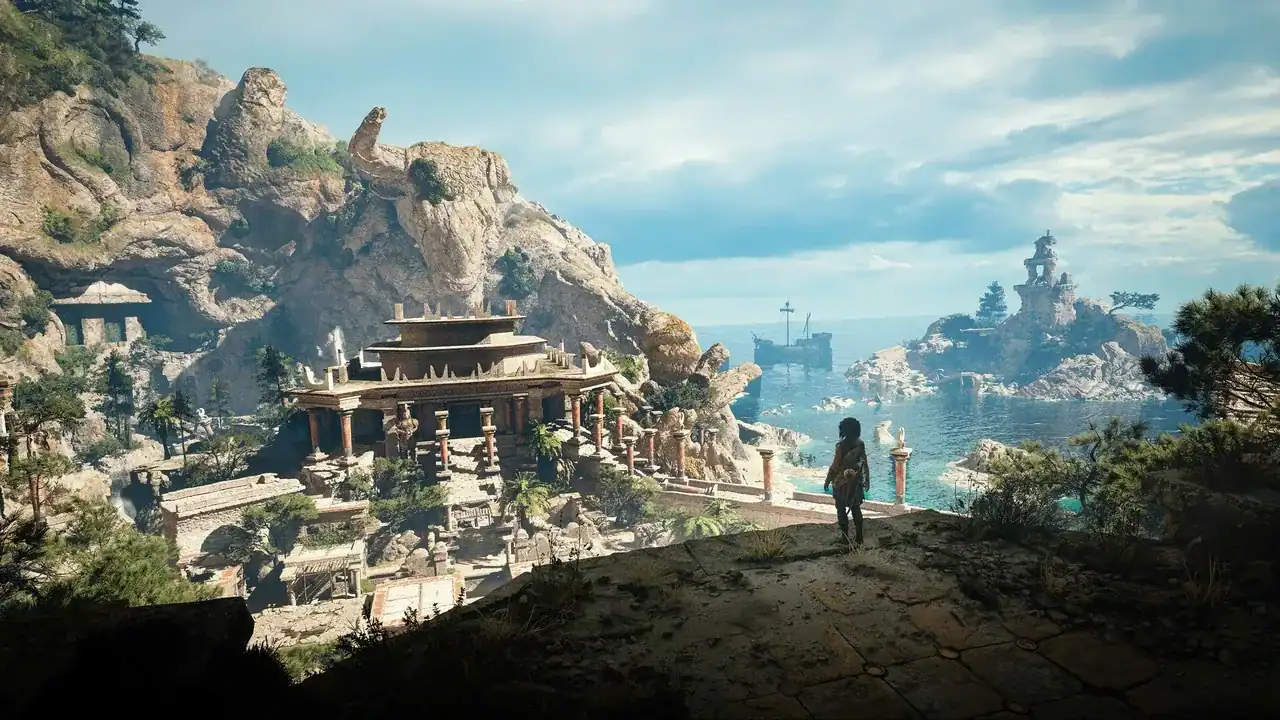
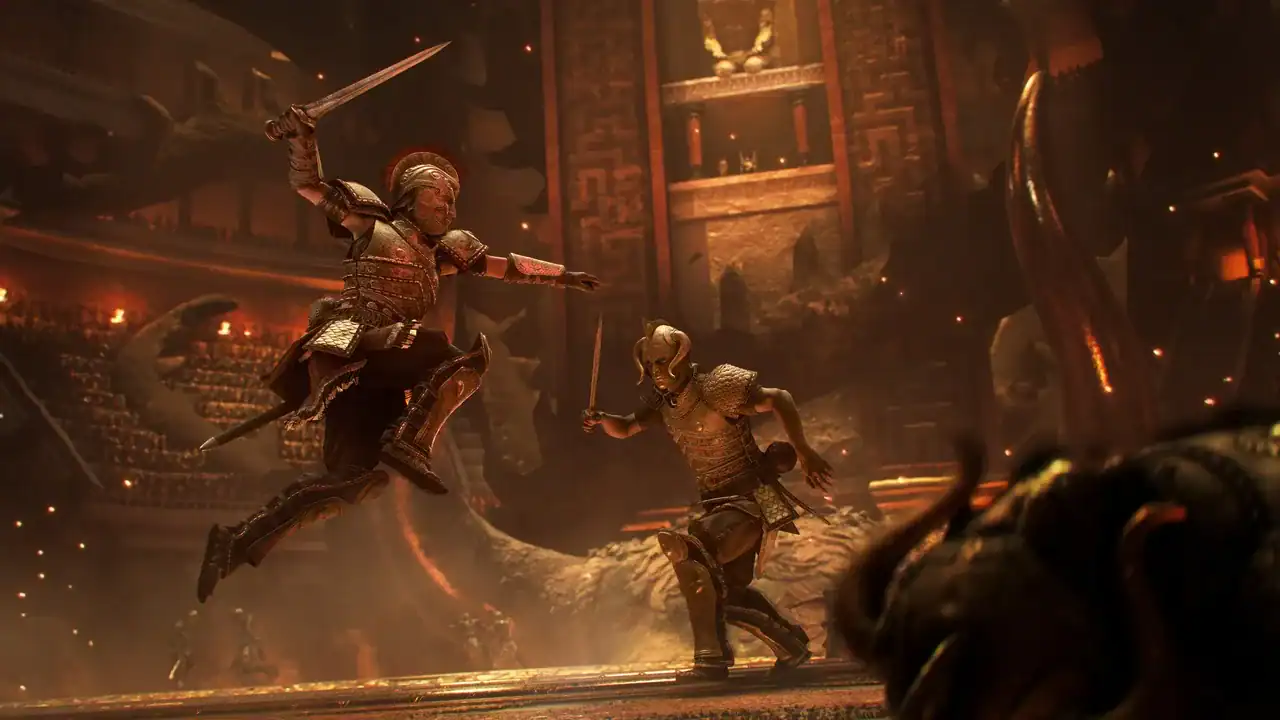
Visually, Resonance: A Plague Tale Legacy is stunning. When I previewed the game, I said it appeared to be roughly on par with A Plague Tale: Requiem, but after seeing the full adventure, I think I underestimated just how impressive some of these environments become. The art direction is phenomenal, with the surface of Minotaur’s Island filled with enormous ruins being reclaimed by vegetation, while the environments beneath it become increasingly oppressive and disturbing.
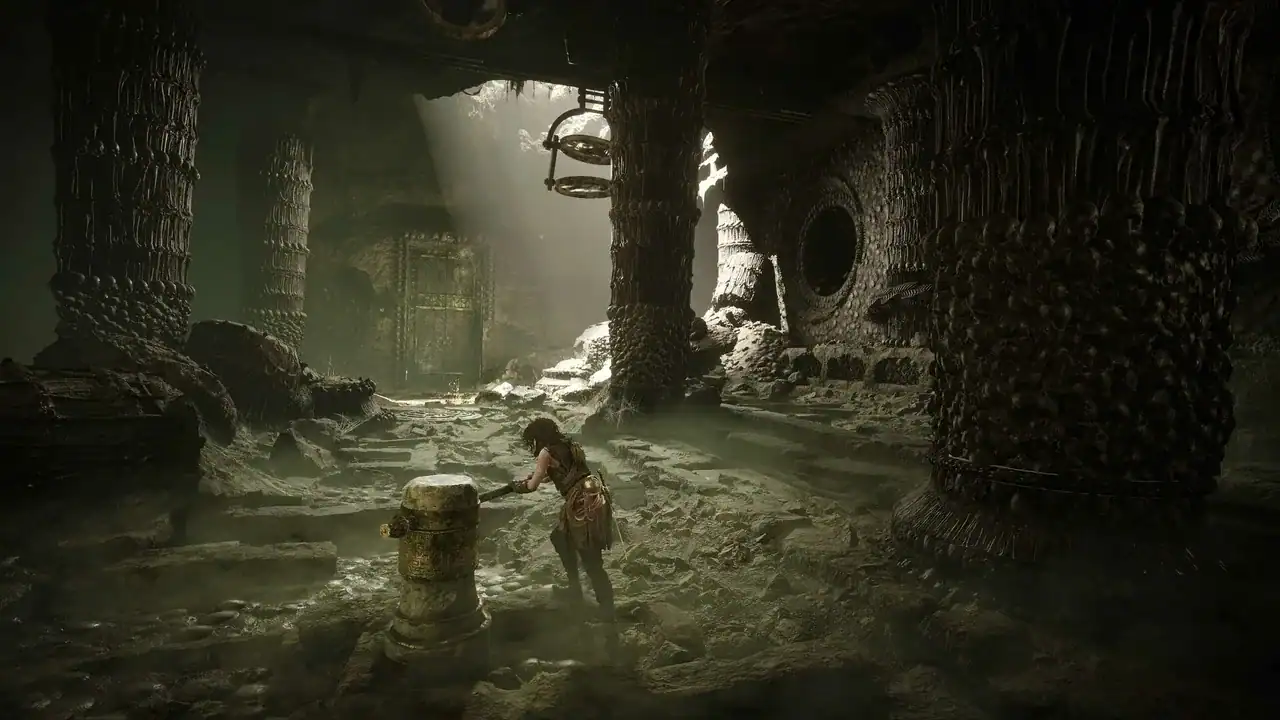
Character models and facial animation are equally impressive, especially in the quieter scenes where subtle expressions do much of the storytelling. The scale of some puzzle environments is also surprising, with certain chambers making Sophia look absolutely tiny as enormous mechanisms shift around her. Asobo has consistently produced visually impressive games, but Resonance might contain some of the studio’s best environmental work yet.
The overall presentation also benefits from the change in tone. Requiem was a game seemingly designed to emotionally destroy you at every available opportunity, while Resonance initially feels much more like a traditional adventure. The music, dialogue, and brighter environments contribute to that feeling, but as the story develops, Asobo gradually reminds you exactly what series you’re playing. It might begin as a more adventurous story, but that doesn’t mean it won’t eventually punch you in the gut.
Near-Flawless PC Performance
I played Resonance: A Plague Tale Legacy on PC, and from a technical perspective, my experience was near flawless. Across my entire playthrough, I didn’t encounter a single bug or technical issue that negatively impacted the experience, which is increasingly something worth highlighting when reviewing a PC release at launch.
Performance was similarly impressive throughout my time with the game. Considering just how detailed some of the environments are, particularly once the scale of Minotaur’s Island really starts opening up, I was impressed by how consistently well the game ran. My experience suggests that Asobo’s impressive visual presentation hasn’t come at the expense of the PC version’s overall stability, and it was refreshing to play through the game without worrying about technical problems getting in the way.
Final Thoughts
When I finished previewing Resonance: A Plague Tale Legacy, I said that I wasn’t ready to stop playing. Now that I’ve finished the entire game, I’m happy to say those first two hours were representative of what Asobo created. The combat remains satisfying, the puzzles only get better, Minotaur’s Island is fantastic to explore, and Sophia’s story gives a character I already liked significantly more depth than I ever expected.
Resonance isn’t A Plague Tale: Innocence 3, and I’m glad it isn’t. Sophia needed a different kind of game, and her personality and history naturally allow Asobo to experiment with direct combat, larger action sequences and a greater sense of adventure without completely abandoning the darkness, vulnerability and emotional storytelling that made this series special.
It isn’t perfect. The boss encounters fail to take full advantage of an otherwise enjoyable combat system, and some of the later sections could have been tightened slightly as the game begins to outstay its welcome. Neither issue was enough to significantly hurt my overall experience, though, particularly when the eventual resolution to Sophia’s story is so strong.
Most importantly, Resonance: A Plague Tale Legacy proves that this universe doesn’t need to belong exclusively to Amicia, Hugo or even the rats. There are other stories worth telling in this world, and if this is what Asobo can do with Sophia, then I genuinely hope the A Plague Tale Legacy name becomes an opportunity to explore even more of them.
Resonance: A Plague Tale Legacy Review – A New Fantastic Experience
Resonance: A Plague Tale Legacy proves that this universe doesn’t need to belong exclusively to Amicia, Hugo or even the rats. There are other stories worth telling in this world, and if this is what Asobo can do with Sophia, then I genuinely hope the A Plague Tale Legacy name becomes an opportunity to explore even more of them.
Pros
- Excellent character development for Sophia
- Strong emotional storytelling and great chemistry between Sophia and Leni
- Satisfying, weighty combat with strong parry and grappling mechanics
- Varied and rewarding puzzle design
Fantastic art direction and environmental design - Near-flawless PC performance with no bugs experienced
Cons
- Boss fights are repetitive and don’t fully utilise the combat system
- Some later sections slightly outstay their welcome
-
Resonance: A Plague Tale Legacy Review – A New Fantastic Experience
