

When Tarsier Studios revealed it was moving on from its Little Nightmares series and pursuing something new, many fans assumed that chapter was over. That was until we finally found out what Reanimal was, and it became clear that while this wasn’t Little Nightmares, it was still very much rooted in Tarsier’s dark creative identity. What I didn’t expect was just how far the studio was willing to go once those familiar boundaries were gone.
Game Name: Reanimal
Platform(s): PC (Reviewed), PS5, Xbox Series X, Nintendo Switch 2
Developer(s): Tarsier Studios
Publisher(s): THQ Nordic
Moody, dark, and atmospheric, Reanimal tells a cryptic story about two characters who, on the surface, appear to be returning to a devastated location to rescue their friends. However, that initial premise quickly unravels. The further you progress, the more fragmented the narrative becomes, constantly pulling you in new directions and leaving you scrambling to piece everything together. I don’t usually gravitate toward horror games like this, which made Reanimal’s ability to pull me in all the more surprising.
Like Tarsier’s previous work, progression is built around exploration layered with puzzle-solving. Most puzzles are fairly straightforward, but the isometric camera can sometimes work against you. Environmental details are occasionally obscured by shadows or perspective, leading to moments where solutions are not immediately clear until you reposition yourself and notice something you initially missed.
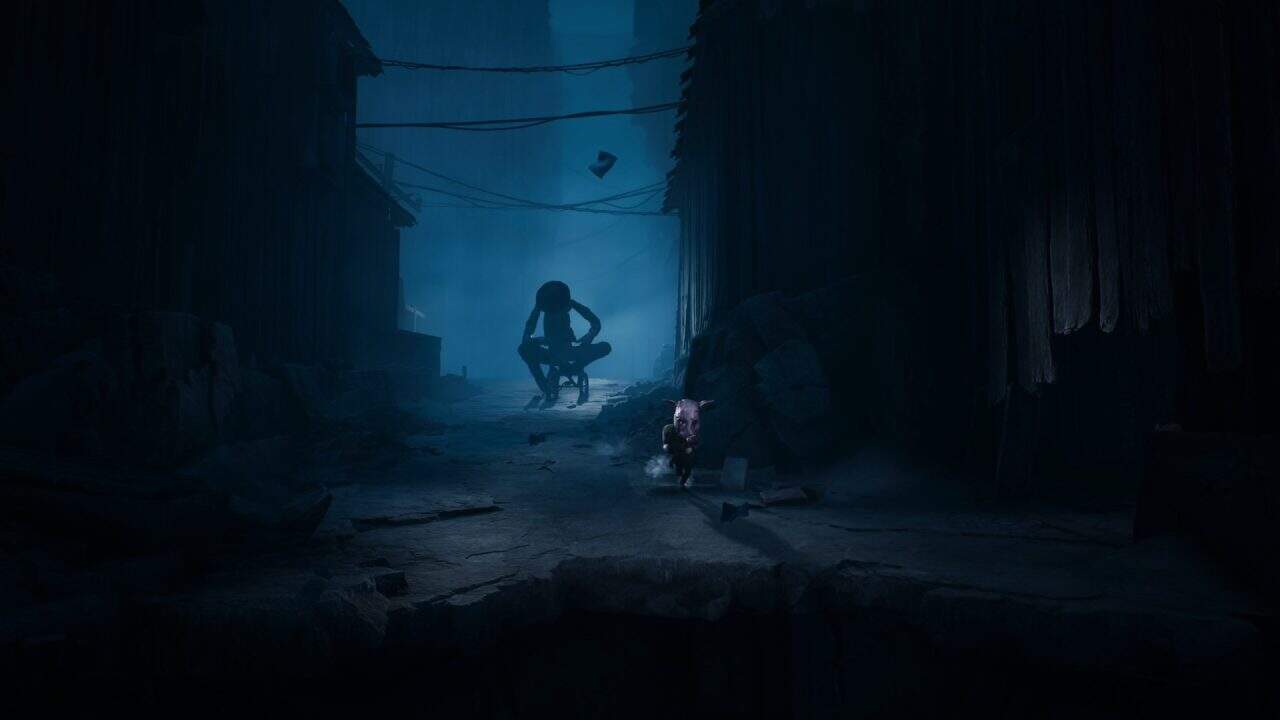
There are also some genuinely tense and creative moments throughout the game, which, given the developer, isn’t all that unexpected. One standout sequence involves using an ice cream truck as a getaway vehicle, which transitions into a short but intense encounter. The chase sequences in particular do an excellent job of rattling your nerves and keeping the pressure high.
What surprised me most wasn’t just how tense these moments were, but how consistently they escalated. Just when I thought I had seen what Reanimal was capable of, it found ways to push things further, both mechanically and emotionally. That constant sense of unease is what kept me glued to the experience, even when I felt frustrated and wanted to step away.
Co-Op and Going Solo

Much like Tarsier Studios’ prior titles, Reanimal is very much a two-player or co-op-focused experience. You can play with another person or rely on an AI-controlled partner, which is a mixed bag at times but still performs better than expected. The emphasis on co-op is far more pronounced this time around. Many sections simply cannot be completed without involving the second character, whether that means holding switches, advancing ahead and doubling back, or coordinating movement through environmental obstacles. If you have someone to play alongside you, the experience is noticeably better, as you can bounce ideas off one another.
They Fight Now? Yep, They Fight
The duo you control are not entirely helpless. Early combat is limited mostly to melee encounters, reinforcing the idea that survival still comes first. As the game moves into its middle and later chapters, that dynamic begins to shift. You gain access to tools and weapons that feel deliberately out of place, changing how certain encounters unfold.
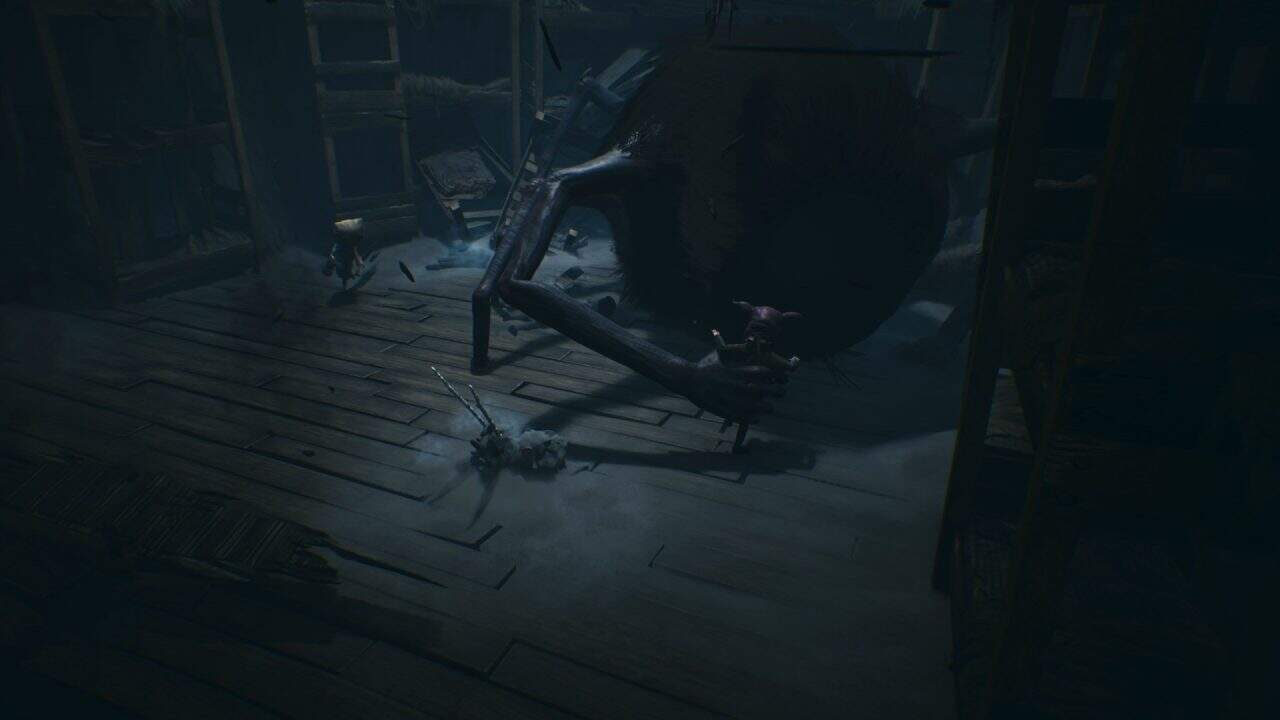
This evolution shines during boss encounters. Rather than relying solely on hiding, running, or pure chase mechanics, these moments blend combat and positioning. You are still very vulnerable, but no longer powerless. That balance makes these encounters memorable. While there are still plenty of situations where hiding and running remain the safest option, being able to push back heightens the tension without abandoning the game’s horror roots.
Visuals and Sound
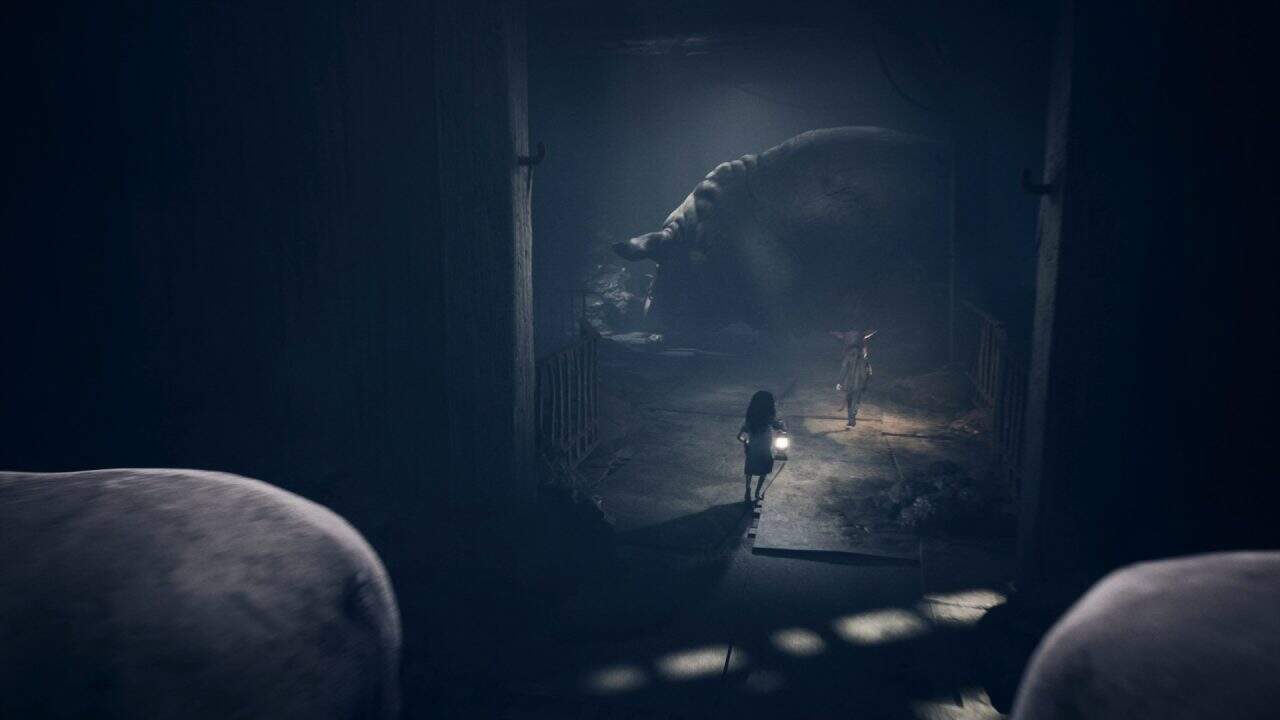
Tarsier continues to excel in visual and audio design. The oppressive and emotionally depressive environments are filled with harsh contrasts that limit visibility to just a few feet in front of you, making every corner feel threatening. The sound design heightens that tension even further, using unsettling audio cues and realistic effects to amplify the horror. This is absolutely a game best experienced with a quality headset.
A Bit on the Short Side
There’s no way around it, Reanimal simply isn’t a long game, clocking in at around four hours, or maybe just a bit longer if you’re trying to track down all the collectibles in the form of masks and concept art. Just when I was enjoying the ride and wanted more, I had hit the climax and then closure within 30 minutes of each other. Still, they always say it’s about the journey, and it’s one hell of a journey.
Verdict
Tarsier Studios’ previous games were among the more memorable horror experiences I’ve played, but they were still anchored by restrained narratives. At times, it felt like the studio wanted to go darker but could not, at least not with its prior arrangement, since the studio did not own the rights to Little Nightmares.
With Reanimal, those restraints are gone. This is Tarsier fully unleashed, delivering a concentrated and relentlessly dark experience that refuses to let go. Even when I felt exhausted or unsettled enough to stop, the game compelled me forward. Long after the credits rolled, the experience continued to linger. This is not more Little Nightmares. That series felt like cautionary horror. This is something else entirely. It is unsettling, uncomfortable, and genuinely disturbing in ways that will make even seasoned horror fans question what they are witnessing. And that is exactly the point.
If Little Nightmares III didn’t fully satisfy your survival horror cravings, Tarsier Studios’ Reanimal aims to go much further.
Review Disclosure Statement: A copy of Reanimal was provided to us by THQ Nordic for review purposes. For more information on how we review video games and other media/technology, please review our Review Guideline/Scoring Policy.
Summary
Reanimal is Tarsier Studios at its darkest and most uncompromising. What begins as a familiar, eerie setup quickly spirals into something far more unsettling, blending tense exploration, co-op-driven puzzle solving, and memorable chase and boss encounters that steadily escalate in intensity. While the experience is short and occasionally frustrating when played solo due to AI partner issues, its atmosphere, pacing, and willingness to push players out of their comfort zone leave a lasting impression. This is not a continuation of Little Nightmares, but a bolder, more disturbing evolution that proves Tarsier is fully unleashed.
Pros
- A haunting visual and audio tour de force
- Enjoyable co-op either local or online
- Masterclass story telling
- The addition of combat really helps elevate the game, and isn’t sold as a get out of jail card
Cons
- AI-controller partner can be annoying at times
- A tad on the short side – I wanted more
-
The stuff of nightmares continues
