

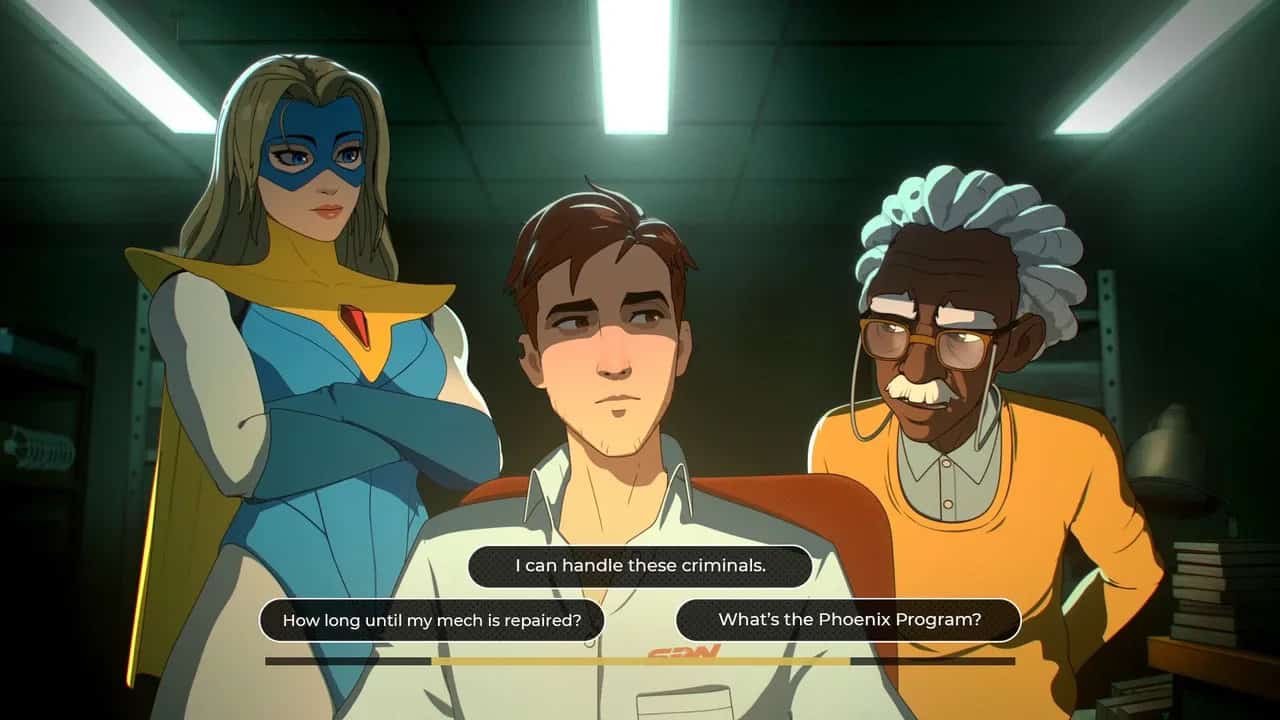
Dispatch has taken the gaming world by storm, and for good reason. With its engaging story, fun gameplay, and the freedom it gives players to approach situations in their own way, the title quickly built a strong following and strong sales across multiple platforms.
Now the conversation around the game has shifted. As first reported by Video Games Chronicle, the recently released Nintendo Switch and Nintendo Switch 2 versions of Dispatch are drawing criticism from players who discovered that certain adult content has been censored on those platforms. On other platforms, Dispatch includes optional nudity and mature visual elements that players can toggle on or off in the settings. That choice, however, does not appear to exist on Switch or Switch 2. In those versions, censorship is enabled by default and cannot be disabled, with black bars covering the items in question.
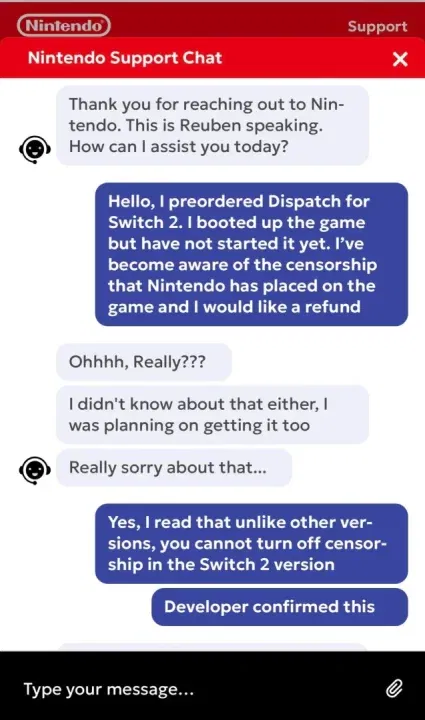
Fans have voiced frustration online, with some players on Reddit and other forums saying they plan to request refunds because the Switch release does not match the experience offered elsewhere. One instance had a Reddit user reaching out to Nintendo’s customer support, who also planned on getting the game and not realizing that the game included forced censorship.
A significant portion of the backlash is also being directed at AdHoc Studio. Players say the developer did not clearly communicate ahead of release that the Switch and Switch 2 versions would have these restrictions in place. Many fans argue that had they known the content would be altered and the censorship could not be turned off, they would have chosen to buy the game on another platform or skipped the purchase entirely. For those players, the issue is not just the censorship itself, but the lack of transparency before launch.
What makes the situation more confusing for players is Nintendo’s recent platform history. High profile titles like Cyberpunk 2077 have appeared on Nintendo hardware with mature content intact, including nudity. By comparison, the content in Dispatch is relatively mild, which has led many fans to question why stricter limits would apply here.
Personally, I am leaning toward the idea that this may stem from a Nintendo of Japan decision, as the company has historically taken a stricter stance on nudity compared to some Western publishers. With AdHoc Studio being a smaller developer, it is possible the team either did not have the resources or was not in a position to produce multiple regional versions of Dispatch with different content rules. If that is the case, the Switch releases may have been required to follow a single, more conservative standard across regions.
We have reached out to AdHoc Studio for clarification on whether these changes were required by Nintendo or were a decision made by the team for the Switch releases. Until there is an official explanation, players are left speculating about how and why the differences came to be.

The situation also clashes with Nintendo’s broader efforts in recent years to appeal to a wider, older audience. The Switch and its successor have hosted an increasing number of mature games, and Nintendo has worked to move beyond the perception that its platforms are only for children. For many players, platform level restrictions on optional adult content feel out of step with that direction, especially in a game that is clearly intended for mature audiences.
Whether this controversy meaningfully affects sales of Dispatch on Switch remains to be seen. Still, the backlash highlights how important feature parity has become when games launch across multiple platforms. Players expect the same core experience regardless of where they play, especially when content choices are already built into the game itself.
For now, fans are waiting for answers, and both Nintendo and AdHoc Studio will likely face continued questions about how this version of Dispatch ended up being different from the rest. And don’t think for a moment this is about gooners wanting to see some nudity, but more about having a decision removed from people, sort of like treating them like children.
