

As we start 2026, I wanted to address some unfinished business from 2025, my review of Kingdom Come: Deliverance II from Warhorse Studios. Those who know what happened to me in 2025 know that I was playing Kingdom Come: Deliverance II for review when my PC decided to die. Unfortunately, I wasn’t able to return to it until recently on my new, even more capable PC. So, was Kingdom Come: Deliverance II worth the wait and should you play it if you haven’t already? I’ll discuss that and more in this, The Outerhaven’s review of Kingdom Come: Deliverance II.
Game Name: Kingdom Come: Deliverance II
Platform(s): PlayStation 5, Xbox Series X|S, PC (reviewed)
Publisher(s): Deep Silver
Developer(s): Warhorse Studios
Release Date: February 4th 2025
What is Kingdom Come: Deliverance II?
If you don’t know, Kingdom Come: Deliverance II is an action role-playing open-world game from developer Warhorse Studios, and is the direct continuation of the events in Kingdom Come: Deliverance. You once again primarily play as Henry of Skalitz (Tom McKay), the son of a blacksmith who is still driven to avenge his parents, murdered during the conflict between Wenceslaus IV and the invading Sigismund, King of Hungary and Croatia. Henry has risen above his simple beginnings to become a man-at-arms serving Sir Radzig Kobyla and as the bodyguard and confidant of Sir Hans Capon (Luke Dale).
In Kingdom Come: Deliverance II, we find our protagonists on a journey from Rattay to deliver a message to Otto von Bergow at Trosky. However, on their journey, things go very wrong, leaving Henry and Hans unable to prove who they are and halting their quest before it even begins.
After a brawl at a tavern sees both men confined to the stocks, they fall out and go their separate ways, and this is where your adventure really starts. You need to find a way to contact Otto von Bergow and deliver your message. However, having been denied entry to Trosky due to looking like a beggar, this will be easier said than done.
This balance of real-world history and historical figures, combined with fictional characters, works exceptionally well. Neither fact nor fiction feels less important than the other here in Kingdom Come: Deliverance II. The way the game makes you feel that the actions of a fictional character, Henry, impacted real history shows what master storytellers Warhorse Studios are. It is one of many elements in Kingdom Come: Deliverance II that come together to make a truly remarkable RPG title.
The only potential downside for some players is the very slow pace at the start. After the initial incident that sets up your adventure, the first ten to fifteen hours of Kingdom Come: Deliverance II can feel like it crawls at a snail’s pace. However, for me, this opening, with such a slow pace, is perfect. Not only does it allow you to embrace all the world and its systems, but it also makes every small step forward feel incredibly rewarding.
Role Playing Game Or Simulation?
Of course, no RPG is complete without various systems that we have come to know and love in the genre, from levelling up and dialogue choices to relationships and much more. Kingdom Come: Deliverance II has an abundance of systems that work in tandem to create the most immersive role-playing experience I’ve ever had. Although I still occasionally wonder whether Kingdom Come: Deliverance II is an RPG or more of a simulation game.
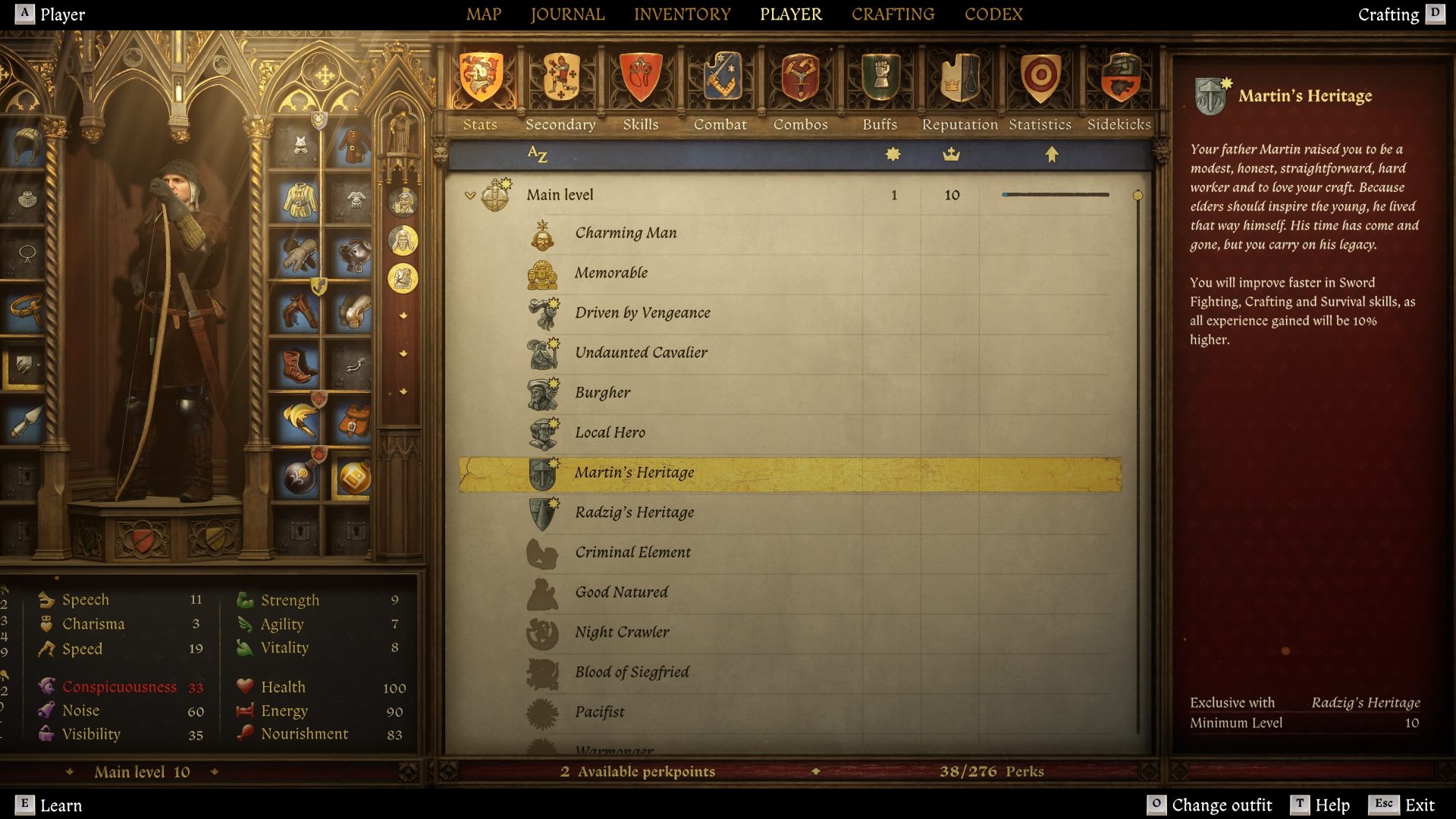
Firstly, you have the levelling system, which, just like the first game, takes inspiration from The Elder Scrolls V: Skyrim, with each attribute levelling up the more you use it. Gaining levels allows you to access many different perks, which have a massive impact on the way you play. For example, using alchemy a lot will not only allow you to get perks that enable you to sell potions for more, or brew better quality concoctions. You’ll also increase your survival skills in the process of picking flowers to use in brewing these potions. Increasing your survival allows you to unlock perks with various effects, such as sleeping or eating less, which can open up gameplay opportunities that weren’t previously available to you. That’s just one example of how an RPG system works hand in hand with Kingdom Come: Deliverance II‘s simulation aspects to create a more engaging overall experience.
Secondly, we have dialogue options and how they work. On the face of it, they may seem just like any other RPG game. You speak to someone, you choose a dialogue option attached to one of your skills, which results in a skill check, where you pass or fail depending on the level of that skill. However, what makes Kingdom Come: Deliverance II different is that what you’re wearing and how hygienic you are also heavily impact your interactions with everyone. Several times in playthrough, NPCs wouldn’t talk to me, or even let me in their place of work, simply because I forgot to wash Henry before approaching them.
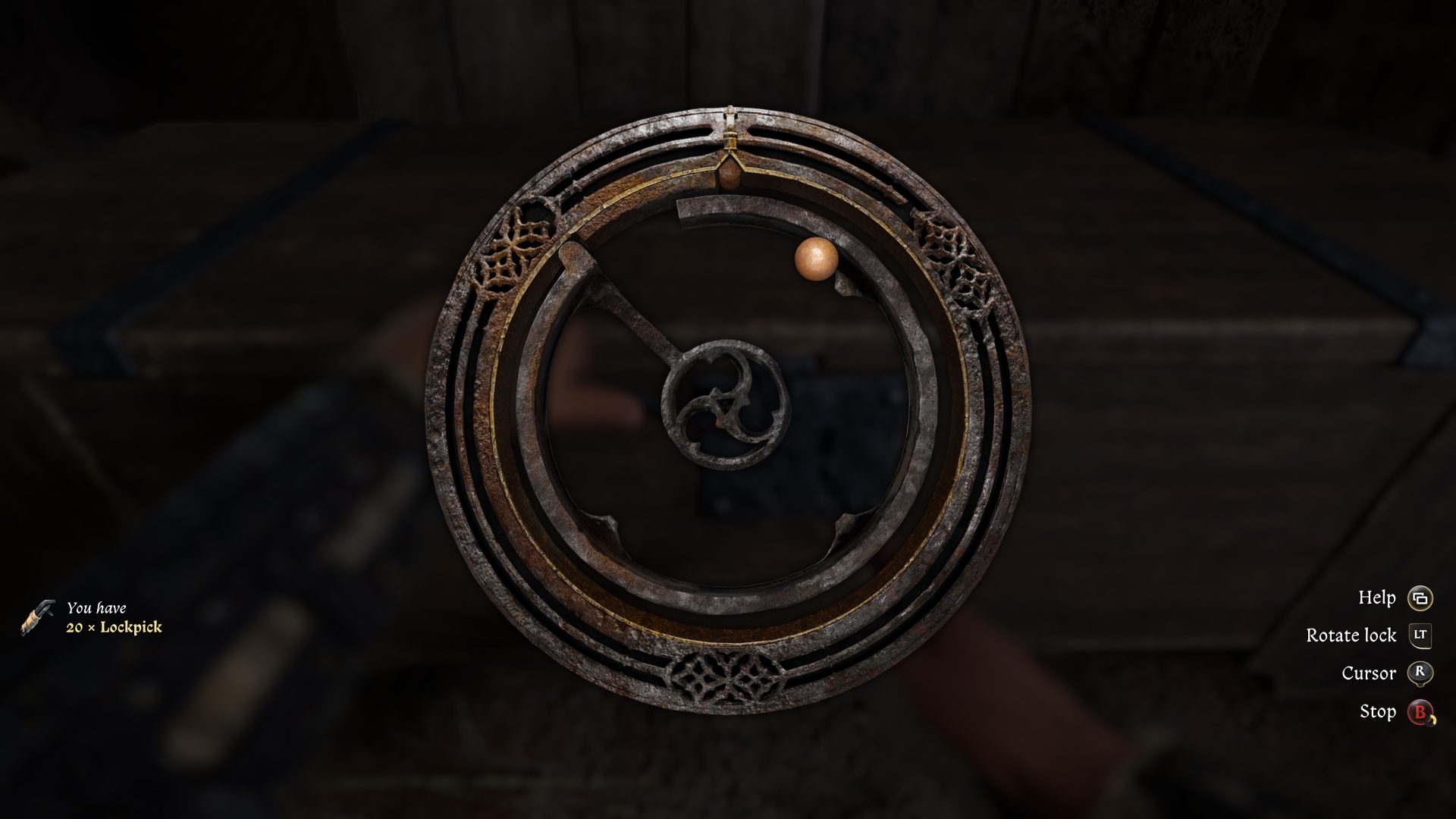
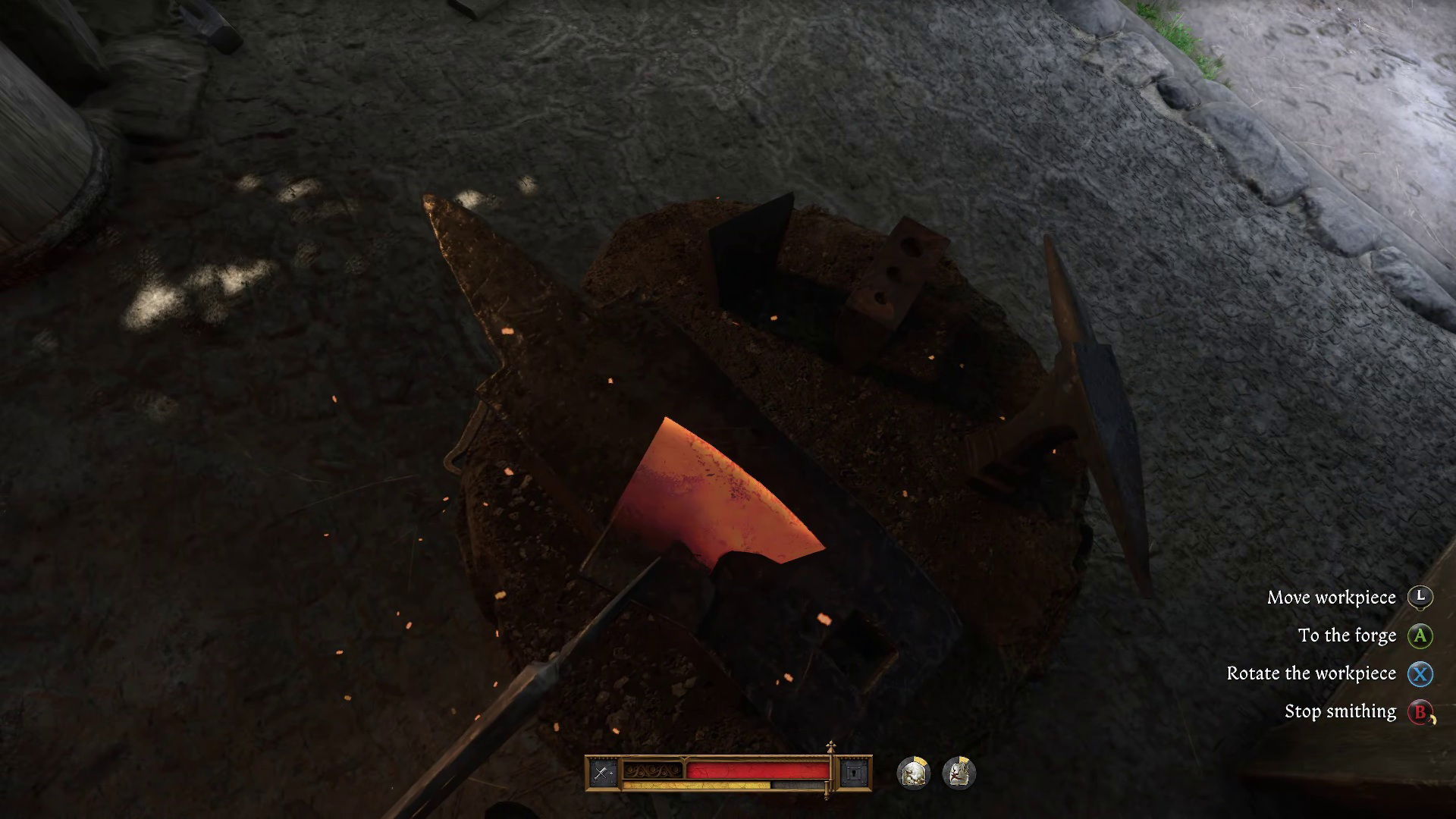
These aren’t the only examples of RPG mechanics combining with simulation-based systems to create an incredibly immersive experience. Another area of Kingdom Come: Deliverance II where you see this at play is in the crafting mechanics. Where you don’t just open up a menu and press a single button to craft items, you have to actually go through the process of making them yourself. From grinding up can boiling flowers or herbs for potions, to shaping metal over an anvil for anything from horseshoes to swords and armour. To add even more of a simulation aspect to the crafting, how effectively you complete the process impacts the quality of the items themselves.
In the end, this combination of well-explored RPG systems and a heavy dose of simulation really helps to set Kingdom Come: Deliverance II apart from its contemporaries and drives the genre forward. Which, ultimately, I don’t think has really happened in such a significant way since the release of The Witcher 3: Wild Hunt.
The World Of Kingdom Come: Deliverance II
For example, I have never played a game where the world felt more alive, not only because NPCs reacted to everything about you, from what you’re wearing to your hygiene and more.
What makes the world of Kingdom Come: Deliverance II even more alive is the fact that it waits for no one. If you accept a quest and they say ok we are going now, meet us by the gate and you decide to go and sleep instead. When you come back, those NPC’s will be gone on the quest without you.
Each NPC in the game also has their own unique schedule, which is something we have seen before, but the way it works here seems to be enhanced. On top of the usual things like vendors only being accessible during working hours, guards will have different patrol patterns and positions at different times of day. Even some buildings will be open during the day but locked at night. So learning patterns and planning ahead are essential to your success in Kingdom Come: Deliverance II, especially if you are trying to do a stealth-and-thievery playthrough.
The level of interactions you can have with the world, based on the fact that it doesn’t care about you, is outstanding. Kingdom Come: Deliverance II has an open world that is unmatched in terms of immersion and unique gameplay opportunities. It sets a new bar for how alive and responsive an open world can be, and I hope every game follows in its footsteps.
Combat Is Better But Still Divisive
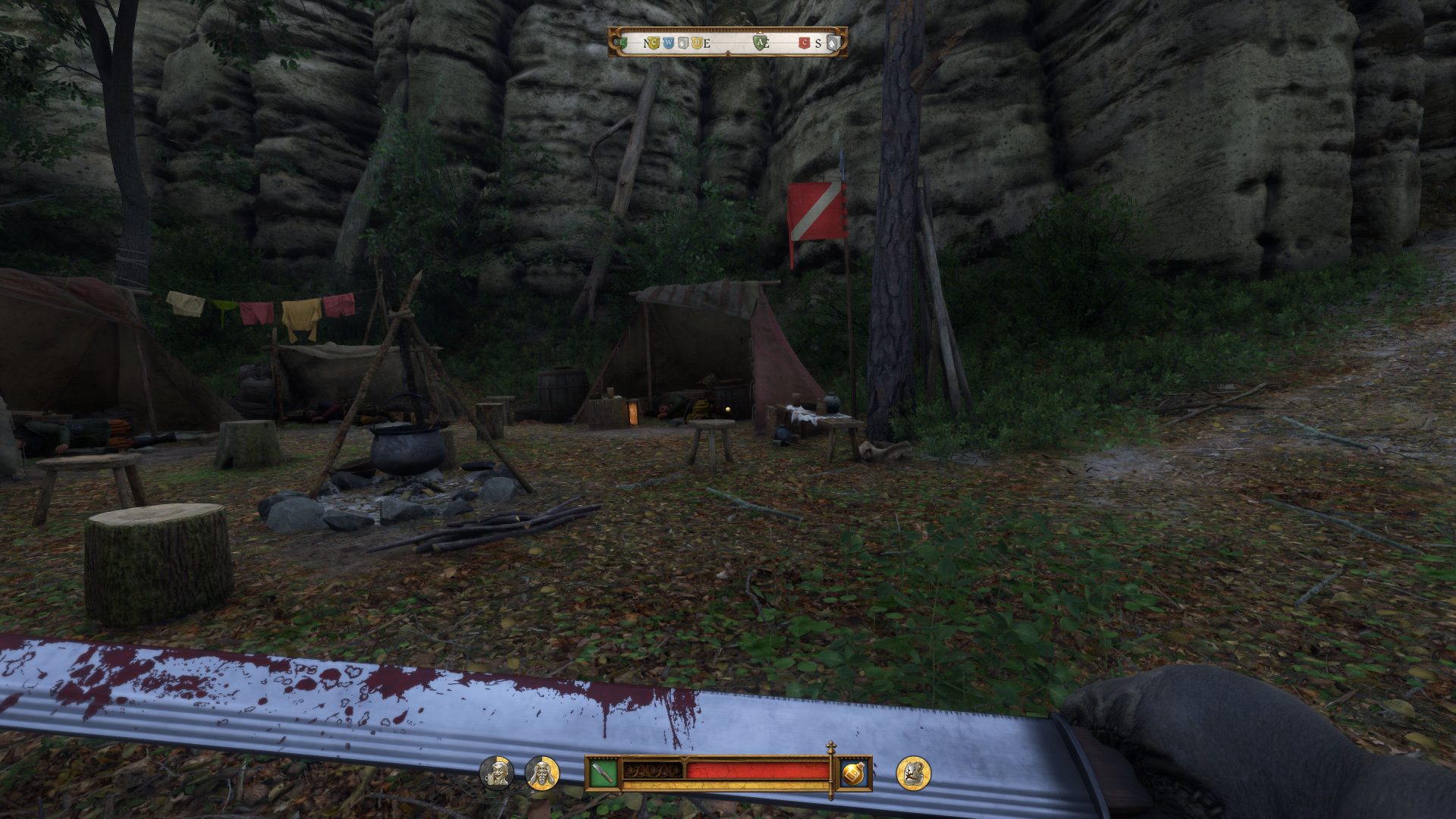
I could spend all day talking about the systems and simulation aspects of Kingdom Come: Deliverance II, but then we’d be here forever. So, now I must talk about the combat, which will be perhaps the most divisive element of Kingdom Come: Deliverance II.
Those who played the first game will be very familiar with the combat system. It works almost exactly the same as it did in Kingdom Come: Deliverance; you use the right stick to position your weapon in any of four different directions while using the left trigger to block and the right trigger to attack. Oh, and yes, that is one less point of attack/defence than the first game, which makes combat not only a little bit easier but also more fluid in Kingdom Come: Deliverance II.
That being said, the combat is still challenging and requires not only skill but careful management of stamina. Which is precisely why it won’t be to everyone’s taste, but personally, I love it!
Under Appreciated Beauty
One aspect of Kingdom Come: Deliverance II that I think is very underappreciated is its presentation. Visuals and audio are both excellent in their own right, with the presentation feeling grounded and natural for the time period and location where Kingdom Come: Deliverance II is set.
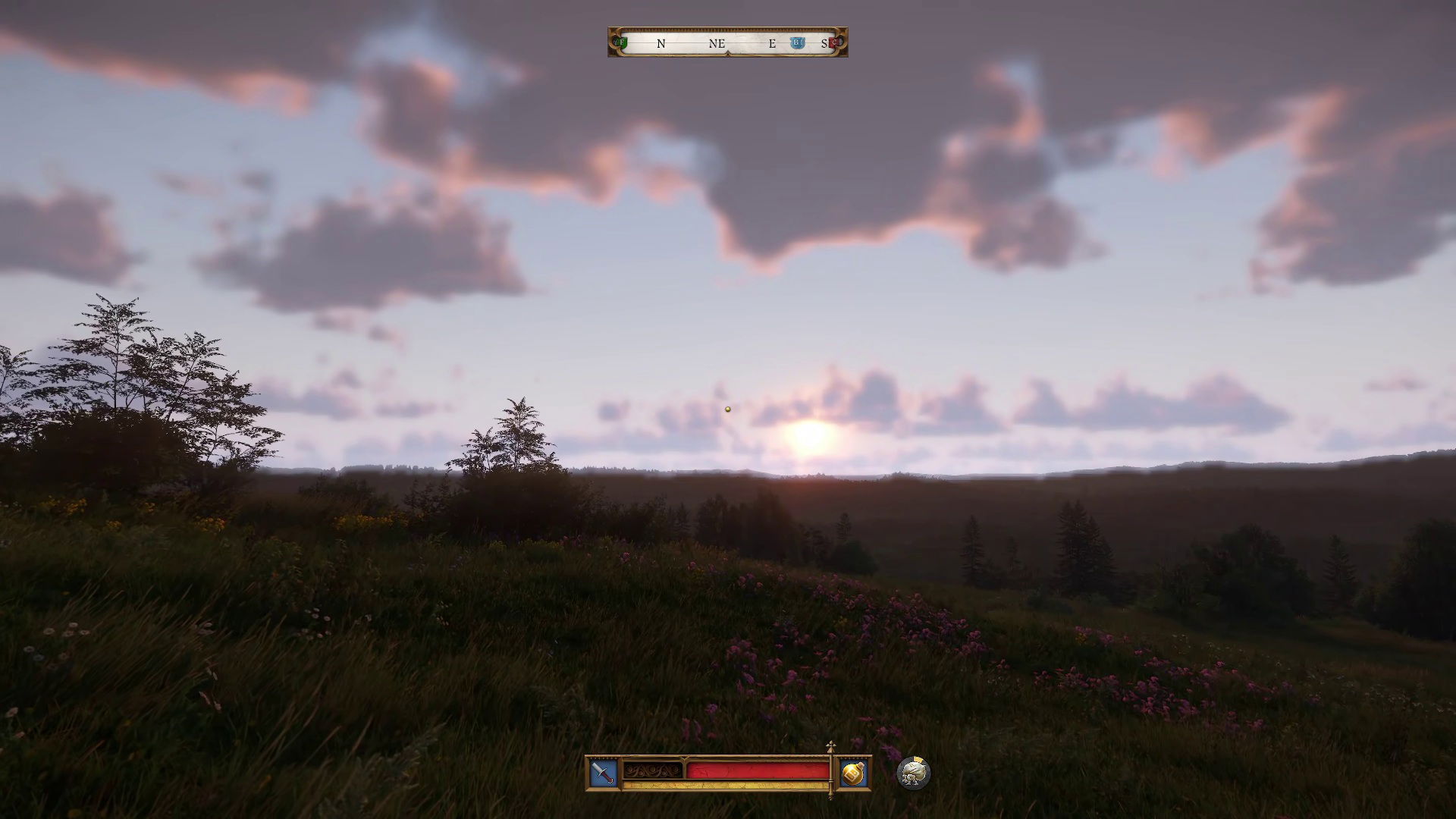
The world, for example, is beautifully full of color but not overly vibrant like we see it in some games. It looks just as great in the grassy fields and green forests as it does in the muddy towns and villages. In terms of style, the art direction is realistic and relatively lifelike, though the game’s character models often can’t match the much bigger budgets of today’s games. That being said, in cutscenes and general play, they still look great. It’s only during in-game dialogue sequences, where you really notice that some characters don’t hit the same quality as the rest of the visual presentation.
Speaking of cutscenes, this is where the audio really shines from the fantastic emotive performances of all the main cast, especially Tom McKay and Luke Dale, to a gritty medieval-inspired score that plays during some of the game’s most significant moments.
Thankfully, the audio is also brilliant throughout general gameplay. With sound effects for everything from the chirps of birds and mooing of cows, to the clashing of swords or the click-clack of armor as you walk around, adding a constant immersion. Kingdom Come: Deliverance II also offers some of the most peaceful background music to exploration and more mundane tasks that I’ve ever heard.
PC Performance Overview
When it comes to technical performance, I can’t say enough good things about Kingdom Come: Deliverance II. Even when I played it at its initial release, it was an excellent, mostly bug-free experience. Now, nearly a year later, any minor kinks have been completely ironed out, resulting in one of the best-looking, most well-optimized, and highly scalable PC ports in recent years.
When running at native 4K resolution with all visual settings set to ultra, the framerates are a near 60fps lock with only one or two frames dropped in highly intensive scenes. You might be thinking, “yeah, that’s to be expected on your high-end PC,” but what about the rest of us? Although I personally don’t have different hardware to test, I have tinkered with various graphical settings and tried different native resolutions. I feel confident that Kingdom Come: Deliverance II should be highly playable on most mid-range PC’s in 2026. Of course, if you are still rocking hardware from a decade ago, you might have trouble getting a 60fps, high-resolution experience. So, in that case, I’d always suggest checking the minimum required specs before purchasing any game.
Jordan’s PC Specs: AMD 9950X3D, RTX 5090 Founders Edition, 96GB DDR5 6000MHz Corsair RAM
I also tested Kingdom Come: Deliverance II with the same settings at 4K using DLSS. I have to say I settled on 4K DLSS Quality mode with ultra settings as my preferred way to play because it offered a significant boost up to the 90+fps while having minimal impact on visual quality.
Everything I Want From An RPG
In the end, Kingdom Come: Deliverance II is without a doubt the best action role-playing open-world game I have ever played. It takes everything you could want from a great RPG and enhances it with an added layer of simulation. While its slower initial pacing and somewhat challenging combat are sure to put some people off, Kingdom Come: Deliverance II is the easiest game recommendation I can make to RPG fans in more than a decade. Not only does it define the genre itself, but it pushes this particular style of RPG forward significantly for the first time in a long time, and as a result, I’d say it’s a must-play game even a year after its initial release.
Review Disclosure Statement: A copy of Kingdom Come: Deliverance II was provided to us for review purposes by Deep Silver. For more information on how we review video games and other media/technology, please review our Review Guideline/Scoring Policy for more info.
Affiliate Link Disclosure: One or more of the links above contain affiliate links, which means at no additional cost to you, we may receive a commission should you click through and purchase the item.
Kingdom Come: Deliverance II Review - A Genre Defining Experience
Kingdom Come: Deliverance II is everything you could wish for from an action RPG, with a heavy focus on systems that lean in to support the way you want to play. Not only is Kingdom Come: Deliverance II a brilliant sequel, but it’s a genre-defining game that pushes an otherwise stagnant genre forward for the first time in a decade.
Pros
- Extreme Player Freedom
- Huge Impact Of Player Choices
- Every System Adds Value
- Solid PC Performance
- Lovable Characters
- Strong Cast Performances
- Highly Replayable
- World Is Alive, It Doesn’t Wait For You
Cons
- The Slower Initial Hours Will Turn Some Players Off
-
Kingdom Come: Deliverance II Review - A Genre Defining Experience
