

I had the pleasure of participating in the closed beta of Neverness To Everness last summer, where I focused heavily on how the gacha system worked. I also spent time exploring the game itself, which stood out for blending supernatural phenomena with real-life city gameplay like driving and shopping. Earlier this year, I got another chance to jump back in thanks to access to a new closed beta. This time, I wanted to test the game on PlayStation 5 and the PlayStation Portal. Thanks to that opportunity, I came away with some new thoughts, especially since there were more characters available in the gacha system this time around.
Playing The Game
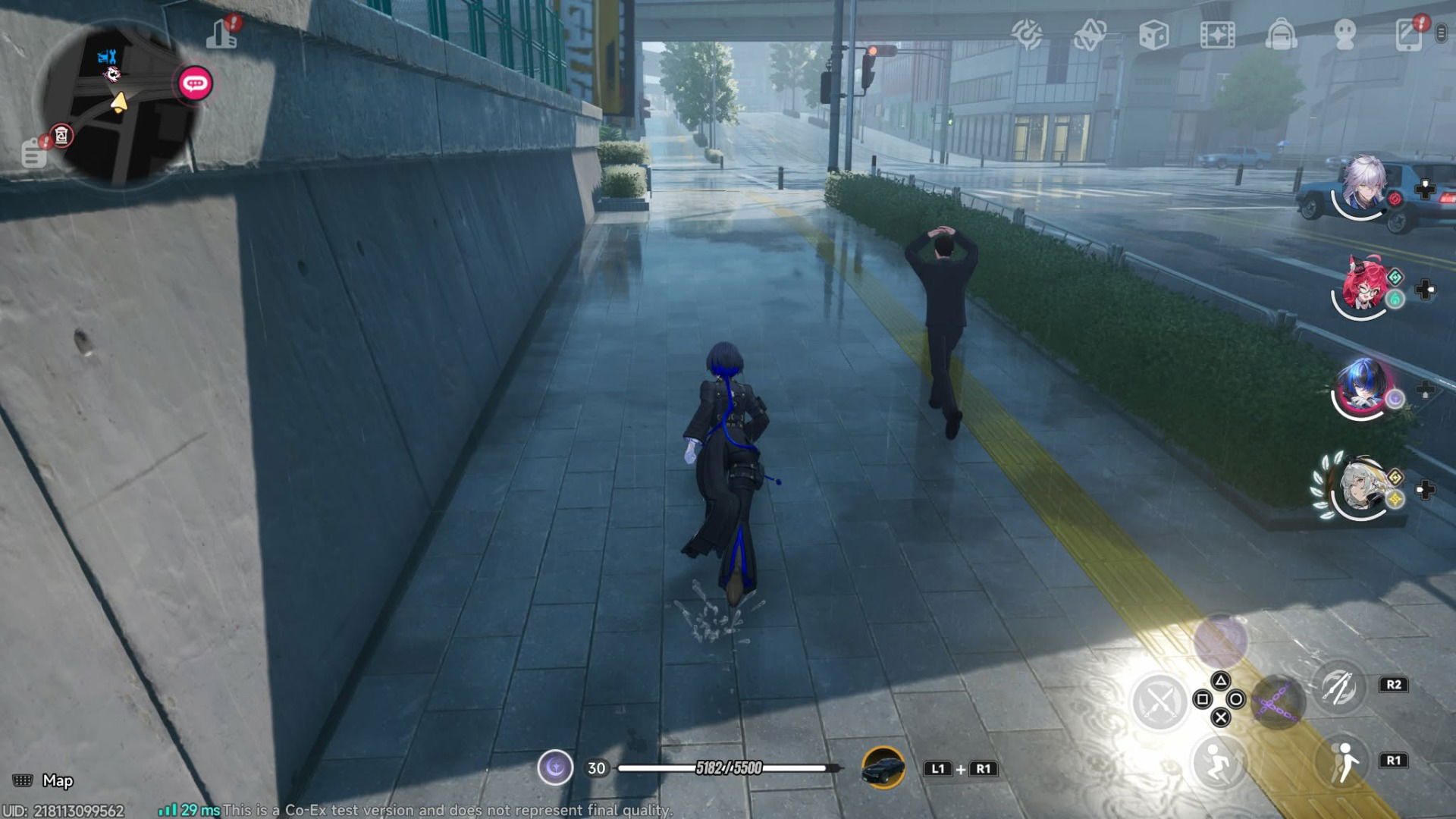
For the majority of my time in the game, I played it on the PlayStation Portal, and for the most part, it was really solid. It helps that the game was cloud-enabled. I have noticed that with some games, Remote Play can feel awkward. When I play Arknights: Endfield with Remote Play, it ranges from a bad connection to barely playable. Generally, cloud streaming options perform much better and feel more reliably synced.
The first thing I have to note is that controller support for the DualSense is fantastic. There is a lot of effort put into using the technology. Driving cars makes great use of the adaptive triggers. You feel the haptic feedback across different terrains as you run up city buildings, and you experience the intense rumbles of the supernatural spirits you encounter.
Every day of the beta test, players received a generous amount of dice to throw at the fair to earn characters. It allowed for constant pulls. It was nice to open the mail and see another 10 to 20 dice waiting for me to use on a character banner. I will discuss the gacha improvements in a later section, but this system heavily motivated me to log in every day so I could throw a brand-new multi at a banner.
The actual combat also differed from when I played it during the first containment test. There are reactions based on the elemental makeup of your party. Having good synergy generally requires two to three elements working together. It feels much more thought-out this time, and it showed in how characters reacted to your abilities on the side of the screen. Character reactions were present in the previous containment test, but they felt more random. This time, instead of focusing on a single character, strong synergy enhanced the entire team.
Another big thing I noticed in this test was the City Tycoon feature. This is a special menu that tracks your progress in essentially owning different parts of the city. You needed to reach City Tycoon level 17 to unlock a new unique S-rank character. Buying an apartment, a business, or a house also unlocked the ability to place acquired characters with a bond level of 4 or higher into those buildings.
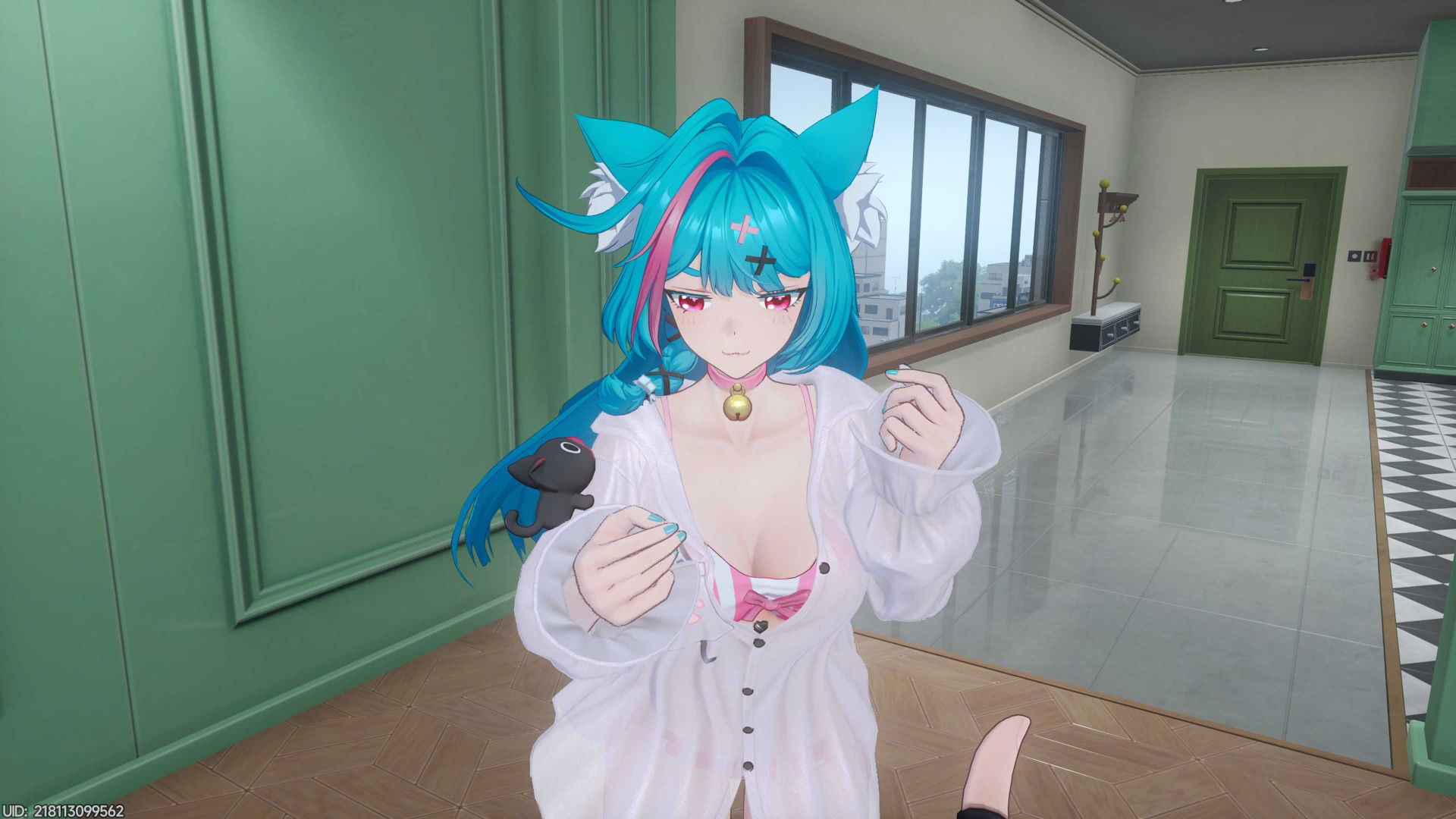
You can have different interactions with each character depending on where they are located. For example, if Mint is standing next to you, you can challenge her to a game of Rock-Paper-Scissors. You can also rub behind her ears if she is sitting in a chair. This incentivizes you to collect more furniture, especially since apartments look empty without furnishings. The higher the bond level, the more likely characters are to respond to your requests in the apartment. You can ask them to sit in certain places or even hold your hand as you move through the apartment and the nearby city.
Gacha
The fair system itself has not changed. The gacha system, however, has. Back in the first containment test, the character spaces were tied to specific characters. Now, they award random A-rank or higher characters. This includes S-rank characters as well. I was genuinely shocked to pull an S-rank character from one of the character spaces since I did not expect that to be possible. There are also cosmetic spaces now, where you can grab cosmetics for gliders, characters, and cars. The Guardian is still present and moves two spaces away from you each turn for three turns. If you do not catch it by turn three, it disappears.
Another gacha-related system is the Arc system. With the currency you collect in the form of chess piece paper, you can spend it on keys. These keys can be used to obtain a generic S-rank Arc for a character type, or you can roll on an Arc banner. Most of the Arcs you obtain will be B-rank. You are guaranteed at least one A-rank Arc with an Arc gacha pull. Arcs boost your characters’ stats and provide passive abilities. Like other gacha games, certain Arcs work best with specific characters, so it is not too difficult to figure out optimal pairings.
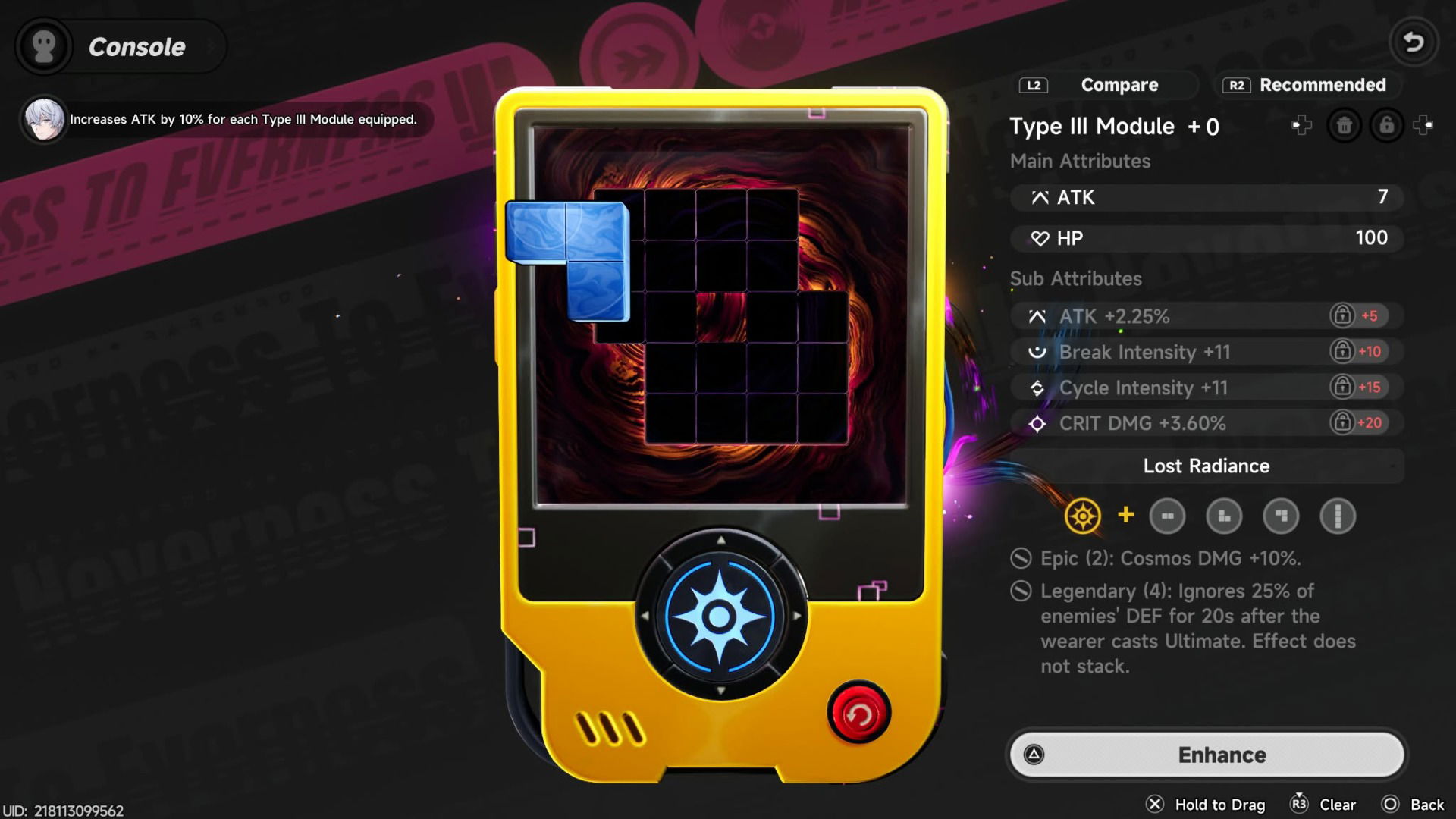
The part of the character you will spend the most time grinding is their Console. Each character has a Game Boy-style console attached to them. In this Console, you play a Tetris-style system using modules. These modules act as equipment that you attach to the character.
Appraising Neverness To Everness
I took a much more serious approach this time around with Neverness To Everness, and I am glad I did. There is a lot of potential here, and the systems feel more polished overall. I tried to play Mahjong in the game, but no one was matchmaking at the same time, so it ended up being just me waiting alone in a large club for participants. The improved reactions and character passives made combat flow better. It also helped that I had a full party of S-rank characters this time. I enjoyed the supernatural themes in the main story and the way the cast plays off one another.
I plan to see how much more depth the game offers when it officially launches. It is currently slated for release in 2026.
