

In this Styx: Blades of Greed review, we dive into Cyanide Studio’s long-awaited return to stealth to see whether this third entry proves pure stealth still has teeth in 2026. Styx is not a hero, and he is certainly not a fighter. Open combat remains a last resort and usually a fatal one. Success comes from staying unseen, manipulating patrol routes, and using the environment as both shield and weapon. That identity has always defined the series, and here it feels sharper and more deliberate than ever.
After eight years away, Blades of Greed does not chase trends or soften its edges. Where many modern stealth games lean into power fantasies or combat safety nets, Styx demands patience, planning, and discipline. It is a game that expects you to respect its systems, and rewards you when you do.
Game Name: Styx: Blades of Greed
Platform(s): PlayStation 5, Xbox Series X|S (Reviewed of Xbox Series X|S), PC
Publisher(s): Nacon
Developer(s): Cyanide Studios
Release Date: 19th February 2026
Profanity, sarcasm, and amazing level design mean Styx: Blades of Greed fires into a stealth-shaped hole that not many games have accomplished in a while. I haven’t felt like this since playing the Shadow of War/Mordor games. Styx is a really fun and charismatic protagonist, bringing his sense of humor and crude vocabulary to a time where some games try to keep it PG just to hit every demographic.
From sneaking around guards to setting up traps and using your entire arsenal to enable you to constantly move forward, it all feels smooth. You and your crew move around in a Zeppelin that you acquire in the tutorial portion of the game. Within this, you can unlock loads of new things, while some friends help you with crafting & others will give you side missions that you can choose to complete.
Gameplay
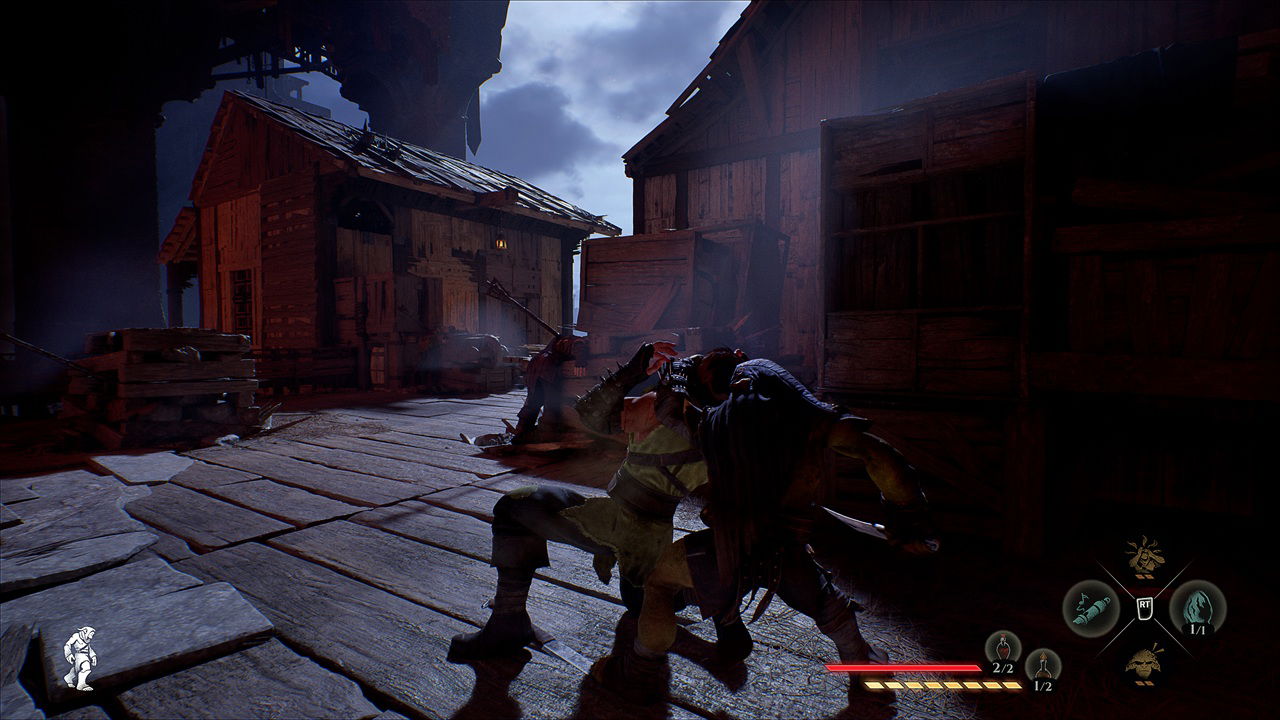
At its core, Styx: Blades of Greed remains a pure stealth experience. Styx is fragile, vastly outmatched in open combat, and heavily reliant on remaining unseen. Charging headfirst into enemies is rarely survivable, and the game makes it clear early on that success comes from observation, timing, and environmental awareness.
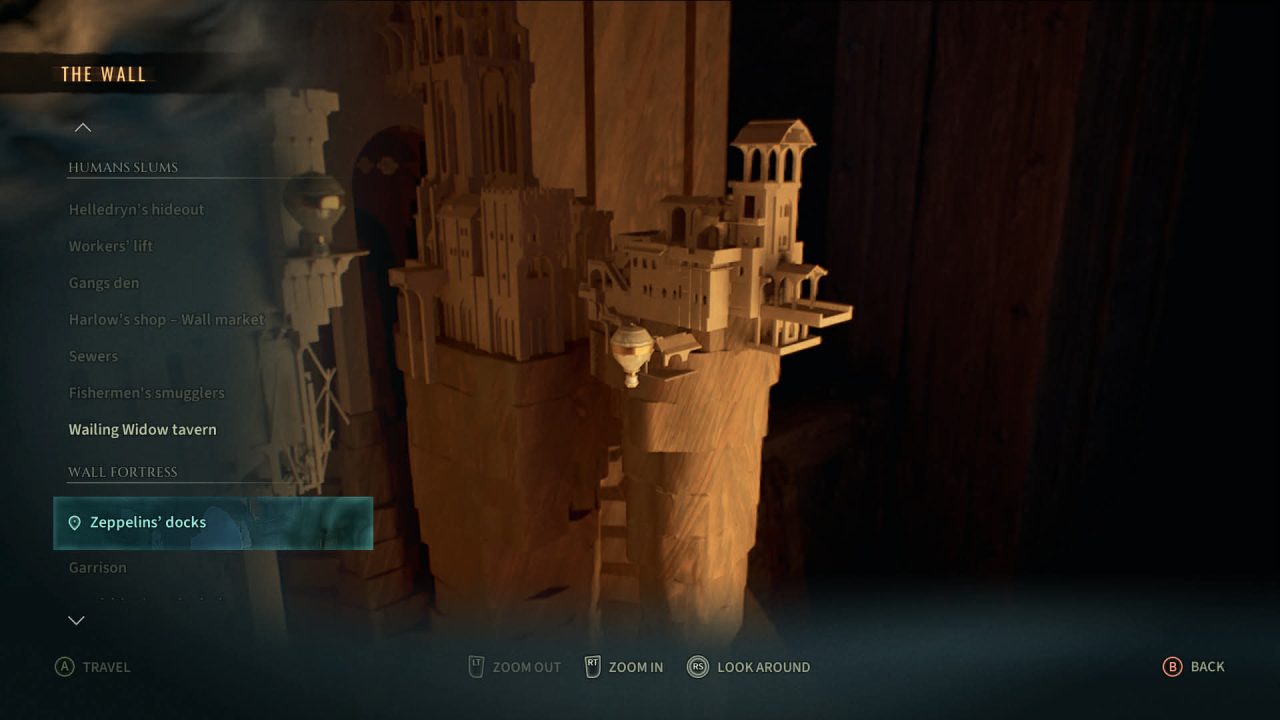
During my time with the game, I struggled at first, especially without any abilities or upgrades. But after several deaths, I was able to prevail. This made me want to continue, and that feeling gives you confidence to tackle the next mission. Another really cool mechanic that is used frequently once you have unlocked a few places is the “Fast Travel” system, A balloon that will take you across the city you are in. The one downside is that you have to find these ports, and they are not marked at all, so you might miss them if you are not looking for them.
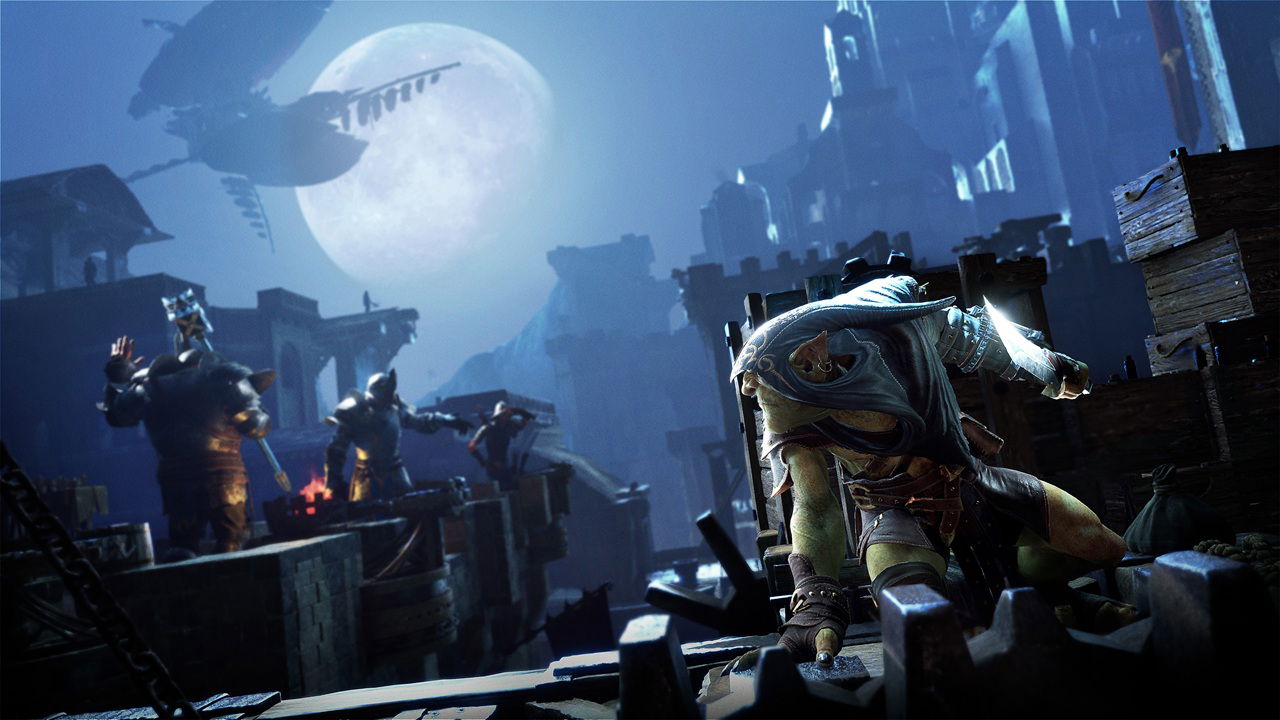
The most significant evolution comes through the game’s level design. Styx: Blades of Greed introduces large, open-ended environments that prioritize verticality and player choice. Rather than guiding players down narrow corridors, the game encourages exploration across rooftops, ledges, hidden tunnels, and upper pathways. Nearly every objective can be approached from multiple angles, allowing players to experiment with routes and strategies that suit their playstyle.
Enemy behavior supports this balance well. Guards are observant, patrol patterns overlap, and mistakes tend to escalate quickly. Being spotted often leads to tense escapes rather than easy recoveries, reinforcing the high-risk nature of every decision. While this can feel unforgiving at times, failures are usually the result of player impatience rather than unclear mechanics.
Abilities and Equipment
Abilities return in familiar form, with classic tools like cloning and invisibility joined by new Quartz-powered abilities that add flexibility to encounters. These abilities allow Styx to manipulate guards, control crowds, or briefly tilt situations in his favor. Importantly, they never feel overpowered. Resource management remains crucial, and careless use of abilities can leave you exposed when you need them most.
Traversal tools play a major role in this freedom. Climbing, gliding, and grappling feel essential rather than optional, often providing safer and more efficient alternatives to ground-level movement. Choosing to stay above enemy patrols frequently proves smarter than weaving through them, reinforcing the idea that positioning is as important as timing.
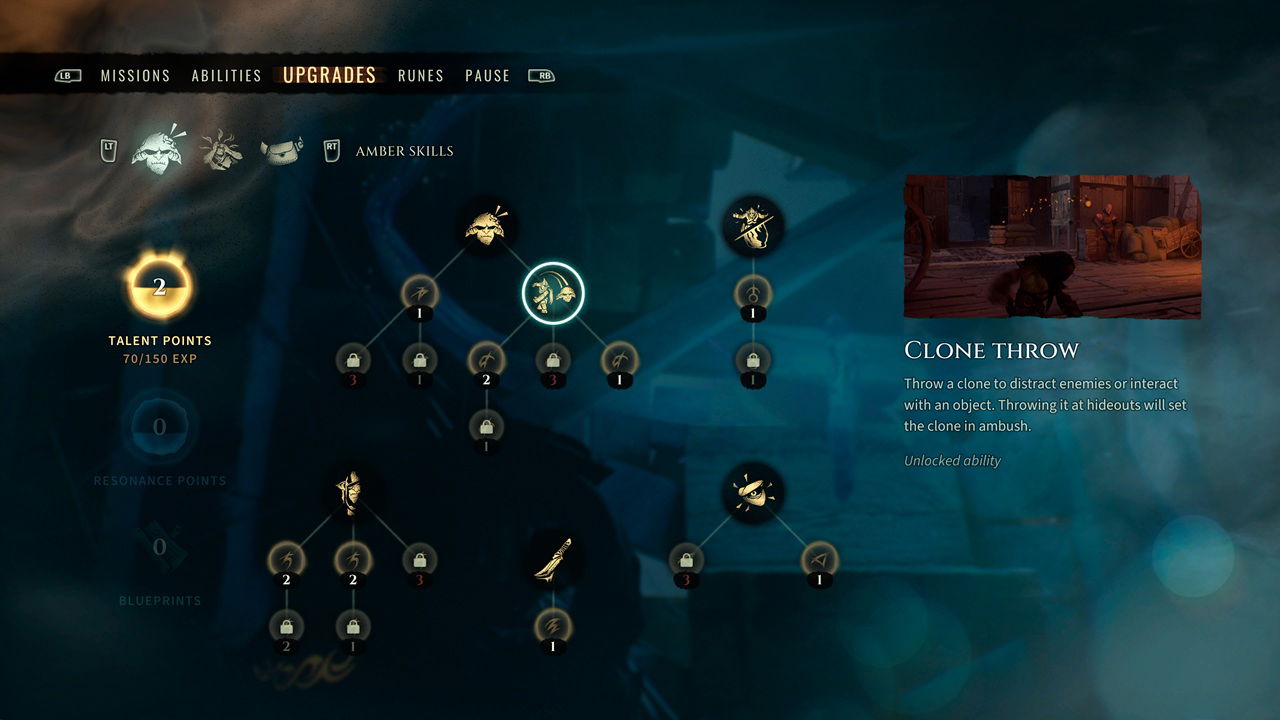
Skill Tree is split into 3 sections, each having unique abilities to unlock and different mechanics needed. One is XP-based, one is Amber-based, and the final one is Blueprints-based. A really cool new ability is Mind Control, which lets you infect a mind and bend it to your will. I liked to use this advantage to walk patrolling guards, off into the void. Another really useful piece of equipment is the Acid Mine, a personal favourite. Plant the device, then use your whistle to alert the guards; poof, they disintegrate as they walk over it. I used this a fair few times in my time playing.
Presentation
Visually, Styx: Blades of Greed opts for strong art direction over technical spectacle. Its fantasy environments feel dense and purposeful, with careful use of lighting and shadow to support stealth gameplay. Dark corners, flickering torches, and layered architecture all work together to create spaces that feel designed around sneaking rather than spectacle.
Character models and animations are serviceable, though not without flaws. Styx’s movement can occasionally feel abrupt, particularly during rapid transitions between climbing and running. These moments rarely break gameplay, but they can slightly disrupt immersion during tense sequences where precision matters.
Audio design is a highlight. Environmental sound cues play a critical role in moment-to-moment decision making, from guard footsteps to distant chatter. Silence is often just as important as sound, heightening tension as players wait for the perfect moment to move. The soundtrack stays understated, allowing ambient noise to carry much of the atmosphere rather than overpowering it.
Styx himself remains a strong presence throughout. His sarcastic commentary and dark humor add personality without undermining the game’s tension. The writing does not aim for epic fantasy drama, but it succeeds in giving Styx a distinct voice that sets the series apart from more stoic stealth protagonists.
Some characters return alongside Styx, his trusted confidant Helledryn, Human & Djarak, Dark Elf; these friends are very familiar if you played Styx: Shards of Darkness 8 years ago. Along with many new names and faces. Every character feels fleshed out and sounds amazing.
Accessibility
Styx: Blades of Greed makes few concessions when it comes to accessibility. This is a game built firmly around stealth mastery, and it expects players to engage fully with its systems. There are difficulty options available, but even at lower settings, the game demands patience and awareness. This is something I have first-hand experience with. I really struggled even on easy, but with some time, patience, and a lot of trial-and-error, finishing missions feels like you’ve accomplished something.
That said, the game does a solid job of communicating its mechanics. Visual indicators, sound cues, and environmental design all work together to teach players how to succeed without relying heavily on tutorials. Failure is treated as part of the learning process, encouraging players to rethink their approach rather than brute force their way forward.
Players looking for flexible combat options or generous checkpoints may find the experience frustrating. Styx: Blades of Greed is unapologetic in its design philosophy, and it will not appeal to those unwilling to slow down and plan carefully. For its intended audience, however, that focus is a strength rather than a weakness.
Performance
Just a small thing, as I was playing on Xbox Series X, I had no problems for the most part. Running smoothly throughout, I did have a moment when I fell off the map while trying to climb up. Felt like a GTA V elevator glitch if you know what that is. But that was the one time; other than that, I really felt like I was immersed in the world.
In terms of performance, I never experienced any frame drops, audio hiccups, or screen tears during my playthrough. But keep in mind that I was playing on a console, so on PC your experience could be vastly different.
Audio is a key part of play, as every footstep is something that needs to be planned and thought through, A indicator appears in the bottom left corner to let you know when you are crouching as well as a pulsing circle when you are walking to loud.
Verdict
This entry into the Styx catalogue really does wonders for the future of games like this; stealth and planning are critical, and the learning curve is very high. The imminent fear of being seen and not being able to escape as the nearby patrols all converge on your position.
With everything said I do fear this game will just fall to the way side and be seen as a niche or even bland game. However, I really hope people will try it, because this game is a nice change of pace and a beautiful homage to stealth games of the past.
Review Disclosure Statement: A copy of Styx: Blades of Greed was provided to us for review purposes by NACON. For more information on how we review video games and other media/technology, please review our Review Guideline/Scoring Policy for more info.
Affiliate Link Disclosure: One or more of the links above contain affiliate links, which means at no additional cost to you, we may receive a commission should you click through and purchase the item.
Styx: Blades of Greed delivers smart stealth design and expanded levels that reward patience, but rough edges and limited accessibility hold it back from greatness.
Pros
- Brilliant Stealth
- Crude Humour
- Beautiful Set Pieces
Cons
- Very Difficult Even On Easy
- Unforgiving
- Repetitive Missions
-
Styx: Blades of Greed Review
