

Where Legends Grow, Not Just Fight
Riftbound: Spiritforged feels like handing your League of Legends mains a forge instead of a battlefield. Champions aren’t just fighting anymore. They’re being armed, upgraded, and pushed into repeatable, momentum-heavy clashes that feel distinctly Runeterran.
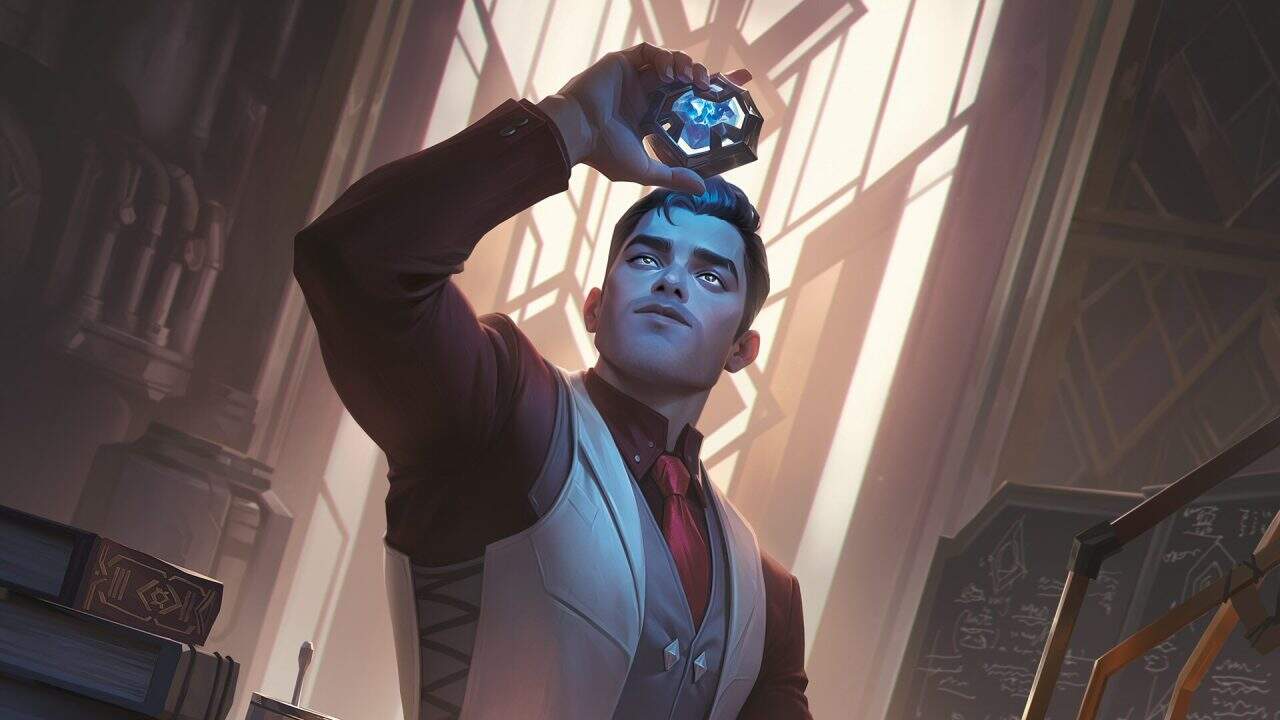
Publisher: UVS Games
Designer: Riot Games
Players: 2–4 (2 person is my favorite)
Playtime: 25–45 minutes
Release: February 13, 2026
Opening Hook / First Impression
From the first pre-release games, Spiritforged makes it clear this is the set where Riftbound leans fully into combat identity. Equips matter. Timing matters. A single turn can completely reshape a battlefield in ways that feel both earned and explosive.
Overview / Core Gameplay
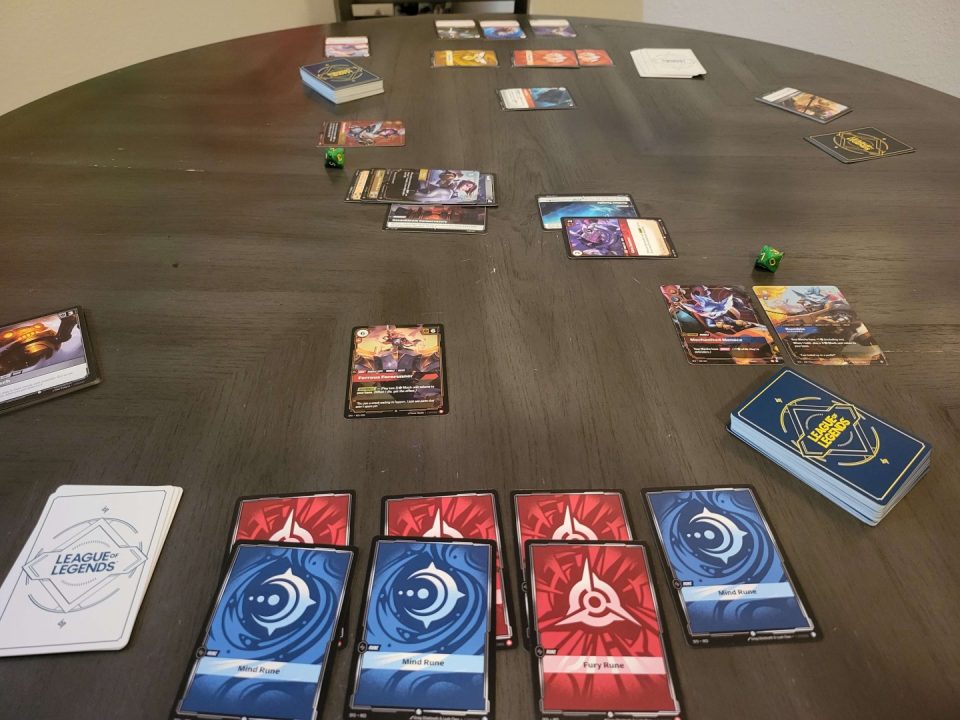
At its core, Riftbound still revolves around managing your rune deck to fuel champions, units, and spells across shared battlefields. Think lanes where positioning and raw might decide who controls the Rift.
The objective remains clean and focused:
- Win combat on a battlefield
- Conquer it to score a point
- Hold it to apply ongoing pressure
- First player to 8 points wins
Each turn flows through refreshing runes, committing resources, deploying to base or battlefields, and preparing attackers for showdown. Combat is straightforward on paper. Might wins. Survivors stay. But Spiritforged ensures that how you reach that moment is where the real game lives.
What makes it fun is how often the tide turns. A losing board can flip instantly with the right equip or spell, and Spiritforged leans hard into those decisive moments.
Mechanics & Flow
Spiritforged’s biggest addition is attachments, introducing equips that permanently alter units by boosting might or granting powerful effects. These aren’t passive upgrades either. Cards like Weaponmaster can steal or reassign gear mid-conflict, creating sudden tempo swings that feel dramatic without being random.
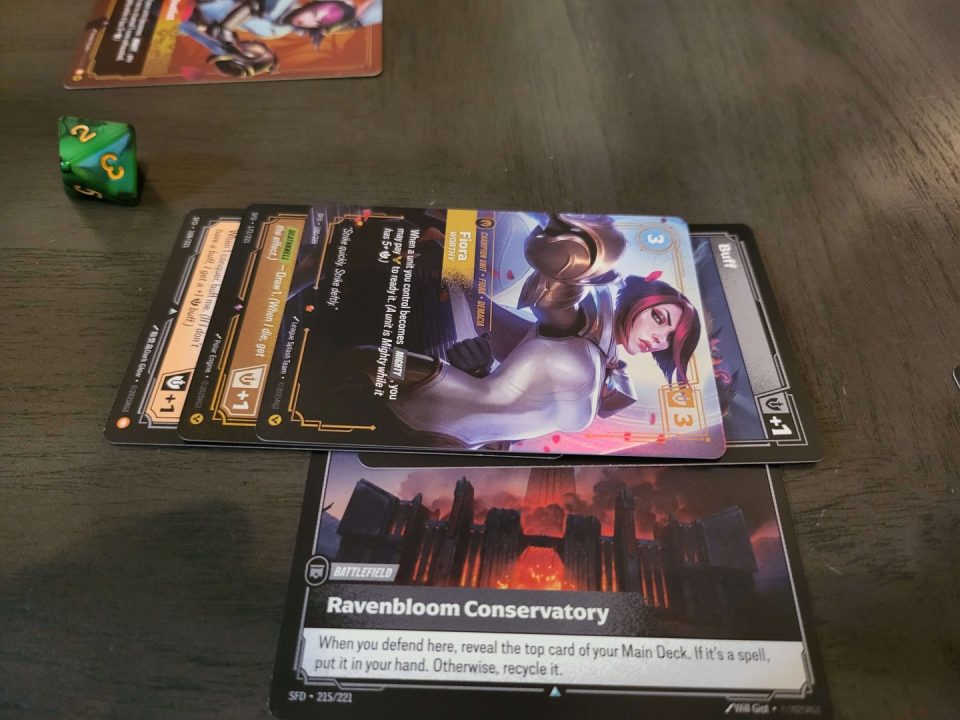
The new Repeat keyword adds another layer, allowing spells to fire twice at an added cost. Used well, it creates devastating turns. Used poorly, it empties your resources fast. Together, equips and Repeat integrate smoothly with Origins’ domain system, adding depth without overcomplicating the ruleset.
Compared to games like Magic or Pokémon, Riftbound continues to emphasize battlefield positioning and commitment over resource ramping. Early turns are careful and economical. Midgame boards become crowded and dangerous. Endgames often turn into tense races where every point matters.
Pacing remains excellent. One-on-one matches feel focused and tactical, while 3–4 player games lean into controlled chaos. Multiplayer can be swingy, but it also produces some of the most memorable moments at the table.
Theme & Components
Spiritforged carries Riot’s production quality with confidence. The art is vibrant and readable, showcasing champions mid-action in ways that reinforce both theme and mechanics. Fiora, Rumble, and Jax all feel mechanically and visually distinct.
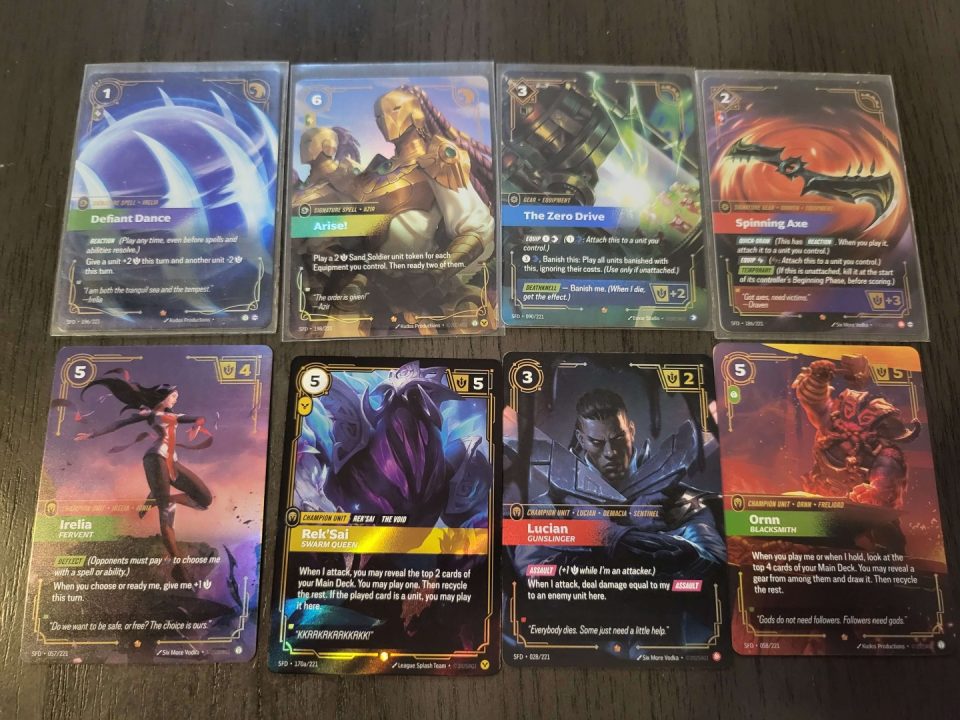
Component quality is strong across the board. Cards are thick, icons are clear, and might values are instantly readable even in crowded battlefields. Collectors will appreciate the abundance of alternate art and foils, while players will appreciate that none of it gets in the way of usability.
Spirit Blossom serves more as a thematic backbone than a mechanical centerpiece in Spiritforged, reinforcing the set’s focus on champion growth and mythic escalation rather than dominating every match outright.
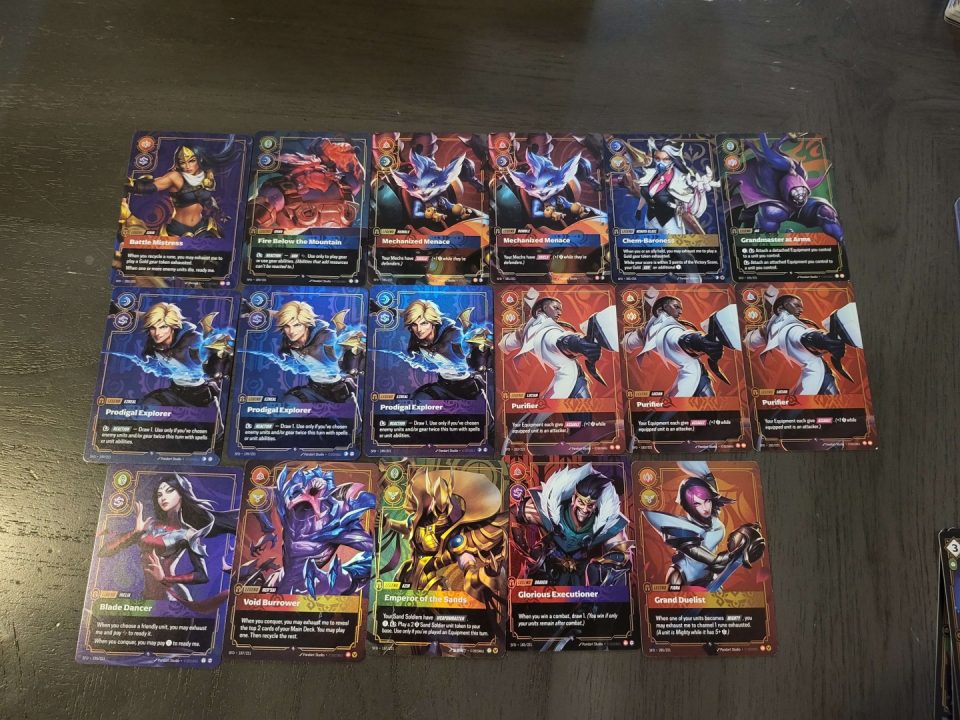
As with most collectible releases, how strongly the Spirit Blossom theme resonates will depend heavily on individual pulls, with some boxes showcasing it more prominently than others.
Ease of Learning / Accessibility
Riftbound remains approachable, but Spiritforged clearly targets players who already understand the fundamentals. The core loop clicks quickly, and most players will grasp battlefield combat within their first game.
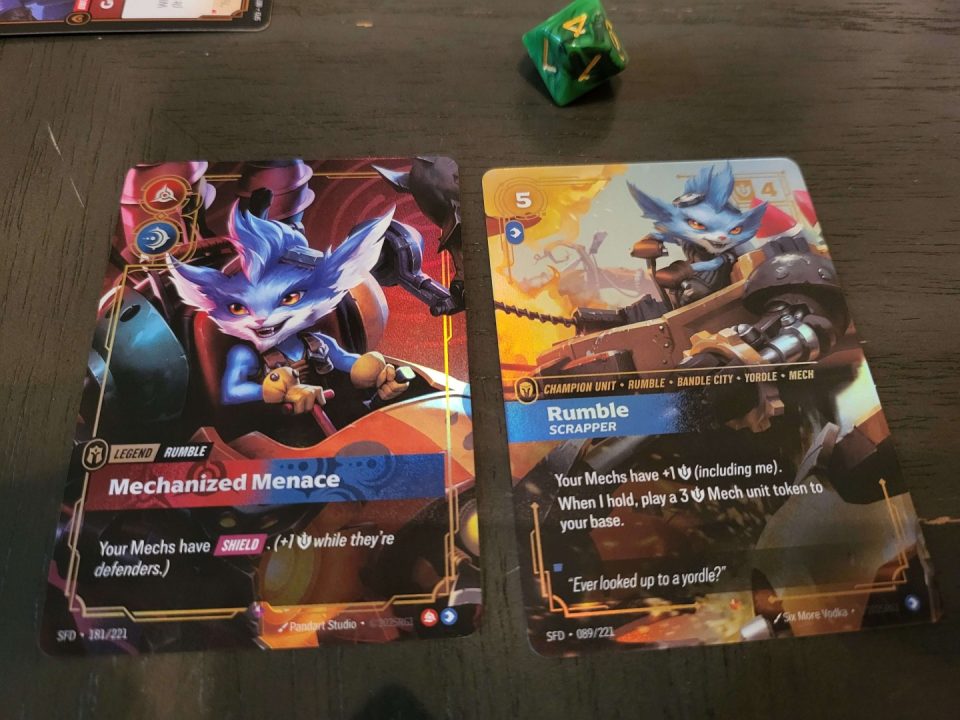
That said, equips and Repeat add meaningful complexity. New players are best served starting with champion decks or Origins before diving fully into Spiritforged’s deeper interactions.
This is a hobbyist-focused expansion, but one that rewards learning rather than overwhelming it.
The Table Experience
Spiritforged shines during live play. Combat turns are tense, visible, and emotionally charged. Watching an opponent Weaponmaster your carefully planned setup hurts in the right way. Landing a final conquer with a fully equipped champion feels incredible.
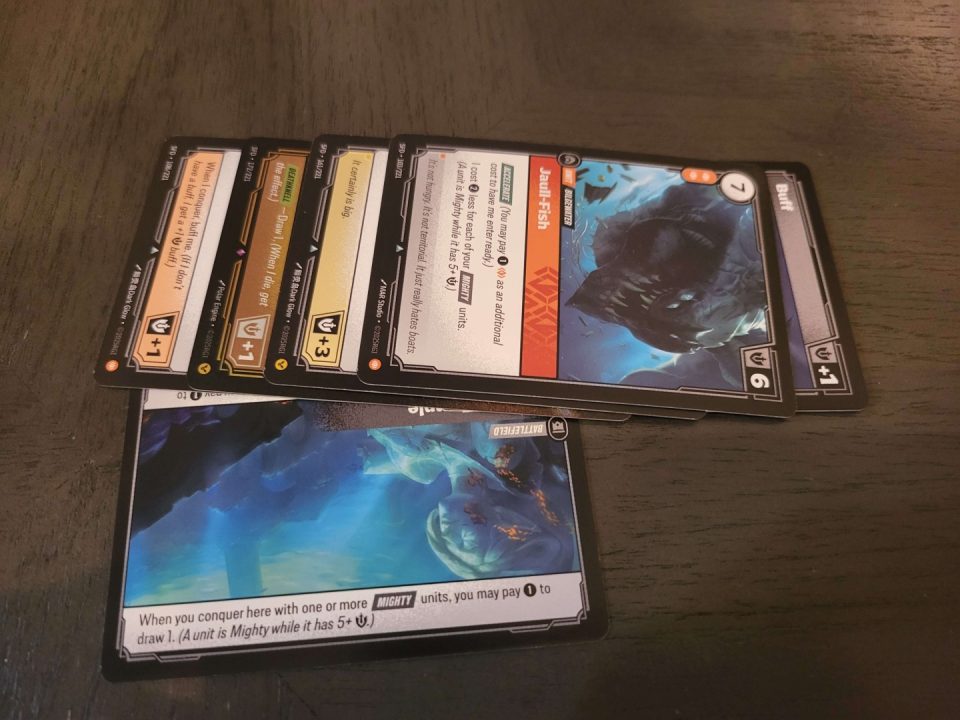
Wins feel earned. Losses feel instructive. And most importantly, games end with players immediately wanting to shuffle up again.
Final Thoughts / Verdict
Riftbound: Spiritforged sharpens the foundation laid by Origins into something more confident and more competitive. It rewards commitment, punishes sloppy sequencing, and gives champions the mechanical weight they deserve.
Competitive players and League fans will find endless deckbuilding potential here. Casual players may hesitate at pack variance, but the preconstructed decks provide an accessible entry point.
Replayability is high, the meta feels poised to evolve, and Spiritforged firmly establishes Riftbound as a serious contender in the modern TCG space.
You can purchase Spiritforged (here) on TCGPlayer.com
Special thanks to Riot and UVS Games for the products to review!
Summary
Riftbound: Spiritforged is the expansion where Riftbound stops warming up and starts swinging.
Pros
- Equip and Weaponmaster mechanics meaningfully elevate combat
- Excellent art direction and component quality
- Fast-paced games with genuine strategic depth
Cons
- Collectible costs can add up beyond precons
- Multiplayer games can feel swingy
- Pack pulls seem repeatitive
