

Cassette Boy is a puzzle adventure RPG that blends clever environmental challenges with character-driven exploration, and while not every part of that mix lands perfectly, the pieces that do are genuinely memorable. Developed solo by Wonderland Kazakiri, the game leans heavily into atmosphere and inventive design, delivering moments that feel fresh in a genre space that often plays it safe. It’s an ambitious project, and even when it stumbles, there’s no denying the creativity behind it.
Game Name: Cassette Boy
Platform(s): PlayStation 5, Nintendo Switch, Xbox Series X/S, PC (Reviewed)
Publisher(s): Pocket Pair & Forever Entertainment
Developer(s): Wonderland Kazakiri
Release Date: January 14, 2026
Wake Up Cassette Boy
Is the moon there when nobody’s looking? “What you can’t see does not exist.” These are the existential questions and statements that Cassette Boy poses at the start of the game. They make sense once you realize that the Boy is collecting moon fragments and literally everything is based around removing objects from view.
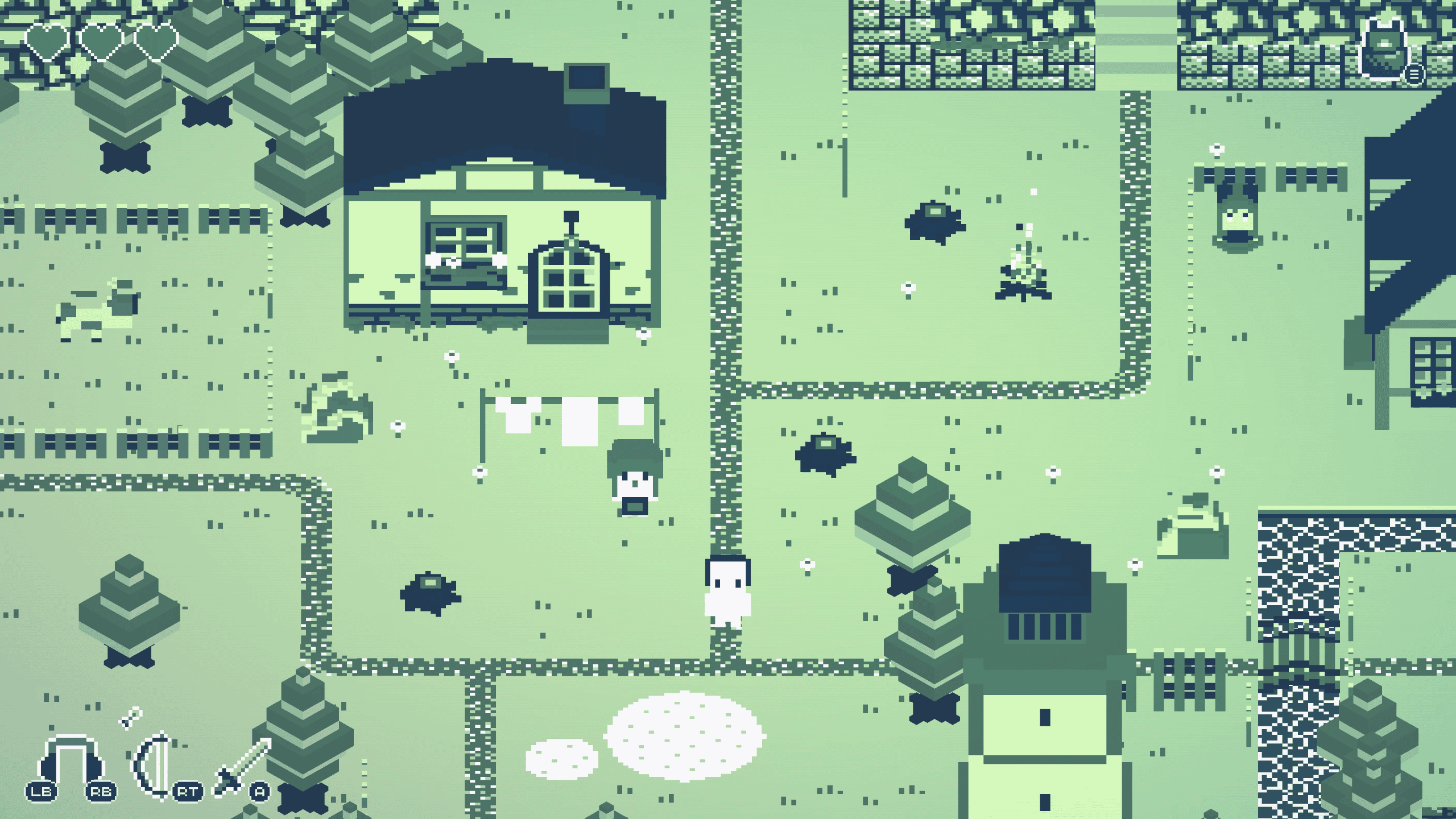
The Boy’s journey begins as one would expect: by awakening in a bedroom, finding their mother downstairs, and then going out into the village and conversing with the townsfolk. Doing so with one of them reveals that their cat Luna is missing, and it doesn’t take long for Luna to suddenly appear and then run off. This, of course, leads to a chase across multiple screens, allowing you to become acquainted with Cassette Boy’s mechanics in the process, which are very Zelda-like. However, once the Boy finds some headphones, the entire crux of the game comes into view.
Puzzles Go Round and Round
Cassette Boy’s main mechanic, named the Schrödinger System, is designed by solo developer Kiyoshi Honda and uses headphones to grant the Boy the ability to move the entire world around on a 3D axis while the base remains in 2D, thus allowing you to move the character with the analog sticks and, at the same time, move the background by using the LB and RB buttons.
Need to find a way to get through a stationary figure? Twist the camera around to make them invisible and suddenly, the Boy can walk through. Can’t seem to figure out how a gated door opens? The switch may actually be in the way.
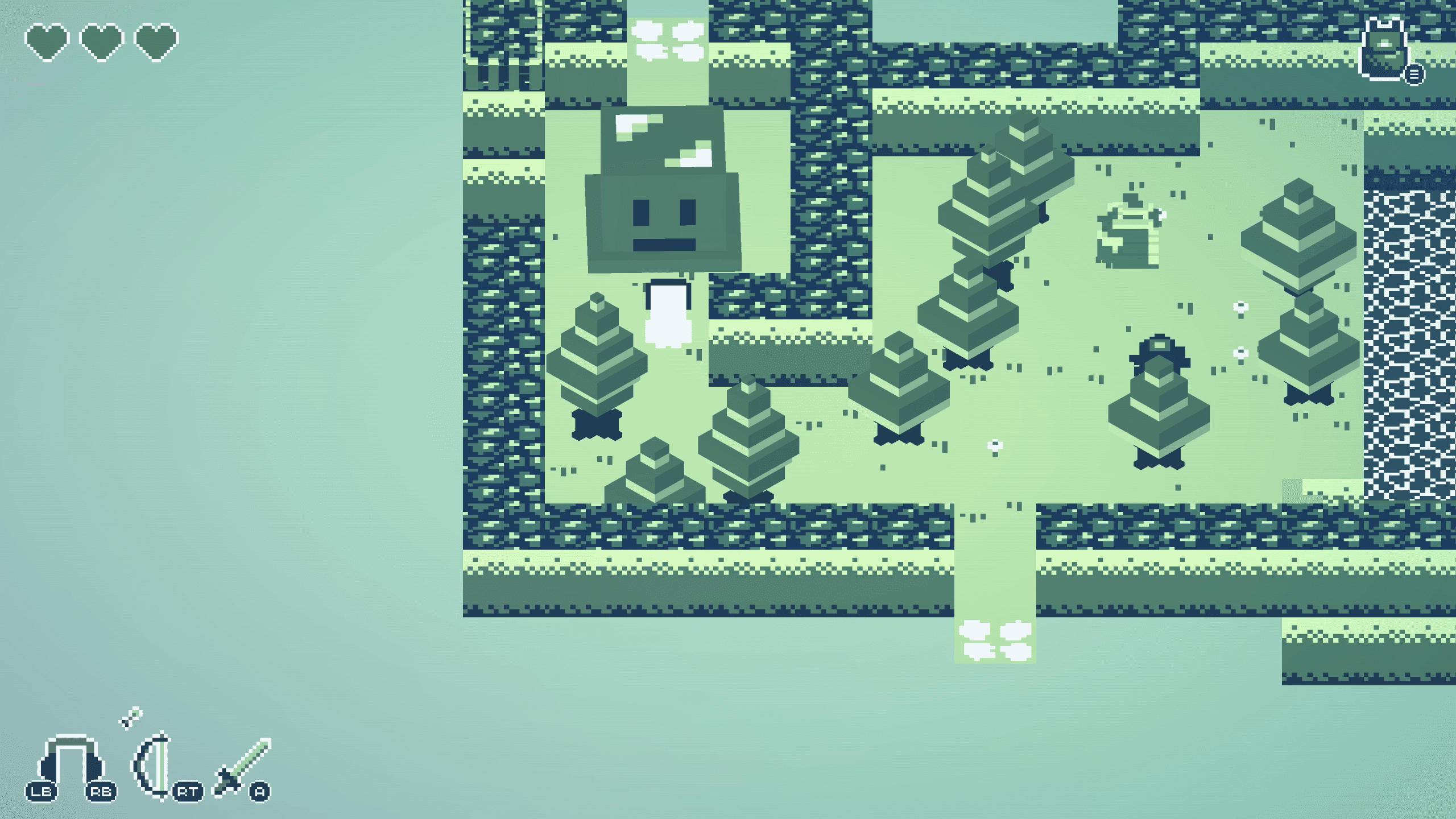
At first, I didn’t necessarily get this aspect, as at one point I was lost for an entire hour trying to get back to the town and growing rather frustrated at not seeing what I needed to do, so I decided to restart my save. In doing so, I carefully retraced what I did and then I had the realization that the statement “If you can’t see it, it does not exist” applies to everything and not just enemies. This is when it dawned on me to stand on top of the switch and move the camera so you couldn’t see it at a certain angle, and all of a sudden the gate remained open.
Keeping what I learned in the back of my mind for the rest of the adventure truly allowed for the developer’s idea to become much more clear. Cassette Boy always has you thinking about camera angles, movable objects, and their perspective relative to what needs to be solved. This concept isn’t technically new, as Phil Fish’s Fez popularized it, but Kazakiri innovates on it by having the Zelda-like elements infused together with the puzzles.
Adventure Awaits
Much like the aforementioned beginning, the other Legend of Zelda staples are present in Cassette Boy. The main weapon is a sword, but a bow and bombs do become available later on too. There is a standard sword attack and a 3-hit combo, although the 3-hit combo causes the Boy to jump into the enemy for some reason, and half the time it just leads to the character taking unnecessary damage instead. It’s a tad annoying, but not that big a deal because there are bonfires pretty much everywhere that not only save your progress but also heal you as well.
The Zelda-like top-down view is also present here, but this actually works really well with the shifting camera as it provides a greater depth of field to be able to see what needs to be obfuscated. However, it does still create some issues with certain angles, but for the most part I liked that there are illusions created, especially when it comes to removing enemies from view. The two types of jumps available add options for reaching what seem like unreachable areas, as the regular jump helps with verticality, whereas the dive-type jump aids with longer distances.
The best parts of Cassette Boy are when everything is in motion and the camera switches to show you what you may need to do, and then the toolkit available allows for you to get through and move on. But suddenly something arrives on one screen that may stump you for a bit, and once you figure out the solution there’s this awesome satisfaction of finding it. Pushing this further is that the camera perspective helps empower you to keep searching even when stuck, making it highly unlikely you’ll just happen upon the result.
Maybe Not Everything Needs to be a RPG
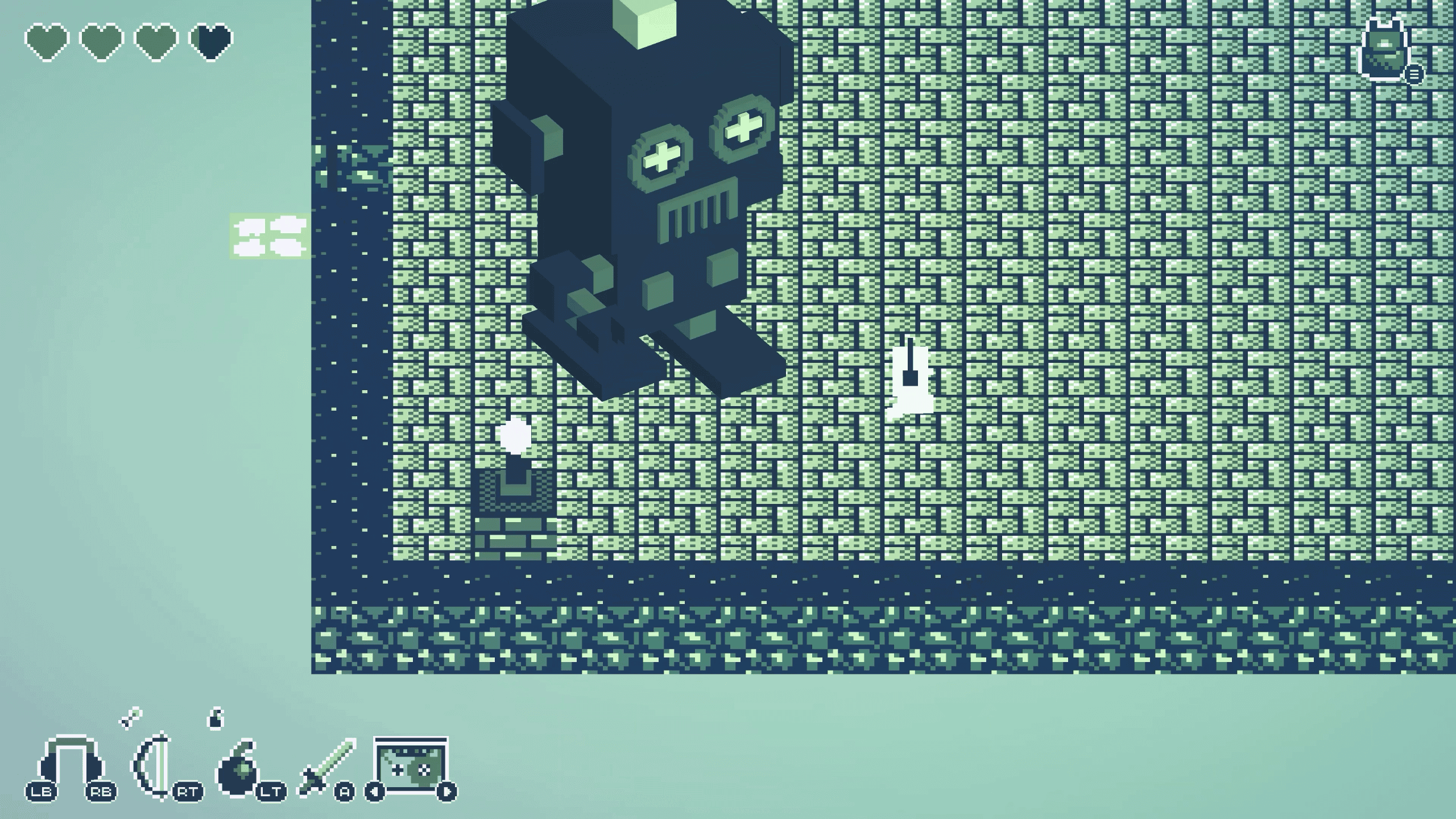
Unfortunately, there’s one aspect of the game that doesn’t hit for me. Cassette Boy has a level-up RPG aspect that feels more like it was added in order to differentiate it from Zelda instead of truly adding to the experience.
Anytime an on-screen enemy is defeated, they disperse some orbs that add experience points. Once you gather enough of them, it then helps the Boy gain a level and improves his stats. I didn’t have too much of a problem, per se, in getting through the game because of this, but you could feel it when fighting the bosses that perhaps if I was a bit more leveled up it may have been a quicker battle. I get the idea that you’ll have to fight the same enemies several times going back and forth through screens, so it’s supposed to serve as an incentive, but it really doesn’t and ultimately feels unnecessary.
The Good And Bad of the Cassette Boy Gameboy Look
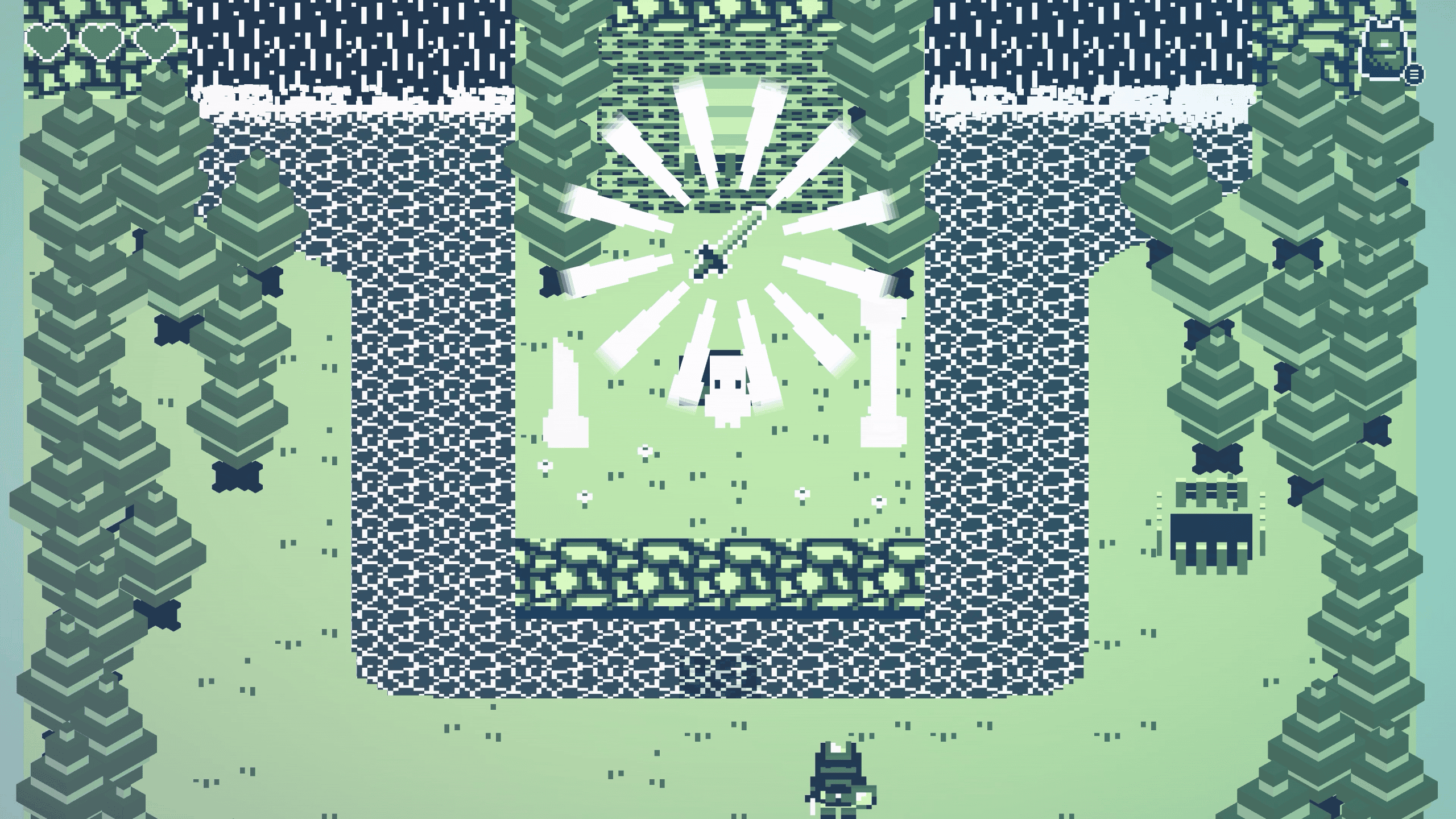
The one Nintendo handheld I’ve never owned is the original Game Boy, and although I don’t have the direct nostalgia for playing games on it, I do have an appreciation for its color palette. This extends to how it’s used in Cassette Boy as it really does feel like a game that could have easily released on that system. The characters all have this cute look to them that resembles a bit more Pokémon than Zelda. Environments look great, especially when there’s water involved as it provides a nice contrast to the varying shades of green. There’s this serene feel to its world that sucks you in and wants you to keep traversing through it.
Unfortunately, there are times where the different shades of green run together a bit and make it difficult to tell where a box is, or when there’s, say, a fence inside of a structure and you need to adjust the camera so that it isn’t in the way. The majority of the time I didn’t have much of an issue with this, especially in open areas as the grass is a much lighter green and easily distinguishable.
However, considering the smaller size of the characters, and then when the colors run together, it can be hard to see what section of a level the Boy is located. Even though the main character is contrasted due to being white in color, the dark green can mix with the slightly lighter green and you’ll lose focus of where the character is and fall down, thus having to climb up to that part again.
The Joy of Perspective
Overall, Cassette Boy is a great game that’s deeply satisfying when it has you exploring the full use of its Schrödinger System. The rotating world is far beyond any sort of gimmick and it truly does have you questioning its opening statements. Although not every facet of what’s presented ends up delivering, between its adorable characters, its charming world, and familiar gameplay elements, it kept me wanting to push on to the next screen even if I got lost. It’s quite easy to see why it’s already won an award for its fantastic puzzle mechanics, and perhaps it won’t be the only one it wins by the time we get to the end of the year.
Review Disclosure Statement: A digital code for Cassette Boy was provided to us by Pocket Pair for review purposes. For more information on how we review video games and other media/technology, please review our Review Guideline/Scoring Policy for more details.
Name: Cassette Boy
Description: Cassette Boy may be doused in the green hues of Gameboy nostalgia but it certainly puts its own spin on puzzles with its modern Schrodinger system. Using the familiar elements of the Legend of Zelda and combining them with a rotating 3D camera has you questioning much more than just what you see, but also what you don't.
Cassette Boy may be doused in the green hues of Gameboy nostalgia but it certainly puts its own spin on puzzles with its modern Schrodinger system. Using the familiar elements of the Legend of Zelda and combining them with a rotating 3D camera has you questioning much more than just what you see, but also what you don’t.
Pros
- Schrodinger System Makes Puzzles Captivating
- World is full of charm and cute characters
- The Gameboy colors give the game a vibe
- Combat has the Zelda Punch
- Plenty to collect and explore
Cons
- RPG Elements Feel Tacked On
- Gameboy Colors Bleed Together Sometimes
- the top-down viewpoint can cause issues at times with the camera
-
Cassette Boy
